Quick Answer: Can You Buy a Buggy Electric Car?
Yes — but "buggy electric car" covers two very different categories. Off-road-only electric UTVs (like the Polaris Ranger XP Kinetic or Can-Am Maverick Electric) are purpose-built for trails and work sites, with 30–70 miles of real-world range and $25,000–$40,000 price tags. Street-legal electric buggies (Neighborhood Electric Vehicles or NEVs) are federally limited to 25 mph and roads with speed limits up to 35 mph, offering 15–40 miles of range. Neither category qualifies for the federal §30D new-vehicle tax credit unless the buggy meets full FMVSS passenger-vehicle safety standards — most do not. If you want a daily driver with open-air fun, you're better served by a mainstream EV like the Ford Mustang Mach-E Rally or Tesla Model Y with a roof rack.
What Exactly Is a Buggy Electric Car?
The term "buggy electric car" gets thrown around loosely, so let's pin down what you're actually looking at before spending real money. The market splits into three buckets:
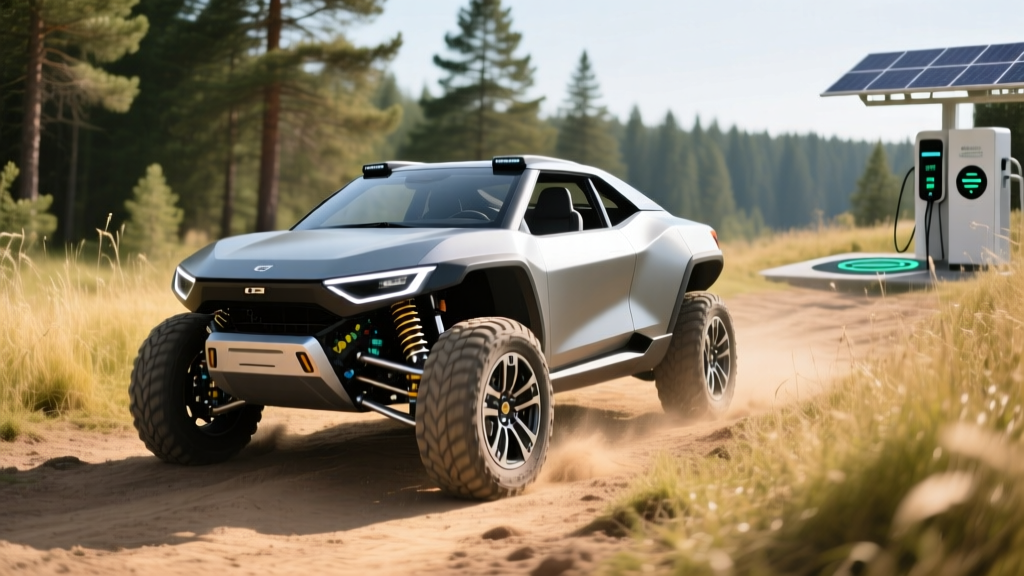
- Electric UTVs / Side-by-Sides: Off-road utility vehicles from Polaris, Can-Am, and smaller brands. Not street-legal. Built for trails, ranches, and job sites. These are the closest thing to a modern "electric dune buggy."
- Neighborhood Electric Vehicles (NEVs): Low-speed vehicles (LSVs) capped at 25 mph under FMVSS 500. Street-legal on roads with speed limits of 35 mph or less in most states. Think golf-cart-adjacent vehicles from brands like GEM (Polaris), Club Car, and Tomberlin.
- Kit-Car / Custom Electric Buggies: Aftermarket conversions or sand-rail builds with electric drivetrains. Highly variable in quality, safety, and legality. Not recommended unless you have deep mechanical expertise and understand your state's titling requirements for homemade vehicles.
None of these are substitutes for a full-size passenger EV. They're specialty vehicles, and buying one without understanding the limitations is how buyers end up disappointed.
Electric UTVs: The Real "Buggy Electric Car" for Off-Road Use
The Polararis Ranger XP Kinetic remains the benchmark electric UTV as of 2026. Here's what the numbers actually look like:
| Specification | Value |
|---|---|
| Battery Capacity | 29.8 kWh (LFP chemistry) |
| Claimed Range (flat terrain, moderate use) | Up to 55 miles |
| Real-World Range (hilly trails, towing) | ~25–40 miles |
| Motor Output | 110 hp, 140 lb-ft torque |
| Top Speed | ~60 mph (off-road governed) |
| Charging | Level 1 (120V) only — ~10 hours for full charge |
| Towing Capacity | 2,500 lbs |
| Base MSRP | $29,999 (Premium trim, before destination) |
| Warranty | 1 year vehicle, 3 years battery |
The LFP (lithium iron phosphate) battery is a smart choice here: it handles the deep-discharge cycles common in off-road use better than NMC chemistry, and it's less prone to thermal runaway if the pack takes a rock strike. The trade-off is lower energy density — hence the relatively modest range from a 29.8 kWh pack.
Charging reality check: The Ranger XP Kinetic charges only via a standard 120V Level 1 cord. There's no DC fast-charging option and no Level 2 onboard charger. You're looking at roughly 10 hours from empty to full. For a ranch vehicle that plugs in overnight, that's fine. For a weekend dune buggy where you want to run two sessions in a day, it's a hard limitation.
Street-Legal NEVs: What the Law Actually Allows
If you're imagining a beach-town cruiser or a gated-community runabout, you're in NEV territory. Under federal regulation FMVSS 500, a Low-Speed Vehicle must:
- Have a top speed between 20 and 25 mph
- Include headlamps, turn signals, tail lamps, stop lamps, reflex reflectors, mirrors, a parking brake, a windshield (glazed), a VIN, and seat belts
- Not exceed 25 mph — even if the motor is capable of more
State laws vary on where NEVs can operate. Most states permit them on roads with posted speed limits of 35 mph or less, but some states restrict them further or allow local municipalities to ban them. Check your state DMV before purchasing.
Popular NEV options in 2026 include:
- GEM e4 / e6 (Polaris): ~30 miles range, 12 kWh lead-acid or lithium pack option, ~$15,000–$20,000
- Club Car Onward EV: ~15–20 miles range, 6–8 kWh pack, ~$12,000–$16,000 depending on configuration
- Tomberlin Emerge: ~20 miles range, street-legal LSV, ~$14,000–$18,000
These ranges are highly dependent on terrain, temperature, and payload. Expect 20–30% less range in cold weather (below 40°F) and on hilly routes.
Cost Breakdown: Electric Buggy vs. Gas UTV vs. Mainstream EV
The financial case for a buggy electric car depends entirely on what you're comparing it to. Here's a five-year ownership snapshot:
| Category | Polaris Ranger XP Kinetic (Electric UTV) | Polaris Ranger XP 1000 (Gas UTV) | Ford Mustang Mach-E Select (EV SUV) |
|---|---|---|---|
| Purchase Price | $30,000 | $22,000 | $40,000 |
| Federal Tax Credit (§30D) | $0 (not a qualifying highway vehicle) | $0 | Up to $7,500 (subject to income, MSRP caps, sourcing — see IRS §30D rules) |
| Effective Purchase Price | $30,000 | $22,000 | ~$32,500 |
| Fuel/Energy (5 years, 3,000 mi/yr) | ~$450 (electricity at $0.14/kWh) | ~$3,750 (gas at $3.50/gal, ~20 mpg) | ~$2,250 (electricity at $0.14/kWh, 3.5 mi/kWh) |
| Maintenance (5 years) | ~$500 (minimal — no oil, filters) | ~$2,500 (oil, filters, belts, clutch) | ~$1,200 |
| Insurance (5 years est.) | ~$2,500 | ~$2,000 | ~$7,500 |
| 5-Year Total | ~$33,450 | ~$30,250 | ~$43,450 |
The electric UTV saves significantly on fuel and maintenance compared to its gas counterpart, but the higher purchase price (and lack of tax credit) means the payback period stretches to roughly 6–7 years at 3,000 miles per year. If you drive your UTV more — say, daily on a ranch — the electric model breaks even faster.
The mainstream EV comparison (Mach-E) is included to show that if you need a vehicle for daily road use, a full-size EV offers vastly more utility, range (EPA 250 miles), safety, and tax-credit eligibility for a comparable total cost.
Common Misconceptions About Electric Buggies
| Myth | Fact |
|---|---|
| "Electric buggies qualify for the $7,500 federal tax credit." | Most do not. The §30D credit requires the vehicle to be a qualifying highway vehicle meeting FMVSS passenger-car standards. UTVs and most NEVs don't qualify. |
| "An electric buggy can replace my gas UTV for full-day trail riding." | With 25–40 real-world miles of range and 10-hour charge times, you'll need to plan carefully. Gas UTVs refuel in 3 minutes and carry spare fuel cans. |
| "NEVs are street-legal everywhere." | They're legal on low-speed roads in most states, but local restrictions apply. Some municipalities ban them outright on certain roads. |
| "Electric buggies need zero maintenance." | They skip oil changes and air filters, but still require brake service, suspension work, tire replacement, and battery health monitoring — especially in dusty or wet environments. |
| "I can charge an electric UTV at a public DC fast charger." | No. Current electric UTVs like the Ranger XP Kinetic only support Level 1 (120V) AC charging. They have no CCS, NACS, or CHAdeMO port. |
Real-World Ownership: What First-Time Buyers Need to Know
Before you put down a deposit, honestly assess these four factors:
1. Charging Access
Electric UTVs and NEVs charge on standard 120V household outlets. That's convenient — no special electrical work needed. But it also means slow charging. If you plan to use the vehicle heavily on weekends, you need a dedicated 120V/20A circuit near your parking spot. A standard 15A circuit will work but may trip if you share it with other loads. Have a licensed electrician verify your circuit capacity before relying on it.
2. Climate and Range Loss
LFP batteries (used in the Polaris Ranger XP Kinetic) lose roughly 15–25% of usable capacity in temperatures below 32°F. If you ride in winter conditions, plan for 20–30 real-world miles instead of the claimed 55. Most electric buggies lack active thermal management (heat pumps or liquid cooling), so cold-weather performance is a genuine limitation, not a marketing footnote.
3. Driving Patterns
Be honest about how you'll use this vehicle. If it's a ranch workhorse that drives 10 miles a day and plugs in every night, electric is a strong fit. If it's a weekend toy for 60-mile trail loops, you'll be range-limited and frustrated. Match the vehicle to the mission.
4. Resale and Battery Replacement
Electric UTV battery replacement costs are not well-established yet. The Polaris Ranger XP Kinetic's 29.8 kWh LFP pack is proprietary, and replacement pricing is estimated at $8,000–$12,000 out of warranty. Factor this into long-term cost planning, especially if you're buying used.
Decision Framework: Should You Buy a Buggy Electric Car?
Choose an electric UTV (like the Polaris Ranger XP Kinetic) if:
- You need a work/ranch vehicle with short daily routes (<30 miles)
- You have reliable overnight 120V charging access
- You value silent operation (hunting, wildlife areas, noise-restricted sites)
- You want to eliminate gas, oil, and air-filter maintenance
- You don't need to refuel mid-day on long trail rides
Choose a gas UTV if:
- You regularly ride 50+ miles per day on trails
- You need fast refueling (3 minutes vs. 10 hours)
- You operate in extreme cold frequently
- Your budget is under $25,000
Choose a street-legal NEV if:
- You live in a beach town, gated community, or campus with low-speed roads
- Your trips are under 15 miles round-trip
- You understand the 25-mph speed limit and safety limitations
- You don't need highway capability
Choose a mainstream EV (Mach-E, Model Y, Ioniq 5) if:
- You need a daily driver that can also carry gear for outdoor trips
- You want EPA range of 250+ miles and DC fast charging (150–250 kW)
- You want federal tax credit eligibility (up to $7,500, subject to IRS requirements)
- You need full crash-test safety and highway capability
What a First-Time EV Buyer Should Know Before Going Buggy
If you're coming from a gas vehicle and this is your first electric purchase — even a small one — a few fundamentals apply:
- kW vs. kWh: kW (kilowatts) measures power — how fast energy flows. kWh (kilowatt-hours) measures energy — how much the battery holds. A 29.8 kWh battery charged at 1.4 kW (Level 1) takes roughly 21 hours from empty. These numbers are not interchangeable.
- Charge curves matter even on small vehicles: As the battery approaches full, charging slows. The last 20% may take nearly as long as the first 80%. Plan accordingly.
- Battery degradation is real: LFP batteries degrade more slowly than NMC, but expect 5–10% capacity loss over 5 years of regular use. This directly reduces your already-limited range.
- Insurance varies wildly: Some insurers classify UTVs under recreational-vehicle policies; others treat NEVs as autos. Get quotes before buying — premiums can range from $300 to $800/year depending on your state and coverage.
- Safety is minimal: NEVs and UTVs lack airbags, crumple zones, and the structural protection of a passenger car. They are not safe substitutes for highway-capable vehicles. Treat them as what they are: specialty vehicles for specific environments.
Frequently Asked Questions
Is a buggy electric car street-legal?
It depends on the vehicle type. Off-road electric UTVs like the Polaris Ranger XP Kinetic are not street-legal. Neighborhood Electric Vehicles (NEVs) are street-legal on roads with speed limits up to 35 mph in most states, but they're capped at 25 mph and lack highway safety features. Always check your state and local regulations before purchasing.
How far can an electric buggy go on a charge?
Real-world range varies dramatically. The Polaris Ranger XP Kinetic achieves roughly 25–40 miles on trails (claiming up to 55 miles on flat terrain). NEVs typically deliver 15–30 miles. Cold weather, hills, towing, and high speeds all reduce range by 15–30%.
Do electric buggies qualify for the federal EV tax credit?
Generally, no. The IRS §30D New Clean Vehicle Credit requires the vehicle to meet full FMVSS passenger-vehicle safety standards. Most UTVs and NEVs do not qualify. Always verify eligibility against current IRS guidelines before counting on a credit.
How long does it take to charge an electric buggy?
Most electric UTVs and NEVs charge only via Level 1 (120V) AC. The Polaris Ranger XP Kinetic takes approximately 10 hours for a full charge. NEVs with smaller packs may charge in 6–8 hours. None currently support DC fast charging or Level 2 (240V) charging.
What's the best electric buggy for off-road use?
The Polaris Ranger XP Kinetic is the most capable electric UTV available in 2026 for work and trail use, with 110 hp, 2,500-lb towing, and a durable LFP battery. For pure recreation (dune riding, rock crawling), the market is still limited — most serious off-road enthusiasts still rely on gas UTVs for their range and refueling speed.
Can I convert a gas dune buggy to electric?
Technically yes, but it's expensive ($10,000–$20,000+ for a quality conversion), complex, and may create titling and insurance challenges. Unless you have fabrication skills and understand your state's rules for homemade/converted vehicles, a purpose-built electric UTV is a more practical path.