The Short Answer on BrightDrop EVs
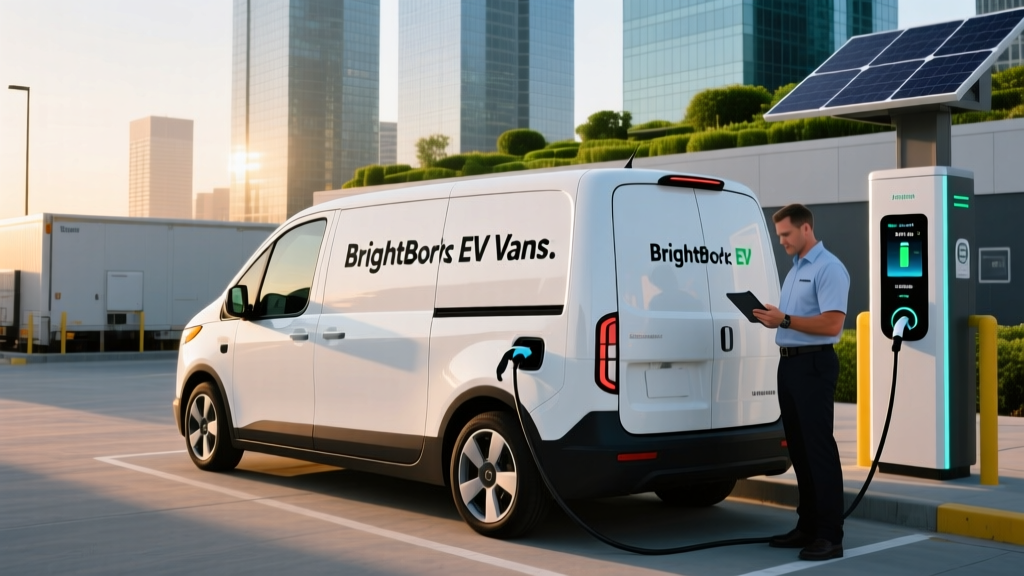
BrightDrop (a GM-backed commercial EV brand) offers two electric delivery vans for fleet operators: the Zevo 400 (compact, ~250 miles EPA-est. range, 410 cu ft cargo) and the Zevo 600 (full-size, ~250 miles EPA-est. range, 615 cu ft cargo). Both use GM's Ultium battery platform with ~165 kWh usable capacity and support DC fast charging up to 120 kW. Pricing is fleet-negotiated rather than MSRP-listed, but total cost of ownership undercuts comparable gas vans (Ford E-Transit, Ram ProMaster EV) on fuel and maintenance over a 5-year/150,000-mile duty cycle. BrightDrop EVs are sold B2B only — consumers cannot purchase them for personal use.
What Is BrightDrop and Who Can Buy One?
BrightDrop launched as a GM subsidiary focused on last-mile delivery electrification. The brand produces purpose-built electric cargo vans and a software fleet-management ecosystem. Unlike consumer EVs you can walk into a dealership and buy, BrightDrop Zevo vans are sold exclusively through fleet sales channels to commercial operators — think FedEx, Walmart, and mid-size logistics companies.
As of the 2026 model year, BrightDrop offers two Zevo variants built on a shared Ultium skateboard chassis:
- Zevo 400: Compact step-van, ~250 miles of range, 410 cubic feet of cargo volume, ~2,200 lbs payload capacity
- Zevo 600: Full-size step-van, ~250 miles of range, 615 cubic feet of cargo volume, ~2,500 lbs payload capacity
Both models share the same powertrain architecture: dual-motor AWD, approximately 165 kWh of usable battery capacity (NMC chemistry via Ultium), and a peak DC fast-charge rate of 120 kW. The Zevo 600 achieves its identical range rating despite greater cargo volume because its aerodynamic profile and weight distribution are optimized for the larger body.
Range, Battery, and Charging Specs
For fleet route planning, the numbers that matter go beyond the EPA sticker. Here's what the Zevo platform delivers in practice:
| Spec | Zevo 400 | Zevo 600 |
|---|---|---|
| EPA-Est. Range | ~250 mi | ~250 mi |
| Real-World Range (loaded, mixed route) | ~190–220 mi | ~185–215 mi |
| Battery (Usable) | ~165 kWh (NMC, Ultium) | ~165 kWh (NMC, Ultium) |
| Peak DC Fast Charge | 120 kW | 120 kW |
| 10–80% DC Charge Time | ~75 min | ~75 min |
| Level 2 AC Charge Rate | 11.5 kW | 11.5 kW |
| Level 2 Full Charge Time | ~15 hours | ~15 hours |
| Drivetrain | Dual-motor AWD | Dual-motor AWD |
| Cargo Volume | 410 cu ft | 615 cu ft |
| Payload Capacity | ~2,200 lbs | ~2,500 lbs |
Real-World Range Reality
The ~250-mile EPA estimate assumes moderate payload and temperate conditions. Fleet operators running fully loaded vans on stop-and-go urban routes in summer heat can expect 200–220 miles. In winter (below 30°F), range drops to approximately 160–190 miles due to battery chemistry limitations and cabin/cargo heating demands. Routes exceeding 180 miles should include mid-day charging contingencies or depot opportunity-charging plans.
The 120 kW peak DC charge rate is conservative compared to passenger EVs like the Hyundai Ioniq 5 (240 kW) or Tesla Cybertruck (350 kW). For a 165 kWh battery, 120 kW means a 10–80% session takes roughly 75 minutes — acceptable for depot-based overnight charging but a constraint if mid-day top-ups are needed. The charge curve tapers significantly above 80% SoC, so fleet managers should program chargers to target 80–85% for daily cycles to preserve battery longevity and avoid diminishing returns on charge time.
Total Cost of Ownership: BrightDrop EV vs. Gas Fleet Van
The purchase price of a BrightDrop Zevo van is negotiated through fleet channels and is not publicly listed like a consumer MSRP. Industry estimates place the Zevo 600 in the $90,000–$110,000 range before incentives, compared to approximately $45,000–$55,000 for a comparable gas-powered Ford Transit or Ram ProMaster cargo van. That upfront premium is significant, but the operational math shifts over a typical fleet lifecycle.
| Cost Factor (5-Year / 150K Miles) | BrightDrop Zevo 600 (EV) | Ford Transit 350 (Gas) |
|---|---|---|
| Estimated Purchase Price | ~$100,000 | ~$50,000 |
| Federal Commercial Clean Vehicle Credit (§45W) | Up to $40,000 | $0 |
| Net Effective Purchase | ~$60,000 | ~$50,000 |
| Fuel/Energy Cost (150K mi) | ~$9,000 (at $0.13/kWh avg) | ~$30,000 (at $3.50/gal, 14 MPG) |
| Maintenance (5 Years) | ~$3,500 | ~$11,000 |
| Estimated Insurance (5 Years) | ~$18,000 | ~$15,000 |
| Depot Charger Install (per vehicle) | ~$4,000–$8,000 | $0 |
| Total 5-Year Cost | ~$94,500–$98,500 | ~$106,000 |
The numbers show EV parity or advantage over a 5-year cycle, driven primarily by fuel savings (~$21,000) and reduced maintenance (~$7,500). The IRS §45W Commercial Clean Vehicle Credit provides up to $40,000 for qualified commercial EVs (vehicles over 14,000 lbs GVWR), which is the key incentive making BrightDrop economics work. Note: §45W is a business credit with different rules than the consumer §30D credit — consult a tax professional for eligibility specifics.
Home Depot Charging vs. Public Infrastructure
BrightDrop vans are depot-charged vehicles. They do not rely on public charging networks the way a consumer EV on a road trip would. Fleet operators install Level 2 (240V) AC chargers at their facilities, and vans charge overnight between shifts.
At 11.5 kW (Level 2), a full charge from empty takes approximately 15 hours. For most delivery routes consuming 60–75% of the battery daily, an overnight session of 8–10 hours restores sufficient range. Fleet operators with 24-hour operations may need to install DC fast chargers (50–120 kW) at depots for opportunity charging between shifts.
| Depot Charging Component | Level 2 (per stall) | DC Fast 60 kW (per stall) |
|---|---|---|
| Equipment | $2,000–$5,000 | $25,000–$50,000 |
| Electrical Work & Panel | $2,000–$6,000 | $15,000–$40,000 |
| Permitting & Utility Upgrade | $500–$2,000 | $10,000–$30,000 |
| Total per Stall | $4,500–$13,000 | $50,000–$120,000 |
Utility demand charges are a real consideration for depot charging. Facilities adding 10+ Level 2 chargers or any DC fast chargers should engage their utility early — demand charges can add $0.05–$0.15/kWh on top of base electricity rates, significantly affecting operating costs. Managed charging software (BrightDrop includes this in its ecosystem) mitigates demand spikes by staggering charge sessions.
How Does BrightDrop Compare to Ford E-Transit and Ram ProMaster EV?
The commercial EV van market has three main players as of 2026. Here's how they stack up:
| Spec | BrightDrop Zevo 600 | Ford E-Transit (High Roof) | Ram ProMaster EV |
|---|---|---|---|
| EPA Range | ~250 mi | ~126 mi | ~162 mi |
| Battery (Usable) | ~165 kWh | ~68 kWh | ~110 kWh |
| Peak DC Charge | 120 kW | 115 kW | 150 kW |
| Cargo Volume (Max) | 615 cu ft | 487 cu ft | 463 cu ft |
| Drivetrain | AWD (dual motor) | RWD (single motor) | FWD (single motor) |
| Availability | Fleet-direct | Fleet-direct + dealers | Fleet-direct + dealers |
BrightDrop's range advantage is substantial — nearly double the E-Transit and roughly 50% more than the ProMaster EV. That translates directly to route flexibility: a Zevo 600 can handle a 200-mile loaded route without mid-day charging, while an E-Transit on the same route would require a depot return or DC fast-charge stop. The trade-off is a higher purchase price and longer delivery lead times, as BrightDrop production capacity remains constrained relative to Ford's established commercial-vehicle pipeline.
BrightDrop EV Decision Framework
Choose BrightDrop Zevo if:
- Your daily routes exceed 150 miles loaded and you cannot accommodate mid-day charging
- You operate in regions with harsh winters where AWD and larger battery buffers matter
- Your fleet qualifies for the full §45W credit ($40,000), closing the upfront price gap
- You need 600+ cubic feet of cargo volume in an electric platform
Choose Ford E-Transit or Ram ProMaster EV if:
- Your daily routes are under 100 miles with predictable depot returns
- You need immediate vehicle availability and established dealer service networks
- Lower upfront capital cost is the primary constraint (even after credits)
- Your cargo needs fit within 450–490 cubic feet
Common Misconceptions About Commercial EV Vans
| Myth | Fact |
|---|---|
| "EV vans can't handle real delivery routes." | 250 miles of range covers the vast majority of last-mile routes (~80–120 miles/day average for urban delivery). The constraint is routes exceeding 200 miles without charging access. |
| "Charging takes too long for fleet operations." | Overnight depot charging at Level 2 fully restores the battery in ~15 hours. Most fleets charge 8–12 hours and only need 60–80% restored for the next shift. |
| "Battery replacement will cost more than the van." | GM's Ultium batteries carry an 8-year/100,000-mile warranty (whichever comes first) with a capacity-retention threshold. Replacement costs are estimated at $20,000–$30,000 out of warranty — significant but manageable over a 10-year fleet lifecycle. |
| "You need the consumer $7,500 tax credit." | Commercial fleets use the §45W Commercial Clean Vehicle Credit (up to $40,000 for heavy vehicles), which is a separate, more valuable incentive. Consumer §30D rules do not apply. |
| "Cold weather makes EV vans unusable." | Range drops 20–30% in sub-freezing temperatures, bringing a Zevo 600 to ~175–200 real-world miles. This still covers most urban routes, but operators in extreme cold climates should plan for 30% more charging time and reduced route length. |
What First-Time Fleet EV Buyers Should Know
If your organization is transitioning from gas vans to electric for the first time, the vehicle is only half the equation. The infrastructure and operational adjustments require planning:
- Engage your utility 6–12 months before deployment. Depot charging for 10+ vans may require a transformer upgrade or new service line. Lead times for utility work can exceed 6 months.
- Right-size your chargers. Level 2 is sufficient for overnight-only operations. DC fast chargers are only necessary if you run multi-shift operations or need mid-day top-ups.
- Train drivers on regen braking and efficiency. One-pedal driving and regenerative braking recover significant energy in stop-and-go urban routes — but drivers accustomed to gas vans need onboarding.
- Monitor battery State of Health (SoH). BrightDrop's fleet software tracks battery degradation. Expect ~2–3% capacity loss per year under normal use; heavy DC fast-charging cycles accelerate this slightly.
- Factor in insurance premiums. Commercial EV insurance runs 15–25% higher than equivalent gas vans due to repair cost structures and battery replacement exposure. Get quotes before finalizing your TCO model.
BrightDrop EV FAQ
Can I buy a BrightDrop van for personal use?
No. BrightDrop sells exclusively to commercial fleet operators through B2B channels. There is no consumer retail path. If you need a personal electric cargo van, the Ford E-Transit is available through retail dealerships.
What is the BrightDrop Zevo 600's real-world range with a full load?
Expect approximately 185–215 miles with a full payload on mixed urban/suburban routes in moderate temperatures. In winter conditions (below 30°F), plan for 160–190 miles. The EPA's ~250-mile estimate reflects lighter-load, temperate-condition testing.
How long does it take to charge a BrightDrop van?
On a Level 2 (11.5 kW) depot charger: approximately 15 hours from empty to full. On a 120 kW DC fast charger: roughly 75 minutes from 10–80% State of Charge. Most fleet operators charge overnight at Level 2 and rarely use DC fast charging.
What tax credits apply to BrightDrop EVs?
Commercial fleets may qualify for the IRS §45W Commercial Clean Vehicle Credit, which provides up to $40,000 for vehicles over 14,000 lbs GVWR. This is separate from the consumer §30D credit. Eligibility depends on vehicle sourcing requirements and your business tax situation — consult a tax professional.
What is the battery warranty on BrightDrop Zevo vans?
GM's Ultium battery platform carries an 8-year/100,000-mile warranty with a minimum capacity-retention threshold (typically 70% of original capacity). Fleet operators running high-mileage routes should plan for potential battery service in years 8–12 of ownership.
How does BrightDrop compare to the Ford E-Transit on range?
The BrightDrop Zevo 600 offers approximately 250 miles of EPA-estimated range versus the Ford E-Transit's ~126 miles. That's nearly double — a decisive advantage for routes exceeding 100 miles daily. The trade-off is higher purchase price and longer lead times for BrightDrop.