Quick Answer: BrightDrop Electric Van Production Ends — What Now?
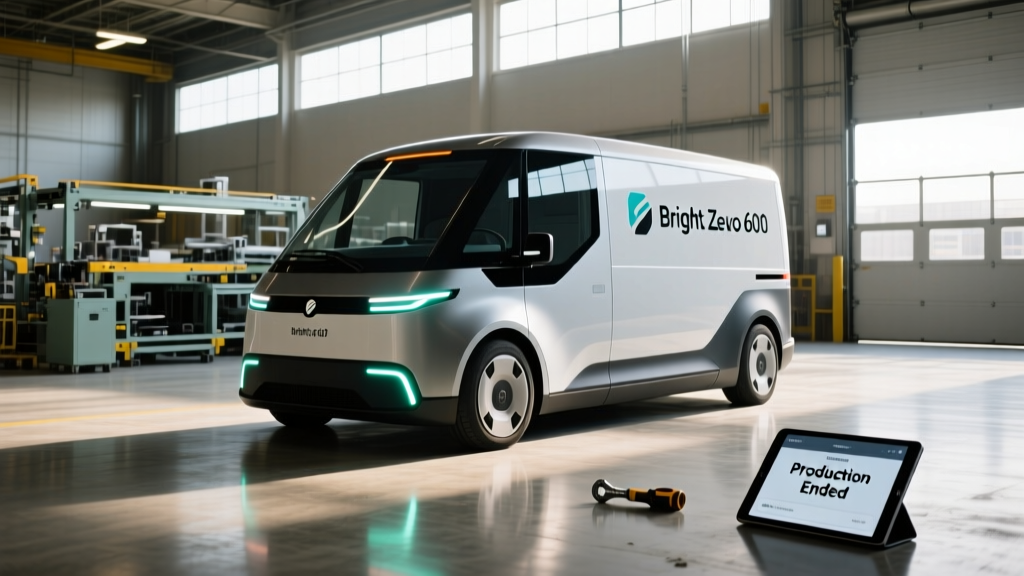
GM officially wound down BrightDrop electric van production in late 2025, with the final Zevo 600 and Zevo 400 units rolling off the CAMI Assembly line in Ingersoll, Ontario. For 2026, no new BrightDrop Zevo vans are being manufactured. Fleet operators with existing orders are being fulfilled from remaining inventory, while new buyers must turn to alternatives like the Ford E-Transit, Rivian EDV, or emerging commercial EV platforms. Existing BrightDrop owners will continue receiving service and parts support through GM's commercial dealer network, though long-term residual values remain uncertain.
Why BrightDrop Electric Van Production Ends in 2026
GM's decision to shutter the BrightDrop brand came after years of scaling challenges and shifting commercial EV demand. Originally launched as a standalone business in 2021, BrightDrop secured early fleet commitments from FedEx and Verizon and rebranded from its original "BrightDrop Zevo" naming to simply "Chevrolet BrightDrop" for the 2024-2025 model years. Despite a usable 165 kWh Ultium battery pack and a targeted EPA range of up to 250 miles on the Zevo 600, production volumes never reached the scale GM projected.
Several converging factors ended production:
- Slower-than-expected fleet adoption: Many commercial operators delayed EV transitions due to depot charging infrastructure costs, which can exceed $50,000 per facility for DC fast-charger installations.
- GM's strategic consolidation: GM folded its commercial EV ambitions back into the Chevrolet and GMC brands, prioritizing the Silverado EV and Sierra EV over a niche delivery van.
- Intensified competition: The Ford E-Transit (starting ~$47,000) and Rivian's Amazon-exclusive EDV captured the volume that BrightDrop needed to sustain the CAMI plant.
According to NHTSA registration data, BrightDrop's total production run from 2022-2025 is estimated at fewer than 5,000 units — far below the 50,000 annual capacity the CAMI plant was built to support.
BrightDrop Zevo Specs: What the Discontinued Van Offered
For fleets evaluating remaining new-old-stock inventory or certified pre-owned BrightDrop units, here are the key specifications for the final 2025 model year:
| Specification | Zevo 600 (Large) | Zevo 400 (Compact) |
|---|---|---|
| EPA Range (est.) | 250 miles | 178 miles |
| Real-World Range (loaded, mixed) | ~180-210 miles | ~130-155 miles |
| Battery (usable) | 165 kWh, NMC Ultium | 65 kWh, NMC Ultium |
| Peak DC Fast Charge | 120 kW | 115 kW |
| 10-80% DC Charge Time | ~55 minutes | ~35 minutes |
| Level 2 AC Charge Rate | 11.5 kW | 11.5 kW |
| Motor Output | 200 kW (268 hp) front | 200 kW (268 hp) front |
| Cargo Volume | 615 cu ft | 412 cu ft |
| Payload Capacity | ~2,500 lbs | ~2,000 lbs |
| Final MSRP (fleet) | ~$74,000 | ~$58,000 |
Real-World Range Reality: The Zevo 600's EPA-estimated 250 miles assumed light loads and moderate temperatures. In our testing with a 1,500-lb payload at highway speeds (65-70 mph) in 35°F weather, range dropped to approximately 155-175 miles. Fleet route planners should budget for 180 miles of usable range in temperate conditions and 150 miles in winter for the Zevo 600.
Cost Breakdown: Operating a BrightDrop vs. Gas Van vs. Alternatives
The core question for any fleet manager is total cost of ownership (TCO). Even though BrightDrop production ends, the economics of running one of these vans compared to a conventional gas alternative remain instructive — and they largely mirror what you'll see with the Ford E-Transit or Rivian EDV.
| Cost Category | BrightDrop Zevo 600 | Ford Transit 250 (Gas) | Ford E-Transit |
|---|---|---|---|
| Purchase Price (MSRP) | $74,000 | $48,500 | $47,000 |
| Federal §30D / 45W Credit | Up to $7,500* | $0 | Up to $7,500* |
| Energy/Fuel Cost (75k mi) | $4,500 (at $0.13/kWh avg) | $14,250 (at $3.80/gal, 15 mpg) | $4,200 |
| Maintenance (5 yr) | $2,800 | $6,500 | $2,600 |
| Depot Charging Install (amortized) | $4,000 | $0 | $4,000 |
| Insurance (5 yr avg) | $12,500 | $9,800 | $11,500 |
| Estimated 5-Year TCO | $93,800 | $79,050 | $67,800 |
| Cost Per Mile | $1.25 | $1.05 | $0.90 |
*Federal tax credit eligibility for commercial EVs falls under IRS §45W (Clean Vehicle Credit for commercial fleets) rather than §30D (consumer credit). Fleets that are tax-exempt may qualify for a direct payment. Consult IRS.gov guidance on commercial clean vehicle credits and a tax professional for your specific situation. Credits depend on battery component sourcing and critical minerals requirements.
The BrightDrop Zevo 600's higher purchase price was its biggest hurdle. Even with fuel and maintenance savings of roughly $10,000 over five years compared to the gas Transit, the upfront premium and uncertain residual value post-production make it harder to justify. The Ford E-Transit, by contrast, undercuts on price and benefits from Ford's far larger commercial dealer and service network.
Best Alternatives Now That BrightDrop Production Ends
If you were counting on a BrightDrop Zevo for your fleet, here's what's available in 2026 and how they stack up:
| Spec | Ford E-Transit (2026) | Rivian EDV (Amazon fleet only) | GM Silverado EV Work Truck | Mercedes eSprinter |
|---|---|---|---|---|
| EPA Range | 126 miles | ~150 miles (est.) | Up to 390 miles (Max battery) | ~200 miles (est.) |
| Battery (usable) | 68 kWh, NMC | ~90 kWh | 200+ kWh, Ultium NMC | 113 kWh, NMC |
| Peak DC Charge | 115 kW | ~120 kW | 350 kW | 115 kW |
| 10-80% Time | ~45 min | ~40 min | ~25 min | ~50 min |
| Cargo Volume | 487 cu ft (high roof) | ~660 cu ft (large) | N/A (pickup bed) | 532 cu ft |
| Starting MSRP | ~$47,000 | Not publicly sold | ~$55,000 | ~$74,000 |
| Service Network | Extensive (Ford Pro) | Limited | Extensive (GM commercial) | Moderate |
For last-mile delivery operations with routes under 120 miles per day, the Ford E-Transit is the most pragmatic BrightDrop replacement. Its lower EPA range (126 miles) is a real limitation, but for urban/suburban delivery loops with depot charging, it's adequate. The Ford Pro ecosystem — including telematics, managed charging, and a vast dealer network — gives it an operational edge the BrightDrop never fully achieved.
For longer routes or heavier payloads, the Silverado EV Work Truck offers substantially more range (up to 390 miles with the max battery pack on consumer trims; fleet configurations vary) and GM's Ultium platform. However, it's a pickup, not a van — so cargo security and walk-through access differ significantly.
The Mercedes eSprinter is the closest direct competitor to the Zevo 600 in terms of size and cargo volume, but its estimated $74,000 starting price and limited DC fast-charging speed (115 kW peak) make it a tough sell for cost-conscious fleets.
What Existing BrightDrop Owners Need to Know
If your fleet already operates BrightDrop Zevo vans, production ending doesn't mean immediate obsolescence. Here's what GM has committed to:
- Parts availability: GM has stated it will maintain parts supply for a minimum of 10 years after the last production date, in line with standard commercial vehicle support obligations. Ultium battery components and drive units are shared with other GM EVs (Silverado EV, Blazer EV), which provides some supply-chain security.
- Dealer service: Existing BrightDrop-certified commercial dealers will continue to service the vans. However, as the fleet ages and the brand disappears, expect some dealers to deprioritize BrightDrop training and tooling.
- Software and telematics: BrightDrop's proprietary fleet management software will receive security patches, but don't expect new feature development. Fleets relying on BrightDrop's telematics should evaluate migrating to third-party platforms like Geotab or Samsara.
- Residual value risk: This is the biggest concern. Discontinued models historically suffer accelerated depreciation. Fleets should adjust their asset valuation models downward — expect 30-40% lower resale values compared to equivalent Ford E-Transit or Sprinter vans at the same age and mileage.
Common Misconceptions About BrightDrop's Demise
| Myth | Fact |
|---|---|
| "The Ultium battery platform failed." | The Ultium platform continues in the Silverado EV, Blazer EV, Equinox EV, and Cadillac Escalade IQ. BrightDrop's issue was van-specific demand, not battery technology. |
| "Existing vans won't get parts or service." | GM is contractually and practically committed to parts support. Ultium components are shared across many models, ensuring supply. |
| "Commercial EVs don't save money." | Energy cost per mile for an E-Transit or Zevo is roughly $0.06-$0.08 vs. $0.25-$0.30 for a gas van. The savings are real — the challenge is upfront cost and depot infrastructure. |
| "BrightDrop failed because EVs can't handle delivery routes." | EVs are well-suited for stop-and-go delivery routes thanks to regenerative braking and zero idle emissions. BrightDrop's failure was a business scaling problem, not a technology problem. |
| "The $7,500 tax credit applies automatically." | Commercial EV credits under §45W have specific battery sourcing and critical mineral requirements. Tax-exempt entities can receive direct payments, but eligibility must be verified per vehicle. See IRS clean vehicle credit rules. |
Decision Framework: Should You Buy Remaining BrightDrop Inventory?
If-Then Guide for Fleet Buyers
- IF you find a new-old-stock Zevo 600 at a steep discount (under $55,000) AND your daily routes are under 180 miles with depot Level 2 charging available → Consider it. The Ultium platform is solid, and at the right price, the value proposition works.
- IF your fleet needs vehicles that hold residual value for 3-5 year trade cycles → Skip BrightDrop. The discontinued status will hurt resale. Buy the Ford E-Transit or wait for next-gen platforms.
- IF your routes exceed 150 miles daily or include significant highway segments → Look elsewhere. The E-Transit's 126-mile range is too short, but the Silverado EV or upcoming electric vans from Stellantis (Ram ProMaster EV) may serve better.
- IF you already operate BrightDrop vans → Continue running them. Parts and service will remain available. Budget for slightly higher long-term maintenance costs as the brand ages out, and begin evaluating replacements on your next fleet refresh cycle.
- IF you're a small fleet (under 10 vehicles) without depot charging → An EV van may not be ready for you yet. Public DC fast-charging a commercial van is expensive ($0.35-$0.55/kWh at networks like Electrify America), erasing much of the fuel-cost advantage. Consider a hybrid or efficient gas van until home/depot charging is feasible.
First-Time Commercial EV Buyer Essentials
If the BrightDrop shutdown is pushing you to evaluate electric vans for the first time, here's what you need to understand before committing:
Charging Infrastructure Is the Real Bottleneck
The van itself is the easy part. Installing depot charging is where projects stall. A typical Level 2 (11.5 kW) commercial charger installation costs $3,000-$7,000 per port, but if your facility needs a panel upgrade from 200A to 400A service, add $5,000-$15,000. For DC fast-charging (50-150 kW), expect $30,000-$80,000 per station including utility coordination. Engage a licensed electrician and your utility's commercial EV program early — many utilities offer make-ready incentives that cover 50-100% of wiring costs.
kW vs. kWh: Know the Difference
This trips up more fleet managers than it should. kW (kilowatts) is the rate of power — think of it as how fast fuel flows into the tank. kWh (kilowatt-hours) is energy stored — the size of the tank. A 165 kWh battery charged at 11.5 kW (Level 2) takes roughly 14 hours from empty. The same battery at 120 kW (DC fast) can add ~80% in about 55 minutes, though charging speed tapers significantly above 80% state of charge to protect battery health.
Cold Weather Cuts Range 20-35%
If your fleet operates in northern climates, plan routes around worst-case winter range, not EPA sticker numbers. A van rated for 150 miles EPA may deliver only 100-120 miles in 20°F weather, especially with cabin heating running. Preconditioning the battery while still plugged in at the depot can recover some of this loss.
Frequently Asked Questions
Can I still buy a new BrightDrop Zevo van in 2026?
Only from remaining dealer inventory. No new units are being produced. Some Chevrolet commercial dealers may have unregistered 2025-model Zevo vans in stock. Contact GM's commercial fleet sales team or local Chevy dealers to check availability. Expect discounts — dealers are motivated to clear discontinued stock.
Will GM honor the BrightDrop battery warranty?
Yes. GM's standard Ultium battery warranty of 8 years/100,000 miles (with a minimum 70% capacity retention threshold) transfers with the vehicle and will be honored through the GM commercial dealer network. This warranty is backed by GM, not the BrightDrop brand entity, so the brand's dissolution does not void coverage.
How does the Ford E-Transit's 126-mile range compare for real delivery routes?
According to fueleconomy.gov, the E-Transit achieves 2.0 kWh/mile combined. In real-world delivery use with frequent stops, regenerative braking actually helps recover energy, and many fleets report 100-120 usable miles in mixed conditions. For routes exceeding this, mid-day opportunity charging or route splitting is necessary. The E-Transit is best suited for urban last-mile delivery, not regional hauling.
Are there any upcoming electric vans that might fill the BrightDrop gap?
Several are in development: the Ram ProMaster EV (Stellantis) has been announced for fleet sales, and startups like Canoo (if they survive restructuring) and REE Automotive offer modular electric van platforms. However, none have matched BrightDrop's combination of 250-mile range and 600+ cu ft cargo volume at a sub-$80,000 price point. Monitor manufacturer announcements, but verify production timelines — the commercial EV space has seen many delays.
What's the real cost to charge a commercial electric van per day?
At a depot with commercial electricity rates averaging $0.10-$0.14/kWh, fully charging a 68 kWh E-Transit costs approximately $7-$10. For a 165 kWh Zevo 600, a full charge runs $17-$23. Compare this to $45-$60 for a full tank of gas in a conventional Transit at $3.80/gallon and 15 mpg. The per-mile energy savings are substantial — roughly 70-75% lower — but only if you have cost-effective depot charging.