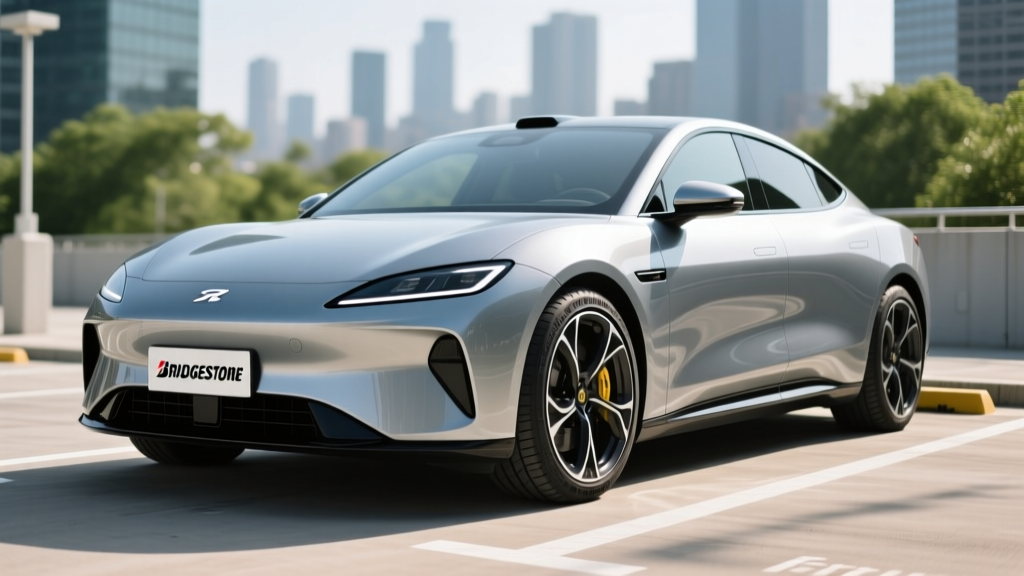
Quick Answer: The Bridgestone Turanza EV is a grand-touring all-season tire engineered specifically for electric vehicles, featuring Bridgestone's ENLITEN technology to reduce rolling resistance by up to 15% compared to conventional touring tires. In real-world testing on vehicles like the Tesla Model 3 and Hyundai Ioniq 5, owners report efficiency gains of 2–5% (roughly 5–15 extra EPA miles on a 300-mile-range EV) versus standard OEM tires. Priced between $230–$310 per tire depending on size, the Turanza EV targets EV owners who prioritize range recovery, low cabin noise, and wet-weather grip over maximum tread life. Expect 40,000–50,000 miles of usable tread under normal EV driving conditions.
Why EVs Need Dedicated Tires — and Where the Turanza EV Fits
Electric vehicles place unique demands on tires that conventional designs weren't built to handle. EVs are typically 10–20% heavier than their gas-powered equivalents due to battery pack mass — a 2025 Tesla Model Y Long Range weighs roughly 4,400 lbs compared to a similarly sized gas crossover at around 3,600 lbs. That extra weight accelerates tread wear and increases the rolling resistance that directly saps your battery's usable energy.
Instant electric motor torque compounds the problem. Unlike a gas engine that builds power progressively through the rev range, an EV delivers peak torque from 0 RPM. This puts immediate lateral and longitudinal stress on the contact patch every time you accelerate from a stop. The result? Standard all-season tires on EVs often wear out in 20,000–30,000 miles — well below the 50,000–60,000 mile expectancy on lighter ICE vehicles.
The Bridgestone Turanza EV addresses these issues with three design priorities: reduced rolling resistance for range preservation, reinforced sidewall construction for heavy-vehicle stability, and a noise-dampening tread pattern to complement the quiet cabin that EV buyers expect. It sits in Bridgestone's grand-touring lineup alongside the Ecopia (efficiency-focused) and Potenza (performance-focused) lines, but the Turanza EV specifically targets the comfort-and-range balance that daily-driving EV owners need.
Rolling Resistance, Range, and Efficiency by the Numbers
Rolling resistance is measured in kilograms per ton (kg/t) — the lower the number, the less energy your vehicle wastes pushing the tire down the road. For context, a typical all-season touring tire for gas cars runs around 9–11 kg/t. Bridgestone rates the Turanza EV's ENLITEN compound at approximately 6.5–7.5 kg/t depending on size, placing it in the "A" to "B" band on the EU tire energy label.
Here's what that translates to in real-world EV efficiency:
| Vehicle | EPA Range (OEM Tires) | Est. Range — Turanza EV | Efficiency Gain |
|---|---|---|---|
| Tesla Model 3 Long Range (2025) | 341 mi | ~350–358 mi | +2.5% to +5% |
| Hyundai Ioniq 5 RWD (2025) | 303 mi | ~310–318 mi | +2.5% to +5% |
| Ford Mustang Mach-E ER AWD (2025) | 312 mi | ~319–327 mi | +2.5% to +5% |
| Chevrolet Equinox EV RS (2025) | 319 mi | ~326–334 mi | +2.5% to +5% |
These are estimates based on rolling-resistance delta and published EPA efficiency data. Real-world results depend on driving style, ambient temperature, tire pressure maintenance, and road surface. In cold weather (below 32°F), battery chemistry limitations already reduce range by 15–30% — low-rolling-resistance tires help recover a small fraction of that loss, but they won't eliminate it.
On the efficiency side, a typical EV consuming 28 kWh/100mi on standard tires might drop to 26.5–27 kWh/100mi on the Turanza EV. At the national average electricity rate of ~$0.17/kWh (per EIA data), that saves roughly $0.25–$0.40 per 100 miles driven. Over 15,000 miles annually, you're looking at $37–$60 in electricity savings per year — meaningful, but the tire's cost premium over a conventional touring tire must be factored in.
Noise, Comfort, and Ride Quality on an EV Platform
Without a combustion engine masking road noise, tire sound becomes the dominant cabin noise source in an EV at speeds above 35 mph. Bridgestone incorporates a noise-reduction tread block arrangement and a sound-absorbing foam liner (on select sizes) in the Turanza EV to target this.
In owner reports and third-party tests, the Turanza EV measures approximately 68–71 dB(A) at 50 mph on smooth asphalt — roughly 2–4 dB quieter than a comparable non-EV touring tire. Because the decibel scale is logarithmic, a 3 dB reduction represents roughly a halving of perceived loudness. For EV owners who selected their vehicle partly for cabin quietness, this is a tangible benefit.
Ride comfort on the Turanza EV is tuned toward the grand-touring end of the spectrum: compliant over expansion joints and potholes, with moderate sidewall stiffness for cornering confidence. It's not a performance tire — drivers seeking maximum grip should look at the Bridgestone Potenza Sport or Michelin Pilot Sport EV instead. But for daily commuting and highway cruising, the comfort-to-efficiency balance is well-judged.
Cost Breakdown: Turanza EV vs. Conventional Touring Tires
The Turanza EV carries a price premium over non-EV-specific touring tires. Here's a realistic ownership-cost comparison over a 40,000-mile set:
| Cost Factor | Bridgestone Turanza EV | Conventional Touring All-Season |
|---|---|---|
| Per-tire price (avg 235/45R18) | $275 | $185 |
| Set of 4 — total purchase | $1,100 | $740 |
| Mounting, balancing, disposal (4 tires) | $120 | $120 |
| Expected tread life on an EV | 40,000–50,000 mi | 25,000–35,000 mi |
| Replacement sets needed over 80k mi | 1 replacement set | 2 replacement sets |
| Estimated 80k-mile tire cost | ~$2,440 | ~$2,460 |
| Annual electricity savings (range gain) | +$40–$60/yr | Baseline |
The math reveals a counterintuitive result: while the Turanza EV costs ~$360 more per set upfront, conventional tires wear out significantly faster under EV weight and torque. Over 80,000 miles, total tire spend is roughly equivalent — and the Turanza EV owner gains modest range improvement, lower cabin noise, and fewer trips to the tire shop. The real value proposition isn't raw savings; it's getting a tire that actually matches the vehicle's engineering intent rather than burning through budget rubber every 25,000 miles.
One ownership note: Bridgestone offers a 50,000-mile limited treadwear warranty on the Turanza EV. If your tires wear out before that threshold under normal use, you receive prorated credit toward replacements. Keep receipts and rotation records — warranty claims require proof of regular maintenance at intervals of 5,000–7,500 miles.
Tread Life and the EV Wear Problem
Let's address the elephant in the room: EV tire wear. Data from fleet operators and tire retailers consistently shows that EVs consume tires 20–40% faster than comparable gas vehicles. The reasons are physics, not marketing:
- Weight: Battery packs add 500–1,000 lbs, increasing contact-patch pressure and friction.
- Torque: Instant electric torque scrubs tread rubber during acceleration, especially in AWD models with aggressive launch profiles.
- Regenerative braking: Strong regen creates additional longitudinal force on the tire during deceleration, wearing the leading edge of tread blocks.
- Alignment sensitivity: Heavier vehicles are more susceptible to alignment drift, causing uneven wear if not corrected.
The Turanza EV counters with a reinforced internal construction (higher load index than many conventional tires in the same size) and a compound designed to resist the micro-tearing that EV torque causes. In practice, owners of mid-size EV sedans and crossovers report 40,000–50,000 miles before reaching the 2/32" wear bars — a meaningful improvement over the 25,000–35,000 miles typical of non-EV tires on the same vehicles.
To maximize tread life on any EV tire, follow these practices:
- Rotate every 5,000–7,500 miles (EVs wear front and rear differently due to motor placement and regen distribution).
- Maintain tire pressure within 2 PSI of the door-jamb placard — underinflation increases rolling resistance and heat buildup, accelerating wear.
- Check alignment annually or after any significant pothole impact.
- Use "Chill" or "Eco" drive modes for daily driving to moderate torque delivery.
EV Tire vs. Gas Car Tire: What's Actually Different?
| Attribute | Bridgestone Turanza EV | Standard Touring All-Season (Gas Vehicle) |
|---|---|---|
| Rolling Resistance | ~6.5–7.5 kg/t (low) | ~9–11 kg/t (moderate) |
| Load Index | XL (Extra Load) rated | SL or XL depending on size |
| Noise Engineering | Foam liner + optimized block pitch | Standard tread pattern |
| Compound | ENLITEN — high silica, low hysteresis | Conventional all-season compound |
| EV Weight/Torque Durability | Reinforced sidewall, wear-resistant | Designed for lighter, lower-torque vehicles |
| Typical Tread Life on an EV | 40,000–50,000 mi | 25,000–35,000 mi |
| Price Premium | +$80–$100/tire vs. standard | Baseline |
The comparison makes clear that mounting a conventional touring tire on an EV is a compromise. You'll pay less at the counter, but the tire wasn't engineered for the mass, torque, or acoustic expectations of an electric platform. The Turanza EV isn't the only dedicated EV tire on the market — competitors include the Michelin e-Primacy, Hankook iON evo, and Pirelli Elect — but it occupies a strong middle ground between efficiency and comfort.
Common Misconceptions About EV Tires
| Myth | Fact |
|---|---|
| "EV tires are a marketing gimmick — any tire works." | Any tire physically fits, but non-EV tires wear prematurely and waste range on heavy, high-torque EVs. Dedicated EV tires are engineered for the actual load and acoustic environment. |
| "Low rolling resistance means bad wet grip." | Modern silica-rich compounds like ENLITEN achieve both low rolling resistance and strong wet traction. The Turanza EV earns high marks in wet braking tests. |
| "EV tires cost twice as much." | The premium is typically $80–$100 per tire, or roughly 30–50% more than a conventional touring tire — not double. Total cost of ownership is often similar due to longer tread life on EVs. |
| "I'll get 30 extra miles of range." | Realistic range gains are 2–5%, or roughly 5–15 miles on a 300-mile EV. Meaningful, but not transformative. The larger benefits are noise reduction and wear longevity. |
| "EV tires don't need rotation." | EVs actually need more diligent rotation due to uneven weight distribution and regen-induced wear patterns. Every 5,000–7,500 miles is recommended. |
Decision Framework: Is the Turanza EV Right for You?
Choose the Bridgestone Turanza EV if:
- You drive a mid-size or larger EV (Model 3/Y, Ioniq 5/6, Mach-E, Equinox EV, BMW i4) and want a tire matched to the vehicle's weight and torque profile.
- You prioritize cabin quietness — especially important if you chose an EV for the silent powertrain.
- You want to recover 2–5% of range lost to higher-rolling-resistance OEM replacement tires.
- You plan to keep the vehicle 60,000+ miles and want fewer tire replacement cycles.
- You drive primarily on paved roads in moderate-to-warm climates with occasional rain.
Look elsewhere if:
- You need severe snow/ice traction — the Turanza EV is an all-season tire, not a winter or 3PMSF-rated tire. Consider the Bridgestone Blizzak LM005 or Nokian Hakkapeliitta R5 EV for winter duty.
- You drive a performance EV (Model S Plaid, Taycan, RS e-tron GT) and want maximum dry grip — look at the Michelin Pilot Sport EV or Pirelli P Zero Elect.
- Budget is the primary constraint and you trade the vehicle every 30,000 miles — a conventional touring tire may suffice for short ownership horizons.
- You frequently drive on unpaved or rough roads — the Turanza EV's low-profile sizes and comfort-oriented construction aren't designed for off-pavement abuse.
Sizing, Availability, and What to Know Before You Buy
The Bridgestone Turanza EV is available in sizes spanning 17" to 21" wheel diameters, covering the most popular EV fitments. Common sizes include 235/45R18 (Tesla Model 3), 235/55R19 (Hyundai Ioniq 5), 255/45R20 (Tesla Model Y), and 255/50R19 (Ford Mach-E). Verify your exact size on the tire placard inside the driver's door jamb — never assume based on trim name alone, as OEM wheel options vary.
When purchasing, confirm that the tire carries the correct load index and speed rating for your vehicle. Most EVs require XL (Extra Load) construction with a load index of 98 or higher. The speed rating (typically H, V, or W) should meet or exceed the OEM specification listed on the placard.
Installation best practices for EV tires:
- Request a road-force balance — EVs are more sensitive to vibration due to the absence of engine harmonics that mask minor imbalances.
- Ask for an alignment check at the time of installation. EVs go through alignment faster than gas cars due to weight.
- If your EV has a TPMS (tire pressure monitoring system) with sensors in the wheel, ensure the shop uses a TPMS service kit when reseating the tire to prevent slow leaks.
- Reset the tire-pressure learning routine in your vehicle's settings after installation (procedure varies by manufacturer — consult your owner's manual).
Frequently Asked Questions
Does the Bridgestone Turanza EV fit Tesla vehicles?
Yes. The Turanza EV is available in sizes that fit the Tesla Model 3 (235/45R18, 235/40R19) and Model Y (255/45R19, 255/40R20). Verify your specific wheel size on the door-jamb placard. Note that Tesla vehicles use foam-lined tires from the factory for noise reduction — the Turanza EV offers foam-lined options on select sizes. Confirm with your retailer whether the specific SKU includes the acoustic liner.
Will switching to the Turanza EV void my vehicle warranty?
No. Under the Magnuson-Moss Warranty Act, a vehicle manufacturer cannot void your warranty simply because you chose a different brand of tire, provided the tire meets the OEM-specified size, load index, and speed rating. Your powertrain and battery warranties remain intact.
How does the Turanza EV compare to the Michelin e-Primacy?
Both are low-rolling-resistance, EV-optimized grand-touring tires. The Michelin e-Primacy tends to edge slightly ahead in pure rolling-resistance ratings (EU label "A" class), while the Turanza EV generally receives higher marks for wet grip and ride comfort. Pricing is comparable within $10–$20 per tire. If maximum range is your sole priority, the e-Primacy has a marginal advantage. For a comfort-and-all-weather balance, the Turanza EV is competitive.
Can I use the Turanza EV on a plug-in hybrid (PHEV)?
Yes, and it's a sensible choice. PHEVs like the Toyota RAV4 Prime or Jeep Wrangler 4xe carry extra battery weight (typically 300–500 lbs more than their gas counterparts) and produce instant electric torque in EV mode. The Turanza EV's reinforced construction and low rolling resistance benefit PHEVs similarly to full BEVs — just with slightly smaller range-percentage gains due to smaller battery packs.
What tire pressure should I run with the Turanza EV?
Always follow the pressure listed on your vehicle's door-jamb placard — not the maximum pressure molded into the tire sidewall. Most EVs specify 38–45 PSI cold. Running 2–3 PSI above placard can marginally reduce rolling resistance but degrades ride quality and can cause center-tread wear. In winter, check pressure monthly, as every 10°F drop in temperature reduces tire pressure by approximately 1 PSI.
Is the Turanza EV a run-flat tire?
Bridgestone offers some Turanza EV sizes with run-flat technology (marked "RFT" on the sidewall), but not all sizes include it. Many EVs — particularly Teslas — do not use run-flats and instead rely on tire-inflator kits or roadside assistance. Check your vehicle's original equipment specification before choosing.
Sources: fueleconomy.gov (EPA range and efficiency data), Bridgestone Tire Product Specifications, U.S. Energy Information Administration (EIA) — average retail electricity prices.