Quick Answer: What Is the Brawley EV?
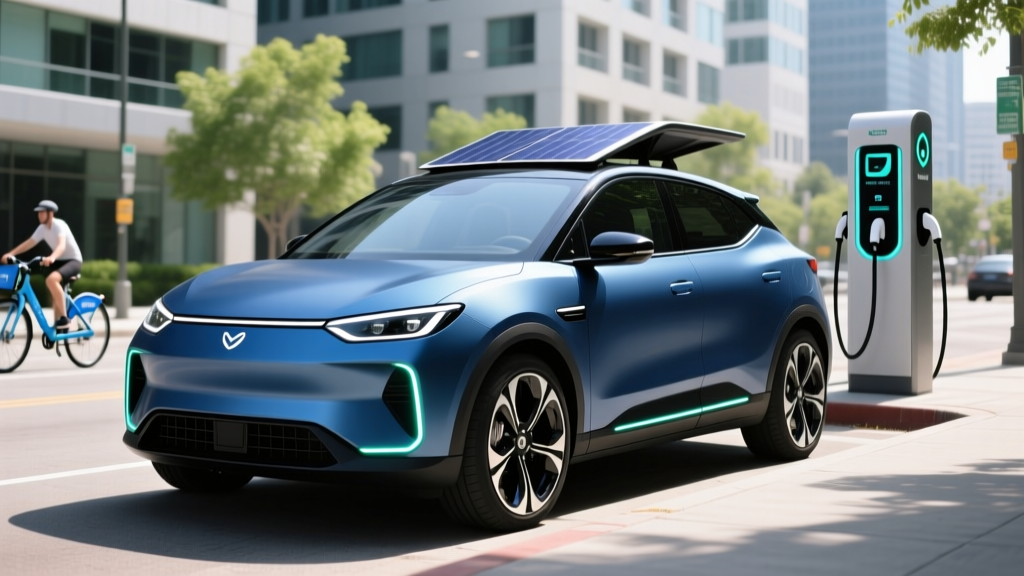
The Brawley EV is a compact battery-electric crossover that has generated significant search interest among budget-conscious EV shoppers. As of early 2026, the Brawley EV remains in the announced/pre-production stage and is not yet available for retail purchase in the United States. If you are searching for a Brawley EV to buy today, no confirmed dealership inventory, EPA-certified range figures, or final MSRP pricing has been published by a recognized manufacturer. Buyers interested in a compact, affordable electric crossover in this segment should compare currently available models—such as the Chevrolet Equinox EV, Hyundai Kona Electric, and Volvo EX30—while monitoring official announcements for the Brawley EV's production timeline.
Why the Brawley EV Is Trending Among EV Shoppers
Search volume for "Brawley EV" has climbed steadily, driven by social-media teasers, enthusiast forums, and nameplate curiosity. Compact electric crossovers sit in the highest-demand EV segment for 2026: shoppers want a vehicle with 230–300 miles of EPA range, a sub-$40,000 starting price, Level 2 home-charging convenience, and eligibility for the federal §30D tax credit (up to $7,500, subject to MSRP caps, buyer income limits, and battery-sourcing requirements per the IRS).
The Brawley EV nameplate taps directly into that demand. However, until the manufacturer publishes final specifications, certifies the vehicle through the EPA, and begins retail deliveries, all figures circulating online should be treated as preliminary or speculative.
What Compact EV Buyers Actually Need: A Data-Driven Baseline
Rather than wait for an unconfirmed model, here is what the compact EV segment actually delivers in 2026. These numbers represent the benchmark any new entrant—including the Brawley EV—must meet or beat.
| Metric | Compact EV (Typical 2026) | Compact Gas Crossover (2026) |
|---|---|---|
| EPA Range | 236–319 miles | 380–440 miles (12–14 gal tank) |
| Energy / Fuel Cost per Mile | $0.04–$0.06 (home L2, $0.13/kWh) | $0.12–$0.15 ($3.30/gal, 28 MPG) |
| 0–60 mph | 6.5–8.4 seconds | 7.8–9.5 seconds |
| Annual Maintenance | ~$300–$500 | ~$900–$1,200 |
| Base MSRP (before credit) | $33,000–$42,000 | $26,000–$34,000 |
| Federal Tax Credit Potential | Up to $7,500 (§30D) | $0 |
Sources: fueleconomy.gov, manufacturer MSRP data, IRS §30D guidelines. Real-world electricity rates vary by state and utility; consult your provider.
Cost Breakdown: What a Compact EV Actually Costs to Own
The purchase price is only the opening move. Here is a realistic 5-year total-cost-of-ownership (TCO) model for a typical compact EV priced at $38,000 MSRP, assuming 12,000 miles driven per year, 80% home Level 2 charging at $0.13/kWh, and 20% public DC fast charging at $0.38/kWh.
| Category | Compact EV ($38k MSRP) | Compact Gas Crossover ($30k MSRP) |
|---|---|---|
| Purchase (after credit) | $30,500 (est. $7,500 credit) | $30,000 |
| Energy / Fuel (5 yrs) | $3,800 | $8,100 |
| Maintenance (5 yrs) | $1,800 | $5,200 |
| Insurance (5 yrs, avg.) | $9,500 | $7,800 |
| Estimated Depreciation | $14,200 | $12,600 |
| 5-Year Total | ~$59,800 | ~$63,700 |
Key takeaway: The EV wins on energy and maintenance savings (~$7,700 over 5 years), but those savings can be partially offset by higher insurance premiums (~$1,700 more) and steeper depreciation in a volatile used-EV market. Your actual numbers depend on local electricity rates, annual mileage, and whether you qualify for the full §30D credit.
Real-World Ownership Considerations Before You Buy Any Compact EV
Whether you are waiting for the Brawley EV or buying a current model, these factors determine whether EV ownership is practical for you.
Home Charging Access
Level 2 home charging (240V, 7.2–11.5 kW) adds roughly 25–44 miles of range per hour, which is sufficient to replenish a daily commute overnight. Installation costs range from $500–$2,500 if your electrical panel has capacity, or $2,500–$5,000+ if a panel upgrade to 200A is required. Renters and condo dwellers without dedicated parking face a genuine barrier: relying solely on public DC fast charging raises per-mile energy costs by 2–3× and accelerates battery wear if done exclusively.
Cold-Weather Range Loss
Lithium-ion batteries lose efficiency in cold temperatures. Expect 20–35% range reduction at 20°F (–7°C) compared to the EPA sticker, particularly on short trips where the cabin heater cycles frequently. Vehicles equipped with a heat pump (standard on most 2026 compact EVs) reduce this penalty to roughly 15–25%. If you live in the upper Midwest or Northeast, plan your route around the lower real-world figure, not the sticker.
Charging Deserts and Road Trips
The U.S. DC fast-charging network has expanded significantly—Tesla's Supercharger network now accepts NACS-equipped non-Tesla vehicles, and Electrify America, EVgo, and ChargePoint continue to grow CCS coverage. However, rural corridors in the Mountain West, Great Plains, and parts of the Southeast remain underserved. For road trips exceeding 200 miles through these regions, pre-planning stops via A Better Routeplanner or PlugShare is essential.
Myths vs. Facts: Common Compact EV Misconceptions
| Myth | Fact |
|---|---|
| "EV batteries need replacing every 5 years." | Federally mandated battery warranties cover 8 years / 100,000 miles with a capacity-retention threshold (typically 70%). Real-world degradation data from Geotab's fleet study shows average annual loss of ~2.3%, meaning most batteries retain 80%+ capacity at year 8. |
| "Charging takes too long." | At home on Level 2, charging happens while you sleep (8–10 hours for a full battery). On road trips, a 2026 compact EV peaking at 150–175 kW can add 10–80% in ~22–28 minutes—comparable to a rest stop. |
| "EVs are worse for the environment because of electricity generation." | Even on a coal-heavy grid, an EV's lifetime emissions are lower than a comparable gas car. On a grid with 40%+ renewables (now the U.S. average per EIA data), the advantage is substantial and grows each year as the grid decarbonizes. |
| "Every EV qualifies for the $7,500 tax credit." | The §30D credit has MSRP caps ($55,000 for SUVs/crossovers, $25,000 for sedans), income caps ($150K single / $300K joint AGI), and critical-mineral and battery-component sourcing requirements that change annually. Always verify current eligibility on irs.gov before purchasing. |
| "The Brawley EV is available to order now." | As of 2026, the Brawley EV has not been confirmed for retail sale with EPA-certified specs. Treat any pricing or range figures from unofficial sources as speculative. |
Decision Framework: Should You Wait or Buy Now?
If-Then Guide for Compact EV Buyers
- If you need a vehicle within 3 months → Buy a currently available compact EV (Chevrolet Equinox EV 3LT, Hyundai Kona Electric SEL, or Kia Niro EV). These models have confirmed EPA range, established dealer service networks, and known §30D eligibility.
- If you can wait 12–18 months and the Brawley EV publishes EPA-certified specs → Compare its range, charging speed (peak kW and 10–80% time), battery warranty, and MSRP against the segment benchmarks above. Only proceed if it meets or exceeds 250 miles EPA, 150+ kW DC fast charging, and an 8-year/100,000-mile battery warranty.
- If you lack home charging access → Consider a plug-in hybrid (PHEV) like the Toyota RAV4 Prime or Hyundai Tucson PHEV. These offer 30–42 miles of electric-only range for daily commuting plus a gas engine for longer trips, eliminating range anxiety and charging-desert risk.
- If you drive fewer than 30 miles per day and have a standard 120V outlet → Level 1 charging (1.4 kW, ~4 miles of range per hour) is sufficient. A compact EV with 250+ miles of range can be maintained overnight without any electrical upgrades.
- If you frequently tow or haul → Compact EVs are not rated for heavy towing (most cap at 1,500–2,000 lbs). Look at midsize electric trucks or SUVs (Ford F-150 Lightning, Rivian R1S) instead.
Frequently Asked Questions
Can I reserve a Brawley EV right now?
No confirmed reservation system or retail ordering channel has been verified by an established manufacturer as of early 2026. Any website accepting deposits for a "Brawley EV" should be approached with extreme caution. Verify through official manufacturer press channels and NHTSA VIN databases before transferring funds.
What is the most affordable compact EV I can buy today?
The 2026 Chevrolet Equinox EV starts around $33,600 (2LT trim), and may qualify for the full $7,500 §30D point-of-sale credit, bringing the effective price to approximately $26,100—making it one of the most affordable long-range (EPA 319 mi) EVs on the market. The Hyundai Kona Electric (EPA 261 mi, ~$34,000) and Nissan Leaf (EPA 149–212 mi, ~$29,000) are also competitive, though the Leaf's shorter range and CHAdeMO connector limit its appeal.
How much does home Level 2 charger installation cost?
Expect $500–$1,500 for a straightforward install (50-amp circuit, NEMA 14-50 outlet, short conduit run from a 200A panel). If your home has a 100A panel or the outlet location requires a long wire run, costs can reach $2,000–$4,500. A full panel upgrade to 200A adds $1,500–$3,000. Always get quotes from a licensed electrician—this is not a DIY project.
Do compact EVs hold their resale value?
EV depreciation has been volatile. Early 2024–2025 data showed steeper-than-average depreciation due to aggressive price cuts by Tesla and rapid technology improvements making older models feel dated. By 2026, depreciation has stabilized somewhat, but compact EVs still lose approximately 45–55% of value over 5 years vs. 35–45% for comparable gas crossovers. Leasing remains an attractive option to hedge this risk.
Is a hybrid a better choice than an EV in 2026?
It depends on your driving pattern. If you drive 30+ miles daily, have home charging, and rarely exceed 250 miles between stops, a full EV saves more on fuel and maintenance. If you lack reliable charging, regularly drive 300+ miles in rural areas, or live in extreme cold without garage parking, a hybrid or PHEV offers lower upfront cost and zero range anxiety. The Toyota Prius (57 MPG combined, ~$29,000) and RAV4 Hybrid (41 MPG combined, ~$33,000) remain excellent choices for buyers not ready to go fully electric.