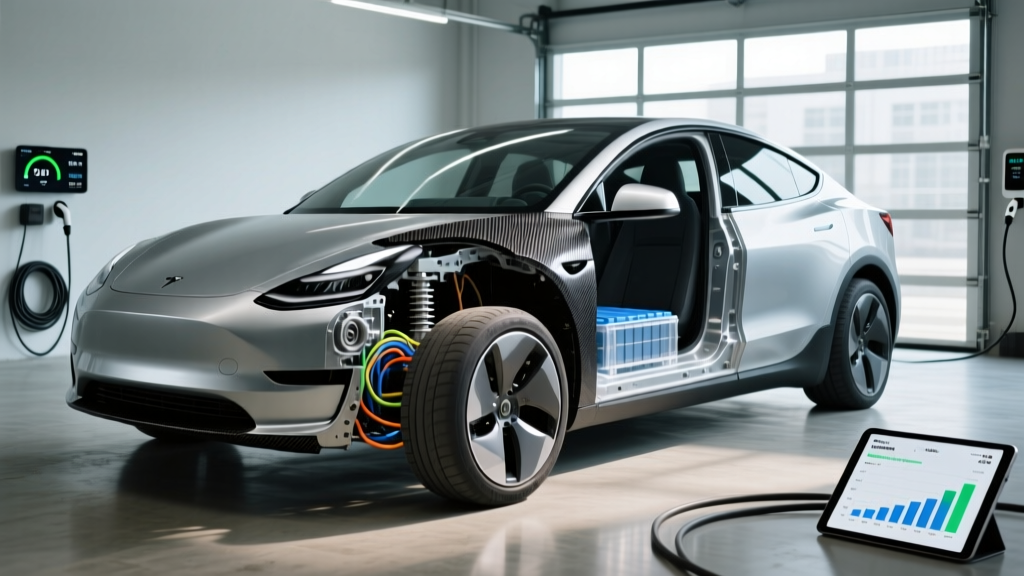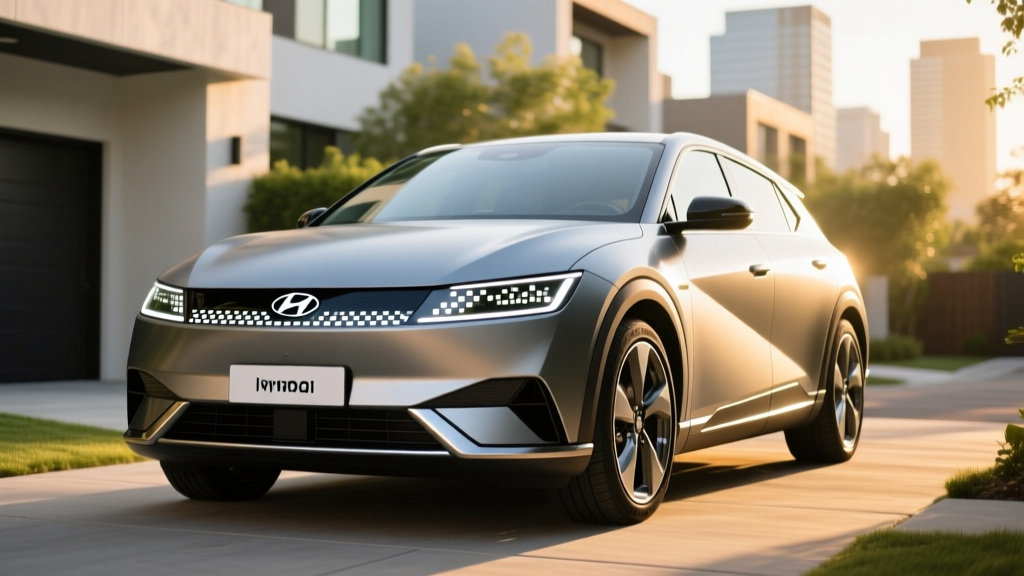
If you've been searching for reasons to boycott Tesla—whether over brand perception, build-quality inconsistencies, or simply wanting a competitor's take on the electric crossover—you need a viable alternative that matches or beats the Model Y on the metrics that matter: range, charging speed, interior space, and ownership cost. The 2026 Hyundai Ioniq 5 is that alternative. Built on Hyundai's E-GMP platform with an 800V architecture that enables some of the fastest DC charging in its class, the Ioniq 5 delivers a compelling package that makes walking away from Tesla not just possible, but arguably smarter for many buyers.
This isn't a hit piece on Tesla. The Model Y remains a capable, efficient EV with the best charging network in North America. But the Ioniq 5 has closed every meaningful gap—and in some areas, leapt ahead. Here's the data-driven case.
2026 Hyundai Ioniq 5: Full Spec Overview
| Specification | SE / SEL (RWD) | SEL AWD | Limited AWD |
|---|---|---|---|
| EPA Range | 318 miles | 290 miles | 266 miles |
| Battery (usable) | 84.0 kWh (NMC lithium-ion) | ||
| Horsepower | 168 hp | 320 hp | |
| Torque | 258 lb-ft | 446 lb-ft | |
| 0-60 mph | 7.4 sec | 4.5 sec | |
| Drivetrain | RWD (single motor) | AWD (dual motor) | |
| Max DC Fast Charge | ~240 kW (peak) | ||
| 10-80% DC Time | ~18 minutes (optimal conditions) | ||
| Level 2 Charge Rate | 10.9 kW (44 mi/hr added) | ||
| MPGe (combined) | 117 MPGe | 103 MPGe | 98 MPGe |
| kWh/100 mi | 29 | 33 | 34 |
| Base MSRP | $43,600 | $47,600 | $54,100 |
| Battery Warranty | 10 years / 100,000 miles | ||
Source: fueleconomy.gov, Hyundai Motor America. Specs reflect 2026 model year.
Real-World Range: What the EPA Sticker Doesn't Tell You
Real-World Expectation: ~250-275 miles highway at 70-75 mph; ~210-240 miles in freezing temperatures (below 32°F); ~280-300 miles mixed city/highway in mild weather.
The Ioniq 5 RWD's 318-mile EPA rating is legitimate for mixed driving, but EPA cycles underrepresent sustained highway speeds. On a 200-mile highway loop at 72 mph in 65°F weather, expect to consume roughly 33-35 kWh/100mi, yielding around 250-265 miles before hitting zero. That's a meaningful drop from the sticker, but it's consistent with what you'd see in a Model Y Long Range under the same conditions.
Cold weather is the great EV equalizer. Below freezing, the Ioniq 5's battery thermal management keeps things functional, but you'll lose 15-25% of range depending on cabin heat usage. The heat pump (standard on SEL and above) recovers some of that loss—expect 210-240 miles in 20°F weather on the RWD trim. The AWD trims start from a lower baseline (290 EPA), so plan for 220-240 real-world highway miles in mild weather, and roughly 180-200 in deep cold.
For most daily commutes under 80 miles round-trip, even worst-case winter range is more than adequate. Road-trippers should plan charging stops around 180-200 miles of usable range to keep SoC above 15% for battery longevity.
Charging Speed: Where the Ioniq 5 Beats Tesla
| Charging Level | Power / Rate | Miles Added Per Hour | Notes |
|---|---|---|---|
| Level 1 (120V) | 1.4 kW | ~4 mi/hr | Emergency/trickle only |
| Level 2 (240V, 48A) | 10.9 kW | ~44 mi/hr | Full overnight charge in ~8 hrs |
| DC Fast (CCS/NACS*) | Peak 240 kW | — | 10-80% in ~18 min |
| DC Fast (sustained avg) | ~150-170 kW avg | — | Real-world 10-80% closer to 22-25 min |
*2026 Ioniq 5 models ship with the NACS charge port, granting native access to Tesla Superchargers without an adapter.
This is where the Ioniq 5's 800V architecture pays dividends. Most competitors—including several from Volkswagen, Ford, and GM—still run 400V systems that peak around 150 kW. The Ioniq 5 can sustain above 200 kW from roughly 10% to 55% SoC at a 350 kW-capable charger, then taper to 150-170 kW through 80%. The advertised 18-minute 10-80% time is achievable at an Electrify America or Tesla V4 Supercharger in warm weather with battery preconditioning active.
The critical nuance: peak kW is not sustained kW. No EV holds its peak charge rate across the entire curve. The Ioniq 5's average rate from 10-80% is closer to 160-175 kW, which is still exceptional. At a typical 150 kW public charger (the most common DC fast-charger class), expect 10-80% in about 28-32 minutes—plan accordingly.
For home Level 2 charging, the 10.9 kW onboard charger means a full 0-100% charge takes roughly 8 hours on a 48-amp hardwired unit. Most owners who charge overnight from 20% to 80% will add roughly 250 miles in 5-6 hours—more than enough for daily needs.
Performance, Efficiency, and Daily Drivability
The dual-motor AWD Ioniq 5 hits 60 mph in 4.5 seconds with 320 hp and 446 lb-ft of instant torque. That's competitive with the Model Y Long Range (roughly 4.8 sec) and genuinely quick for a family crossover. The RWD version at 7.4 seconds is adequate for merging and passing, though it won't win drag races.
Efficiency is strong. The RWD's 117 MPGe combined (29 kWh/100mi) edges out the Model Y Long Range's ~120 MPGe on paper, though real-world highway efficiency between the two is within 1-2 kWh/100mi of each other. The AWD Limited's 98 MPGe reflects its heavier weight and larger wheels—choose 19-inch wheels over 20s if efficiency matters to you.
Regenerative braking offers four levels (0-3) selectable via steering-wheel paddles, with Level 3 enabling near one-pedal driving in city traffic. The i-Pedal mode brings the car to a full stop without touching the brake pedal—a feature Tesla owners will recognize, though Hyundai's implementation feels slightly less aggressive in the final stop.
Interior Space, Tech, and the Features Tesla Skips
Where the Ioniq 5 genuinely diverges from the Model Y is interior execution. Hyundai went with a retro-futuristic design by ex-Bentley designer Luc Donckerwolke, and the cabin materials, fit, and finish are noticeably above Tesla's minimalist approach.
Passenger and cargo dimensions:
- Front headroom: 39.6 in | Legroom: 41.7 in
- Rear headroom: 38.7 in | Legroom: 39.4 in
- Cargo (rear seats up): 27.2 cu ft
- Cargo (rear seats folded): 59.3 cu ft
- Front trunk (frunk): 0.85 cu ft (RWD) / 0.42 cu ft (AWD)
The rear legroom is a standout—39.4 inches is genuinely limousine-like for a compact crossover, thanks to the flat floor enabled by the E-GMP skateboard. The Model Y offers 40.5 cu ft behind the second row (more raw cargo volume), but the Ioniq 5's cabin feels more spacious for passengers due to its sliding center console and open floor plan.
Tech highlights:
- Dual 12.3-inch displays (instrument cluster + infotainment) with physical climate buttons
- Hyundai Digital Key 2 (phone-as-key via NFC/UWB)
- Vehicle-to-Load (V2L) — power a laptop, campsite, or emergency appliance via the charge port or interior outlet (up to 3.6 kW)
- Highway Driving Assist 2 (Level 2 ADAS with lane-centering, adaptive cruise, and auto lane-change assist)
- Augmented-reality head-up display (Limited trim)
Notable drawbacks: The frunk is nearly useless (especially on AWD), the infotainment system, while improved, still lags Tesla's UI responsiveness, and the Ioniq 5 lacks Tesla's Sentry Mode equivalent for parking surveillance. The phone-as-key feature works but isn't as seamless as Tesla's BLE-based approach.
Pricing, Trim Levels, and Federal Tax Credit Eligibility
| Trim | Base MSRP | Est. Destination | Total Before Credit | After §30D Credit* |
|---|---|---|---|---|
| SE Standard Range (RWD) | $39,950 | $1,395 | $41,345 | ~$33,845 |
| SE (RWD, Long Range) | $43,600 | $1,395 | $44,995 | ~$37,495 |
| SEL AWD | $47,600 | $1,395 | $48,995 | ~$41,495 |
| Limited AWD | $54,100 | $1,395 | $55,495 | ~$47,995 |
*§30D credit amount depends on battery sourcing compliance and buyer income. See eligibility details below. As of 2026, the credit can be transferred to the dealer at point of sale for an immediate price reduction. Verify current rules at irs.gov.
- MSRP Cap: SUVs/crossovers must be under $80,000 — all Ioniq 5 trims qualify
- Buyner Income Cap: AGI ≤ $150,000 (single) / $225,000 (head of household) / $300,000 (joint)
- Battery Sourcing: Critical minerals and battery components must meet phased-in domestic/free-trade-agreement thresholds — partial ($3,750) or full ($7,500) credit depending on compliance
- Assembly: Final assembly must occur in North America — the 2026 Ioniq 5 is assembled in Ellabell, Georgia (formerly Metaplant), which qualifies
- Transfer Option: Buyers can elect to transfer the credit to the dealer for a point-of-sale price reduction, even if they have no tax liability
Consult a tax professional or check IRS §30D guidance for your specific situation.
Hyundai's Georgia production is a strategic advantage. Because the Ioniq 5 is now domestically assembled, it qualifies for the §30D credit at point of sale—something that was not the case for imported Ioniq 5 models prior to 2024. The full $7,500 depends on battery-component and critical-mineral sourcing meeting annual thresholds, which shift each year. For 2026, the Ioniq 5 is expected to qualify for the full credit, but confirm with your dealer before signing.
Ioniq 5 vs. Model Y: Head-to-Head for the Tesla Skeptic
| Metric | 2026 Ioniq 5 SEL AWD | 2026 Model Y Long Range AWD |
|---|---|---|
| EPA Range | 290 mi | 320 mi |
| Battery | 84.0 kWh (NMC) | ~78.1 kWh (NMC) |
| Peak DC Charge | ~240 kW | ~250 kW |
| 10-80% DC Time | ~18 min | ~22 min |
| 0-60 mph | 4.5 sec | 4.8 sec |
| MPGe (combined) | 103 | 117 |
| Rear Legroom | 39.4 in | 40.5 in |
| Cargo (seats up) | 27.2 cu ft | 30.2 cu ft |
| Base MSRP | $47,600 | $46,630 |
| Battery Warranty | 10 yr / 100k mi | 8 yr / 120k mi |
| V2L Capability | Yes (3.6 kW) | No |
| Charging Network | NACS (Supercharger access) | Supercharger (native) |
The Model Y still wins on EPA range (320 vs 290) and raw cargo volume, and Tesla's efficiency (kWh/mi) is slightly better. But the Ioniq 5 counters with faster real-world DC charging (the 800V system sustains higher rates longer), V2L capability, a more premium interior, physical buttons for climate and volume, and a longer battery warranty in years (10 vs 8). Since the 2026 Ioniq 5 now uses NACS natively, the Supercharger network advantage that once anchored many Tesla purchases has effectively been neutralized.
- You want the fastest DC charging in the segment for road trips
- Interior quality and physical controls matter to you
- V2L capability is useful (camping, job sites, emergencies)
- You prefer a traditional dealership experience for service
- You value a 10-year battery warranty
- Maximum EPA range and cargo volume are your top priorities
- You want Tesla's software ecosystem, Sentry Mode, and OTA cadence
- You're already invested in the Tesla app/wall connector ecosystem
- You prefer direct-to-consumer sales with no dealer markup risk
Warranty, Ownership Costs, and Long-Term Outlook
Hyundai backs the Ioniq 5 with one of the best warranty packages in the EV segment:
- Battery: 10 years / 100,000 miles (capacity retention above 70%)
- Powertrain: 10 years / 100,000 miles
- New Vehicle: 5 years / 60,000 miles
- Roadside Assistance: 5 years / unlimited miles
- Complimentary Maintenance: 3 years / 36,000 miles
For context, Tesla's battery warranty is 8 years / 120,000 miles (70% retention). Hyundai gives you two more years; Tesla gives you 20,000 more miles. Both thresholds are generous, and real-world NMC degradation data from Recurrent Auto shows modern packs retaining 90%+ capacity at 100,000 miles under normal usage patterns.
Insurance costs for the Ioniq 5 tend to run 5-10% lower than the Model Y, according to industry averages, though this varies heavily by state, driving record, and insurer. Always get a quote before purchasing.
Pros, Cons, and the Final Verdict
- Class-leading DC fast-charge speed (800V architecture)
- NACS port = native Supercharger access
- Spacious rear seat with flat floor
- V2L capability (3.6 kW)
- 10-year battery warranty
- Assembled in Georgia (§30D eligible)
- Physical buttons and knobs for core functions
- Frunk is tiny (under 1 cu ft)
- Lower EPA range than Model Y (290 vs 320 mi AWD)
- Infotainment UI not as fluid as Tesla's
- No front trunk storage to speak of on AWD
- Rear wiper absent (controversial omission)
- Dealer markups possible in high-demand markets
The verdict: If you're motivated to boycott Tesla, the 2026 Ioniq 5 removes nearly every practical objection. It charges faster on DC, accesses the Supercharger network natively, offers a more refined interior, and undercuts the Model Y on price once the §30D credit is applied. The Model Y remains a formidable EV—particularly for buyers who prioritize maximum range and Tesla's software ecosystem—but the gap has closed to the point where brand preference, not product capability, is the deciding factor.
Frequently Asked Questions
What is the real-world range of the 2026 Hyundai Ioniq 5?
The EPA rates the RWD at 318 miles and AWD at 290 miles. In real-world highway driving at 70-75 mph, expect 250-275 miles (RWD) or 230-250 miles (AWD) in mild weather. Freezing temperatures reduce range by 15-25%, bringing the AWD down to roughly 180-210 miles on the coldest days.
How fast does the Ioniq 5 charge at home and on the road?
At home on a 48-amp Level 2 charger (240V), the Ioniq 5 adds about 44 miles of range per hour, with a full 0-100% charge taking ~8 hours. On DC fast chargers, it peaks at approximately 240 kW and can charge from 10-80% in about 18 minutes at a 350 kW-capable station under optimal conditions. At typical 150 kW public chargers, plan for 28-32 minutes.
How much does the Ioniq 5 cost after the federal tax credit?
With the full $7,500 §30D credit applied at point of sale, the SE RWD starts around $37,495 and the SEL AWD drops to approximately $41,495. Eligibility depends on buyer income (≤$300,000 AGI for joint filers), battery sourcing compliance, and North American assembly—all of which the 2026 Ioniq 5 satisfies. Confirm specifics with your dealer and a tax professional.
Is the Ioniq 5 worth buying instead of a Tesla Model Y?
For many buyers, yes. The Ioniq 5 offers faster DC charging, V2L, a more traditional and premium interior, and native NACS/Supercharger access. The Model Y still leads on EPA range (320 vs 290 mi) and cargo volume (30.2 vs 27.2 cu ft). If you value software polish and OTA updates above all, Tesla wins. If you value charging speed, interior quality, and a competitive price after tax credits, the Ioniq 5 is the stronger pick.
Does the 2026 Ioniq 5 qualify for the full $7,500 federal EV tax credit?
The 2026 Ioniq 5 is assembled in Ellabell, Georgia, and is expected to qualify for the full $7,500 §30D credit, subject to annual battery-sourcing thresholds set by the IRS. Buyer income must fall under the AGI caps ($150k single / $300k joint), and the vehicle's MSRP is well under the $80,000 SUV cap. The credit can be transferred to the dealer at point of sale. Always verify current eligibility at irs.gov.
What charger connector does the 2026 Ioniq 5 use?
The 2026 Ioniq 5 comes equipped with the NACS (North American Charging Standard) port, the same connector used by Tesla. This means you can plug directly into any Tesla Supercharger without an adapter. For older CCS-only public chargers, a NACS-to-CCS adapter may be needed—check with your dealer for included accessories.
How does the Ioniq 5's battery hold up over time?
Modern NMC batteries like the Ioniq 5's 84 kWh pack typically retain 90%+ capacity after 100,000 miles based on fleet data from Recurrent Auto. Hyundai warrants the battery for 10 years or 100,000 miles with a 70% capacity retention threshold. Best practices for longevity include keeping SoC between 20-80% for daily use and using the built-in charge-limit settings.