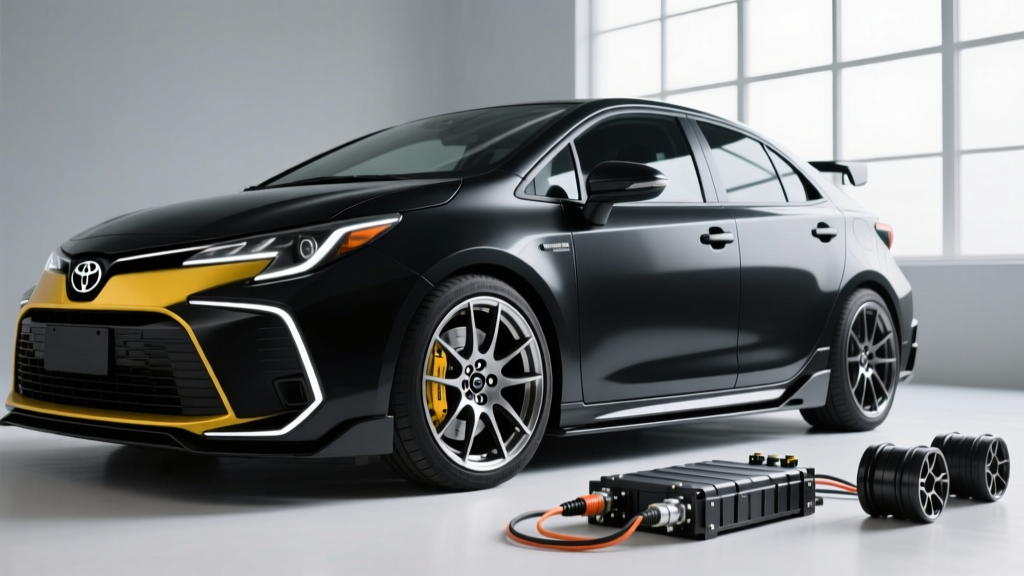
If you've landed here searching for the bolt pattern Toyota Corolla 2016, you likely need it for one of three reasons: replacing a damaged wheel, upgrading to aftermarket alloys, or planning a custom EV conversion project on a lightweight Corolla chassis. Whatever your goal, getting the wheel fitment right is non-negotiable — a wrong bolt pattern means the wheel simply won't mount, and incorrect offset or center bore can cause vibration, bearing wear, or clearance issues with brake calipers.
Below is the exact wheel specification data for the 2016 Toyota Corolla, along with practical context for anyone working with this platform — including notes relevant to the growing EV-swap community that's increasingly using Corollas as lightweight donor chassis.
2016 Toyota Corolla Bolt Pattern: The Exact Numbers
The 2016 Toyota Corolla (across all trims — L, LE, LE Eco, S, and SE) uses a 5x100mm bolt pattern (also written as 5x4.0 inches). This means the wheel has five lug holes arranged on a circle with a 100-millimeter diameter.
| Specification | Value |
|---|---|
| Bolt Pattern (PCD) | 5x100 mm (5x4.0 in) |
| Center Bore | 54.1 mm |
| Lug Nut Thread Size | M12 x 1.5 |
| Lug Nut Torque Spec | 76 lb-ft (103 Nm) |
| Stock Wheel Sizes | 15x6.0 (L/LE), 16x6.5 (LE Eco/S), 17x7.0 (SE) |
| Stock Offset (ET) | +39 to +45 mm (varies by trim/wheel) |
| Stock Tire Sizes | 195/65R15, 205/55R16, 215/45R17 |
The 5x100 pattern is shared across many compact Toyota and Subaru platforms. This matters for parts sourcing — you'll find compatible wheels from vehicles like the Toyota Prius (2010-2015), Toyota Matrix, Scion xB, Subaru Impreza (pre-2012), and some older Audi models. However, compatibility goes beyond just bolt pattern; center bore and offset must also align.
Why Center Bore and Offset Matter Just as Much
Many wheel buyers focus solely on the bolt pattern and discover fitment problems afterward. The 2016 Corolla's 54.1 mm center bore is relatively small compared to many aftermarket wheels, which are often designed with larger bores (56.1 mm, 67.1 mm, or 73.1 mm) to fit multiple vehicle platforms.
If you mount a wheel with a larger center bore without using hub-centric rings, the wheel will be lug-centric — meaning the lug nuts alone bear the centering load. This leads to vibration at highway speeds and accelerated wheel bearing wear. Hub-centric rings (typically $15-25 per set) solve this by filling the gap between the wheel bore and the hub.
Conversely, a wheel with a center bore smaller than 54.1 mm simply will not fit over the Corolla's hub. No workaround exists for this — the wheel must be machined or rejected.
Offset (ET) determines how far the wheel sits inward or outward relative to the hub mounting surface. The Corolla's stock range of +39 to +45 mm keeps the wheel tucked properly within the fender. Going significantly lower (e.g., +25 mm) pushes the wheel outward, which can cause fender rubbing under load or over bumps. Going significantly higher pushes the wheel inward, risking contact with suspension components or brake calipers.
The 2016 Corolla as an EV Conversion Donor: Wheel Fitment Considerations
The 2016 Corolla's relatively light curb weight (approximately 2,800-2,900 lbs depending on trim) and simple front-wheel-drive layout have made it a popular candidate in the DIY EV conversion community. Builders typically remove the 1.8L gasoline powertrain and install an electric motor, controller, and battery pack — often salvaged from a Nissan Leaf, Tesla drive unit, or a purpose-built EV crate motor.
When converting a Corolla to electric, wheel fitment takes on additional importance:
- Added weight: Battery packs add significant mass, often 400-800 lbs over stock. The 5x100 bolt pattern and M12 studs are adequate for moderate weight increases, but heavily loaded builds should verify stud integrity and consider upgraded lug hardware.
- Regenerative braking loads: Aggressive regen settings place different torque loads on the drivetrain and wheels compared to friction braking alone.
- Weight distribution shift: Battery placement changes the front/rear weight balance, which can alter how the suspension loads the wheels — making correct offset even more important to avoid uneven tire wear.
- Low-rolling-resistance tires: Many EV conversions benefit from LRR tires to maximize range. Verify that your chosen tire size and wheel combination accommodates available LRR options in the 15- or 16-inch diameter.
For EV-swap Corollas running higher-torque motors, some builders opt for 16-inch or 17-inch wheels to accommodate larger brake rotors or to fit wider tires for improved traction under electric torque delivery. The 5x100 pattern limits some aftermarket options compared to the more common 5x114.3 pattern, but companies like Enkei, Konig, and Method offer quality 5x100 wheels in the 15-17 inch range.
Compatible Wheels and What to Avoid
Because the 5x100 bolt pattern appears across several manufacturers, you have a reasonable selection of both OEM take-off wheels and aftermarket options. Here's a practical compatibility overview:
| Source Vehicle | Bolt Pattern | Center Bore | Fitment Notes |
|---|---|---|---|
| Toyota Prius (2010-2015) | 5x100 | 54.1 mm | Direct bolt-on, hub-centric |
| Toyota Matrix / Pontiac Vibe | 5x100 | 54.1 mm | Direct bolt-on |
| Scion tC (2011-2016) | 5x100 | 54.1 mm | Direct bolt-on, check offset |
| Subaru Impreza (2008-2011) | 5x100 | 56.1 mm | Requires 56.1→54.1 hub ring (won't work — bore too small to hub) |
| Subaru WRX (2008-2014) | 5x100 | 56.1 mm | Hub ring needed; offset often too low |
| Aftermarket (Enkei RPF1, etc.) | 5x100 | 73.1 mm (typical) | Hub ring required; verify offset +39 to +45 |
Important note on Subaru wheels: While many Subaru models share the 5x100 bolt pattern, their 56.1 mm center bore is larger than the Corolla's 54.1 mm hub. This means Subaru wheels can physically mount on a Corolla with hub-centric rings (56.1 mm bore to 54.1 mm hub adapter). However, many Subaru wheels have lower offsets (+35 to +38 mm), which may push the wheel outward and cause fender clearance issues. Always test-fit before committing.
Wheels to avoid: Any 4-lug pattern (4x100) — some older Corollas used 4-lug, but the 2016 model year is exclusively 5-lug. Also avoid 5x114.3 wheels from larger Toyotas (Camry, RAV4) — they will not fit despite being "Toyota wheels."
Lug Nut Torque and Maintenance for Corolla Wheels
Whether you're running stock wheels, aftermarket alloys, or an EV-converted setup, proper lug nut torque is essential. The 2016 Corolla's factory specification is 76 lb-ft (103 Nm). Always torque in a star pattern using a calibrated torque wrench — never an impact gun alone.
For EV conversions producing higher torque, re-check lug nut torque after the first 50 miles of driving and then at regular intervals. The additional drivetrain torque from an electric motor can accelerate lug nut loosening if the initial torque was insufficient or uneven.
Stock Corolla wheels use conical (tapered) seat lug nuts. If you switch to aftermarket wheels, verify the lug seat type — many aftermarket wheels use ball (radius) seat or flat seat lug nuts. Using the wrong seat type will not properly secure the wheel and is a serious safety hazard.
Practical Buying Guide: Getting the Right Wheels for Your 2016 Corolla
Whether you're replacing a curb-damaged wheel, upgrading for aesthetics, or preparing a Corolla for an EV powertrain swap, follow this checklist before purchasing:
- Confirm bolt pattern: 5x100 mm — non-negotiable.
- Check center bore: 54.1 mm is ideal for hub-centric fit. Larger bores require rings. Smaller bores will not fit.
- Verify offset: Stay within +35 to +45 mm for proper clearance. Stock is +39 to +45.
- Match wheel diameter to tire availability: 15-inch wheels offer the widest, cheapest tire selection and best ride comfort. 17-inch looks better but limits LRR tire options for EV builds.
- Confirm lug seat type: Conical for OEM Toyota wheels; check aftermarket wheels for ball or flat seat requirements.
- Verify load rating: Especially important for EV conversions — the wheel's maximum load rating must exceed the loaded corner weight of the vehicle.
- Check brake clearance: If running larger aftermarket calipers or an EV swap with a different hub assembly, physically test-fit the wheel before finalizing the purchase.
Frequently Asked Questions
Is the 2016 Toyota Corolla bolt pattern 5x100 or 5x114.3?
The 2016 Corolla uses a 5x100 mm bolt pattern. The 5x114.3 pattern is found on larger Toyota vehicles like the Camry, RAV4, and Highlander. They are not interchangeable.
Can I use Subaru WRX wheels on a 2016 Corolla?
Subaru WRX wheels from the 5x100 era (roughly 2008-2014) share the bolt pattern but have a 56.1 mm center bore versus the Corolla's 54.1 mm hub. Hub-centric rings are required, and the lower offset on many WRX wheels (+35 to +38 mm) may cause fender rubbing. Test-fit before purchasing.
What size hub-centric rings do I need for aftermarket wheels on a 2016 Corolla?
It depends on the wheel's center bore. Common aftermarket bore sizes include 56.1 mm, 67.1 mm, and 73.1 mm. You'll need rings with an outer diameter matching the wheel bore and an inner diameter of 54.1 mm to match the Corolla's hub. For example: "73.1 to 54.1 hub rings."
Does the bolt pattern change for the 2016 Corolla S or SE trim?
No. All 2016 Corolla trims (L, LE, LE Eco, S, SE) share the same 5x100 mm bolt pattern, 54.1 mm center bore, and M12 x 1.5 lug thread. The only difference across trims is the stock wheel diameter (15, 16, or 17 inches) and offset within the +39 to +45 mm range.
Is the 5x100 Corolla platform suitable for an EV conversion?
The 2016 Corolla's lightweight chassis (under 2,900 lbs) makes it a reasonable EV conversion candidate. The 5x100 bolt pattern limits some aftermarket wheel options compared to 5x114.3 platforms, but quality wheels from Enkei, Konig, and other manufacturers are available. The key consideration is ensuring wheel load ratings exceed the vehicle's increased weight after adding batteries.
Can I use wheel spacers on a 2016 Corolla?
Wheel spacers are available in 5x100 with a 54.1 mm center bore. If used, they must be hub-centric and the extended studs or bolt-on spacers must be properly torqued. Spacers reduce the effective offset — a 10 mm spacer on a +45 mm wheel effectively creates a +35 mm offset. Keep total effective offset above +30 mm to avoid fender and bearing issues.
For official torque specifications and wheel compatibility, always cross-reference the Toyota Owner's Manual for your specific model year and trim. For aftermarket wheel fitment data, manufacturers like Enkei provide detailed spec sheets including PCD, bore, offset, and load ratings for each wheel model.