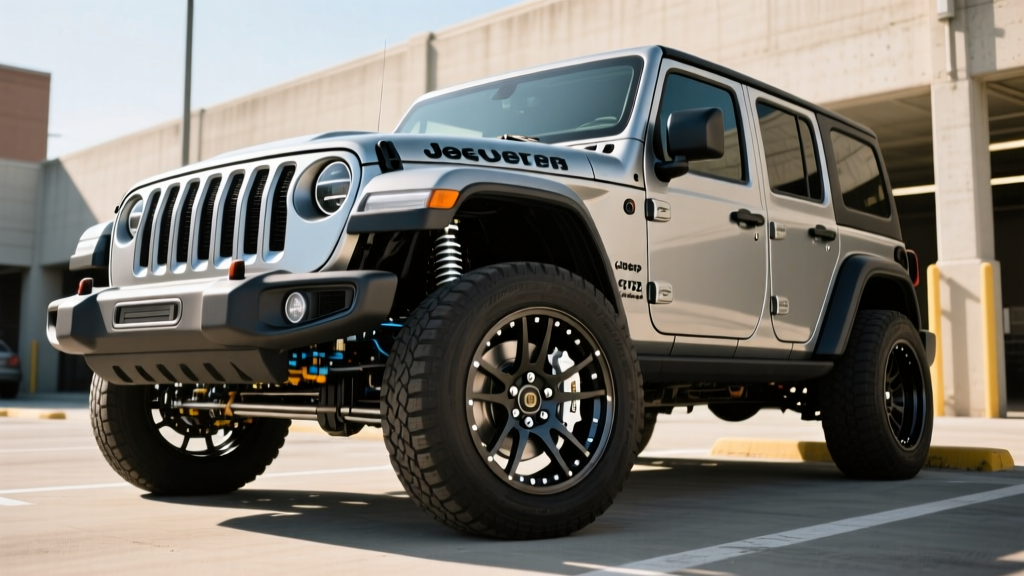
When planning an EV conversion on a 2014 Jeep Wrangler (JK generation, 2007–2018), understanding the wheel bolt pattern is foundational — it determines which wheels you can run after swapping in an electric motor, adapter plate, and battery pack. The 2014 Wrangler uses a 5x127mm (5x5 inch) bolt pattern with a 71.5mm center bore, and getting this right affects brake clearance, hub-centric fitment, and whether you can reuse stock wheels or need to source EV-compatible alternatives.
This guide is written from the perspective of builders and shops performing EV conversions on JK-platform Wranglers in 2026. We cover the exact bolt pattern specs, how they interact with common EV drivetrain adapters, wheel offset considerations when adding battery weight, and what you need to know before ordering wheels for your electric Wrangler build.
2014 Jeep Wrangler Bolt Pattern: Exact Specifications
The 2014 Jeep Wrangler JK shares its bolt pattern with all JK-generation models (2007–2018). Here are the critical dimensions for any EV conversion build:
| Specification | Value | EV Conversion Note |
|---|---|---|
| Bolt Pattern | 5x127mm (5x5") | Shared with some Dodge/Chrysler; not shared with JL (2018+) |
| Center Bore | 71.5mm | Hub-centric rings may be needed for aftermarket wheels |
| Lug Nut Thread | 1/2"-20 UNF | Verify stud length if using thicker adapter plates |
| Lug Nut Type | Conical (60° taper) | Must match wheel seat type — do not mix |
| Stock Wheel Offset | +44mm to +47mm (17" wheels) | Lower offset common in aftermarket for brake clearance |
| Stock Wheel Size | 17x7.5" (Sahara), 16x7" (Sport) | 17" minimum recommended for EV brake rotor clearance |
| Hub Diameter | 71.5mm | Must match EV adapter hub pilot diameter |
| Stud Length (stock) | ~1.65" (42mm) | May require longer studs with spacer/adapter use |
The 5x127mm bolt pattern is relatively uncommon in the modern EV wheel market. Most Tesla, Rivian, and Hyundai Ioniq wheels use different patterns (Tesla uses 5x114.3 or 5x120 depending on model; Rivian uses 6-lug patterns). This means you'll likely need to source wheels from the Jeep/Dodge ecosystem or use hub adapters if you want to run EV-specific wheels.
Why Bolt Pattern Matters for EV Conversions
In a Wrangler EV swap, the bolt pattern isn't just about whether the wheel physically mounts — it intersects with several conversion-specific factors:
Adapter Plate & Motor Mounting
Most Wrangler EV conversions use a motor adapter plate that bolts to the existing transmission bellhousing or replaces the transmission entirely with a direct-drive motor. If your conversion retains the stock Dana 35 or Dana 44 rear axle, the bolt pattern remains unchanged. However, if you're swapping to an independent rear suspension (IRS) from a Tesla or other EV donor, you'll need to match the new axle's bolt pattern or use adapters.
Weight Distribution & Offset Changes
A typical Wrangler EV conversion adds 400–800 lbs of battery weight, often mounted low in the frame rails or where the fuel tank formerly sat. This changes the vehicle's unsprung weight dynamics. Running wheels with incorrect offset can accelerate wheel bearing wear under the heavier load. Stick within ±10mm of stock offset (+44mm) unless your conversion shop specifies otherwise.
Brake Clearance with Regenerative Braking
EV conversions often upgrade brakes to handle the increased vehicle weight and supplement regenerative braking. Larger rotors (13"+ vs. stock 11.9") require wheels with adequate barrel clearance. The 17" stock wheels on a 2014 Sahara may not clear aftermarket big-brake kits — plan for 18" wheels minimum if upgrading brakes as part of your conversion.
Compatible Wheel Options for EV-Swapped Wranglers
Given the 5x127mm bolt pattern, here are the practical wheel sourcing paths for a 2014 Wrangler EV conversion:
| Source | Bolt Pattern | Pros | Cons |
|---|---|---|---|
| Stock JK Wrangler wheels (2007–2018) | 5x127mm | Direct fit, hub-centric, affordable used | Limited to 16"–18", may not clear big brakes |
| JL Wrangler wheels (2018–2026) | 5x127mm | Modern designs, 17"–20" available, OEM quality | Offset differs slightly (+35mm to +45mm), verify clearance |
| Aftermarket 5x5" wheels (Method, Black Rhino, Fuel) | 5x127mm | Wide selection, off-road rated, various offsets | May require hub-centric rings, heavier than stock |
| Hub adapters (5x127 to 5x114.3) | Adapted | Opens Tesla/EV wheel market | Adds 25–38mm thickness, changes offset, stress concerns |
| Custom billet wheels | Any | Exact offset, weight-optimized for EV | $800–$2,000+ per wheel, long lead times |
Our recommendation for most builds: Use JL-generation (2018+) OEM wheels or quality aftermarket 5x5" wheels in 17" or 18" diameter. They maintain proper hub-centric fitment and offer enough barrel clearance for most EV conversion brake setups. Avoid hub adapters unless your conversion engineer specifically engineers for them — the added leverage on wheel studs under EV torque loads (often 300+ lb-ft instant) creates fatigue risk.
EV Conversion Drivetrain Compatibility & Axle Considerations
The 2014 Wrangler's bolt pattern is only one piece of the drivetrain puzzle. When planning your EV swap, consider how the motor, adapter, and axle interact:
Retaining the Stock Axle
The most straightforward conversion retains the stock Dana 35 (rear) and Dana 30 (front) axles with a motor adapter plate mating an electric motor (commonly a Tesla Large Drive Unit, NetGain Hyper9, or Cascadia Motion unit) to the existing driveline. The 5x127mm bolt pattern stays intact, and wheel selection is unchanged.
Axle Swap Scenarios
Some high-power conversions (400+ HP) upgrade to a Ford 8.8 or Dana 60 rear axle for strength. These axles typically use different bolt patterns (Ford 8.8 uses 5x114.3; Dana 60 uses 5x127mm or 8-lug depending on application). If you swap axles, your bolt pattern may change — plan wheel purchases accordingly.
Hub & Bearing Load Rating
The stock JK wheel bearings are rated for the vehicle's original GVWR (~5,400 lbs). An EV conversion adding 600+ lbs of batteries may approach or exceed this rating. Consider upgrading to heavy-duty hub assemblies (available from manufacturers like Spicer/Dana) rated for higher loads, especially if you plan to tow or carry heavy cargo.
Wheel Torque Specs & Maintenance for EV Wranglers
Electric motors deliver instant torque, which puts different stress patterns on wheel studs and lug nuts compared to internal combustion engines. Follow these torque and maintenance guidelines:
| Item | Specification | Notes |
|---|---|---|
| Lug nut torque (stock studs) | 100 lb-ft (135 Nm) | Re-torque after first 50 miles post-install |
| Lug nut torque (aftermarket studs) | Per manufacturer (typically 100–120 lb-ft) | ARP studs may allow higher torque — check specs |
| Re-torque interval | Every 500 miles initially, then every 5,000 miles | EV torque pulses can loosen improperly torqued lugs |
| Stud replacement interval | Inspect every 20,000 miles | Check for stretch, thread damage, corrosion |
| Wheel bearing inspection | Every 10,000 miles | EV weight increase accelerates bearing wear |
Critical warning: Never use impact wrenches to final-torque lug nuts on an EV conversion. The instant torque delivery of electric motors can mask loose lug nuts until failure. Always use a calibrated torque wrench, and re-check after your first highway-speed drive.
Real-World Build Examples: 2014 Wrangler EV Conversions
Here are documented 2014 JK Wrangler EV conversions and how they handled wheel and bolt pattern decisions:
Build A: Tesla Drive Unit Swap (RWD Conversion)
A 2024–2025 documented build used a Tesla Large Drive Unit mated to the stock Dana 35 rear axle via a custom adapter plate. The builder retained stock 17" Sahara wheels with 5x127mm bolt pattern and +44mm offset. No wheel modifications were needed. The builder noted that regenerative braking from the Tesla motor reduced brake wear significantly, allowing the stock brake package to remain adequate despite the ~500 lb battery weight addition.
Build B: NetGain Hyper9 with Manual Transmission
A conversion retaining the stock Aisin AX-15 manual transmission and all original axles used the Hyper9 motor (141 HP, 240 lb-ft). Stock 16" Sport wheels were replaced with 17" JL Wrangler Rubicon take-off wheels (same 5x127mm pattern, +40mm offset) for improved brake clearance with a slotted rotor upgrade. The 4mm offset difference was within acceptable tolerance and caused no rubbing or bearing issues over 15,000 miles of use.
Build C: Dual-Motor AWD with Axle Swap
A high-performance build used dual Cascadia Motion motors with a Dana 60 rear axle upgrade. The Dana 60 was ordered with a 5x127mm bolt pattern (available from some manufacturers) to maintain wheel compatibility with the stock front Dana 30. This build used 18" Method Race Wheels (5x127mm, +25mm offset) for aggressive offset to clear the larger axle housing and brake calipers. The wider track required fender flares.
Frequently Asked Questions
What is the bolt pattern on a 2014 Jeep Wrangler?
The 2014 Jeep Wrangler (JK generation) uses a 5x127mm bolt pattern, also expressed as 5x5 inches. This is consistent across all JK Wrangler model years from 2007 through 2018. The center bore is 71.5mm, and lug nuts are 1/2"-20 UNF with a 60° conical seat.
Will JL Wrangler wheels (2018+) fit a 2014 JK?
Yes. JL Wrangler wheels share the same 5x127mm bolt pattern and 71.5mm center bore as the JK. The offset differs slightly (JL wheels typically +35mm to +45mm vs. JK's +44mm to +47mm), but this is within acceptable tolerance for most builds. Verify brake clearance if running larger JL Rubicon wheels.
Can I use Tesla wheels on a Wrangler EV conversion?
Not directly. Tesla wheels use 5x114.3mm (Model 3/Y) or 5x120mm (Model S/X) bolt patterns — neither matches the Wrangler's 5x127mm. Hub adapters exist (5x127 to 5x114.3) but add 25–38mm of thickness, change your effective offset significantly, and create stress concentration points under EV torque loads. Most conversion shops advise against this approach.
Do I need longer wheel studs for an EV conversion?
Only if you're adding spacer plates or hub adapters between the hub and wheel. If your EV conversion retains stock axles and you're mounting wheels directly to the hub, stock studs are sufficient. If using spacers (common when correcting offset after an axle swap), you need extended studs or spacers with integrated studs — never stack spacers.
What torque should I use on Wrangler lug nuts after an EV swap?
Use the factory specification of 100 lb-ft (135 Nm) with a calibrated torque wrench. Re-torque after the first 50 miles and again at 500 miles. The instant torque delivery of electric motors creates different vibration patterns than ICE drivetrains, making proper initial torque and follow-up checks critical for safety.
How does battery weight affect wheel bearing life?
A typical Wrangler EV conversion adds 400–800 lbs, increasing static and dynamic loads on wheel bearings. Stock JK bearings are rated for the original GVWR. Expect bearing life to decrease proportionally with weight increase — if your conversion adds 20% to vehicle weight, bearing inspection intervals should decrease by roughly the same proportion. Upgrade to heavy-duty bearings if adding more than 600 lbs.
For official wheel and torque specifications, reference the 2014 Jeep Wrangler Owner's Manual or consult your conversion shop's engineering documentation. For aftermarket wheel load ratings, verify with the wheel manufacturer that the wheel is rated for your converted vehicle's actual curb weight plus cargo.