Why Challenger Owners Are Searching for the Bolt Pattern for Dodge Challenger
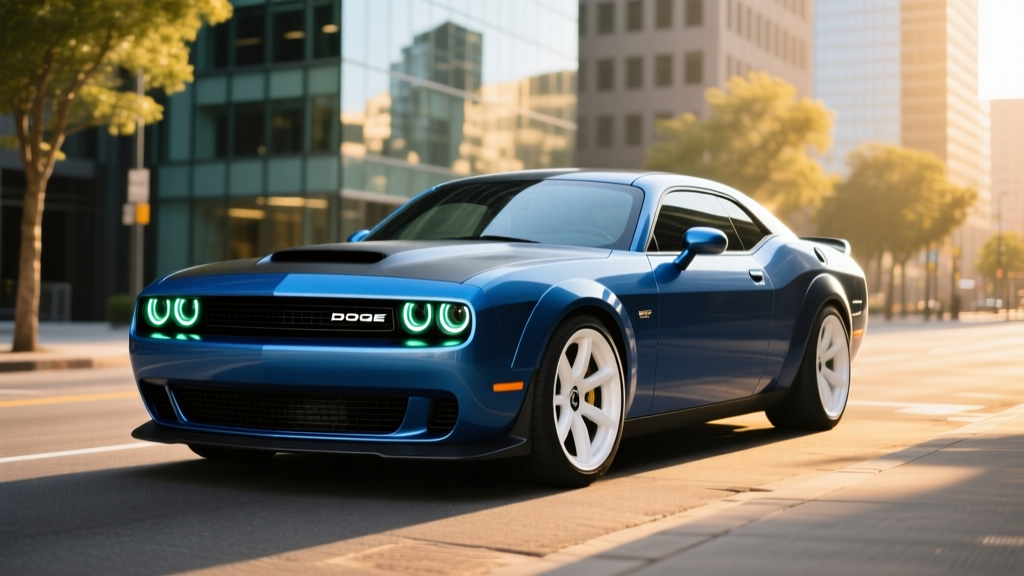
If you own a Dodge Challenger, you've likely searched for the bolt pattern for Dodge Challenger at some point — whether to swap wheels for winter rubber, upgrade to aftermarket alloys, or fit a wider tire setup for track days. The answer is straightforward: modern Challengers (2008–2023) use a 5×115 mm (5×4.53-inch) bolt pattern with a 27 mm offset and a 71.5 mm center bore. That spec served a generation of HEMI, Hellcat, and Demon owners well.
But here's the shift happening in 2026: Dodge has discontinued the gas-powered Challenger after the 2023 model year, and the brand's muscle-car future is now electric. The 2026 Dodge Charger Daytona EV is the spiritual successor, and if you're a Challenger owner weighing an EV transition, the bolt pattern question takes on a new dimension — because wheel compatibility, weight distribution, and tire wear on a 5,800+ lb EV are entirely different animals.
This review covers everything a Challenger loyalist needs to know about the 2026 Charger Daytona EV: real-world range, charging speed, performance, pricing, tax credits, and whether it's a worthy replacement for America's most iconic muscle coupe.
2026 Dodge Charger Daytona EV: Key Specifications
| Specification | Daytona R/T | Daytona Scat Pack |
|---|---|---|
| EPA Est. Range | 317 miles | 260 miles |
| Battery Capacity | 100.5 kWh (usable), NMC | 100.5 kWh (usable), NMC |
| Drivetrain | Dual-Motor AWD | Dual-Motor AWD |
| Horsepower | 496 hp | 670 hp |
| Torque | 404 lb-ft | 627 lb-ft |
| 0–60 mph | 4.7 sec | 3.3 sec |
| Top Speed | 137 mph | 137 mph |
| Max DC Fast Charge | 175 kW (peak) | 175 kW (peak) |
| 10–80% DCFC Time | ~27 min | ~27 min |
| Level 2 Home Charging | 11.5 kW (~34 mi/hr) | 11.5 kW (~34 mi/hr) |
| MPGe (Combined) | 92 MPGe | 78 MPGe |
| Efficiency | 36 kWh/100 mi | 43 kWh/100 mi |
| Cargo Volume | 14.3 cu ft (trunk) + 1.7 cu ft (frunk) | 14.3 cu ft (trunk) + 1.7 cu ft (frunk) |
| Rear Legroom | 33.2 in | 33.2 in |
| Curb Weight | 5,838 lbs | 5,838 lbs |
| Bolt Pattern (Wheels) | 5×115 mm | 5×115 mm |
| Battery Warranty | 8 yr / 100,000 mi | 8 yr / 100,000 mi |
| Base MSRP | $59,595 | $73,590 |
Range and Efficiency: Real-World Expectations
EPA Range: 317 miles (R/T) | 260 miles (Scat Pack)
Real-World Expectation: In mixed driving at 70°F, expect ~280–295 miles from the R/T and ~235–250 from the Scat Pack. At sustained highway speeds of 75+ mph, range drops to ~245 miles (R/T) and ~210 miles (Scat Pack). In cold weather (below 32°F), plan for a 25–35% reduction — that means as low as ~205 miles for the R/T and ~170 miles for the Scat Pack on a frigid winter commute.
The 100.5 kWh NMC (nickel-manganese-cobalt) battery pack is large, but the Charger Daytona's 5,838-lb curb weight demands significant energy to move. The R/T's 92 MPGe combined rating is respectable for a muscle-class EV, but it trails efficiency leaders like the Hyundai Ioniq 6 (140 MPGe) and Tesla Model S (124 MPGe). The Scat Pack's wider 20-inch tires and more aggressive powertrain calibration drop efficiency to 78 MPGe — which is the trade-off for 670 hp on tap.
For Challenger upgraders accustomed to 350–400 miles per tank, the R/T's real-world 280-mile envelope will feel adequate for daily driving but will require planning on road trips exceeding 250 miles. The Scat Pack's ~235-mile practical range makes it a weekend warrior, not a cross-country cruiser.
Charging Speed: DC Fast Charging and Home Setup
| Charging Level | Power | Miles Added per Hour | Notes |
|---|---|---|---|
| Level 1 (120V household) | 1.4 kW | ~3–4 mi/hr | Emergency/top-up only; full charge takes ~70+ hours |
| Level 2 (240V home) | 11.5 kW | ~34 mi/hr | Full charge overnight in ~9 hours; requires 48A circuit |
| DC Fast Charge | 175 kW (peak) | ~190 mi in 27 min (10–80%) | Peak rate sustained to ~55% SoC, then tapers; 80–100% adds ~20 more min |
The Charger Daytona's 175 kW peak DC fast-charge rate is the most common criticism among EV enthusiasts. Competitors like the Hyundai Ioniq 5 (240 kW), Kia EV6 (239 kW), and Tesla Model S (250 kW) charge noticeably faster. The 800-volt architecture Stellantis promised during development was downgraded to a 400-volt system, which caps charging throughput.
In practice, the charge curve peaks at 175 kW between roughly 15–55% state of charge, then tapers to ~120 kW through 70%, and drops further to ~60 kW above 80%. A 10–80% session takes approximately 27 minutes at a properly rated CCS or NACS station. For road trips, that's one extra stop every ~240 miles with a half-hour recharge — workable but not class-leading.
At home, the onboard 11.5 kW AC charger is a bright spot. With a professionally installed Level 2 wall connector on a 60A dedicated circuit (expect $800–$2,200 for installation depending on panel capacity and run length), you'll recover the full 100.5 kWh battery in roughly 9 hours. Most owners charging from 20–80% overnight will wake to a full car every morning.
Connector note: The 2026 Charger Daytona ships with a CCS1 port. Dodge has confirmed NACS adapter compatibility for Tesla Supercharger access, but native NACS ports are expected for the 2027 model year. Verify adapter availability with your dealer.
Performance: Does It Feel Like a Challenger?
The Scat Pack's 3.3-second 0–60 mph time is legitimately quick — it matches the outgoing Challenger SRT Hellcat Redeye and demolishes the R/T 5.7L HEMI's ~5.0-second run. Dual-motor AWD provides instant torque delivery with zero wheelspin, and the one-pedal driving mode with aggressive regen lets you modulate speed without touching the brake pedal in city traffic.
However, the Charger Daytona weighs nearly 1,400 lbs more than a comparable gas Challenger R/T. That mass is felt in corners. The steering is precise but numb compared to the hydraulic feel of older Challengers, and body roll is noticeable on canyon roads despite the standard adaptive dampers on the Scat Pack. This is a straight-line bruiser that handles competently — not a track weapon.
Dodge has included a "Fratzonic" exhaust-emulation system that pipes synthetic V8-style sound through interior and exterior speakers. Opinions vary wildly: some Challenger owners find it a fun homage, others consider it gimmicky. Fortunately, it can be disabled entirely for silent EV cruising.
For the bolt pattern for Dodge Challenger crowd interested in wheel upgrades: the Charger Daytona shares the same 5×115 mm pattern, so select aftermarket wheel options may cross over — but the EV's significantly higher curb weight demands wheels rated for the load. Always verify load rating (minimum 1,650 lbs per corner recommended) before reusing any Challenger wheel on the Daytona.
Pricing, Trims, and Federal Tax Credit Eligibility
| Trim | Base MSRP | As-Tested (Typical Options) | Est. Federal Credit (§30D) | Effective Price |
|---|---|---|---|---|
| Daytona R/T | $59,595 | $63,500 | Up to $7,500* | ~$52,095 – $56,000 |
| Daytona Scat Pack | $73,590 | $78,900 | Up to $7,500* | ~$66,090 – $71,400 |
*Federal tax credit caveat: Under current IRS §30D clean vehicle rules, the $7,500 credit is not guaranteed. Eligibility depends on:
- MSRP cap: Sedans/coupes must have an MSRP at or below $55,000. The Charger Daytona R/T and Scat Pack both exceed this cap, which means neither trim qualifies for the new-vehicle §30D credit under current rules.
- Buyer income cap: Modified AGI must not exceed $150,000 (single) / $300,000 (joint).
- Battery sourcing: Critical minerals and battery components must meet phased-in domestic-content thresholds.
- Point-of-sale transfer: If eligible, the credit can be applied at purchase rather than at tax filing.
This is a significant blow for the Charger Daytona's value proposition. The MSRP cap for sedans/coupes ($55,000) was set to encourage affordable EVs, and the Daytona's muscle-car pricing puts it outside the credit's reach. By contrast, the Tesla Model 3 Long Range ($47,740 MSRP) and Hyundai Ioniq 6 SE ($42,450) both qualify, saving buyers up to $7,500 at the point of sale.
Some buyers may qualify for state-level incentives (California's CVRP, Colorado's innovative motor vehicle credit, etc.), but these vary by jurisdiction. Check your state's energy office or the Alternative Fuels Data Center for local programs.
Interior, Tech, and Daily Livability
The Charger Daytona's interior marks a sharp departure from the Challenger's dated but beloved cabin. A 12.3-inch digital instrument cluster and a 12.3-inch infotainment touchscreen sit behind a flat-bottom steering wheel. Uconnect 5 is among the best infotainment systems on the market — fast, intuitive, with wireless Apple CarPlay and Android Auto.
Driver assistance: The Daytona comes standard with adaptive cruise control, lane-keeping assist, automatic emergency braking, and blind-spot monitoring. Available features include a hands-on-wheel Level 2 highway assist system (similar to GM's Super Cruise but requiring hands on the wheel). This is SAE Level 2 automation — the driver must remain fully engaged at all times.
Cargo and space: The 14.3 cu ft trunk is slightly smaller than the outgoing Challenger's 16.2 cu ft, but the addition of a 1.7 cu ft frunk (front trunk) partially compensates. Rear legroom at 33.2 inches is tight for adults on longer trips — this remains a 2+2 coupe, not a family sedan. If you regularly carry rear passengers, the four-door Charger Daytona sedan variant (also available for 2026) is the better pick.
Notable drawbacks:
- Rear visibility is poor; the camera-based rearview mirror is nearly mandatory
- Ride quality on 20-inch Scat Pack wheels is firm on broken pavement
- Regen braking calibration feels inconsistent between drive modes
- No rear wiper on the fastback glass (visibility issue in rain)
Pros and Cons: The Honest Assessment
Pros
- Scat Pack's 3.3-sec 0–60 rivals supercars at half the price
- Muscle-car styling with genuine road presence
- Uconnect 5 is top-tier infotainment
- Same 5×115 bolt pattern eases wheel crossover from Challenger
- 11.5 kW Level 2 onboard charger is above average
- Standard AWD on all trims (all-weather capability)
Cons
- 175 kW peak DC charging is slow for the class
- MSRP exceeds $55K sedan cap — no federal tax credit
- 5,838 lbs — heavy even among large EVs
- Real-world highway range drops significantly below EPA
- Rear seat is cramped for adult passengers
- Fratzonic synthetic sound will polarize buyers
Who Should Buy the 2026 Charger Daytona EV?
Buy it if: You're a current Challenger or Charger owner who wants to stay in the Dodge muscle family, you prioritize straight-line performance and styling over charging speed, you can charge at home nightly, and your daily commute is under 100 miles round-trip. The Scat Pack is for enthusiasts who want Hellcat-rivaling acceleration without the fuel bill (charging at $0.13/kWh nationally averages ~$0.05/mile vs. the Hellcat's ~$0.28/mile at 13 mpg combined).
Look elsewhere if: You road-trip frequently (the 175 kW charge rate and ~240-mile real-world highway range make long hauls tedious), you need rear-seat space for car seats or tall passengers, you're counting on the $7,500 federal credit to make the math work, or efficiency is a priority. The Tesla Model S, Hyundai Ioniq 5 N, and BMW i4 M50 all offer compelling alternatives with faster charging, better range, or lower pricing.
Frequently Asked Questions
What is the real-world range of the 2026 Charger Daytona EV?
The EPA rates the R/T at 317 miles and the Scat Pack at 260 miles. In real-world mixed driving, expect ~280–295 miles (R/T) and ~235–250 miles (Scat Pack). Sustained highway driving at 75+ mph and cold weather below freezing will reduce range by 20–35%.
How fast does the Charger Daytona charge at home and on the road?
On a Level 2 home charger (11.5 kW), expect ~34 miles of range per hour, or a full charge in about 9 hours. DC fast charging peaks at 175 kW, with a 10–80% session taking approximately 27 minutes. Above 80%, charging slows considerably — plan for ~20 additional minutes to reach 100%.
Does the 2026 Dodge Charger Daytona qualify for the federal EV tax credit?
Under current IRS §30D rules, no. The $55,000 MSRP cap for sedans/coupes disqualifies both the R/T ($59,595) and Scat Pack ($73,590). Always verify current rules at irs.gov as legislation can change. State-level incentives may still apply.
Is the Charger Daytona EV worth buying vs. the Tesla Model S or Ioniq 5 N?
If brand loyalty and muscle-car styling matter most, yes — nothing else looks or feels like a Daytona. But the Tesla Model S offers 402 miles of EPA range and 250 kW charging for a similar price, while the Ioniq 5 N delivers track-focused performance with 240 kW charging and federal credit eligibility. Cross-shop all three before deciding.
What is the bolt pattern for the Dodge Charger Daytona EV?
The Charger Daytona uses a 5×115 mm (5×4.53-inch) bolt pattern — the same as the outgoing Challenger. However, due to the EV's significantly higher curb weight (5,838 lbs vs. ~4,400 lbs for a Challenger R/T), always verify that any aftermarket or carryover wheel is rated for the increased load.
How long is the battery warranty?
Dodge covers the battery pack and electric powertrain for 8 years or 100,000 miles, whichever comes first. This is the industry-standard warranty mandated in part by EPA emissions requirements for EV components. The warranty covers defects and capacity loss below a specified threshold (typically 70% of original capacity, though Dodge's exact retention guarantee should be confirmed in your purchase documents).