If you've landed here searching for the bolt pattern for 2015 Chevy Impala, you're likely sizing up replacement wheels, considering an upgrade, or exploring how the Impala platform has evolved. We'll answer that question directly — and then pivot to what matters for forward-looking Chevy buyers: the state of electric large sedans in 2026, and whether an EV successor to the Impala is on the horizon.
The 2015 Chevrolet Impala was a full-size, front-wheel-drive sedan riding on GM's Epsilon II platform. It was discontinued after the 2020 model year, and as of early 2026, Chevrolet has not announced a battery-electric Impala replacement. However, understanding the 2015 model's wheel specifications matters for current owners maintaining or upgrading their vehicles — and understanding the EV landscape matters for anyone considering what to buy next.
Bolt Pattern for 2015 Chevy Impala: The Exact Specification
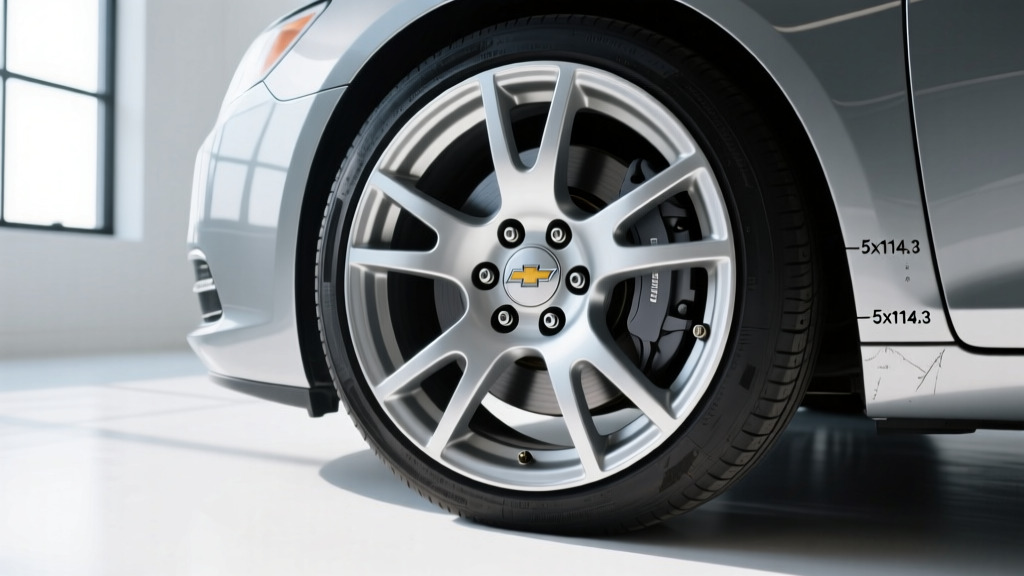
The 2015 Chevrolet Impala uses a 5x120mm bolt pattern (also written as 5x4.72 inches). This means five lug bolts arranged on a circle with a 120-millimeter diameter. Here are the complete wheel specifications:
| Specification | Value |
|---|---|
| Bolt Pattern (PCD) | 5x120mm (5x4.72") |
| Center Bore | 66.9 mm |
| Thread Size | M12 x 1.5 |
| Wheel Torque Spec | 100 lb-ft (135 Nm) |
| OEM Wheel Sizes | 18", 19", or 20" depending on trim |
| OEM Tire Sizes | 235/50R18, 245/45R19, 245/40R20 |
The 5x120 bolt pattern is shared with several other GM vehicles, including the Chevrolet Camaro (2010+), Cadillac CTS, and certain Buick models. This commonality gives Impala owners a wide aftermarket wheel selection. Always verify center bore and offset when sourcing replacement wheels — a mismatched center bore causes vibration, and incorrect offset affects scrub radius and bearing wear.
The 2015 Impala's Powertrain: What You're Maintaining
The 2015 Impala came with two engine options: a 2.5-liter inline-4 (195 hp, 186 lb-ft) or a 3.6-liter V6 (305 hp, 264 lb-ft). Both paired with a 6-speed automatic transmission driving the front wheels. EPA fuel economy ranged from 22/35 mpg (city/highway) for the 4-cylinder to 19/29 mpg for the V6, per fueleconomy.gov.
For owners keeping a 2015 Impala on the road, routine maintenance includes oil changes, transmission fluid service, brake pad and rotor replacement, and suspension component checks. The Epsilon II platform is known for durability, but at 10+ years old, expect to address struts, control arm bushings, and wheel bearings if not already done.
Why There's No 2026 Chevy Impala EV (Yet)
Chevrolet discontinued the Impala after the 2020 model year as consumer demand shifted decisively toward crossovers and SUVs. GM's current EV strategy centers on the Ultium platform, which underpins the Chevrolet Equinox EV, Blazer EV, Silverado EV, and Cadillac Lyriq and Optiq. As of 2026, GM has not announced an electric large sedan to replace the Impala.
This reflects a broader industry trend: large sedans have been exiting the U.S. market. The Ford Taurus, Chrysler 300, Toyota Avalon, and Nissan Maxima have all been discontinued. The remaining large-sedan segment is dominated by the Toyota Crown (a lifted sedan/crossover hybrid) and luxury offerings like the BMW 5 Series and Mercedes E-Class — both of which now offer electrified variants.
If you loved the Impala's combination of spaciousness, comfort, and value, the closest current Chevy EV equivalents are the Equinox EV and Blazer EV. Here's how they compare to what an electric Impala successor might have offered:
2026 Chevy Equinox EV: The Closest Current Alternative
Since no electric Impala exists, the 2026 Chevrolet Equinox EV is the most practical electrified Chevy for former Impala buyers who want room, comfort, and reasonable pricing. It's a compact/midsize crossover, not a sedan, but it fills a similar role: daily commuting, family hauling, and road trips.
| Spec | Value |
|---|---|
| EPA Range | ~319 miles (3RS FWD trim) |
| Battery Capacity | ~85 kWh usable (NMC lithium-ion) |
| Drivetrain | FWD (single motor) or AWD (dual motor) |
| Horsepower | ~213 hp (FWD) / ~288 hp (AWD) |
| 0-60 mph | ~7.8 sec (FWD) / ~5.9 sec (AWD) |
| Max DC Fast Charge | ~150 kW peak |
| 10-80% DC Charge Time | ~30 minutes |
| Level 2 Home Charging | 11.5 kW (~34 miles/hr added) |
| Efficiency | ~3.0-3.3 kWh/mile (~100-110 MPGe combined) |
| Cargo Volume | ~26.4 cu ft (rear seats up) / ~57 cu ft (folded) |
| Battery Warranty | 8 years / 100,000 miles |
| Base MSRP | ~$33,000 (2LT FWD) |
Real-World Range Note: The Equinox EV's ~319-mile EPA estimate assumes moderate temperatures and mixed driving. Expect ~260-280 miles on sustained highway driving at 70+ mph, and ~220-250 miles in cold weather (below 32°F) without preconditioning. GM's Ultium battery thermal management helps mitigate cold-weather losses, but all NMC chemistries lose 15-30% range in freezing conditions.
Charging the Equinox EV: What to Expect at Home and on the Road
Charging speed is a top concern for EV buyers, and the Equinox EV delivers adequate — though not class-leading — performance. Here's a breakdown by charging level:
| Level | Power (kW) | Miles of Range Added Per Hour | Notes |
|---|---|---|---|
| Level 1 (120V outlet) | ~1.4 kW | ~4-5 mi/hr | Emergency/trickle only |
| Level 2 (240V home) | 11.5 kW | ~34 mi/hr | Full charge in ~9 hours |
| DC Fast Charge | ~150 kW peak | ~175 mi in 30 min (10-80%) | Tapers significantly above 80% |
The 150 kW peak DC charge rate means the Equinox EV is competitive with the Hyundai Ioniq 5 and Volkswagen ID.4 but slower than the Tesla Model Y (which peaks around 250 kW on V3 Superchargers). On a road trip, plan for ~25-30 minute stops at 150+ kW chargers to go from 10% to 80%.
Home charging reality: A Level 2 home charger installation typically costs $800-$2,500 depending on your electrical panel's capacity. If your home has a 200-amp panel with available capacity, expect the lower end. A panel upgrade to 200A can add $1,500-$3,000. Always consult a licensed electrician for a site assessment before purchasing equipment.
Pricing, Tax Credits, and Total Cost
The 2026 Equinox EV starts around $33,000 for the 2LT FWD trim, with the fully loaded 3RS AWD reaching approximately $46,000. The key question for buyers: does it qualify for the federal EV tax credit?
| Trim | MSRP | §30D Credit Potential | Effective Price |
|---|---|---|---|
| 2LT FWD | ~$33,000 | Up to $7,500* | ~$25,500 |
| 3LT AWD | ~$39,000 | Up to $7,500* | ~$31,500 |
| 3RS AWD | ~$46,000 | Up to $7,500* | ~$38,500 |
*Federal §30D tax credit eligibility depends on multiple factors per IRS guidelines:
- MSRP cap: Vans, SUVs, and pickups up to $80,000; sedans up to $55,000 (Equinox EV qualifies as an SUV)
- Buyer income cap: $150,000 single / $225,000 head of household / $300,000 joint (modified AGI)
- Battery sourcing: Critical minerals and battery component requirements phase in annually — verify current-year compliance on the IRS qualified vehicles list
- Point-of-sale transfer: Eligible buyers can transfer the credit to the dealer at purchase for an immediate price reduction
The Equinox EV's domestic assembly (at GM's Spring Hill, Tennessee plant) and Ultium battery sourcing have historically positioned it well for credit eligibility, but always confirm the specific VIN on the IRS qualified vehicle list before purchasing.
Who Should Consider the Equinox EV (and Who Shouldn't)
Pros
- Competitive ~319-mile EPA range at a sub-$35K starting price
- Spacious interior with ~26.4 cu ft cargo volume
- GM's Super Cruise hands-free driving available on higher trims (SAE Level 2 — driver must remain attentive)
- Eligible for full $7,500 federal credit (verify current sourcing rules)
- 8-year/100,000-mile battery warranty
Cons
- 150 kW peak charge rate is slower than Hyundai/Kia and Tesla rivals
- No sedan option — crossover ride height may not appeal to former Impala sedan buyers
- FWD base model's ~213 hp feels adequate, not quick
- Infotainment learning curve with Google Built-in on lower trims
- Real-world highway and cold-weather range falls noticeably short of EPA sticker
Best for: Daily commuters with home charging access, small families needing cargo flexibility, and buyers who want maximum range per dollar after tax credits.
Not ideal for: Buyers who specifically want a large sedan (look at the Hyundai Ioniq 6 or Tesla Model S), frequent long-distance road-trippers who need the fastest possible charging (Tesla Model Y or Hyundai Ioniq 5 charge faster), or those who tow regularly (the Equinox EV is not rated for significant towing).
What If Chevy Actually Built an Electric Impala?
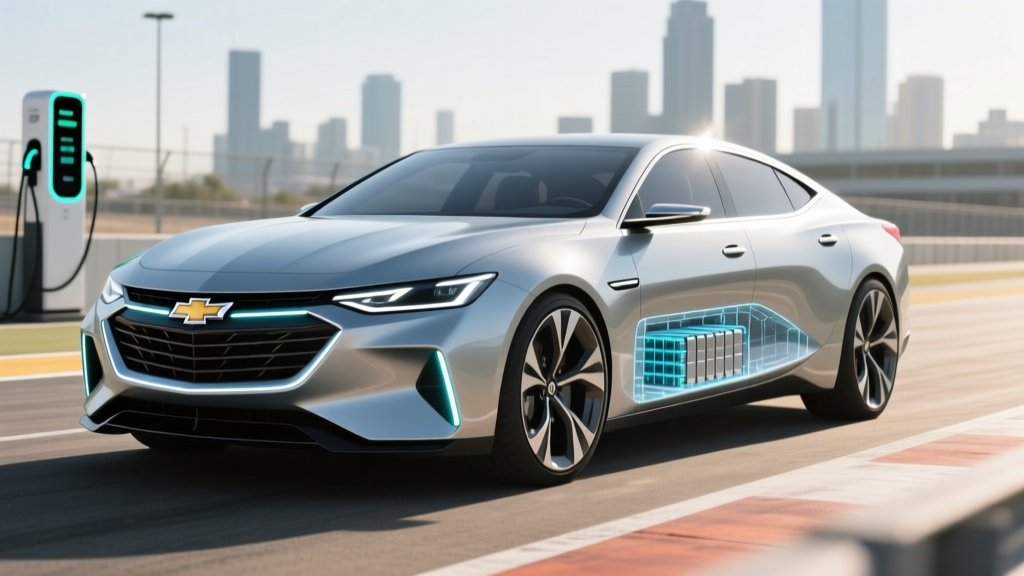
Speculating based on GM's Ultium platform capabilities and the current large-sedan market, a hypothetical electric Impala successor could look like this:
- Platform: Ultium, sedan body style, ~115-inch wheelbase
- Battery: 100-110 kWh NMC pack
- Range: 350-400 miles EPA
- Powertrain: Dual-motor AWD, 350-400 hp
- Charging: 200+ kW DC fast charge (if GM upgrades to 800V architecture)
- Price: $45,000-$55,000 MSRP
- Competitors: Tesla Model S, BMW i5, Hyundai Ioniq 6, Lucid Air Pure
However, GM's current product roadmap focuses heavily on trucks and SUVs. The closest thing to a large electric sedan in GM's 2026 lineup is the Cadillac Celestiq (a $300,000+ ultra-luxury hand-built vehicle) — not exactly Impala territory. For mainstream buyers, the Equinox EV and Blazer EV remain the practical choices.
Frequently Asked Questions
What is the exact bolt pattern for a 2015 Chevy Impala?
The 2015 Chevy Impala has a 5x120mm bolt pattern (5 lugs on a 120mm circle), a 66.9mm center bore, and M12x1.5 lug nuts torqued to 100 lb-ft. This pattern is shared with the Chevy Camaro (2010+), Cadillac CTS, and several Buick models.
Will 2015 Impala wheels fit a newer Chevy EV?
Generally no. The 2015 Impala's 5x120 bolt pattern differs from the Chevy Equinox EV, which uses a 5x115mm pattern. Always verify bolt pattern, center bore, offset, and load rating before mounting wheels from one vehicle onto another — especially on EVs, where higher curb weight demands wheels rated for the increased load.
Is there an electric Chevy Impala for 2026?
No. Chevrolet discontinued the Impala after 2020 and has not announced an electric replacement. The closest current Chevy EVs are the Equinox EV (compact/midsize crossover, ~$33K starting) and Blazer EV (midsize crossover, ~$44K starting).
Does the Equinox EV qualify for the $7,500 federal tax credit?
The Equinox EV has historically qualified for the full §30D credit, but eligibility depends on your income (caps at $150K single/$300K joint), the vehicle's MSRP (must be under $80K for SUVs), and current-year battery sourcing requirements. Always verify on the IRS qualified vehicles list and consult a tax professional.
What's the real-world range of the Equinox EV?
The EPA rates the Equinox EV 3RS FWD at approximately 319 miles. In real-world highway driving at 70+ mph, expect ~260-280 miles. In freezing temperatures, range can drop to ~220-250 miles without battery preconditioning. These figures are competitive for the class but fall short of the sticker number, as is typical for all EVs.
How does the Equinox EV compare to the Tesla Model Y?
The Model Y offers faster DC charging (~250 kW peak vs 150 kW), access to the Supercharger network, and slightly more cargo space. The Equinox EV counters with a lower starting price (especially after tax credits), a more traditional interior layout, and available Super Cruise. Choose the Model Y for road-trip charging speed and tech; choose the Equinox EV for value and comfort.
Sources: fueleconomy.gov (EPA range and efficiency data), IRS §30D Clean Vehicle Credit (tax credit eligibility rules), Chevrolet manufacturer specifications.