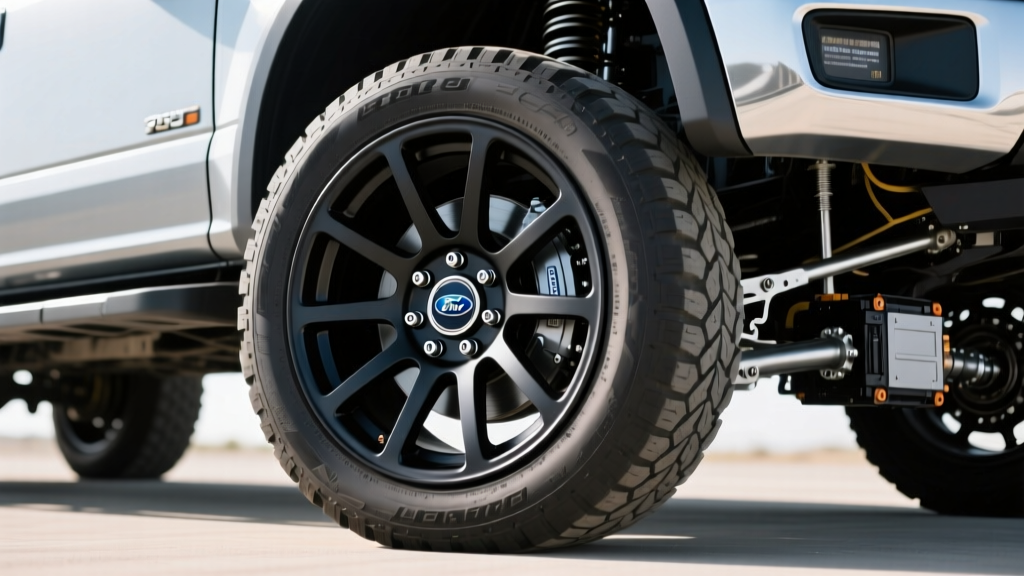
2010 Ford F-150 Bolt Pattern: The Essential Specs
The bolt pattern for 2010 F-150 trucks is 6x135mm (6 lug bolts on a 135mm circle). This applies to every trim level and cab configuration of the 2010 model year, including the XL, XLT, Lariat, King Ranch, Platinum, and Harley-Davidson editions. Whether you're maintaining a stock 2010 F-150 or planning an EV conversion with aftermarket wheels, understanding this spec is the starting point for safe, proper fitment.
As electric truck conversions gain traction and owners explore fitting lighter, more aerodynamic wheels to reduce rolling resistance, the 6x135 bolt pattern remains the hard constraint that dictates your wheel selection. Here's everything an EV-minded F-150 owner needs to know.
Bolt Pattern: 6x135mm (6-lug, 135mm bolt circle diameter)
Center Bore: 87.1mm
Lug Nut Thread Size: M14 x 2.0
Lug Nut Torque Spec: 150 lb-ft (203 Nm)
Stock Wheel Sizes: 17" / 18" / 20" depending on trim
Why Bolt Pattern Matters for EV Conversions
If you're converting a 2010 F-150 to electric power — or fitting wheels on a used F-150 you plan to electrify — wheel selection directly impacts efficiency, range, and safety. Here's why the bolt pattern is more than a trivia number:
- Hub-centric vs. lug-centric fitment: The 87.1mm center bore on the 2010 F-150 is designed for hub-centric wheels, where the center bore of the wheel precisely matches the hub flange. This reduces vibration at speed — critical when an EV conversion adds significant unsprung weight from battery packs and electric motors.
- Load rating requirements: F-150 wheels must support the truck's gross axle weight rating (GAWR). EV conversions often add 500–1,200 lbs of battery mass, meaning aftermarket wheels need an even higher load rating than stock. Any 6x135 wheel you select must be rated for at least 2,500 lbs per wheel for safe EV use.
- Offset and backspacing: The 2010 F-150 uses a positive offset typically between +30mm and +44mm on stock wheels. Deviating significantly from this range with aftermarket wheels changes scrub radius and bearing load — both of which accelerate wear when the truck carries the additional static weight of a battery pack.
| Trim Level | Stock Wheel Size | Bolt Pattern | Offset Range | Typical Tire Size |
|---|---|---|---|---|
| XL / XLT (base) | 17" steel | 6x135mm | +35mm to +44mm | P235/70R17 |
| XLT (optional) | 18" alloy | 6x135mm | +35mm to +40mm | P265/60R18 |
| Lariat / King Ranch | 18" alloy | 6x135mm | +30mm to +38mm | P275/55R18 |
| Platinum / Harley-Davidson | 20" alloy | 6x135mm | +30mm to +35mm | P275/45R20 |
Source: Ford Vehicle Specifications
Wheel Compatibility: What Fits the 6x135 Bolt Pattern?
The 6x135mm bolt pattern is relatively uncommon compared to the more universal 6x5.5" (6x139.7mm) pattern found on many GM and Toyota trucks. This narrows your aftermarket options, but several manufacturers produce 6x135 wheels suitable for the 2010 F-150:
Direct Bolt-On Compatibility (No Adapters)
- 2004–2024 Ford F-150 OEM wheels — All 12th through 14th generation F-150s share the 6x135 pattern, though center bore and offset may vary by generation.
- 2003–2010 Ford F-250/F-350 SRW (select years) — Some light-duty F-250 models used 6x135, but verify center bore before purchasing.
- Aftermarket brands: Fuel Off-Road, XD Wheels, Moto Metal, and Pro Comp all offer 6x135 options in 17"–22" sizes with appropriate load ratings for truck use.
EV Conversion Considerations for Wheel Selection
When fitting wheels to a 2010 F-150 destined for an electric drivetrain, prioritize these three factors:
- Weight: Lighter wheels reduce rotational mass, directly improving range. Forged aluminum wheels can save 5–8 lbs per corner vs. cast equivalents — translating to roughly 2–4% range improvement in stop-and-go driving.
- Aerodynamic profile: Enclosed or semi-enclosed wheel designs reduce turbulent airflow around the wheel wells. On an EV conversion traveling at highway speeds, aero-optimized wheels can recover 1–3% efficiency.
- Low rolling-resistance tire pairing: The bolt pattern determines your wheel; the tire determines your rolling resistance. EV-specific tires like the Michelin e.Primacy or Hankook iON evo reduce energy consumption by 10–20% compared to standard all-terrain truck tires.
Measuring and Verifying the Bolt Pattern Yourself
If you've acquired a 2010 F-150 with aftermarket wheels and need to verify the bolt pattern, follow this process:
Step-by-Step Verification
- Count the lugs: The 2010 F-150 has 6 lug nuts per wheel. This immediately narrows the pattern to 6-lug configurations.
- Measure the bolt circle diameter: For a 6-lug pattern, measure center-to-center between two lug studs directly across from each other (opposing lugs). The measurement should read 135mm (5.315").
- Verify center bore: Use calipers to measure the hub pilot diameter. Stock 2010 F-150 hubs are 87.1mm. If aftermarket wheels have a larger bore (e.g., 106.1mm), you'll need hub-centric rings to prevent vibration.
- Check lug nut thread pitch: The 2010 F-150 uses M14 x 2.0 studs. Using incorrect lug nuts (e.g., M12 or M14 x 1.5) can result in catastrophic wheel separation.
Torque Specifications and Maintenance for EV Use
The increased weight of an EV conversion places additional stress on lug nuts and wheel studs. Proper torque becomes even more critical than on a stock gas F-150.
| Specification | Stock F-150 | EV Conversion (Recommendation) |
|---|---|---|
| Lug Nut Torque | 150 lb-ft (203 Nm) | 150 lb-ft (203 Nm) — do not exceed |
| Re-torque Interval | After 50 miles post-install | After 25 miles, then every 500 miles |
| Stud Replacement Interval | As needed | Inspect annually for stretch/fatigue |
| Lug Nut Type | OEM conical seat | Match to wheel seat (conical or ball) |
After any EV conversion that adds significant axle weight, have a qualified shop perform a wheel load analysis to confirm your chosen 6x135 wheels and studs can handle the increased gross vehicle weight. Reference the NHTSA vehicle weight guidelines for safe loading practices.
Common Questions About the 2010 F-150 Bolt Pattern
Will 6x5.5" (6x139.7mm) wheels fit a 2010 F-150?
No. The 6x5.5" pattern (common on Chevy Silverado, GMC Sierra, and Toyota Tundra) has a bolt circle 4.7mm larger than the F-150's 6x135mm pattern. The studs will not align. Do not attempt to force or modify wheels from a different bolt pattern.
Can I use wheels from a 2015+ F-150 on a 2010 model?
The bolt pattern (6x135mm) is identical across 2004–2024 F-150 generations. However, the center bore changed on some later models, and TPMS sensor compatibility differs. You may need hub-centric rings and new TPMS sensors for a proper swap.
What's the largest tire I can fit on stock 2010 F-150 wheels?
On stock 17" wheels, most owners fit up to 285/70R17 without rubbing. On stock 18" wheels, 295/60R18 is a common maximum. For an EV conversion where suspension geometry may change under added battery weight, stay conservative — tire rub under compression can damage both tire and wheel.
Are hub-centric rings necessary for aftermarket 6x135 wheels?
If the aftermarket wheel's center bore exceeds 87.1mm (many universal-fit wheels bore to 106.1mm or larger), then yes — hub-centric rings fill the gap between hub and wheel, preventing vibration and ensuring the hub, not the lug studs, carries the vehicle's weight. This is especially important on EV conversions where total vehicle mass is higher.
Does bolt pattern affect EV range or efficiency?
Indirectly. The bolt pattern itself doesn't influence efficiency, but it determines which wheels you can mount. Lighter, more aerodynamic wheels in the correct 6x135 pattern can reduce energy consumption by 3–7% compared to heavy stock steel wheels — meaningful gains on a battery-constrained EV conversion where every watt-hour counts.
EV Conversion Wheel Selection Checklist
- ☐ Bolt pattern confirmed: 6x135mm (6-lug, 135mm circle)
- ☐ Center bore: 87.1mm (or hub-centric rings included for larger bore)
- ☐ Load rating: minimum 2,500 lbs per wheel (higher if battery-heavy)
- ☐ Offset: +30mm to +44mm (within stock range)
- ☐ Lug seat type matches lug nuts (conical 60° or ball seat)
- ☐ Wheel weight: lighter is better for range (target under 30 lbs per wheel for 18")
- ☐ TPMS compatibility: verify sensor fitment or plan for aftermarket TPMS
- ☐ Clearance check: wheel/tire combo clears brake calipers and suspension at full compression
Where to Source 6x135 Wheels for EV Projects
The 6x135 bolt pattern limits your options compared to the more common 6x5.5", but several reliable sources carry appropriate wheels:
- RockAuto.com — OEM replacement wheels for 2004–2024 F-150 at competitive prices.
- Tire Rack — Aftermarket 6x135 options with verified fitment data and load ratings.
- Car-Part.com — Salvage yard network for OEM Ford wheels at a fraction of new pricing.
- Specialty EV conversion suppliers — Companies like EV West and Zero EV Components occasionally stock lightweight, high-load wheels specifically curated for electric truck projects.
When ordering, always confirm the bolt pattern with the seller before purchase. Listings occasionally mislabel 6x5.5" wheels as fitting Ford trucks — they do not. Request the manufacturer's spec sheet showing the exact bolt circle diameter, center bore, offset, and load rating before committing.
The bolt pattern for 2010 F-150 is a non-negotiable mechanical interface. Get it right, and your wheels will safely carry the truck — whether it's running a 5.4L V8 or a 200 kW electric motor — for thousands of reliable miles. Get it wrong, and you risk vibration, bearing wear, or wheel separation. Measure twice, buy once.