Why a 2007 F-150 Owner Cares About the Bolt Pattern Switch to Electric
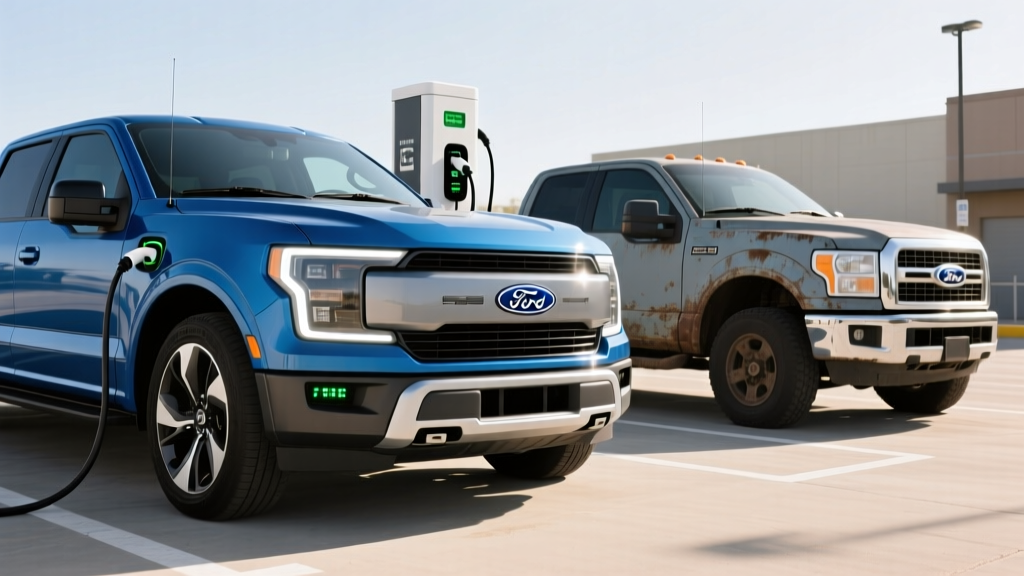
If you've owned a 2007 Ford F-150 for years, you probably know its bolt pattern by heart: 6x135mm (six lug nuts arranged on a 135-millimeter circle). That 6x135 spec defined a generation of Ford trucks from 2004 through 2020, meaning thousands of aftermarket wheels, spacers, and lift kits were built around it. But when Ford redesigned the F-150 for the 2021 model year — and subsequently launched the all-electric F-150 Lightning — they changed the bolt pattern to 6x139.7mm (often written 6x5.5 inches). That 4.7mm difference per stud means your old rims won't fit a new Lightning, and it's symbolic of a much larger shift in what a full-size pickup can be.
This guide bridges the gap for longtime F-150 owners evaluating whether the 2026 F-150 Lightning is a viable replacement. We'll cover the wheel specs you need to know, then dive deep into the Lightning's EPA range, charging speed, towing reality, pricing, and federal tax credit eligibility so you can make a data-driven decision.
Bolt Pattern Comparison: 2007 F-150 vs. 2026 F-150 Lightning
| Specification | 2007 Ford F-150 | 2026 Ford F-150 Lightning |
|---|---|---|
| Bolt Pattern | 6x135mm | 6x139.7mm (6x5.5") |
| Center Bore | 87.1mm | 87.1mm |
| Thread Size | M14 x 2.0 | M14 x 1.5 |
| Typical Wheel Size | 17"-20" | 18"-22" |
| OEM Tire (common) | 255/70R17 | 275/60R20 (Lariat) |
| Wheel Compatibility | Legacy Ford truck pattern | Shared w/ 2021+ F-150, many Toyota/GM 6-lug |
The thread pitch change from 2.0 to 1.5 matters too — lug nuts are not interchangeable. If you're planning to carry a full-size spare from your old truck as a backup, it won't mount correctly. Plan on sourcing Lightning-specific wheels from manufacturers like Ford Performance, Fuel, or Method Race Wheels that explicitly list 6x139.7 fitment.
2026 F-150 Lightning: Range, Battery, and Efficiency
Standard Range (98 kWh usable, NMC): EPA 240 miles — expect ~200-215 miles highway at 70 mph, ~170-185 miles in sub-30°F weather.
Extended Range (131 kWh usable, NMC): EPA 320 miles — expect ~265-280 miles highway, ~220-240 miles in freezing temps.
Highway speeds and cold weather reduce range 15-30%. Towing a 5,000-lb trailer can cut range by 40-50%.
Ford uses nickel-manganese-cobalt (NMC) chemistry across the Lightning lineup, prioritizing energy density over the longer cycle life of LFP. The Extended Range pack's 131 kWh usable capacity makes it one of the largest battery packs in any production vehicle, and it shows in the EPA numbers. Efficiency lands at approximately 70 MPGe combined (Extended Range), which translates to roughly 48 kWh per 100 miles — thirsty by EV standards, but competitive for a 6,500-lb truck with the aerodynamics of a brick.
For context, the EPA figures come from fueleconomy.gov, and they represent mixed city/highway driving at moderate temperatures. If your daily commute is 60 miles round-trip with mostly city driving, the Standard Range pack will cover it easily with margin to spare. But if you regularly drive 200+ miles on the highway or tow on weekends, the Extended Range pack is a near-mandatory upgrade.
Charging Speed: DC Fast, Level 2, and Level 1
| Charging Level | Power / Rate | Time or Miles Added | Connector |
|---|---|---|---|
| DC Fast Charge (peak) | 150 kW (Std) / 155 kW (Ext) | 10-80% in ~41 min (Std), ~44 min (Ext) | CCS1 (NACS adapter available) |
| Level 2 — Ford Mobile Charger | 9.6 kW (240V, 40A) | ~23 mi/hr (Std), ~22 mi/hr (Ext) | J1772 / NACS |
| Level 2 — Ford Charge Station Pro | 19.2 kW (240V, 80A) | ~46 mi/hr (Std), ~44 mi/hr (Ext) | NACS (native) |
| Level 1 — Standard Outlet | 1.4 kW (120V, 12A) | ~2-3 mi/hr | NEMA 5-15 |
The Lightning's DC fast-charging speed is its most debated spec. At a peak of 150-155 kW, it trails the Rivian R1T (220 kW) and Hyundai Ioniq 5 (240+ kW). The charge curve also tapers noticeably above 80%, meaning that last 20% can take as long as the first 80%. On a road trip, plan your stops around the 10-80% window — roughly 41-44 minutes at a functioning 150+ kW Electrify America or Tesla Supercharger (with NACS adapter).
At home, the 19.2 kW Ford Charge Station Pro is the gold standard, adding roughly 44-46 miles of range per hour. A full overnight charge from 20% to 100% takes about 7-8 hours on the Extended Range pack. Installation typically requires a 100-amp dedicated circuit; budget $1,500-$3,500 for the electrician work depending on your panel capacity and conduit run. Ford includes the mobile power cord that handles 9.6 kW on a 240V NEMA 14-50 outlet — sufficient for most daily needs if you can install the receptacle for ~$300-$800.
Performance, Towing, and Cargo: Does It Replace Your F-150?
| Spec | Standard Range (Dual-Motor AWD) | Extended Range (Dual-Motor AWD) |
|---|---|---|
| Horsepower | 452 hp | 580 hp |
| Torque | 775 lb-ft | 775 lb-ft |
| 0-60 mph | ~3.8 sec | |
| Max Towing (w/ Max Tow Pkg) | 7,700 lbs | 10,000 lbs |
| Payload | 2,235 lbs | 1,800 lbs |
| Bed Length | 5.5 ft (standard) | |
| Frunk (Front Trunk) | 14.1 cu ft, 400-lb capacity, drainable | |
| Rear Legroom | 43.6 inches | |
The dual-motor AWD powertrain is standard on every Lightning trim, and the instant 775 lb-ft of torque makes it feel quicker than any gas F-150 short of the Raptor. Towing is where the physics get real: a 7,000-lb trailer on the highway will slash your range to roughly 150-170 miles on the Extended Range pack. Ford's onboard scale and Intelligent Range estimation help manage expectations, but if you tow a large camper more than 150 miles one-way, you'll need to plan charging stops carefully — and accept that DC fast charging with a trailer attached requires pull-through charging stations, which remain scarce.
The Mega Power Frunk is the Lightning's party trick: 14.1 cubic feet of lockable, drainable, weather-sealed storage under the hood, with 400 pounds of payload capacity and integrated LED lighting. It's genuinely useful for groceries, tools, or wet gear. The 5.5-foot bed is shorter than the 6.5-foot bed on most gas F-150s — a trade-off for the independent rear suspension and packaging — so if you haul long lumber, factor that in.
Pricing, Trims, and Federal Tax Credit (IRS §30D)
| Trim | Base MSRP (2026) | Battery | Est. After §30D Credit |
|---|---|---|---|
| Pro (Standard Range) | $52,990 | 98 kWh | ~$45,490* |
| XLT (Standard Range) | $58,990 | 98 kWh | ~$51,490* |
| Lariat (Extended Range) | $72,990 | 131 kWh | ~$65,490* |
| $86,990 | 131 kWh | ~$79,490* |
*Tax credit estimates assume full eligibility. Actual credit varies based on IRS §30D requirements.
- MSRP Cap: Trucks/vans/SUVs must have MSRP ≤ $80,000 (Pro, XLT, and Lariat qualify; Platinum does NOT)
- Income Cap: AGI ≤ $150,000 single / $225,000 head of household / $300,000 joint
- Battery Sourcing: Critical minerals and battery components must meet escalating domestic-content thresholds (check IRS.gov for current-year percentages)
- Point-of-Sale Transfer: You can transfer the credit to the dealer at purchase, reducing your out-of-pocket cost immediately — no need to wait for tax filing
- Assembly: Vehicle must undergo final assembly in North America (Lightning is built in Dearborn, MI ✓)
Consult a tax professional to confirm your eligibility. Rules are subject to change.
The Pro trim at ~$52,990 before incentives is the value play, offering the same dual-motor AWD, 12-inch touchscreen, and Pro Power Onboard as higher trims, just with cloth seats and fewer luxury features. The Lariat with Extended Range is the sweet spot for road-trippers and towers, but at $72,990 it pushes close to the $80,000 MSRP cap. The Platinum exceeds the cap and is ineligible for the federal credit — a critical factor if you're comparing fully loaded trucks.
Warranty, Tech, and Ownership Costs
Ford backs the Lightning's battery and electric powertrain with an 8-year/100,000-mile warranty, with a capacity retention threshold of 70% — meaning if your pack degrades below 70% of original capacity within that window, Ford will repair or replace it. The bumper-to-bumper warranty is 3 years/36,000 miles. Battery replacement cost out of warranty is estimated at $15,000-$25,000 depending on pack size, though real-world degradation data from 2022-2024 Lightnings suggests most packs retain 90%+ capacity at 60,000 miles with normal use.
Standout tech includes:
- Pro Power Onboard: 2.4 kW standard (9.6 kW available) — turns the Lightning into a mobile generator with 120V and 240V outlets in the bed and frunk. The 9.6 kW option can run a welder, power tools at a job site, or back-feed your home during an outage (with the Ford Intelligent Backup Power system and a compatible transfer switch).
- BlueCruise: Ford's Level 2 hands-free highway driving assist works on 130,000+ miles of pre-mapped divided highways. It requires a subscription after the initial trial period (~$75/month or $800/year). This is not self-driving — you must remain attentive and the system will monitor your eyes via an infrared camera.
- SYNC 4A: 12-inch portrait touchscreen with wireless Apple CarPlay and Android Auto, over-the-air updates, and integrated Alexa.
- Onboard Scales: Measures payload in real time and adjusts range estimates accordingly.
Notable drawbacks: the Lightning's curb weight (6,000-6,500 lbs depending on trim) eats through tires faster than a gas F-150 — budget for replacement rubber every 30,000-40,000 miles. Insurance premiums run 15-25% higher than a comparable gas F-150 in most states, according to industry data. And the 5.5-foot bed, while functional, is a genuine compromise for anyone who regularly hauls long materials.
F-150 Lightning vs. Rivian R1T vs. Chevy Silverado EV
| Attribute | 2026 F-150 Lightning (Lariat Ext.) | 2026 Rivian R1T (Dual-Motor Max) | 2026 Silverado EV (4WT) |
|---|---|---|---|
| EPA Range | 320 mi | 410 mi | 370 mi |
| Battery (usable kWh) | 131 kWh (NMC) | 149 kWh (NMC) | 200 kWh (NMC) |
| Peak DC Charge | 155 kW | 220 kW | 200 kW |
| 0-60 mph | 3.8 sec | 3.5 sec | 4.5 sec |
| Max Towing | 10,000 lbs | 11,000 lbs | 10,000 lbs |
| Bed Length | 5.5 ft | 4.5 ft (+ Gear Tunnel) | 5.9 ft (w/ Multi-Flex midgate) |
| Starting MSRP | $72,990 | $87,900 | $74,800 |
The Lightning wins on dealer network accessibility, Pro Power Onboard utility, and overall value per dollar. The R1T offers more range, faster charging, and a more refined interior, but at a steep premium and with a smaller bed. The Silverado EV has the longest range and a clever midgate that extends bed length into the cabin, but it's only available in commercial/fleet trims initially, and GM's dealer experience varies widely. For a former 2007 F-150 owner who values familiarity, the Lightning is the most natural transition — it drives like a truck, sits like a truck, and the Ford dealer network handles service in most rural areas.
Who Should Buy the 2026 F-150 Lightning?
- You have home charging access (Level 2) and a daily commute under 100 miles
- You want a work truck with onboard power (Pro Power Onboard is unmatched)
- You tow occasionally (under 150 miles one-way) or can plan charging stops
- You value the F-150 platform, dealer network, and crew-cab rear seat space
- You qualify for the §30D tax credit and the trim you want is under the $80K MSRP cap
- You regularly tow heavy trailers over 200+ miles without overnight access
- You need a 6.5-foot or 8-foot bed for long materials
- You live in an apartment or lack reliable home/workplace charging
- Your AGI exceeds the §30D income caps and the MSRP makes it prohibitive without incentives
Frequently Asked Questions
What is the real-world range of the F-150 Lightning?
The Extended Range Lightning achieves an EPA-rated 320 miles, but expect 265-280 miles in real-world highway driving at 70 mph, and 220-240 miles in sub-freezing temperatures. The Standard Range pack (EPA 240 miles) delivers roughly 200-215 highway miles in moderate weather.
How fast does the Lightning charge at home and on the road?
On a DC fast charger, it peaks at 150-155 kW, reaching 10-80% in about 41-44 minutes. At home on a 19.2 kW Level 2 Ford Charge Station Pro, it adds roughly 44-46 miles of range per hour — a full charge takes 7-8 hours for the Extended Range pack.
Does the F-150 Lightning qualify for the $7,500 federal tax credit?
It can, but eligibility depends on your income (AGI ≤ $300K joint), the trim's MSRP (must be ≤ $80K for trucks — Pro, XLT, and Lariat qualify; Platinum does not), and battery-sourcing requirements that change annually. Check IRS §30D guidelines and confirm with your tax advisor before purchase.
Will my 2007 F-150 wheels fit the Lightning?
No. The 2007 F-150 uses a 6x135mm bolt pattern; the 2026 Lightning uses 6x139.7mm. The thread pitch also differs (M14x2.0 vs. M14x1.5). You'll need wheels specifically designed for the 2021+ F-150 platform.
Is the Lightning worth buying vs. a gas F-150?
If you can charge at home, drive under 200 miles daily, and value instant torque, near-silent operation, and onboard power generation, the Lightning offers lower per-mile fuel costs (roughly $0.05-$0.08/mile on home electricity vs. $0.18-$0.22/mile on gas at 17 MPG). The higher upfront price is partially offset by the tax credit and reduced maintenance — no oil changes, fewer brake replacements thanks to regenerative braking, and no transmission fluid. But if you regularly tow long distances or lack home charging, a gas or hybrid F-150 remains the more practical choice.