Quick Answer: 2006 Chevy Impala Bolt Pattern
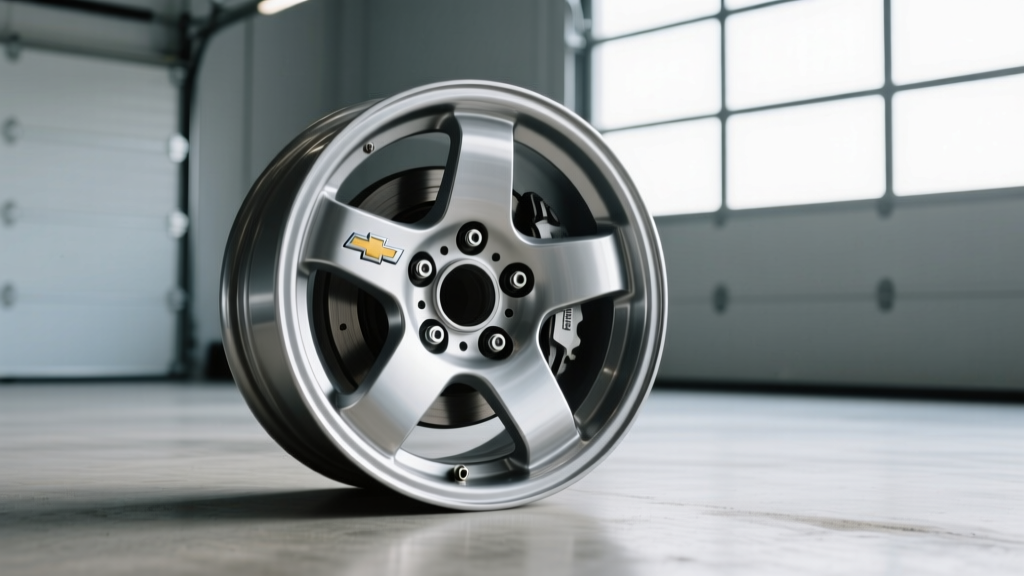
The bolt pattern for 2006 Chevy Impala is 5x115 mm (also expressed as 5x4.53 inches). This means the wheel has five lug holes arranged on a circle with a diameter of 115 millimeters. This pattern is shared across many GM vehicles of the era, including the Chevrolet Malibu, Pontiac Grand Prix, and Buick LaCrosse — making it a common fitment in the used-wheel market.
If you're researching this spec, you likely own or are servicing a ninth-generation Impala (2006–2011) and need to confirm wheel compatibility for replacement rims, winter tire setups, or aftermarket upgrades. Below is a complete fitment reference along with practical notes for anyone considering an electric-vehicle conversion or cross-platform wheel sourcing.
Complete 2006 Chevy Impala Wheel Specifications
| Specification | Value |
|---|---|
| Bolt Pattern (PCD) | 5x115 mm (5x4.53 in) |
| Center Bore | 70.3 mm |
| Thread Size (Lug Nut) | M12 x 1.5 |
| OEM Wheel Diameter | 16 in (base) / 17 in (LT/LTZ) |
| OEM Wheel Width | 6.5 in |
| Stock Offset | +40 to +45 mm |
| OEM Tire Size (Base) | P225/60R16 |
| OEM Tire Size (LT/LTZ) | P225/55R17 |
| Lug Nut Torque Spec | 100 lb-ft (140 Nm) |
Why center bore matters: The 70.3 mm hub bore is critical. If you mount a wheel with a larger bore, you'll need hub-centric rings to prevent vibration. Wheels with a smaller bore physically won't fit over the hub. Always match or exceed the OEM bore diameter when sourcing aftermarket or take-off wheels.
Understanding 5x115 vs. 5x114.3: The Critical Difference
A common mistake when shopping for wheels is confusing 5x115 with 5x114.3 (5x4.5 inches). These patterns differ by only 0.7 mm — barely perceptible by eye — but forcing a 5x114.3 wheel onto a 5x115 hub creates uneven clamping force on the lug studs. Over time, this can lead to:
- Warped brake rotors from uneven stress distribution
- Wheel vibration at highway speeds (typically 60–75 mph)
- Premature wheel bearing wear
- Stud stretch or failure under heavy braking
Some aftermarket wheel manufacturers list 5x115 and 5x114.3 as interchangeable. They are not. If you must use a 5x114.3 wheel, confirm with the manufacturer that it has been specifically engineered with elongated lug holes or a dual-drill pattern rated for the 0.7 mm variance. When in doubt, stick to wheels explicitly listed as 5x115.
Which Vehicles Share the 5x115 Bolt Pattern?
GM used the 5x115 pattern extensively across its W-body, Epsilon, and Lambda platforms. This cross-compatibility is useful if you're hunting for take-off wheels or affordable OEM replacements:
| Make/Model | Years | Notes |
|---|---|---|
| Chevrolet Impala | 2000–2013 | 9th-gen (2006–2011) is 5x115 |
| Chevrolet Malibu | 2004–2012 (Epsilon) | Check center bore — some differ |
| Pontiac Grand Prix | 2004–2008 | W-body, same hub bore |
| Buick LaCrosse | 2005–2009 | W-body platform |
| Buick Regal | 2011–2017 | Epsilon II, verify bore |
| Cadillac XTS | 2013–2019 | Check offset differences |
| Chevrolet Volt | 2011–2019 | PHEV — same pattern, lighter car |
Important caveat: Sharing a bolt pattern does not guarantee full compatibility. You must also match the center bore, offset range, and load rating. A Cadillac XTS wheel may bolt on, but its different offset could push the tire into the fender liner or alter scrub radius enough to affect steering feel and tire wear.
EV Conversion Considerations: Wheels, Brakes, and Weight
If you're researching the 2006 Impala bolt pattern because you're planning an electric-vehicle conversion — a growing niche in the custom-build community — there are several wheel-and-tire factors that shift dramatically when you swap an ICE powertrain for batteries and an electric motor:
Weight Increase and Load Rating
A typical EV conversion adds 400–800 lbs over the stock curb weight (3,400 lbs for the 2006 Impala). That pushes gross weight toward 4,000+ lbs. OEM 16-inch wheels rated for the original curb weight may not carry adequate load margins. Look for wheels with a load rating of at least 1,500 lbs per corner (6,000 lbs total) to account for the battery pack, motor, and controller mass.
Regenerative Braking and Wheel Stress
Electric motors deliver instant torque — often 200+ lb-ft from zero RPM in a moderate conversion build. This puts significantly more stress on lug studs and wheel mounting surfaces during aggressive regen braking and acceleration. Ensure lug nuts are torqued to spec (100 lb-ft) and re-checked after the first 50 miles of driving post-installation.
Low Rolling Resistance Tire Selection
EV conversions benefit enormously from low rolling resistance (LRR) tires. Switching from standard all-season tires to an LRR compound like the Michelin Energy Saver or Continental EcoContact can recover 5–10% in range — meaningful when your battery pack is limited to 30–60 kWh in a conversion chassis. The stock P225/60R16 size offers limited LRR options; moving to a 17-inch wheel opens up a wider selection of EV-optimized rubber.
Aftermarket Wheel Options for the 5x115 Pattern
The 5x115 pattern is well-supported in the aftermarket, though selection is narrower than the more common 5x114.3 or 5x120 patterns. Here's what's available in 2026:
- OEM take-offs: The most affordable route. eBay and car-part.com regularly list Impala, Grand Prix, and LaCrosse wheels for $50–$150 each. Verify part numbers against GM catalog references.
- Aftermarket cast wheels: Brands like TSW, Konig, and Enkei offer select 5x115 fitments, typically in 17–19 inch diameters. Expect $150–$350 per wheel.
- Custom forged wheels: For EV conversions or show builds, companies like HRE and Forgeline will drill any PCD to order. Cost: $800–$2,000+ per wheel.
- Wheel adapters: Adapters exist to mount 5x120 or 5x114.3 wheels on a 5x115 hub, but they add 20–25 mm of thickness, change offset, and introduce a potential failure point. Avoid for daily-driven or high-torque applications.
Torque Specifications and Installation Best Practices
Whether you're mounting stock replacement wheels or upgrading for a conversion, follow these installation guidelines:
- Hand-thread all lug nuts before using any power tools. Cross-threading on M12x1.5 studs is common when rushing with an impact gun.
- Star-pattern tightening: Tighten in a five-point star sequence to ensure even clamping. Do not tighten in a circle.
- Torque to 100 lb-ft using a calibrated torque wrench. This is the GM specification for the 2006 Impala and should not be exceeded.
- Re-torque after 50 miles. New wheels or freshly removed wheels can settle, causing lug nuts to loosen. This is especially critical on heavier EV conversions.
- Never use anti-seize on lug studs unless the manufacturer explicitly specifies it. Lubricated threads change the torque-to-clamp-force relationship and can lead to over-torquing.
Frequently Asked Questions
Is the 2006 Chevy Impala bolt pattern the same as a Chevy Bolt EV?
No. The Chevrolet Bolt EV (2017–2023) uses a 5x105 mm bolt pattern with a 56.6 mm center bore — completely different from the Impala's 5x115 / 70.3 mm setup. Despite the similar model names (Impala vs. Bolt), they share no wheel compatibility. The Bolt EUV (2022–2023) also uses 5x10⁵. If you're cross-shopping wheels between these vehicles, they will not interchange.
Can I put 5x120 wheels on my 2006 Impala?
Not directly. A 5x120 pattern (common on BMW and some newer GM vehicles) is 5 mm larger in PCD than 5x115. You would need wheel adapters, which add thickness, alter offset, and introduce a mechanical weak point. For daily driving, this is not recommended. Stick to true 5x115 wheels.
What is the largest tire I can fit on a stock 2006 Impala?
On the stock 16x6.5 wheels, the OEM P225/60R16 is the recommended size. You can typically fit a P235/55R17 on an upgraded 17-inch wheel without rubbing, provided the offset stays within +38 to +45 mm. Anything wider than 245 mm or with a lower aspect ratio risks contact with the strut housing or inner fender liner, especially at full lock.
Does the SS trim have a different bolt pattern?
No. The 2006–2009 Impala SS, equipped with the 5.3L V8, uses the same 5x115 bolt pattern as all other trims. The SS does use 18-inch wheels (P235/50R18 tires) with a slightly different offset, but the PCD and center bore remain identical. SS wheels will fit any 2006–2011 Impala.
How do I verify my wheel's bolt pattern at home?
For a 5-lug pattern, measure from the center of one lug hole to the far edge of the lug hole directly across from it (skipping one hole). On a 5x115 pattern, this measurement should be approximately 115 mm (4.53 inches). Use digital calipers for accuracy — a tape measure introduces enough error to confuse 5x115 with 5x114.3.
Sources: GM Service Information (2006 Impala Service Manual), Tire Rack fitment database, NHTSA vehicle specification records.