Quick Answer: Are Bobcat Electric Tow Tractors Worth It in 2026?
Bobcat electric tow tractors (and similar industrial electric tuggers from manufacturers like Taylor-Dunn, TUG, and Lektro) replace propane and gas-powered tow tractors for warehouse, airport, and factory use. Expect a $35,000–$65,000 purchase price per unit depending on tow capacity (5,000–15,000 lbs), battery chemistry (lead-acid vs. lithium-ion), and configuration. The EV premium over a comparable gas/propane tow tractor is typically $10,000–$20,000 upfront, but fuel and maintenance savings of $3,000–$6,000 per year can deliver payback in 3–5 years for high-utilization fleets operating indoors or in emissions-regulated environments.
Key caveat: these are off-road industrial vehicles, not street-legal automobiles. They do not qualify for the federal §30D consumer EV tax credit and are not rated by the EPA for MPGe or highway range. Their "range" is measured in operating hours per shift, not miles.
What Bobcat Electric Tow Tractors Actually Are (And Aren't)
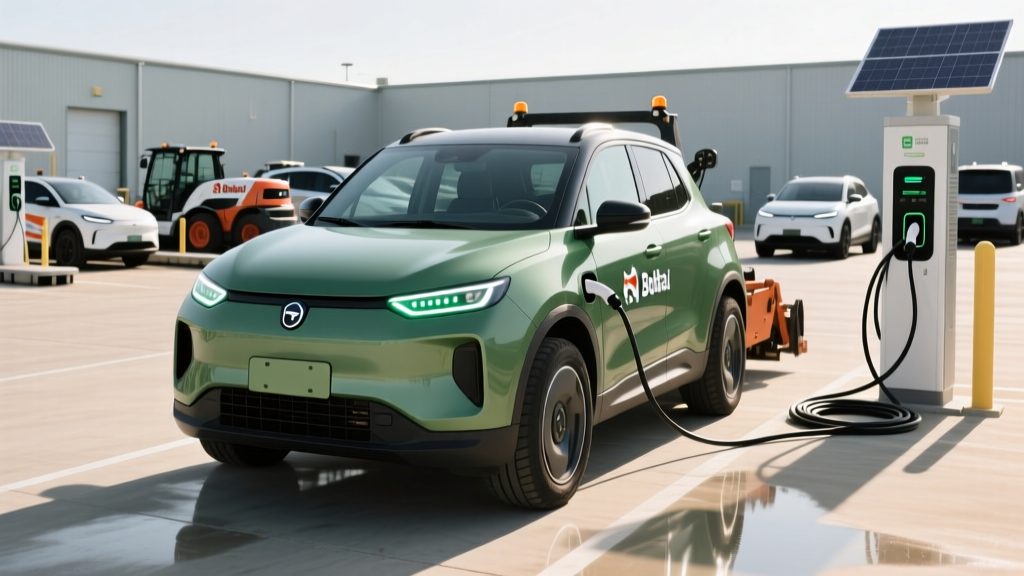
When fleet managers search for "Bobcat electric tow tractors," they're typically looking for electric industrial tow tractors or burden carriers used to pull carts, trailers, and heavy loads across campuses, warehouses, airports, and manufacturing plants. Bobcat (a Doosan brand) is best known for compact construction equipment — skid steers, compact track loaders, and utility vehicles. While Bobcat has expanded into electrified compact equipment, the electric tow tractor segment is dominated by specialized manufacturers:
- Taylor-Dunn (a Polaris company) — Tow tractors from 5,000 to 20,000 lb capacity
- TUG (Textron GSE) — Airport and industrial electric tugs
- Lektro — Aircraft and heavy-duty electric tow tractors
- Toyota Material Handling — Electric tow tractors for warehouse logistics
- Bobcat — Offers electric-drive compact utility vehicles (like the Bobcat T7X compact track loader, announced with a lithium-ion platform) but not dedicated tow tractors in the traditional sense
If you're sourcing an electric tow tractor for a fleet, you'll likely be cross-shopping across these brands rather than finding a single "Bobcat" model. The buying principles, however, are identical regardless of badge.
Electric vs. Propane/Gas Tow Tractors: The Data
The decision between electric and internal combustion (IC) tow tractors comes down to utilization pattern, operating environment, and total cost of ownership. Here's how they compare head to head for a typical 10,000-lb tow capacity unit running a single 8-hour shift:
| Metric | Electric (Li-ion) | Propane / Gas (IC) |
|---|---|---|
| Purchase price (base) | $42,000–$55,000 | $28,000–$38,000 |
| Energy/fuel cost per year (250 days) | $900–$1,500 (electricity) | $3,500–$5,200 (propane/gas) |
| Maintenance cost per year | $400–$800 | $1,800–$3,000 |
| Oil/filter changes | None | 2–4 per year |
| Brake wear | Reduced (regen braking) | Standard replacement cycle |
| Indoor emissions | Zero | CO, NOx, particulates — ventilation required |
| Noise level | ~65 dB | ~80–85 dB |
| Operating hours per "fill" | 6–8 hrs (Li-ion) / 4–6 hrs (lead-acid) | 8–10 hrs per tank |
| Refuel/recharge time | 4–8 hrs (standard) / 1–2 hrs (fast charge) | 5–10 minutes |
| Estimated 5-year TCO | $52,000–$68,000 | $58,000–$78,000 |
Key takeaway: The electric tow tractor wins on total cost of ownership in high-utilization scenarios (5+ days/week, indoor or campus use). The IC tow tractor wins where multi-shift continuous operation is required without downtime for charging, or in extremely cold outdoor environments where battery performance drops 15–30%.
Battery Chemistry: Lead-Acid vs. Lithium-Ion for Industrial Tugs
The single biggest specification decision when buying an electric tow tractor is battery chemistry. Most units in 2026 are available in two configurations:
| Factor | Flooded Lead-Acid (FLA) | Lithium-Ion (LiFePO4 / LFP) |
|---|---|---|
| Upfront battery cost | $3,000–$6,000 | $10,000–$20,000 |
| Usable capacity (typical) | 48V / 300–600 Ah (14–29 kWh) | 48V–80V / 200–500 Ah (10–40 kWh) |
| Depth of discharge | 50% recommended (80% max) | 80–100% usable |
| Cycle life | 800–1,500 cycles | 3,000–5,000+ cycles |
| Calendar lifespan | 3–5 years | 8–12 years |
| Maintenance | Water topping, equalization charges | Minimal — BMS managed |
| Charge time (0–100%) | 8–10 hours | 2–4 hours (opportunistic charging possible) |
| Opportunity charging | Not recommended (sulfation risk) | Yes — partial charges extend life |
| Weight | Heavier (acts as ballast — can be a benefit) | Lighter (may need added ballast for traction) |
For a fleet running a single shift with overnight charging, lead-acid remains viable and lowers the purchase price. For multi-shift operations, fast turnaround, or facilities that want to eliminate battery room maintenance (watering, ventilation for off-gassing), LFP lithium-ion is the clear winner — and the 2–3x cycle life means you won't be sourcing a replacement battery pack in year 4.
Charging Infrastructure: What Your Facility Needs
Unlike consumer EVs that use NACS or CCS connectors, industrial electric tow tractors typically charge via industrial-grade connectors (Anderson SB plugs, Anderson Powerpole, or proprietary high-current connectors) connected to dedicated industrial battery chargers. Here's what to plan for:
Electrical Requirements
- Single-unit charging: A standard 48V industrial tow tractor charger draws 2–4 kW from a 120V or 240V AC circuit. A dedicated 240V/20A or 30A circuit per charger is typical.
- Fleet charging (5+ units): Plan for 15–25 kW aggregate draw. A panel upgrade to 200A or 400A three-phase service may be required, at a cost of $5,000–$20,000 depending on existing infrastructure.
- Charger cost: $1,500–$4,000 per industrial smart charger (with programmable charge curves and BMS communication for Li-ion).
Real-World Charging Considerations
If your fleet operates on a single 8-hour shift with overnight charging, standard chargers are sufficient. For two-shift operations, you'll need either:
- Opportunity charging during breaks (requires LFP batteries and fast chargers — adds 30–50% SoC in 30–45 minutes)
- Spare battery swap systems (common with lead-acid — requires a battery extraction rack and spare packs at $3,000–$6,000 each)
Real Costs and Savings: A 5-Year Fleet TCO Breakdown
Let's model a realistic scenario: a warehouse deploying 3 electric tow tractors (LFP, 10,000-lb tow capacity) vs. 3 propane units, running 250 days/year on a single shift.
| Cost Category | 3x Electric (LFP) | 3x Propane (IC) |
|---|---|---|
| Vehicle purchase | $141,000 ($47K ea.) | $99,000 ($33K ea.) |
| Charging infrastructure | $12,000 (3 chargers + install) | $0 (existing propane supply) |
| Energy/fuel (5 years) | $15,000 | $60,000 |
| Maintenance (5 years) | $9,000 | $33,000 |
| Battery replacement | $0 (LFP lasts 8+ years) | N/A |
| Ventilation/exhaust compliance | $0 | $5,000–$10,000 (if new indoor ventilation needed) |
| Total 5-Year TCO | $177,000 | $197,000–$202,000 |
| Cost per unit per year | $11,800 | $13,100–$13,500 |
Net savings with electric: $20,000–$25,000 over 5 years for a 3-unit fleet, with savings accelerating in years 6+ as the LFP batteries continue operating while propane units face major powertrain overhauls.
Note: These figures do not include any federal tax incentives. The IRC §45W Commercial Clean Vehicle Credit may apply to qualified commercial EVs — consult a tax professional to determine eligibility for your fleet vehicles, as the rules differ significantly from the consumer §30D credit.
Common Misconceptions About Electric Tow Tractors
| Myth | Fact |
|---|---|
| "Electric tugs can't pull as much as gas ones" | Electric motors deliver peak torque at 0 RPM — they often outperform IC engines in initial pull force. Tow ratings of 10,000–20,000 lbs are standard. |
| "Batteries die in 2 years and cost a fortune to replace" | True for poorly maintained lead-acid. LFP lithium-ion packs are rated for 3,000–5,000 cycles — that's 10+ years of single-shift daily use before reaching 80% capacity. |
| "You need a massive electrical upgrade" | A single charger draws 2–4 kW — comparable to a clothes dryer. Most warehouses with existing 480V three-phase service need minimal upgrades. |
| "They can't operate in cold weather" | LFP batteries lose 10–20% capacity at 32°F and 25–35% at 0°F. Battery thermal management systems and garage parking mitigate this. Propane also loses efficiency in extreme cold. |
| "Electric tow tractors qualify for the $7,500 EV tax credit" | The §30D credit applies to on-road consumer vehicles meeting MSRP, income, and battery-sourcing requirements. Industrial off-road tugs may qualify under the separate §45W commercial credit (up to $7,500 for vehicles under 14,000 lb GVWR, $40,000 for heavier units), but eligibility depends on specific IRS criteria. |
Decision Framework: Should Your Fleet Go Electric?
Choose Electric Tow Tractors If:
- Your operation is primarily indoors — zero emissions eliminate the need for ventilation upgrades and protect worker health.
- You run a single shift (or can opportunity-charge) — overnight charging covers 8 hours of operation; LFP opportunity charging covers multi-shift with 30-min breaks.
- Your facility has 240V or 480V service available — charging infrastructure adds $1,500–$4,000 per stall, not tens of thousands.
- Noise is a concern — hospitals, university campuses, and food-processing plants benefit from the ~65 dB operating level vs. 80+ dB for IC units.
- You plan to hold units 5+ years — the TCO crossover typically occurs in year 3–4, with compounding savings afterward.
- Sustainability reporting matters — electrifying material-handling equipment contributes to Scope 1 emissions reduction.
Stick with Propane/Gas If:
- You run continuous multi-shift operations without adequate break time for opportunity charging, and don't want to invest in battery-swap infrastructure.
- Units operate primarily outdoors in sub-zero climates — without battery heating, range/capacity drops significantly.
- Your capital budget is strictly limited — the $10,000–$20,000 per-unit EV premium may not be justifiable if units are lightly used (<3 days/week).
- You need long-distance towing across large outdoor sites — IC units can refuel in 5 minutes and don't lose range in cold or on grades.
First-Time Buyer Checklist: What to Know Before You Order
- Audit your current tow routes: Measure total daily distance, average load weight, number of starts/stops, and grade conditions. This determines the battery kWh you need — don't spec a 15 kWh pack for a route that demands 25 kWh.
- Request a site assessment from the dealer: Reputable dealers (Taylor-Dunn, TUG, Toyota Material Handling) will survey your facility and recommend charger placement, electrical requirements, and unit configuration.
- Specify LFP if budget allows: The $7,000–$14,000 battery premium over lead-acid pays for itself in eliminated maintenance, longer life, and opportunity-charging capability.
- Confirm charger compatibility: Ensure the industrial charger communicates with the battery's BMS (Battery Management System) for proper charge-curve management — this is critical for LFP longevity.
- Check warranty terms: Leading manufacturers offer 3–5 year vehicle warranties and 5–10 year battery warranties (with capacity retention guarantees of 70–80% at end of term).
- Consult a tax professional on §45W: The commercial clean vehicle credit has specific requirements around vehicle classification, business use, and manufacturer certification. Don't assume eligibility — verify it with your CPA.
Frequently Asked Questions
Does Bobcat make an electric tow tractor in 2026?
Bobcat (Doosan) has been expanding its electrified compact equipment lineup — including the Bobcat T7X electric compact track loader and battery-electric compact excavators. However, Bobcat does not currently produce a dedicated electric tow tractor in the style of a Taylor-Dunn or TUG tug. If you need a Bobcat-branded electric utility vehicle for light towing, the Bobcat UV (utility vehicle) lineup with electric drive may be suitable for campus and grounds use, but for dedicated industrial towing of 5,000+ lbs, you'll likely look to specialized manufacturers.
How long do electric tow tractor batteries last?
Lead-acid batteries typically last 3–5 years (800–1,500 cycles) before needing replacement at $3,000–$6,000. LFP lithium-ion batteries last 8–12 years (3,000–5,000+ cycles) and are typically warrantied for 5–10 years at 70–80% capacity retention. For a single-shift operation charging once daily, an LFP pack can outlast the tractor itself.
Can I charge an electric tow tractor from a standard outlet?
Some smaller units (under 5,000-lb tow capacity) with onboard chargers can use a 120V/15A household outlet, but charging will take 12–16 hours. For full-size industrial tow tractors, a dedicated 240V circuit with a matched industrial charger is standard — expect 4–8 hours for a full charge depending on battery capacity and charger output (typically 2–5 kW).
What's the real operating range on a single charge?
"Range" for a tow tractor is measured in operating hours, not miles. A typical 48V/400 Ah LFP pack (~19 kWh usable) will deliver 6–8 hours of mixed-load operation (alternating between loaded towing and empty returns) on a single charge. Heavy continuous loads on grades will reduce this to 4–5 hours. Always spec 20–30% more battery capacity than your calculated need to account for degradation and cold-weather losses.
Are electric tow tractors safe for use around flammable materials?
Yes — electric tow tractors produce no exhaust emissions and can be specified with non-sparking components for use in hazardous environments. This is a major advantage in chemical plants, paint booths, and grain-handling facilities where propane or gas exhaust poses ignition or contamination risks. Consult your facility's safety officer and NFPA guidelines for specific requirements.