The Short Answer on the BMW X5 Electric
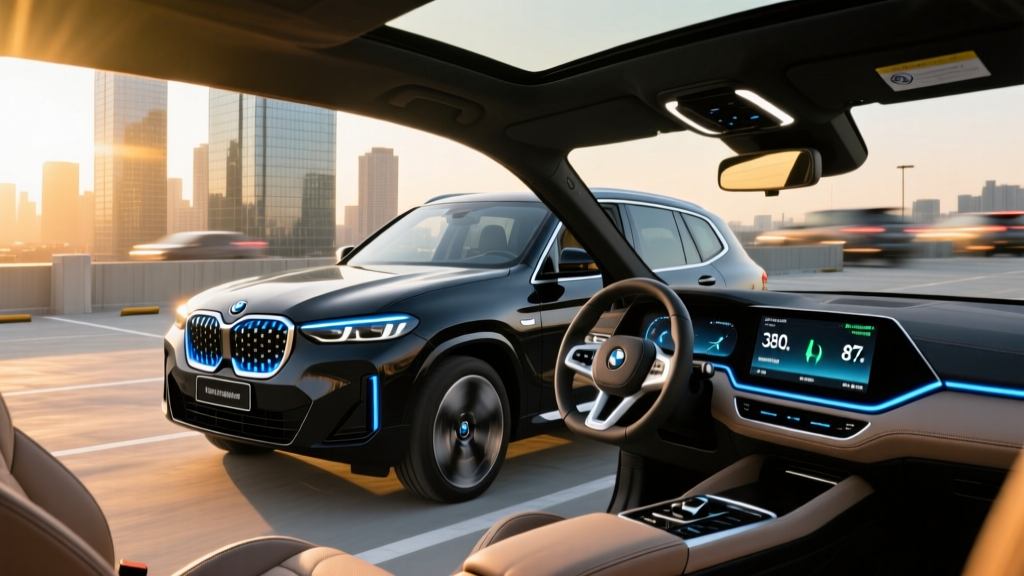
As of early 2026, BMW does not sell a fully electric X5 in the United States. The battery-electric BMW iX5 (built on the Neue Klasse platform) has been announced for global markets and is expected to arrive in the U.S. for the 2027 model year, likely in late 2026 as an early-order program. If you're searching for a "BMW X5 electric" today, your actual options from BMW are the X5 xDrive50e plug-in hybrid (38 miles of electric-only range, EPA-estimated) or the fully electric BMW iX midsize SUV. Below, we break down everything confirmed about the upcoming iX5, how it compares to the gas X5 and the PHEV variant, real ownership costs, and a decision framework to help you choose.
What Is the BMW iX5? Confirmed Specs and Timeline
BMW officially previewed the iX5 as part of its Neue Klasse SUV lineup. Unlike the current X5, which rides on the CLAR platform shared with gas and PHEV variants, the iX5 uses BMW's dedicated EV architecture with a structural battery pack, 800-volt electrical system, and sixth-generation eDrive motors. Here's what we know from BMW's preliminary disclosures and European homologation filings:
| Specification | BMW iX5 (Preliminary / Announced) | 2026 BMW X5 xDrive50e (PHEV) | 2026 BMW X5 xDrive40i (Gas) |
|---|---|---|---|
| Powertrain | Dual-motor AWD BEV | 3.0L I6 turbo + electric motor | 3.0L I6 turbo + 48V mild hybrid |
| Horsepower | ~463 hp (est.) | 483 hp combined | 375 hp |
| 0–60 mph | ~4.5 sec (est.) | 4.6 sec | 5.2 sec |
| Battery / Usable Energy | ~100 kWh usable (NMC, 6th-gen cylindrical cells) | 25.7 kWh usable (NMC) | N/A |
| EPA Range (Est.) | ~300–330 mi (projected) | 38 mi electric-only; ~440 mi total | ~450 mi (tank range) |
| Max DC Fast Charge | ~250 kW peak (800V architecture) | 7.4 kW AC only (no DC fast) | N/A |
| 10–80% DC Charge Time | ~22 min (projected) | ~3.25 hrs (Level 2) | N/A |
| Level 2 AC Charge Rate | 11 kW (est.) | 7.4 kW | N/A |
| Base MSRP (Est.) | ~$78,000–$85,000 | $74,900 | $67,200 |
| Federal Tax Credit (§30D) | Eligibility TBD — battery sourcing unconfirmed | Up to $3,750 (§30D PHEV rules) | None |
| Battery Warranty | 8 yr / 100,000 mi (BMW std.) | 8 yr / 80,000 mi | 4 yr / 50,000 mi powertrain |
Sources: BMW USA X5 page, fueleconomy.gov X5 PHEV listing. iX5 figures are preliminary estimates based on BMW press disclosures and European WLTP-to-EPA conversion patterns; final U.S. specs may differ.
BMW X5 Electric vs Gas vs PHEV: The Real Cost Breakdown
The purchase price tells only part of the story. Here's a five-year total cost of ownership comparison assuming 15,000 miles/year, $3.50/gallon regular unleaded, $0.16/kWh national average electricity, and 80% home / 20% public DC fast charging for the iX5:
| Cost Category (5 Years) | iX5 (Projected BEV) | X5 xDrive50e (PHEV) | X5 xDrive40i (Gas) |
|---|---|---|---|
| Purchase Price (base MSRP) | $82,000 | $74,900 | $67,200 |
| Federal Tax Credit | $0–$7,500 (TBD) | Up to $3,750 | $0 |
| Fuel / Electricity Cost | $4,680 | $7,200 (mixed EV/gas) | $13,125 |
| Maintenance (oil, filters, brakes) | $1,800 | $3,600 | $4,200 |
| Insurance (avg.) | $12,500 | $11,200 | $10,400 |
| Estimated Depreciation | $32,800 | $30,000 | $28,900 |
| 5-Year Total (before credit) | $133,780 | $126,900 | $123,825 |
| 5-Year Total (max credit applied) | $126,280 | $123,150 | $123,825 |
Key takeaway: The iX5's fuel savings (~$8,400 over five years vs. gas) are real, but they don't fully offset the higher purchase price and insurance premiums unless the full $7,500 tax credit applies. The PHEV X5 xDrive50e lands in the middle — lower upfront cost, partial fuel savings, and a more predictable credit. Insurance for EVs runs 10–20% higher on average due to repair costs and battery replacement exposure, per IIHS industry data.
Charging the BMW iX5: What You Actually Need at Home
The iX5's 800V architecture is its biggest practical advantage. At a compatible 250+ kW DC fast charger (Electrify America, Tesla Supercharger with NACS adapter, or Ionity in Europe), you can expect a 10–80% charge in roughly 22 minutes. However, the charging curve matters: peak 250 kW is sustained only between ~10–40% state of charge (SoC). From 40–80%, expect tapering to an average of ~120–150 kW. Above 80%, charging slows dramatically to protect the battery — plan to charge to 80% on road trips and move on.
For daily driving, home Level 2 charging is the baseline. Here's what a typical installation looks like:
| Item | Cost Range | Notes |
|---|---|---|
| Level 2 EVSE (48A hardwired, e.g., ChargePoint Home Flex or Wallbox Pulsar Plus) | $500–$750 | 11.5 kW output on 240V/60A circuit |
| Electrician labor (run 60A circuit, mount EVSE) | $800–$2,500 | Varies by panel proximity and wall material |
| Permit and inspection | $100–$300 | Required in most jurisdictions |
| Electrical panel upgrade (if needed, 100A→200A) | $1,500–$3,500 | Common in older homes; not always required |
| Total (no panel upgrade) | $1,400–$3,550 | |
| Total (with panel upgrade) | $2,900–$7,050 |
At 11.5 kW, you'll add roughly 35–40 miles of range per hour of charging. Overnight (8 hours), that's 280–320 miles — enough to fully replenish the iX5's battery. The federal Alternative Fuel Vehicle Refueling Property Credit (30C) may cover up to $1,000 of home charger installation costs, subject to income and census-tract eligibility.
If you cannot install home charging (apartment, condo, street parking), the iX5 becomes significantly less practical. Relying solely on public DC fast charging adds cost (~$0.35–$0.50/kWh vs. $0.16/kWh at home) and time. In that scenario, the X5 PHEV — which can fill up at any gas station and charges slowly on standard 120V overnight — is the more realistic choice.
Tax Credit Eligibility: Don't Assume $7,500
The federal §30D clean vehicle credit is the most misunderstood part of EV buying. For the iX5, eligibility is not yet confirmed because BMW has not disclosed final battery cell sourcing and critical-mineral supply chain details for the U.S.-spec vehicle. Here's the checklist every buyer must verify before counting on the credit:
- MSRP cap: SUVs must be ≤$80,000 MSRP. If the iX5 base trim exceeds this, it's ineligible regardless of other factors.
- Buyer income cap: Modified AGI ≤$150,000 (single), $225,000 (head of household), $300,000 (joint). Check your prior-year or current-year tax return — whichever is lower.
- Battery component manufacturing: Increasing percentage of battery components must be manufactured or assembled in North America (threshold rises annually).
- Critical minerals sourcing: Increasing percentage of critical minerals must be sourced from the U.S. or FTA partners.
- Foreign Entity of Concern (FEOC) restriction: Battery components or critical minerals from FEOC entities (certain Chinese, Russian, Iranian, North Korean firms) disqualify the vehicle.
- Point-of-sale transfer: You can transfer the credit to the dealer at purchase for an immediate price reduction, but you must still meet all income and eligibility requirements — if you don't, you repay the credit on your tax return.
Always verify current eligibility at fueleconomy.gov and consult a tax professional. Rules change frequently, and BMW's U.S. iX5 credit status will not be final until the EPA and IRS certify the specific VIN range.
Real-World Range: What the EPA Sticker Won't Tell You
Based on the iX5's estimated 100 kWh usable battery and BMW's Neue Klasse efficiency targets, a 300–330 mile EPA estimate is reasonable. But EPA is a laboratory test. Here's what to expect in practice:
EPA Estimated: ~310 miles (projected)
Real-World Highway (70–80 mph, moderate temps): ~250–275 miles
Real-World Cold Weather (below 32°F, highway): ~210–240 miles (25–30% reduction from cabin heating and battery resistance)
Real-World City / Mixed (with regen braking): ~280–310 miles
The iX5's heat pump (standard on Neue Klasse vehicles) helps mitigate cold-weather loss compared to resistive heating, but physics is physics: battery chemistry slows in the cold, and cabin heating draws real energy. If your commute is 60+ miles round-trip in a northern climate, plan for 220–240 miles of usable winter range and charge accordingly.
Common Misconceptions About the BMW X5 Electric
| Myth | Fact |
|---|---|
| "The electric X5 is available now." | It's not. The iX5 is announced for the 2027 model year. The current electric BMW SUV is the iX. |
| "I'll save $8,000/year on fuel." | At 15,000 miles/year and $0.16/kWh, expect ~$936/year in electricity vs. ~$2,625 in gas — a savings of ~$1,689/year, not $8,000. |
| "The battery will need replacing in 5 years." | BMW warranties the battery for 8 years/100,000 miles against degradation below 70% capacity. Industry data shows NMC packs losing ~10–15% capacity over 150,000 miles with normal use. |
| "I can charge on any DC fast charger." | The iX5 will likely use NACS (Tesla-standard) in the U.S. per BMW's 2024 announcement. CCS chargers will require an adapter. Verify connector type at purchase. |
| "The PHEV X5 is basically the same as the electric one." | The PHEV has 38 miles of electric range, no DC fast charging, and still requires oil changes. It's a bridge solution, not a BEV equivalent. |
Decision Framework: Should You Wait for the iX5 or Buy Now?
Choose the upcoming BMW iX5 (wait) if:
- You have home Level 2 charging or can install it.
- Your daily driving is under 200 miles and you take 1–2 road trips per year.
- You want zero tailpipe emissions and minimal maintenance.
- The projected $78K–$85K price fits your budget, and you can wait until late 2026/2027.
- You value 800V fast charging (22-min 10–80%) for road-trip practicality.
Choose the BMW X5 xDrive50e PHEV (buy now) if:
- You can't install home charging or live in an apartment.
- You regularly drive 300+ miles in a day and don't want to plan charging stops.
- You want a lower purchase price ($74,900) and a more predictable tax credit (up to $3,750).
- Your daily commute is under 35 miles — you'll run mostly on electricity and rarely burn gas.
Choose the BMW iX (buy now) if:
- You want a fully electric BMW SUV today with confirmed EPA range (324 mi for xDrive50), DC fast charging, and known tax credit eligibility.
- You're open to a slightly different design and driving position than the X5.
Avoid the iX5 (and EVs generally) if:
- You lack home charging access and your area has sparse public DC infrastructure.
- You regularly tow heavy loads (trailers, boats) — towing cuts EV range by 30–50%.
- Your budget is firmly under $65,000 — consider a used EV or a non-luxury PHEV instead.
Frequently Asked Questions
When will the BMW iX5 be available in the U.S.?
BMW has announced the iX5 globally but has not confirmed a specific U.S. on-sale date. Based on BMW's typical production and certification timeline, expect U.S. deliveries to begin in the first half of 2027 as a 2027 model-year vehicle. Pre-orders may open in late 2026.
Will the BMW iX5 qualify for the $7,500 federal tax credit?
Unknown at this time. Eligibility depends on final battery sourcing, MSRP (must be ≤$80,000 for SUVs), and your income. BMW has not published U.S.-spec battery supply chain details. Check fueleconomy.gov closer to launch for the certified VIN list.
How does the iX5 compare to the Tesla Model X or Rivian R1S?
The Model X offers more range (348 mi EPA, Long Range) and established Supercharger access but starts around $79,990 with a very different interior aesthetic. The Rivian R1S (Dual-Motor, Standard battery) offers 270 mi EPA, genuine off-road capability, and starts around $75,900. The iX5 targets traditional luxury SUV buyers who want BMW driving dynamics and build quality in an electric package.
Can I charge the BMW iX5 at Tesla Superchargers?
BMW has committed to adopting the NACS (Tesla) charging standard for its U.S. vehicles starting in 2025. The iX5 should arrive with a native NACS port, granting direct access to Tesla's Supercharger network without an adapter. Confirm this at the time of purchase, as specifications can change during development.
What happens if the iX5 battery degrades?
BMW's high-voltage battery warranty covers capacity loss below 70% of original for 8 years or 100,000 miles. Real-world data from similar NMC packs (BMW i4, iX) suggests ~10–12% degradation over 100,000 miles with normal charging habits (avoiding frequent 100% charges and deep discharges). Full battery replacement, if ever needed out of warranty, is estimated at $15,000–$22,000 based on current BMW HV battery pricing — though module-level repair is often possible for less.