The Bottom Line on the BMW X4 Electric
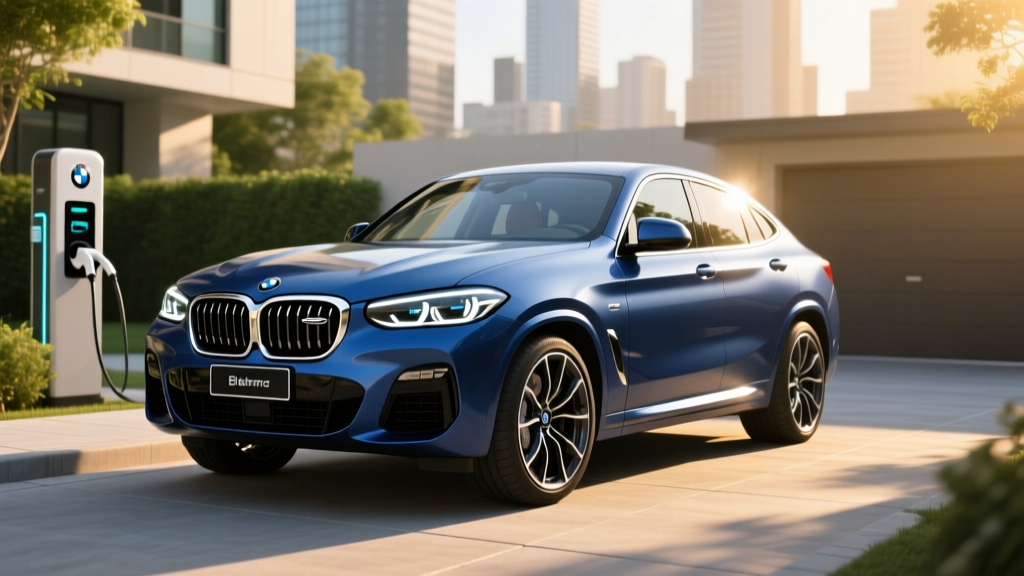
The BMW X4 electric (officially the BMW iX4) is the battery-electric successor to the popular X4 coupe-SUV, built on BMW's Neue Klasse platform. Expected to launch for the 2026 model year, the iX4 targets roughly 300+ miles of EPA range, 800V architecture enabling ultra-fast DC charging, and a starting price in the $55,000–$60,000 range. If you currently drive a gas X4 or are cross-shopping the Audi Q4 e-tron and Mercedes EQB, the iX4 represents a significant generational leap in efficiency and charging speed — but availability remains limited to announcements until BMW confirms final specs and deliveries begin.
What Is the BMW X4 Electric (iX4)?
BMW has been gradually electrifying its lineup with the iX, i4, i5, and i7, but the compact coupe-SUV segment has lacked a dedicated electric offering from the Bavarian automaker. The BMW iX4 — colloquially searched as the "BMW X4 electric" — fills that gap. Based on BMW's Neue Klasse architecture, the iX4 is a ground-up EV, not a converted combustion platform. This matters: dedicated EV platforms typically deliver better interior packaging, lower center of gravity, and more efficient thermal management than retrofitted designs.
BMW previewed the production direction with its Vision Neue Klasse X concept, signaling a coupe-SUV variant alongside the more traditional iX3 sibling. The production iX4 is expected to feature:
- Gen6 BMW eDrive powertrain with improved energy density
- 800V electrical architecture (up from 400V in older BMW EVs)
- Cylindrical battery cells replacing prismatic cells for better thermal performance
- NMC (nickel manganese cobalt) chemistry with reduced cobalt content
- Available single-motor RWD and dual-motor xDrive AWD configurations
Note: As of early 2026, BMW has announced the Neue Klasse platform but final iX4 specs remain preliminary. We'll update this guide as official EPA figures and pricing are confirmed.
Estimated Specs: Range, Battery, and Charging
Here's what we know based on BMW's Neue Klasse platform announcements and European testing data, translated to realistic US expectations:
| Specification | iX4 (Estimated RWD) | iX4 xDrive (Estimated AWD) |
|---|---|---|
| Battery Capacity (usable) | ~80 kWh | ~80 kWh |
| Battery Chemistry | NMC (Gen6 cylindrical) | NMC (Gen6 cylindrical) |
| EPA Range (est.) | ~310 miles | ~285 miles |
| Real-World Highway Range | ~260–280 miles | ~240–260 miles |
| Cold-Weather Range (20°F) | ~230–250 miles | ~210–230 miles |
| Peak DC Fast Charge | ~210 kW | ~210 kW |
| 10–80% DC Charge Time | ~22 minutes | ~22 minutes |
| Level 2 Charging (11 kW) | ~8.5 hours (0–100%) | ~8.5 hours (0–100%) |
| 0–60 mph | ~6.5 sec | ~5.2 sec |
| Horsepower | ~300 hp | ~400 hp |
| Architecture | 800V | 800V |
Real-World Range vs. EPA Sticker
BMW's Neue Klasse platform promises class-leading efficiency, but EPA estimates represent ideal mixed-driving conditions. In real-world testing of similar BMW EVs (i4, iX), expect:
- Highway driving at 75 mph: 15–20% range reduction vs. EPA
- Cold weather (below 32°F): 20–30% reduction without preconditioning; less with heat pump engagement
- Mountain driving: Significant consumption increase uphill, partially recovered via regen on descent
The iX4's 800V architecture and heat pump (expected standard) should help mitigate cold-weather losses compared to older 400V BMW EVs.
Charging Speed: The 800V Advantage
The shift to 800V is the single biggest practical upgrade in the Neue Klasse generation. Here's what it means at the charger:
kW vs. kWh — the critical distinction: kW (kilowatts) measures power — how fast energy flows into the battery. kWh (kilowatt-hours) measures energy — the battery's total capacity. Think of kW as the width of a hose and kWh as the size of the tank.
| Charging Level | Power (kW) | Miles Added per Hour | Typical Use Case |
|---|---|---|---|
| Level 1 (120V household) | ~1.4 kW | ~4–5 miles | Overnight trickle, emergencies |
| Level 2 (240V home/public) | 7.2–11 kW | ~25–37 miles | Daily home charging, workplace |
| DC Fast Charging | Up to ~210 kW (peak) | ~650+ miles/hr (peak) | Road trips, quick top-ups |
The charge curve reality: The iX4's ~210 kW peak rate applies only at lower states of charge (roughly 10–30% SoC). As the battery fills, the charging system throttles power to protect cell health. Expect the rate to taper to ~100 kW around 60% and ~50 kW past 80%. This is why the 10–80% time (~22 minutes) is the meaningful metric — charging from 80–100% can take nearly as long as 10–80%.
Preconditioning matters: The iX4 is expected to include battery preconditioning when you navigate to a DC fast charger. This warms the battery to optimal temperature before you arrive, enabling the full peak charge rate. Skipping preconditioning (or arriving at a charger with a cold battery) can add 5–10 minutes to your charge session.
Cost Breakdown: iX4 vs. Gas X4
The purchase decision ultimately comes down to total cost of ownership. Let's compare the estimated iX4 xDrive against the current gas-powered BMW X4 M40i over 5 years and 75,000 miles:
| Cost Category | BMW iX4 xDrive (est.) | BMW X4 M40i (Gas) |
|---|---|---|
| Base MSRP | ~$62,000 | ~$57,500 |
| Federal Tax Credit (§30D) | Up to $7,500* | $0 |
| Effective Purchase Price | ~$54,500 | ~$57,500 |
| Fuel/Energy (75k miles) | ~$3,400 (home charging)** | ~$9,750 (premium gas)*** |
| Maintenance (5 years) | ~$1,800 | ~$4,200 |
| Insurance (5 years, avg.) | ~$12,500 | ~$10,800 |
| Estimated Depreciation | ~$22,000 | ~$24,000 |
| 5-Year Total Cost | ~$94,200 | ~$106,250 |
* §30D credit eligibility depends on MSRP caps ($80,000 for SUVs), buyer income limits ($300K MFJ / $150K single), and battery critical-mineral sourcing requirements. Verify at IRS.gov before purchasing.
** Based on $0.14/kWh national average and 3.0 mi/kWh efficiency.
*** Based on $4.50/gallon premium and 24 MPG combined.
Key takeaway: The iX4 is projected to save roughly $12,000 over 5 years compared to the gas X4, primarily from fuel and maintenance savings. However, higher insurance premiums (common for EVs) and potential home charger installation costs ($500–$2,000) eat into those savings. If you rely exclusively on public DC fast charging (at $0.35–$0.50/kWh), fuel costs nearly double, narrowing the advantage.
Federal Tax Credit: Does the iX4 Qualify?
The §30D Clean Vehicle Credit can reduce your effective purchase price by up to $7,500, but eligibility is not guaranteed. Here's the current checklist:
§30D Credit Requirements (2026)
- MSRP cap: Vehicle must be under $80,000 (SUV classification) — iX4 expected to qualify
- Buyer income cap: AGI must not exceed $300,000 (married filing jointly), $225,000 (head of household), or $150,000 (single)
- Battery sourcing: Increasing percentages of critical minerals and battery components must be sourced from the US or FTA partners — this is the most volatile requirement and changes annually
- Assembly: Final assembly must occur in North America — BMW's US plant in Spartanburg, SC is a candidate, but Neue Klasse production may initially be in Europe
- Point-of-sale transfer: You can transfer the credit to the dealer at purchase for an immediate price reduction rather than waiting for tax filing
Critical caveat: If BMW produces the iX4 in Germany (at its Neue Klasse plant in Hungary or Germany), it will not qualify for the §30D credit regardless of other factors, because final assembly must be in North America. Monitor BMW's production announcements closely. Always verify current eligibility at fueleconomy.gov before committing to a purchase.
EV vs. Gas vs. Hybrid: Which X4 Is Right for You?
| Factor | iX4 (Electric) | X4 (Gas) | X4 PHEV (if offered) |
|---|---|---|---|
| Upfront Price | Higher (~$62K) | Lower (~$52K base) | Mid-range (~$57K) |
| Fuel Cost per Mile | $0.045 (home) | $0.19 (premium) | $0.08–$0.12 |
| Maintenance | Minimal (no oil, fewer brakes) | Regular (oil, filters, brakes) | Moderate (both systems) |
| Home Charging Needed? | Strongly recommended | No | Recommended for EV mode |
| Road-Trip Convenience | 20–25 min charging stops | 5 min gas stops | Gas-like (hybrid mode) |
| Cold-Weather Impact | 20–30% range loss | Minimal | Moderate (EV range drops) |
| Best For | Home chargers, daily commutes | No home charging, frequent road trips | Short commutes + long trips |
Real-World Ownership: What First-Time EV Buyers Must Know
Transitioning from a gas X4 to the electric iX4 involves practical adjustments that go beyond the spec sheet:
Home Charging Access Is Non-Negotiable
Without home Level 2 charging, EV ownership becomes significantly more expensive and inconvenient. Public DC fast charging costs 3–5× more per kWh than home electricity. If you live in an apartment or condo without charging access, investigate workplace charging or lobby your HOA before purchasing. A home Level 2 installation typically costs $800–$2,000 (equipment + electrician + permit), assuming your electrical panel has capacity. A panel upgrade (200A service) can add $2,000–$4,000.
Your Driving Pattern Determines EV Suitability
The iX4's ~310-mile estimated range comfortably covers the average American's 39-mile daily round trip with room to spare. But if you regularly drive 200+ miles in a single day, live in extreme cold, or frequently tow, a gas or PHEV may still make sense. The iX4's towing capacity is expected around 3,500–4,400 lbs — adequate for a small trailer but less than some gas competitors.
Insurance Costs More
EV insurance premiums run 15–25% higher than equivalent gas vehicles due to higher repair costs (specialized body shops, battery replacement risk). Get quotes before purchasing — the savings on fuel can be offset by $150–$300/month in additional insurance.
Battery Longevity
BMW's Gen6 cylindrical cells are designed for improved cycle life. BMW typically warrants its high-voltage batteries for 8 years / 100,000 miles with a capacity retention threshold of 70%. Real-world degradation data from current BMW EVs (i4, iX) shows approximately 8–12% capacity loss over the first 100,000 miles — well within warranty. The iX4's thermal management system should keep degradation modest even in hot climates.
Common Misconceptions About the BMW X4 Electric
| Myth | Fact |
|---|---|
| "The battery will need replacing in 5 years for $20,000" | Modern NMC batteries retain 85–90% capacity at 100K miles. Full replacement is rare and covered under warranty for 8 years/100K miles. |
| "It's fully self-driving" | BMW's Driving Assistant Professional is a Level 2 system — hands-on, eyes-on driver assistance. It does not drive autonomously. |
| "Charging takes too long for road trips" | At 800V, a 10–80% charge takes ~22 minutes — comparable to a rest stop. Planning with BMW's navigation preconditioning minimizes wait times. |
| "EVs are worse in winter" | Range drops 20–30% in extreme cold, but EVs start instantly (no cold cranking), heat pump cabins warm quickly, and AWD traction is excellent with instant torque. |
| "I'll save $7,500 no matter what" | The §30D credit has strict income, MSRP, sourcing, and North American assembly requirements. Many EVs — especially imports — do not qualify. |
SAE Automation Level: What BMW's Driver Assist Actually Does
BMW's Driving Assistant Professional (expected on the iX4) includes adaptive cruise control, lane centering, and automatic lane changes. This is SAE Level 2 — the driver must remain fully engaged, monitor the road, and be ready to take over instantly. It is not "self-driving" (Level 4). Only services like Waymo operate at Level 4 in limited geofenced areas.
Decision Framework: Should You Buy the BMW iX4?
Choose the BMW iX4 (X4 Electric) If:
- You have access to home Level 2 charging (garage or driveway with 240V capability)
- Your daily driving is under 150 miles and you road-trip 5 or fewer times per year
- You want a premium compact coupe-SUV with the latest EV tech and 800V fast charging
- You can benefit from the §30D tax credit (confirm assembly location and eligibility)
- You value lower running costs and reduced maintenance over the lowest possible purchase price
Choose the Gas X4 or a PHEV Instead If:
- You lack reliable home or workplace charging access
- You regularly drive 300+ miles in a day or live in a charging-desert region
- You live in extreme cold (consistent sub-zero temperatures) and cannot garage the vehicle
- The iX4 is assembled outside North America and you don't qualify for the tax credit, pushing effective cost too high
- You need maximum towing capacity or frequently carry heavy loads that compound range loss
Frequently Asked Questions
Is the BMW X4 electric (iX4) available to buy now?
As of early 2026, the BMW iX4 has been announced as part of the Neue Klasse lineup but is not yet available for delivery in the US. BMW is expected to reveal final specs and open orders later in 2026 for the 2027 model year. Check BMW's official channels for updates.
What connector does the BMW iX4 use?
BMW has committed to adopting the NACS (North American Charging Standard) connector for its US-market EVs, beginning with 2025+ models. The iX4 is expected to ship with a native NACS port, granting access to Tesla Superchargers via BMW's charging network agreements. A CCS adapter may be included for legacy networks.
How much does it cost to charge the iX4 at home?
A full charge from 0–100% on an ~80 kWh battery at the US average of $0.14/kWh costs roughly $11.20, yielding ~310 miles of range. That's about $0.036 per mile — compared to $0.19/mile for the gas X4 on premium fuel at $4.50/gallon. Annual home charging for 12,000 miles: ~$430 vs. ~$2,280 in gas.
Will the iX4 qualify for the $7,500 federal tax credit?
This is uncertain and depends on where BMW assembles the vehicle. The §30D credit requires North American final assembly. If the iX4 is built in Europe (Hungary or Germany), it will not qualify regardless of price or buyer income. BMW has not confirmed US production for the iX4. Verify current eligibility at IRS.gov before purchasing.
How does the iX4 compare to the Tesla Model Y?
The iX4 targets a more premium, driver-focused experience with higher-quality interior materials and BMW's traditional driving dynamics. The Model Y offers more cargo space, a more mature Supercharger network, and typically a lower price. The iX4's 800V architecture may offer faster peak charging, but the Model Y's real-world efficiency and software ecosystem remain benchmarks. Expect the iX4 to start ~$10,000–$15,000 higher than a comparably equipped Model Y Long Range.
What's the warranty coverage on the iX4 battery?
BMW is expected to carry over its standard EV warranty: 4 years/50,000 miles basic vehicle warranty and 8 years/100,000 miles for the high-voltage battery, with a capacity retention guarantee of at least 70% of original capacity during the warranty period.