The Short Answer on the BMW M3 Electric
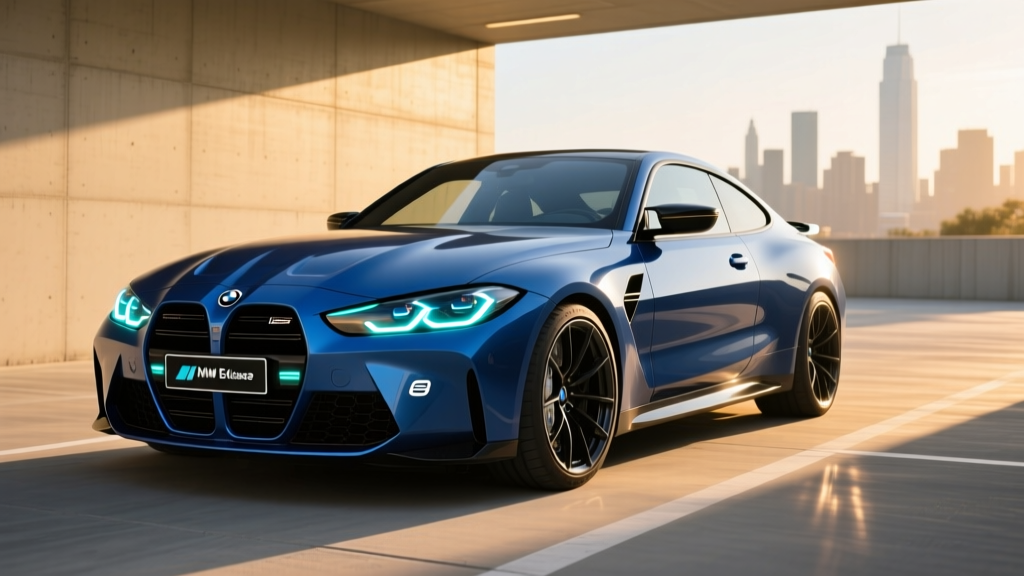
The all-electric BMW M3 — built on BMW's dedicated Neue Klasse 800-volt EV architecture — is not yet on sale. BMW has confirmed production will begin at its Regensburg plant in late 2027 (model year 2028), with first deliveries likely in early 2028. Based on BMW's published platform specs and prototype testing, expect roughly 400 miles of EPA range, a ~100 kWh usable battery using cylindrical cells, peak DC charging above 300 kW (10–80% in approximately 20 minutes), and a starting MSRP near $85,000–$95,000. It will compete directly with the Tesla Model S Plaid, Porsche Taycan, and Mercedes-AMG EQE, while replacing the gas M3 (G80) in BMW's performance lineup.
What the BMW M3 Electric Actually Is (and Isn't)
BMW has been careful with terminology. The electric M3 is not a rebadged i4 M50 or a tuned version of the current i5. It is a ground-up performance sedan built on the Neue Klasse platform — BMW's first dedicated EV skateboard architecture, designed around an 800V electrical system, next-generation cylindrical battery cells (similar in form factor to Tesla's 4680), and a new software-defined vehicle stack BMW calls "Heart of Joy."
BMW M division boss Franciscus van Meel has confirmed the electric M3 will carry a quad-motor all-wheel-drive layout with individual wheel torque vectoring — a first for an M car. Prototype mule testing has been underway since 2024, with camouflaged test vehicles spotted at the Nürburgring and in Arctic winter testing.
Important distinction: If you need an electric BMW performance sedan today, the closest current option is the BMW i5 M60 (593 hp, EPA 256 miles, ~$85,000) or the BMW i4 M50 (536 hp, EPA 227 miles, ~$69,000). Both ride on BMW's older CLAR platform shared with gas models — they are not Neue Klasse vehicles.
Projected Specs: Range, Battery, Charging, and Performance
The following figures are based on BMW's official Neue Klasse platform disclosures, supplier announcements, and prototype data as of early 2026. Final EPA-certified numbers will not be published until closer to launch.
| Specification | Estimated Figure | Status |
|---|---|---|
| Platform | Neue Klasse (800V) | Confirmed |
| Battery Chemistry | NMC cylindrical cells | Confirmed |
| Usable Battery Capacity | ~100 kWh | Estimated |
| EPA Range | ~380–420 miles | Estimated |
| Drivetrain | Quad-motor AWD | Confirmed |
| Horsepower | ~700+ hp | Estimated |
| 0–60 mph | ~2.8–3.2 seconds | Estimated |
| Peak DC Fast Charge | 300+ kW | Platform confirmed |
| 10–80% DC Charge Time | ~20 minutes | BMW stated target |
| Level 2 AC Charging | Up to 22 kW (3-phase) | Confirmed for NK |
| Estimated Base MSRP | $85,000–$95,000 | Projected |
| Production Start | Late 2027 (MY2028) | Confirmed |
| Battery Warranty | 8 years / 100,000 miles (expected) | Based on current BMW policy |
Real-World Range Reality Check
A 400-mile EPA estimate sounds exceptional, but real-world conditions matter. Expect:
- Highway cruising (75 mph, moderate temps): ~320–350 miles
- Cold weather (below 32°F, highway): ~260–300 miles (25–35% reduction)
- Aggressive driving / track use: Significantly less — performance sedans consume energy rapidly under hard acceleration
The 800V architecture and heat pump should help mitigate cold-weather losses and enable faster preconditioning for DC charging — but physics still applies. A 100 kWh battery pushing 700+ hp through four motors will not match its EPA sticker under sustained high-speed driving.
How the Electric M3 Compares: Gas M3, Tesla Model S, and Taycan
Buyers cross-shopping the electric M3 are typically coming from one of three directions: a current gas BMW M3 owner considering electrification, a Tesla Model S Plaid shopper wanting more traditional luxury, or a Porsche Taycan buyer weighing alternatives. Here's how the numbers stack up against the current gas M3 Competition and key EV rivals.
| Metric | BMW M3 Electric (Est.) | BMW M3 Comp. xDrive (2025, Gas) | Tesla Model S Plaid | Porsche Taycan Turbo GT |
|---|---|---|---|---|
| Powertrain | Quad-motor AWD EV | Twin-turbo I6, AWD | Tri-motor AWD EV | Dual-motor AWD EV |
| Horsepower | ~700+ | 523 | 1,020 | 1,019 (Launch Control) |
| 0–60 mph | ~2.8–3.2s | 3.4s | 1.99s | 2.1s |
| EPA Range | ~400 mi | ~340 mi (gas, ~15 gal tank) | 396 mi | 269 mi |
| Energy / Fuel Cost per Mile | ~$0.05–$0.12 (home charging) | ~$0.18–$0.24 (premium gas) | ~$0.04–$0.11 | ~$0.05–$0.13 |
| Base MSRP | $85,000–$95,000 (est.) | $84,900 | $89,990 | $161,400 |
| Federal EV Tax Credit (§30D) | Eligibility TBD (battery sourcing) | Not eligible | Up to $7,500 (if eligible) | Likely not eligible (MSRP cap) |
| DC Fast Charge Peak | 300+ kW | N/A | 250 kW | 320 kW |
| Annual Maintenance (Est.) | ~$400–$600 | ~$1,200–$1,800 | ~$400–$600 | ~$800–$1,200 |
Key takeaways from this comparison:
- The electric M3 should comfortably out-accelerate the gas M3 Competition while delivering roughly double the "range" (miles per tank-equivalent) at a fraction of the per-mile energy cost.
- Against the Model S Plaid, the BMW will likely sacrifice straight-line speed (Tesla's 1.99s 0–60 is extraordinary) in favor of interior quality, driving dynamics, and a more traditional luxury sedan experience.
- The Taycan Turbo GT is the closest handling benchmark — BMW's M division has explicitly cited Porsche's driving dynamics as the target. But the Taycan's 269-mile range and $161K price make the BMW's value proposition compelling if specs hold.
The Real Cost of Ownership: 5-Year Breakdown
Performance EVs carry higher purchase prices but lower running costs. Here's a realistic 5-year / 75,000-mile ownership projection for the electric M3 versus the gas M3 Competition, assuming $0.14/kWh average home electricity, $4.20/gallon premium, and current insurance averages.
| Cost Category | BMW M3 Electric (Est.) | BMW M3 Competition (Gas) |
|---|---|---|
| Purchase Price (base MSRP) | $90,000 | $84,900 |
| Federal Tax Credit (§30D) | –$7,500 (if eligible)* | $0 |
| Effective Purchase | $82,500 | $84,900 |
| Energy / Fuel (75,000 mi) | ~$4,500 (home + some DCFC) | ~$13,500 (premium gas) |
| Maintenance | ~$2,500 | ~$7,500 |
| Insurance (5-yr avg.) | ~$18,000 | ~$14,000 |
| Estimated Depreciation | ~$36,000 (40%) | ~$38,000 (45%) |
| 5-Year Total Cost | ~$143,500 | ~$157,900 |
*§30D tax credit eligibility depends on battery component sourcing, critical mineral requirements, buyer income caps ($300K joint / $150K single), and MSRP caps ($55,000 sedans). As a ~$90,000 sedan, the electric M3 would exceed the §30D MSRP cap for sedans unless reclassified. BMW's final battery sourcing will determine eligibility. Consult IRS guidance on clean vehicle credits before relying on this figure. Always verify with a tax professional.
Where the EV saves money: Energy costs are roughly one-third of gasoline. Maintenance eliminates oil changes, spark plugs, transmission fluid, and reduces brake wear significantly thanks to regenerative braking.
Where the EV costs more: Insurance premiums for performance EVs run 20–30% higher than gas equivalents due to repair costs, battery replacement risk, and parts availability. Depreciation on high-end EVs remains less predictable than established gas M cars.
First-Time EV Buyer Considerations for the M3 Electric
If you're coming from a gas M3 or any ICE vehicle, the ownership experience differs in ways that go beyond specs. Here's what actually matters day-to-day:
Home Charging Is Non-Negotiable
A performance EV like the M3 Electric demands reliable home charging. With a ~100 kWh battery:
- Level 1 (120V, 1.4 kW): Adds ~4 miles per hour. A full charge takes over 70 hours. Not viable as primary charging.
- Level 2 (240V, 11.5 kW): Adds ~35 miles per hour. Overnight charge from 20% to 80% takes ~5 hours. This is the minimum practical setup.
- Level 2 (240V, 22 kW — if vehicle supports 3-phase): Adds ~70 miles per hour. Full overnight replenishment even after aggressive driving.
Expect to invest $1,200–$3,500 for a professional Level 2 home installation (charger + electrician + permit), potentially more if your electrical panel needs a 200A upgrade ($2,000–$5,000 additional). Without home charging, daily ownership of a 100 kWh performance EV becomes a significant inconvenience.
Public Fast Charging on Road Trips
BMW has confirmed Neue Klasse vehicles will use the NACS (Tesla-style) connector in North America, granting access to Tesla Superchargers (now open to non-Tesla EVs) alongside Electrify America, EVgo, and other networks. At 300+ kW peak charging, a 20-minute stop adds roughly 200+ miles of range — competitive with a gas fill-up stop when you factor in restroom and food breaks.
However, real-world DC fast charging rarely sustains peak rates. Expect a charging curve that peaks at 300+ kW between 10–40% State of Charge, then tapers to ~150 kW by 60%, and drops below 50 kW above 85%. This is normal battery physics — the 10–80% time of ~20 minutes is the relevant metric, not peak kW alone.
Cold Weather Is Real
If you live in the upper Midwest, Northeast, or mountain states, expect 25–35% range reduction in sustained sub-freezing temperatures. The Neue Klasse's heat pump (confirmed by BMW) will help — it's significantly more efficient than resistive cabin heating — but battery chemistry slows in cold. Preconditioning while plugged in at home mitigates much of this loss.
Common Misconceptions About the Electric M3
| Myth | Fact |
|---|---|
| "It won't feel like a real M car." | Quad-motor torque vectoring enables individual wheel control impossible with a mechanical differential. BMW M has confirmed the car will have a dedicated "M Mode" with synthetic feedback and adjustable regen profiles. Whether it feels the same is subjective — but it will be technically superior in traction management. |
| "The battery will need replacing in 5 years." | Modern NMC batteries with active thermal management routinely retain 85–90% capacity after 100,000 miles. BMW's expected 8-year/100,000-mile battery warranty (covering degradation below 70% capacity) reflects this. Full replacement is a $20,000–$30,000 worst-case scenario that rarely occurs within the warranty period. |
| "I can charge it on any standard outlet." | Technically yes at Level 1, but charging a 100 kWh battery at 1.4 kW takes 3+ days from empty. A dedicated 240V Level 2 circuit is effectively required for daily ownership of a large-battery EV. |
| "The $7,500 tax credit applies to everyone." | Federal §30D credits have income caps ($150K single / $300K joint filer), MSRP caps ($55K for sedans — which may disqualify the M3 unless reclassified as a "SUV" by the IRS, as some performance crossovers have been), and strict battery sourcing requirements that change annually. Verify eligibility at purchase, not at announcement. |
| "It's self-driving." | The Neue Klasse platform supports SAE Level 2+ driver assistance (hands-on or supervised hands-off highway driving, similar to BMW's current Highway Assistant). The driver must remain engaged and responsible. This is not Level 4 autonomy — no production consumer vehicle currently offers unsupervised self-driving. |
Decision Framework: Should You Wait for the M3 Electric?
Choose to WAIT for the BMW M3 Electric if:
- You currently own a gas M3 (G80/G20 generation) and plan to keep it another 2–3 years
- You want a dedicated EV platform (800V, optimized packaging) rather than a converted ICE chassis
- 400-mile range and sub-20-minute fast charging are priorities for road trips
- You have (or will install) reliable Level 2 home charging
- You value BMW M driving dynamics but want EV running costs and instant torque
Choose to BUY NOW if:
- BMW i5 M60 ($85,000): You need a fast electric BMW sedan today and can accept 256 miles of EPA range on the older CLAR platform
- Tesla Model S Plaid ($89,990): Straight-line performance (1.99s 0–60) and Supercharger access are your top priorities, and you accept Tesla's minimalist interior
- Porsche Taycan Turbo GT ($161,400): Track capability and driving feel are paramount, budget is flexible, and 269 miles of range is acceptable
- BMW M3 Competition ($84,900): You're not ready for EV ownership (no home charging, frequent remote-area travel, or preference for the I6 sound and mechanical feel)
Frequently Asked Questions
When will the BMW M3 Electric be available to buy?
BMW has confirmed production begins at the Regensburg plant in late 2027, making it a 2028 model year vehicle. US deliveries are expected in early-to-mid 2028. Reservations have not yet opened.
Will the electric M3 use NACS or CCS?
NACS (the Tesla-style connector). BMW has confirmed all Neue Klasse vehicles sold in North America will be equipped with the NACS charge port, providing native access to Tesla Superchargers without an adapter.
How does the Neue Klasse battery compare to current BMW EV batteries?
Neue Klasse uses cylindrical NMC cells (similar form factor to Tesla's 4680) rather than the prismatic pouch cells in current BMW i4/i5/iX models. BMW claims a 20% improvement in energy density, 30% faster charging, and reduced cobalt content. The 800V system voltage (vs. 400V in current BMW EVs) enables the higher charge rates.
Will the electric M3 qualify for the $7,500 federal tax credit?
Uncertain. The §30D credit has a $55,000 MSRP cap for sedans, which the M3 Electric will almost certainly exceed. However, the IRS has reclassified some vehicles (like the Tesla Model Y and Cadillac Lyriq) as SUVs with an $80,000 cap based on interior volume. If BMW's electric M3 meets the SUV reclassification criteria, it may qualify — but battery sourcing requirements (critical minerals and component manufacturing) must also be met. This will not be clear until BMW finalizes its supply chain closer to launch. Check fueleconomy.gov for the latest eligible vehicle list.
What about the sound? Will it have a fake engine noise?
BMW has confirmed the Neue Klasse M vehicles will feature a composed drive sound — not a simulated V8 or I6, but an original sound profile designed by composer Hans Zimmer (who also created BMW's current IconicSounds Electric). Whether this satisfies M enthusiasts accustomed to the S58 twin-turbo I6 exhaust note remains to be seen. Expect configurable sound profiles, including a "silent" mode.
Is the electric M3 heavier than the gas M3?
Almost certainly. The current gas M3 Competition xDrive weighs approximately 3,980 lbs. A 100 kWh battery pack alone weighs roughly 1,100–1,300 lbs. Expect the electric M3 to land in the 4,600–4,900 lb range. BMW's M division will need to manage this mass through the quad-motor torque vectoring system, adaptive dampers, and a low center of gravity — but on-paper weight will be notably higher.
Can I reserve one now?
No. BMW has not opened reservations for the electric M3 as of early 2026. Interested buyers should monitor BMW's official channels for reservation announcements, expected in 2027 ahead of the production launch.
Sources: BMW Group official press releases on Neue Klasse platform, BMW Group PressClub, fueleconomy.gov for current BMW EV EPA data, IRS §30D clean vehicle credit guidance. All estimated specifications are preliminary and subject to change before production.