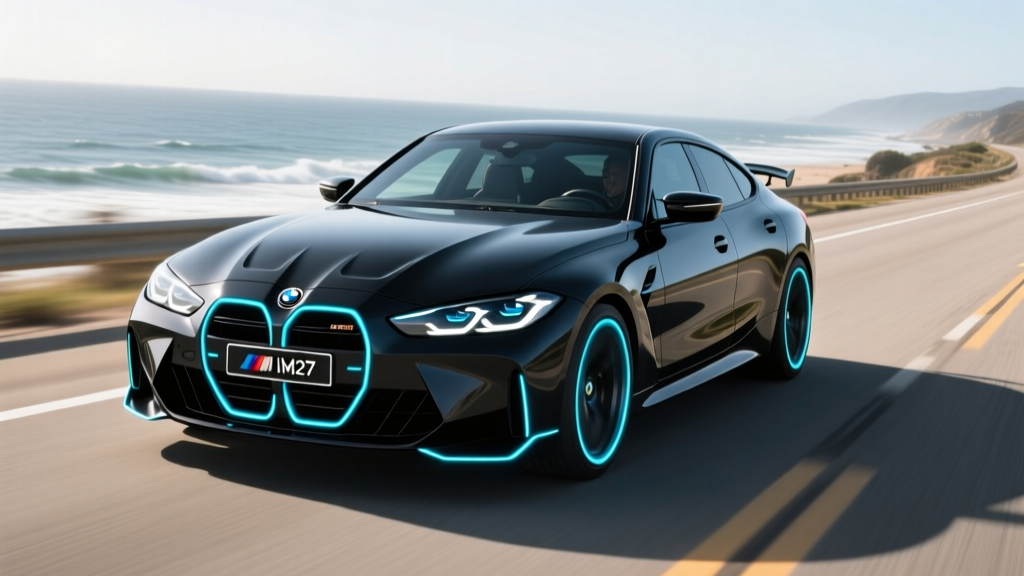
Quick Answer: The BMW M3 electric — expected to wear the iM3 badge — is an announced next-generation performance sedan built on BMW's 800-volt Neue Klasse platform. It is not yet on sale as of early 2026; production is anticipated to begin in late 2027 for the 2028 model year. Preliminary targets point to a 100+ kWh battery, over 600 horsepower, 300+ miles of EPA range, and DC fast-charging speeds that could add ~186 miles (300 km) in roughly 10 minutes. Pricing will likely start above $80,000. If you want a BMW M3 today, the gas-powered G80 M3 and the all-electric BMW i4 M50 remain the only options.
Why BMW Is Building an Electric M3
The BMW M3 has defined the sports-sedan segment for four decades. The current G80-generation M3 Competition xDrive produces 523 hp from its 3.0-liter twin-turbo inline-six, hits 60 mph in 3.4 seconds, and starts at roughly $80,200 (2025 MSRP). But tightening emissions standards in Europe and California, combined with BMW's corporate commitment to electrify its lineup, mean the next M3 will go fully electric.
BMW CEO Oliver Zipse confirmed in 2024 that the next-generation 3 Series and M3 will ride on the Neue Klasse architecture — a dedicated EV platform featuring 800-volt electrical systems, cylindrical battery cells (similar in form factor to Tesla's 46mm cells), and significantly improved energy density. The electric M3 will sit at the top of this new family.
This is not a compliance exercise. BMW M GmbH has been vocal that the electric M3 must match or exceed the performance benchmarks set by the G80 — particularly in acceleration, handling balance, and driver engagement. Whether it can replicate the emotional connection of a high-revving inline-six remains the central question for enthusiasts.
Projected Specs: What We Know About the iM3 Platform
Because the iM3 is still in development, the following figures are preliminary and based on BMW's official Neue Klasse disclosures, patent filings, and industry reporting. Final EPA-certified numbers will not be available until closer to launch.
| Specification | Projected / Announced | Current G80 M3 Comp. xDrive |
|---|---|---|
| Platform | Neue Klasse (800V, dedicated EV) | CLAR (ICE/AWD) |
| Battery Capacity | ~100-110 kWh usable (cylindrical cells) | N/A (15.2-gal fuel tank) |
| Chemistry | Likely NMC (nickel-manganese-cobalt) | N/A |
| EPA Range (Est.) | 300-350 miles (target) | ~330 miles (EPA combined) |
| Horsepower | 600+ hp (dual or tri-motor AWD) | 523 hp |
| 0-60 mph | Sub-3.0 seconds (target) | 3.4 seconds |
| Peak DC Charge Rate | ~300+ kW (800V architecture) | N/A |
| 10-80% DC Charge | ~15-20 minutes (projected) | N/A |
| Starting MSRP (Est.) | $80,000-$90,000+ | $80,200 |
| Production Start | Late 2027 (MY2028) | In production now |
Real-World Range Reality Check: BMW's Neue Klasse concept targets suggest a WLTP range exceeding 400 miles, which typically translates to an EPA figure 15-20% lower — hence our 300-350 mile EPA estimate. In real-world highway driving at 75 mph, expect roughly 260-300 miles. In cold weather (below 32°F), plan for a 20-30% reduction, putting usable range around 210-280 miles depending on conditions. Performance-oriented driving will reduce range further.
Charging Speed and the 800-Volt Advantage
The Neue Klasse platform's 800-volt architecture is the iM3's most consequential technical detail. Higher voltage allows faster charging at lower current, reducing heat buildup and enabling sustained high charge rates.
| Charging Level | Power (kW) | Estimated Miles Added per Hour | Notes |
|---|---|---|---|
| Level 1 (120V household) | ~1.4 kW | ~4-5 mi/hr | Emergency/trickle only |
| Level 2 (240V home) | ~11-22 kW | ~35-70 mi/hr | Overnight full charge in 5-8 hrs |
| DC Fast Charge (peak) | ~300+ kW | ~800-1,000+ mi/hr (peak) | 10-80% in ~15-20 min |
BMW has stated that Neue Klasse vehicles will be able to add approximately 186 miles (300 km) of range in about 10 minutes under optimal conditions. This is a peak-rate figure — real-world charging curves taper significantly above 80% State of Charge (SoC) to protect battery longevity. Expect the 80-100% top-off to add another 15-20 minutes.
Key distinction for buyers: kW (kilowatts) measures charging power — how fast energy flows into the battery. kWh (kilowatt-hours) measures battery capacity — how much energy the battery stores. A 300 kW charger delivering power to a 100 kWh battery can theoretically fill it in 20 minutes, but charge-curve tapering makes real-world times longer.
The iM3 is also expected to adopt the NACS (North American Charging Standard) connector, aligning with BMW's commitment to Tesla Supercharger network access — a significant advantage over CCS-only vehicles for road-trip charging reliability.
Electric M3 vs. Gas M3: Cost and Performance Comparison
For buyers cross-shopping the current gas M3 against the upcoming electric version, here is how the economics and performance stack up over a projected 5-year ownership period.
| Category | BMW iM3 (Projected) | G80 M3 Comp. xDrive |
|---|---|---|
| Base MSRP | $85,000 (est.) | $80,200 |
| Federal Tax Credit (§30D) | $0-$7,500 (see eligibility below) | $0 |
| 5-Year Fuel/Energy Cost | ~$5,500-$7,000 (electricity) | ~$14,000-$17,000 (premium fuel) |
| 5-Year Maintenance | ~$2,500-$3,500 | ~$5,000-$7,000 |
| Insurance (avg. annual) | ~$3,200-$4,000/yr | ~$2,800-$3,500/yr |
| 0-60 mph | <3.0 sec (projected) | 3.4 sec |
| Driving Feel | Instant torque, heavier, quieter | Engine note, lighter, mechanical feedback |
Fuel vs. electricity math: The G80 M3 averages roughly 18 mpg combined. At 12,000 miles/year and $4.50/gallon premium fuel, annual fuel cost is approximately $3,000. The iM3, estimated at ~2.5 kWh/mile, charged at a blended rate of $0.16/kWh (national average for home + public), would cost roughly $1,200/year for electricity — a savings of about $1,800 annually, or $9,000 over five years.
Maintenance advantage: EVs eliminate oil changes, spark plugs, transmission fluid, and exhaust-system wear. Brake pad life extends significantly thanks to regenerative braking. BMW's EV maintenance costs typically run 40-50% lower than equivalent ICE models over five years, per Consumer Reports data.
Federal Tax Credit Eligibility: The §30D Reality
The BMW iM3's eligibility for the federal §30D clean vehicle credit is uncertain and will depend on final battery sourcing and assembly details at launch. Here is what we know about current rules:
- MSRP cap: Sedans must have an MSRP at or below $55,000 to qualify. The iM3, projected at $80,000+, will almost certainly exceed this cap — making it ineligible for the new-vehicle §30D credit.
- Buyer income limits: Modified AGI must not exceed $150,000 (single), $225,000 (head of household), or $300,000 (joint filers).
- Battery sourcing: Critical minerals and battery components must meet escalating domestic-content thresholds that tighten annually through 2029.
- Point-of-sale transfer: Eligible buyers can apply the credit as a down-payment reduction at the dealer, rather than waiting for a tax refund.
Bottom line: At its projected price, the iM3 will not qualify for the $7,500 federal credit due to the $55,000 sedan MSRP cap. Buyers should not factor the federal credit into their purchase budget. Some states (California, Colorado, New York, etc.) offer separate incentives that may apply regardless of MSRP — check your state's energy office for current programs.
Real-World Ownership Considerations
Beyond the spec sheet, several practical factors will shape the iM3 ownership experience:
Home Charging Access
A Level 2 home charger (240V, 40-48 amps) is essential for convenient daily ownership. Expect to pay $500-$1,200 for a quality Level 2 wallbox and $800-$2,500 for professional electrical installation (including potential panel upgrades for older homes). This enables a full overnight charge in roughly 5-8 hours — wake up to a full battery every morning. Without home charging, relying solely on public DC fast-charging adds significant time and cost.
Climate and Range Impact
BMW has confirmed that Neue Klasse will feature an advanced heat-pump thermal management system, which mitigates cold-weather range loss by efficiently warming the cabin and battery. Even so, expect 20-30% range reduction in sustained sub-freezing temperatures. Buyers in northern climates should spec the iM3 with this in mind — a 300-mile EPA car becomes a ~220-mile car in a Minnesota January.
Insurance Premiums
High-performance EVs carry higher insurance costs due to repair complexity, parts pricing, and the total-loss risk associated with battery damage. Expect iM3 premiums to run 10-25% higher than the gas M3, though this varies significantly by insurer, driving record, and state. Get quotes before ordering.
Weight and Tire Wear
The battery pack will make the iM3 heavier than the ~3,900-lb G80 M3. Heavier EVs tend to wear through tires faster, especially with performance driving. Budget for premium tire replacements every 20,000-30,000 miles at roughly $1,200-$2,000 per set.
Common Misconceptions About the Electric M3
| Myth | Fact |
|---|---|
| "The electric M3 will feel like an i4 — heavy and numb." | BMW M GmbH is developing dedicated M-specific chassis tuning, torque-vectoring, and simulated driving dynamics for Neue Klasse M models. The 800V platform also allows a lower center of gravity than the CLAR-based i4. |
| "It will get the $7,500 tax credit." | At a projected $80,000+ MSRP, the iM3 exceeds the $55,000 sedan cap for §30D eligibility. Do not budget for this credit. |
| "I can buy one now." | The iM3 is not yet on sale. Production is expected in late 2027 for the 2028 model year. The current i4 M50 is the closest electric BMW M performance car available today. |
| "800V charging means I'll always charge at 300 kW." | Peak rate is not sustained rate. Charge curves taper above 50-60% SoC. Expect an average rate of ~180-220 kW over a 10-80% session, not the full 300 kW peak. |
| "EVs are cheaper to own no matter what." | Energy and maintenance savings are real (~$2,000-$3,000/year), but higher insurance, faster tire wear, and no tax credit narrow the gap. Total cost advantage depends on your mileage, electricity rates, and ownership duration. |
Decision Framework: Should You Wait for the iM3?
Buy the current G80 M3 (gas) now if:
- You value engine sound, mechanical feedback, and a proven platform
- You want to avoid first-model-year EV risk on a new architecture
- You regularly drive in areas with limited DC fast-charging infrastructure
- You plan to keep the car 3-4 years and want established depreciation data
Wait for the BMW iM3 (electric M3) if:
- You have reliable home Level 2 charging and want lower daily operating costs
- Sub-3-second 0-60 performance and instant torque appeal to you
- You're comfortable with a 2027-2028 delivery timeline
- You want a performance sedan aligned with future emissions regulations and potential resale-value tailwinds
Consider the BMW i4 M50 (available now) if:
- You want an electric BMW performance car today without waiting
- The i4 M50's 536 hp, 3.7-second 0-60, and ~270-mile EPA range meet your needs
- You want real-world ownership data and established pricing before committing
Frequently Asked Questions
Is the BMW M3 electric officially confirmed?
Yes. BMW has confirmed that the next-generation M3 will be fully electric and built on the Neue Klasse platform. However, final specifications, pricing, and the exact on-sale date have not been published. The vehicle is expected to enter production in late 2027.
Will the electric M3 have a manual transmission?
No. EVs do not require multi-speed transmissions — electric motors deliver full torque from 0 RPM. BMW has explored simulated gear-shift experiences in its iX M60 and concept vehicles, but a physical manual is not possible.
What battery chemistry will the iM3 use?
BMW has indicated that Neue Klasse will use cylindrical cells in a format similar to Tesla's 46mm diameter cells. The chemistry is expected to be NMC (nickel-manganese-cobalt) for energy-density reasons in a performance application. LFP (lithium iron phosphate) is heavier and less energy-dense, making it unlikely for the M variant, though it may appear in base Neue Klasse 3 Series models.
How will the iM3 compare to the Tesla Model S Plaid and Mercedes-AMG EQE?
The Tesla Model S Plaid (1,020 hp, 1.99-sec 0-60, ~390-mile EPA range, ~$89,990) will likely outperform the iM3 in straight-line acceleration. The Mercedes-AMG EQE sedan has been discontinued. The iM3's competitive advantage will center on BMW's chassis dynamics, build quality, and the Neue Klasse platform's 800V charging speed — areas where BMW traditionally excels over Tesla. Expect the iM3 to target the handling benchmark, not just the drag-strip number.
Will the iM3 qualify for any EV incentives?
At its projected MSRP above $80,000, the iM3 will not qualify for the federal §30D new-vehicle credit (sedan MSRP cap: $55,000). State-level incentives may apply — California's CVRP, Colorado's state credit, and various utility rebates are worth investigating. Consult a tax professional for your specific situation, and check IRS.gov for current federal rules.
What is the closest electric BMW M car I can buy right now?
The BMW i4 M50 (536 hp, 3.7-sec 0-60, 270-mile EPA range, starting ~$70,700) is the current electric M performance benchmark. The BMW iX M60 (610 hp, 3.6-sec 0-60, 288-mile EPA range, starting ~$111,500) is the SUV equivalent. Neither carries the M3 badge, but both deliver M-tuned electric performance today.