Can the BMW Electric SUV iX3 Fit Your Life?
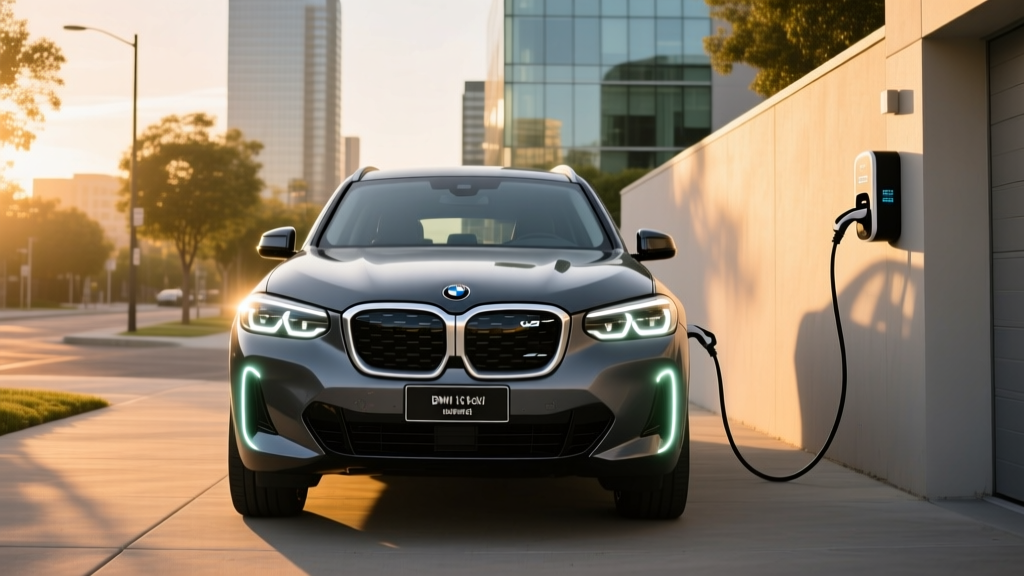
The BMW electric SUV iX3 (the battery-electric version of the X3) is a premium compact crossover that pairs BMW's driving dynamics with a usable ~285-mile EPA range, 200 kW DC fast charging, and a starting price in the low-to-mid $50,000s. But whether it's the right EV for you depends on your daily mileage, charging access, and budget — not just the badge on the hood.
The BMW iX3 delivers around 285 miles of EPA-estimated range, charges from 10–80% in roughly 30 minutes at a 200 kW DC fast charger, and costs roughly $52,000 before incentives. It's best for drivers with home Level 2 charging who want a luxury compact EV SUV without the size (or price) of the larger iX. If you regularly drive more than 250 miles between charges or live in a region with sparse public charging, you'll want to compare it against longer-range rivals like the Tesla Model Y or Hyundai Ioniq 5.
In this guide, we break down the real-world ownership picture — range you can actually count on, what charging at home versus on the road costs, how the iX3 stacks up against gas and hybrid alternatives, and the tax-credit rules that could shave thousands off the price. No hype, just the numbers that matter.
Range, Battery, and Charging: The Numbers That Matter
The iX3 uses an 80 kWh (usable ~74 kWh) NMC (nickel manganese cobalt) lithium-ion battery pack. BMW rates the latest-generation iX3 at approximately 285 miles on the EPA cycle, with an efficiency rating around 98 MPGe combined. But EPA numbers are tested under ideal conditions — real-world results depend on speed, temperature, and terrain.
- EPA sticker: ~285 miles
- Highway driving (70–80 mph): ~230–250 miles
- Cold weather (below 32°F): ~200–220 miles (NMC packs lose 15–25% in freezing temps)
- Mixed city/suburban: ~265–280 miles (regen braking helps in stop-and-go)
| Spec | Value |
|---|---|
| EPA Range | ~285 miles |
| Battery (usable) | ~74 kWh, NMC chemistry |
| Efficiency | ~98 MPGe combined / ~34 kWh/100mi |
| Peak DC Fast Charge | 200 kW (CCS/NACS adapter) |
| 10–80% DC Fast Charge | ~30 minutes |
| Level 2 Home Charge (11 kW) | ~7.5 hours (0–100%) |
| 0–60 mph | ~6.5 seconds |
| Horsepower | 286 hp (single rear motor) |
| Drivetrain | RWD (AWD variant in select markets) |
| Battery Warranty | 8 years / 100,000 miles (70% capacity retention) |
| Base MSRP | ~$52,000 (varies by trim) |
Charging Curve Reality
The iX3 peaks at 200 kW, but like all EVs, it doesn't sustain that rate for the entire session. You'll see peak speeds between roughly 10–50% state of charge (SoC), after which the rate tapers to protect the battery. By 80%, you're typically pulling 60–80 kW. This is why the 10–80% time (~30 minutes) is a more useful metric than peak kW alone. Plan road-trip stops around the 80% mark — charging from 80–100% can take as long as the 10–80% session.
The iX3 supports preconditioning: when you navigate to a charger in the BMW infotainment system, the car warms or cools the battery to optimize charge speed on arrival. Skipping this step in cold weather can add 10–15 minutes to your charging session.
How Does the iX3 Compare to Gas and Hybrid Alternatives?
Many buyers cross-shop the BMW electric SUV iX3 against the gas-powered BMW X3 and plug-in hybrid (PHEV) variants. Here's how the economics stack up over five years of ownership, assuming 12,000 miles per year and national average fuel/electricity prices.
| Category | BMW iX3 (BEV) | BMW X3 (Gas) | BMW X3 PHEV |
|---|---|---|---|
| Base MSRP | ~$52,000 | ~$46,000 | ~$54,000 |
| Fed. Tax Credit (§30D) | Up to $7,500* | $0 | Up to $7,500* |
| Fuel/Energy (5 yr) | ~$4,200 | ~$10,800 | ~$6,500 |
| Maintenance (5 yr) | ~$2,500 | ~$5,500 | ~$4,800 |
| Est. Insurance (5 yr) | ~$9,500 | ~$8,200 | ~$8,800 |
| 5-Year Total (approx.) | ~$60,700 | ~$70,500 | ~$66,600 |
* Federal §30D tax credit eligibility depends on MSRP caps, buyer income limits, and battery mineral/component sourcing requirements. Always verify current-year rules at IRS.gov before purchasing. Point-of-sale transfer is available through registered dealers.
The iX3 wins on fuel and maintenance savings — no oil changes, fewer brake replacements (thanks to regenerative braking), and electricity that costs roughly $0.13/kWh nationally versus $3.50+/gallon for premium gas the X3 requires. But EV insurance premiums run 10–20% higher on average, and the upfront MSRP is higher before credits.
The PHEV Middle Ground
If you can't install a home charger or frequently drive beyond 250 miles without stopping, the X3 PHEV (roughly 30–35 miles of electric-only range) offers a bridge: short commutes on electricity, gas-engine flexibility for road trips. The trade-off is maintaining two powertrains — you still need oil changes, and the combined system adds weight that reduces efficiency when the battery is depleted.
Real Costs of Ownership: What the Sticker Doesn't Show
Beyond MSRP, here's what a first-time EV buyer should budget for with the iX3.
| Expense | Estimated Cost | Notes |
|---|---|---|
| Home Level 2 Charger (hardware) | $500–$800 | BMW Wallbox or ChargePoint Home Flex |
| Electrical Installation | $800–$2,500 | 240V/50A circuit; panel upgrade may add $1,500–$3,000 |
| Annual Electricity (12k mi) | ~$840 | At $0.13/kWh, ~34 kWh/100mi |
| Insurance (annual) | ~$1,900 | Varies by state, driving record |
| Maintenance (annual avg.) | ~$500 | Cabin filter, tire rotation, fluid top-off |
| Tires (replacement every 30–40k mi) | $1,200–$1,800 | EV-specific tires wear faster due to weight and torque |
Home Charging Access: The Make-or-Break Factor
The single biggest ownership variable is whether you can charge at home. With a Level 2 charger (11 kW / 48A), the iX3 fully charges in about 7.5 hours — plug in at night, wake up to a full battery. This is how most EV owners "refuel" and it's dramatically cheaper than public DC fast charging.
If you live in an apartment or lack a dedicated parking spot with electrical access, you'll rely on public charging networks. DC fast charging at Electrify America or EVgo typically costs $0.35–$0.50/kWh — roughly 3x the cost of home charging. Budget accordingly: a full charge at a public station could cost $25–$37 versus $10 at home.
Panel upgrade gotcha: Many older homes have 100A electrical panels. Adding a 50A EV circuit may require upgrading to 200A, which costs $1,500–$3,000 and requires a licensed electrician and permit. Always get a quote before committing to a vehicle purchase.
Common Misconceptions About the BMW iX3
| Myth | Fact |
|---|---|
| "The battery will need replacing in a few years" | NMC batteries typically degrade 10–15% over 8–10 years. BMW warranties 70% capacity retention for 8 years/100,000 miles. Most owners never need a replacement. |
| "285 miles of range isn't enough" | The average American drives 37 miles/day (FHWA data). Even with real-world losses, 285 miles covers 5–7 days of driving before needing a charge. |
| "EVs are worse in cold weather" | Range drops 15–25% in freezing temps, but the iX3's heat pump (standard on recent models) recovers waste heat to warm the cabin efficiently. Preconditioning while plugged in mitigates most range loss. |
| "Charging takes too long on road trips" | A 10–80% charge in ~30 minutes aligns with a typical rest stop. With route planning via BMW's built-in navigation, the car preconditions the battery for faster charging at each stop. |
| "I'll get the full $7,500 tax credit" | Credit eligibility depends on your income, the vehicle's MSRP, and battery sourcing rules that change annually. Check IRS §30D guidelines and consult a tax professional. |
Decision Framework: Is the iX3 Right for You?
- You have (or can install) home Level 2 charging
- Your daily commute is under 80 miles round-trip
- You want a luxury compact EV SUV with BMW driving dynamics
- You value quiet, smooth electric acceleration over raw speed
- You take road trips 3–5 times per year and can plan 30-minute charge stops
- You can't charge at home and public chargers are sparse in your area
- You regularly drive 300+ miles between stops (consider the Tesla Model Y Long Range at ~330 miles EPA)
- You need AWD for severe winter conditions (check if an AWD iX3 variant is available in your market, or consider the Hyundai Ioniq 5 AWD)
- Budget is tight — the iX3's premium pricing may not justify the savings over a more affordable EV like the Chevy Equinox EV
First-Time EV Buyer Checklist
- Verify home charging feasibility. Get an electrician's quote for a 240V/50A outlet (NEMA 14-50 or hardwired Level 2) before buying.
- Check federal and state incentives. The §30D credit has income caps ($150K single / $300K joint) and MSRP caps ($80K for SUVs). Your state may stack additional rebates.
- Download charging apps now. PlugShare, ChargePoint, and Electrify America — scout charger locations on your regular routes before you own the car.
- Test drive with a full-to-low-SoC loop. Experience how regen braking works and how range estimates change in real time.
- Factor in insurance. Get a quote before signing — EV premiums can surprise first-time buyers.
Frequently Asked Questions
What is the real-world range of the BMW iX3?
The EPA estimates ~285 miles, but expect 230–250 miles on the highway and 200–220 miles in freezing weather. City driving with regenerative braking can get you close to the EPA figure. Range is highly dependent on speed, temperature, and elevation changes.
How long does it take to charge the BMW iX3 at home?
On a Level 2 home charger (11 kW / 48A), a full 0–100% charge takes approximately 7.5 hours. Most owners plug in overnight and never think about it. On a standard 120V outlet (Level 1), expect roughly 3–4 miles of range per hour of charging — fine for topping off, not practical for a full recharge.
Does the BMW iX3 qualify for the $7,500 federal tax credit?
It may, but eligibility depends on current-year IRS §30D rules including battery critical-mineral sourcing, buyer income limits, and the vehicle's MSRP. These rules have changed annually since 2023. Check the IRS clean vehicle credit page and ask your dealer about point-of-sale transfer options at the time of purchase.
How does the iX3 compare to the Tesla Model Y?
The Model Y Long Range offers more EPA range (~330 miles), access to the Supercharger network (though BMW owners can now use NACS adapters for Supercharger access), and a lower starting price. The iX3 counters with a more traditional luxury interior, quieter ride quality, and BMW's dealer/service network. If Supercharger reliability and maximum range are priorities, the Model Y has the edge. If interior refinement and driving feel matter more, the iX3 is competitive.
What happens if the iX3 battery degrades significantly?
BMW warrants the high-voltage battery for 8 years or 100,000 miles, guaranteeing at least 70% of original capacity. If the battery drops below that threshold within the warranty period, BMW will repair or replace it at no cost. Outside of warranty, a full battery replacement could cost $12,000–$18,000, but this scenario is rare — most EV batteries outlast the vehicle's useful life with gradual, manageable degradation.
Is the BMW iX3 good for road trips?
Yes, with planning. At 200 kW peak DC charging, you'll add roughly 150–180 miles of range in a 30-minute stop. BMW's navigation system routes you through compatible chargers and preconditions the battery for faster charging. The main limitation versus a gas car is that a 600-mile trip will require 2–3 charging stops instead of 1–2 fuel stops, adding roughly 60–90 minutes total.
Sources: fueleconomy.gov (EPA range and efficiency data), IRS.gov (§30D clean vehicle credit rules), BMW USA (manufacturer specifications).