Quick Answer: Is the BMW iX1 Worth It?
The BMW iX1 xDrive30 is BMW's entry-level electric SUV, offering 232 miles of EPA-estimated range, 313 horsepower, and DC fast charging up to 130 kW (10–80% in ~29 minutes). Starting at approximately $39,600 before incentives, it targets urban and suburban buyers who want premium branding in a compact footprint. However, its real-world highway range drops closer to 200–210 miles, and it faces stiff competition from the Hyundai Ioniq 5 and Tesla Model Y on value and charging speed.
What Exactly Is the BMW iX1?
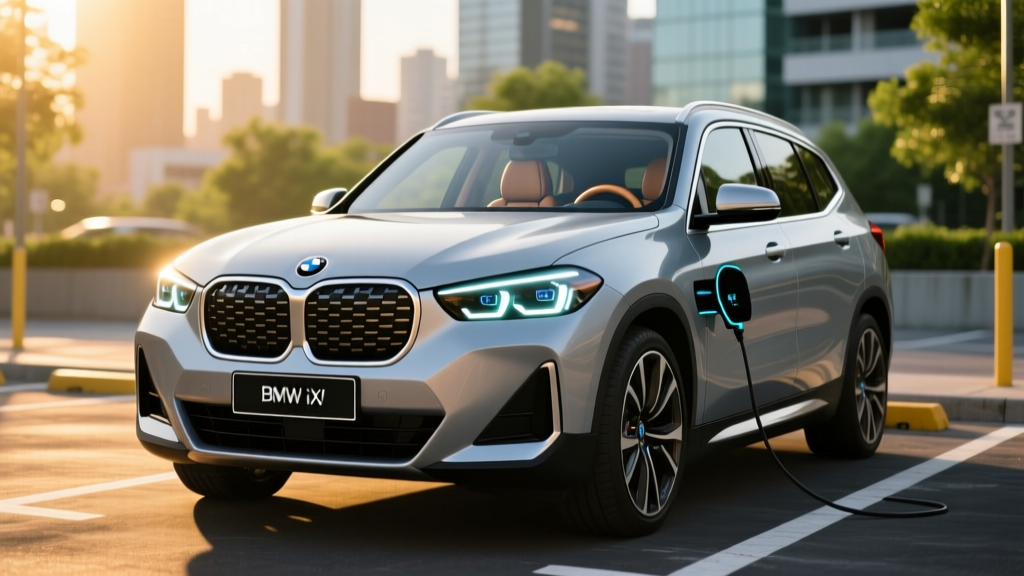
The iX1 is BMW's smallest electric vehicle, based on the same FAAR2 platform as the gas-powered X1. It launched in the US for the 2024 model year and continues into 2026 with minor updates. It's a subcompact luxury crossover — roughly the size of a Subaru Crosstrek — aimed at buyers transitioning from compact premium gas cars like the Audi Q3 or Mercedes GLA.
For 2026, the single available US trim is the iX1 xDrive30, featuring dual motors, all-wheel drive, and a 66.5 kWh usable battery pack (NMC chemistry). BMW quotes 313 hp and 364 lb-ft of torque, with a 0–60 mph time of 5.4 seconds.
Range, Efficiency, and Real-World Expectations
The EPA rates the 2026 BMW iX1 xDrive30 at 232 miles combined. Efficiency comes in at 3.6 kWh/mile (approximately 94 MPGe combined), according to fueleconomy.gov.
EPA vs. Real-World Range
EPA Sticker: 232 miles
Real-World Highway (70 mph, mild weather): ~205–215 miles
Cold Weather (below 30°F, mixed driving): ~175–195 miles
The iX1's relatively small battery and boxy crossover shape hurt highway efficiency. If your commute is primarily under 50 miles round-trip with access to home charging, this range is perfectly adequate. For road trips exceeding 200 miles, plan one charging stop.
Charging Speed: Home and Public
Charging performance is where the iX1 shows its compact-car limitations compared to 800V rivals.
| Level | Power (kW) | Time | Miles Added |
|---|---|---|---|
| Level 1 (120V outlet) | 1.4 kW | ~48 hours (0–100%) | ~4 mi/hr |
| Level 2 (240V, 32A) | 7.4 kW | ~9 hours (0–100%) | ~22 mi/hr |
| Level 2 (240V, 48A) | 11 kW | ~6.5 hours (0–100%) | ~32 mi/hr |
| DC Fast (peak) | 130 kW | ~29 min (10–80%) | ~145 mi in 29 min |
The iX1 uses a CCS1 connector in North America. It does not natively support Tesla's NACS plug, though a BMW-approved CCS-to-NACS adapter is available for Supercharger access. The 130 kW peak charge rate is modest — competitors like the Hyundai Ioniq 5 peak at 240 kW and hit 10–80% in 18 minutes.
Also note the charge curve: the iX1 sustains near-peak power only up to ~50% SoC, then tapers significantly. Expect the 50–80% portion to take nearly as long as 10–50%.
Cost Breakdown: Purchase, Fuel, Maintenance, Insurance
Let's compare the iX1 to its closest gas sibling, the BMW X1 xDrive28i, and a mainstream EV rival, the Hyundai Ioniq 5 SEL, over 5 years and 60,000 miles.
| Cost Factor | BMW iX1 xDrive30 | BMW X1 xDrive28i (Gas) | Hyundai Ioniq 5 SEL |
|---|---|---|---|
| Base MSRP (2026) | $39,600 | $39,900 | $43,500 |
| Federal Tax Credit (§30D) | $0 (battery sourcing) | $0 | $0 (MSRP cap exceeded for SUVs; verify current rules) |
| Est. Fuel/Energy (5 yr / 60k mi) | $5,400 (at $0.15/kWh) | $9,750 (at $3.75/gal, 28 MPG) | $5,100 (at $0.15/kWh) |
| Maintenance (5 yr) | $2,200 | $4,800 | $2,000 |
| Insurance (5 yr avg) | $11,500 | $9,200 | $10,200 |
| 5-Year Total Cost | $58,700 | $63,650 | $60,800 |
Sources: IRS §30D guidelines, manufacturer MSRP data, AAA fuel cost averages.
Key takeaway: The iX1 saves roughly $4,350 in fuel over gas, but higher insurance premiums and lack of federal tax credit eligibility (due to battery component sourcing rules) narrow the gap. The Ioniq 5 offers more range (303 mi EPA) and faster charging for a similar total cost.
Common Misconceptions About the iX1
| Myth | Fact |
|---|---|
| "The iX1 qualifies for the $7,500 federal tax credit." | As of 2026, the iX1 does not meet the critical minerals and battery component sourcing requirements under §30D. Always verify current eligibility at irs.gov. |
| "232 miles is enough for any road trip." | Real-world highway range is ~205 miles. In cold weather or mountain terrain, expect 175–195 miles. Plan charging stops accordingly. |
| "I can use Tesla Superchargers without an adapter." | The iX1 has a CCS1 port. You need a BMW-approved CCS-to-NACS adapter to access Tesla's network. |
| "EV maintenance is zero." | Tire wear is 20–30% faster on EVs due to instant torque and heavier weight. Budget $800–$1,200 for a tire set every 25,000–35,000 miles. |
| "The iX1 is BMW's cheapest EV." | It is currently the most affordable new BMW EV in the US lineup, but the MINI Cooper SE (also under BMW Group) starts lower at ~$32,000. |
EV vs. Gas vs. Hybrid: Which Makes Sense?
| Factor | BMW iX1 (EV) | BMW X1 (Gas) | BMW X1 xDrive25e (PHEV)* |
|---|---|---|---|
| Powertrain | Dual-motor BEV | 2.0L Turbo I4 | 1.5L Turbo + electric motor |
| Electric Range | 232 mi (full) | 0 mi | ~35 mi (electric-only) |
| Total Range | 232 mi | ~410 mi | ~400 mi combined |
| Fuel/Energy Cost (per mile) | $0.09 | $0.16 | $0.11 (blended) |
| Home Charging Required? | Strongly recommended | No | Recommended for EV benefit |
| Best For | Daily commuters with home charging | Road-trippers, no home charging | Mixed use, short EV commutes + gas flexibility |
*The X1 PHEV is available in Europe; US availability for 2026 is limited. Check BMW USA for current offerings.
First-Time EV Buyer Checklist
If you're considering the iX1 as your first electric vehicle, work through these practical questions:
- Can I charge at home? A Level 2 (240V) home charger is nearly essential. Without it, you'll rely on public DC fast charging, which costs 2–3× more per kWh and is less convenient. Home installation runs $500–$2,000 depending on panel capacity and run length.
- Is my electrical panel sufficient? The iX1's onboard charger draws up to 11 kW (48A). Most homes with a 200A panel can accommodate a 40A or 48A circuit. Older homes with 100A panels may need a $1,500–$3,000 panel upgrade.
- What's my actual daily driving distance? If your round-trip commute plus errands is under 60 miles, even the iX1's cold-weather range is more than sufficient. You'll charge every 3–4 days at home.
- Do I take road trips over 200 miles? If yes, map out DC fast charging along your routes using PlugShare or A Better Routeplanner. The iX1's 130 kW peak is adequate but not class-leading.
- What's my climate? Below-freezing winters reduce range by 15–25%. The iX1 includes a heat pump (standard in 2026), which mitigates cabin-heating energy drain but doesn't fully eliminate cold-weather range loss.
Decision Framework: Should You Buy the BMW iX1?
Choose the BMW iX1 If:
- You want a premium-brand compact EV under $45,000
- Your daily driving is under 70 miles round-trip
- You have reliable home Level 2 charging access
- You value BMW's driving dynamics, interior quality, and dealer network
- You don't frequently take road trips exceeding 200 miles one-way
Look Elsewhere If:
- You need over 300 miles of real-world range (consider the Hyundai Ioniq 5 or Tesla Model Y)
- You rely on public DC fast charging and want the fastest possible stops (Ioniq 5 at 240 kW, or any 800V vehicle)
- Federal tax credit eligibility is a dealbreaker (the iX1 currently doesn't qualify)
- You need more cargo space — the iX1 offers 27.1 cu ft behind the rear seats vs. 30.2 in the Ioniq 5
- You live in an extreme cold climate and regularly drive 100+ miles in winter (range drops to ~175 mi)
Frequently Asked Questions
Does the BMW iX1 come with free charging?
BMW typically includes 2 years of complimentary charging on Electrify America's network (with a kWh or session cap). Confirm the current program at purchase, as terms change annually.
What is the iX1's battery warranty?
BMW covers the high-voltage battery for 8 years or 80,000 miles, whichever comes first, against defects and capacity loss below 70% of original capacity. This is standard across the industry and mandated in part by CARB-emissions states.
Can I tow with the BMW iX1?
The iX1 is not rated for towing in the US market. If you need towing capability, consider the Tesla Model Y (3,500 lb) or the Ford Mustang Mach-E (up to 2,700 lb with the California Route 1 package).
How does the iX1 compare to the MINI Cooper SE?
The MINI Cooper SE (also a BMW Group product) is smaller, less expensive (~$32,000), and offers only ~114 miles of range. The iX1 is significantly more practical for daily use and road trips. Choose the MINI only if your driving is strictly urban and under 50 miles daily.
Is the BMW iX1 available with rear-wheel drive?
No. In the US, the iX1 is sold exclusively as the xDrive30 with dual-motor all-wheel drive. A front-wheel-drive eDrive20 variant exists in Europe but is not imported to North America.
What's the real cost to charge the iX1 at home?
At the US average residential rate of ~$0.15/kWh, fully charging the 66.5 kWh battery costs roughly $10.00. That translates to about $0.043 per mile of energy — roughly one-third the per-mile fuel cost of the gas X1.