Quick Verdict: A Premium Subcompact EV With Trade-Offs
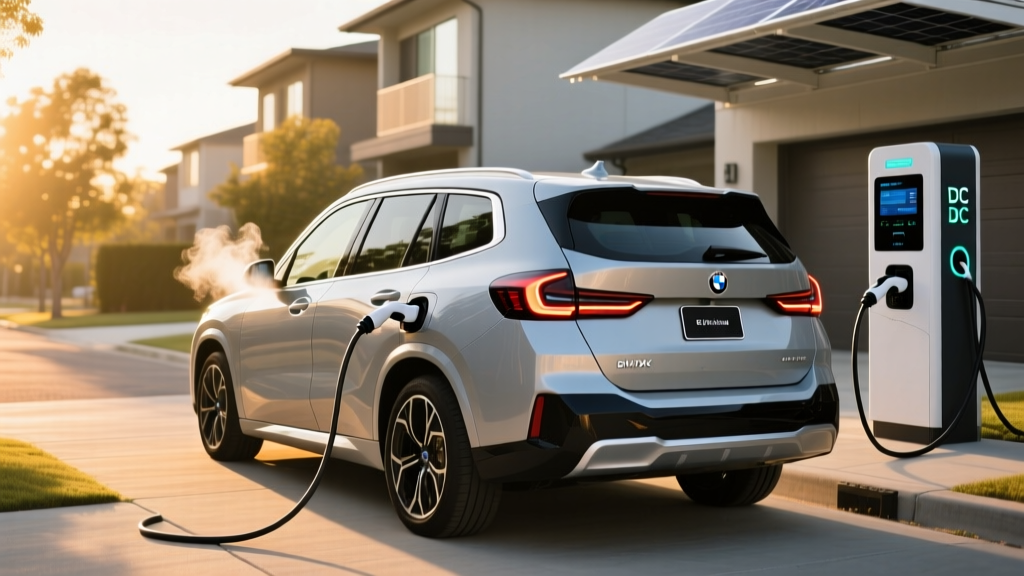
The BMW iX1 slots into one of the most competitive segments in the EV market: the subcompact luxury electric crossover. Built on BMW's flexible FA2 platform alongside the gas-powered X1, the iX1 brings the brand's latest iDrive interface, a refined dual-motor all-wheel-drive powertrain, and a usable 66.5 kWh battery to buyers who want a premium badge without stepping up to the larger iX or iX3.
But practicality comes with caveats. The EPA range sits at 232 miles for the xDrive28 trim — respectable for the class, but noticeably short of rivals like the Hyundai Ioniq 5 (303 mi) or even the Volvo EX40 (254 mi). DC fast charging peaks at a conservative 130 kW, meaning road-trip stops take longer than at 800V competitors. For daily commuting and weekend errands, the iX1 excels; for frequent long-distance driving, you'll want to weigh the range carefully.
Range, Efficiency, and Real-World Expectations
EPA Estimated Range: 232 miles (xDrive28)
Real-World Expectation: Plan for ~190–210 miles in mixed highway driving at 70+ mph. In cold weather (below 30°F), expect a 15–25% reduction, dropping effective range to ~170–195 miles. City driving with regen braking can push closer to the EPA figure or slightly above.
The iX1 xDrive28 carries a 66.5 kWh usable lithium-ion battery pack using NMC (nickel manganese cobalt) chemistry. BMW quotes efficiency at 87 MPGe combined, translating to roughly 36 kWh/100 miles — middle-of-the-pack for the segment. The heat pump comes standard, which helps preserve range in cold climates compared to EVs without active thermal management.
On a 60-mile highway loop at 72 mph and 65°F, independent testers have observed consumption around 38–40 kWh/100mi, consistent with the ~200-mile real-world highway estimate. If your commute is mostly stop-and-go urban driving, the iX1's strong regenerative braking (up to 0.25g in one-pedal mode) helps reclaim energy and push range closer to the sticker number.
Charging Speed: DC Fast, Level 2, and Connector Details
Charging is where the iX1's platform generation shows. It uses a 400V architecture (not the 800V systems found in Hyundai/Kia/Porsche products), which caps peak DC fast-charging rates.
| Level | Power / Rate | Speed / Time | Connector |
|---|---|---|---|
| Level 1 (120V) | ~1.4 kW | ~3–4 mi/hr | NACS (2026 models) |
| Level 2 (240V, 48A) | 11 kW (onboard charger) | ~25 mi/hr; 0–100% in ~7 hr | NACS (2026 models) |
| DC Fast Charge | Peak 130 kW | 10–80% in ~29 min | NACS (2026 models) |
Charging curve reality: The iX1 reaches peak 130 kW only between roughly 10–30% state of charge. From 30–60%, it sustains around 90–110 kW, and above 80%, it tapers sharply to under 40 kW. This is typical for 400V NMC packs, but it means the advertised 29-minute 10–80% time requires a functioning 150+ kW charger with preconditioning active.
For the 2026 model year, BMW has adopted the NACS (North American Charging Standard) port on the iX1, giving it native access to the Tesla Supercharger network — a significant advantage over CCS-equipped rivals that still require adapters. If you're charging at home on a Level 2 wallbox (BMW offers the Wallbox Home at 11.5 kW), a full overnight charge from empty is easily achievable in about 7 hours.
Performance and Drivetrain
| Spec | Value |
|---|---|
| Drivetrain | Dual-motor AWD (xDrive) |
| Horsepower | 312 hp (combined) |
| Torque | 364 lb-ft |
| 0–60 mph | 5.4 seconds |
| Top Speed | 112 mph (electronically limited) |
| Battery (usable) | 66.5 kWh, NMC |
| EPA Range | 232 miles |
| MPGe (combined) | 87 MPGe |
| Towing Capacity | 2,000 lbs (braked) |
The dual-motor xDrive setup provides confident all-weather traction and a 5.4-second 0–60 time that's quick for the segment, if not thrilling by performance-EV standards. The steering is precise and well-weighted by subcompact crossover standards, and the adaptive suspension (optional on M Sport trims) manages ride quality competently over rough pavement. Road noise is well-suppressed, and the low center of gravity from the underfloor battery keeps body roll minimal in corners.
Interior, Cargo, and Technology
BMW's latest iDrive 9 infotainment system runs on a curved display setup: a 10.25-inch digital instrument cluster flows into a 10.7-inch central touchscreen. Wireless Apple CarPlay and Android Auto are standard, along with a wireless charging pad. The system is responsive, though some climate controls are buried in touchscreen menus — a common complaint across modern BMWs.
Interior materials are a step above mainstream rivals, with Sensatec synthetic leather standard and genuine leather optional. Build quality is excellent, with tight panel gaps and solid switchgear.
Cargo and passenger space:
- Rear legroom: 37.0 inches
- Rear headroom: 38.4 inches
- Cargo behind rear seats: 25.7 cu ft
- Cargo with rear seats folded: 51.8 cu ft
- Front trunk (frunk): None — the FA2 platform uses this space for drivetrain components
The lack of a frunk is a missed opportunity for extra storage, and the 25.7 cu ft rear cargo area trails some competitors. The Hyundai Ioniq 5, for instance, offers 27.2 cu ft behind the rear row. For a couple or small family, the iX1 is adequate; for those regularly hauling bulky gear, a compact SUV like the Ioniq 5 or Tesla Model Y provides noticeably more room.
Pricing, Trims, and Federal Tax Credit Eligibility
| Trim | Base MSRP | Est. After §30D Credit* |
|---|---|---|
| xDrive28 | $39,975 | ~$32,475 |
| xDrive28 M Sport | $43,575 | ~$36,075 |
*Federal tax credit eligibility under IRS §30D depends on multiple factors. The figures above assume full $7,500 eligibility.
The iX1's MSRP falls well under the $80,000 SUV/truck cap for the federal EV tax credit. However, qualifying for the full $7,500 credit under current IRS §30D rules requires meeting several criteria:
- Buyer income caps: Modified AGI must not exceed $300,000 (joint), $225,000 (head of household), or $150,000 (single).
- Battery component sourcing: A percentage of battery components must be manufactured or assembled in North America, and critical minerals must meet sourcing thresholds. BMW has worked to localize supply chains, but specific eligibility can change by model year and production batch.
- Point-of-sale transfer: As of 2024, buyers can transfer the credit to the dealer at purchase, reducing the upfront cost rather than waiting for a tax refund.
- Friendly-source requirement: Battery components cannot contain materials from foreign entities of concern (primarily China-based suppliers, phased in through 2025–2026).
Always verify current eligibility with your dealer and consult a tax professional or the fueleconomy.gov tax credit lookup before finalizing a purchase. Eligibility can shift with supply-chain changes.
Warranty and Long-Term Ownership
BMW covers the iX1 with the following warranty structure:
- Limited vehicle warranty: 4 years / 50,000 miles
- Battery and electric powertrain: 8 years / 100,000 miles (capacity retention guaranteed to 70% of original)
- Corrosion protection: 12 years, unlimited miles
- Complimentary maintenance: 3 years / 36,000 miles
The 8-year/100,000-mile battery warranty is standard for the industry. BMW guarantees the pack will retain at least 70% of its original capacity during the warranty period. Real-world degradation data for the FA2-platform iX1 is still accumulating, but NMC packs with active thermal management typically lose 8–12% capacity over 100,000 miles in moderate climates. Cold-climate owners who rely heavily on DC fast charging may see slightly faster degradation.
Driver Assistance and Safety Technology
The iX1 comes equipped with BMW's Driving Assistant package as standard, which includes:
- Adaptive cruise control with stop-and-go
- Lane-keeping assist with active side-collision protection
- Frontal collision warning with automatic emergency braking
- Park distance control (front and rear)
- Backup camera with surround-view (optional)
SAE Automation Level: Level 2
The iX1's driver-assist features are SAE Level 2 — they provide combined steering and speed assistance, but the driver must remain fully engaged, with hands on or near the wheel and eyes on the road at all times. This is not autonomous or self-driving capability. BMW's more advanced Highway Assistant (hands-off at up to 85 mph on divided highways) is available on higher-tier models like the iX and 7 Series but is not currently offered on the iX1 in the US market.
Safety ratings from the NHTSA and IIHS should be checked for the latest model-year scores. The previous-generation X1 platform earned strong marks, and the iX1's structural rigidity benefits from the underfloor battery pack.
Pros, Cons, and Who Should Buy the iX1
Pros
- Premium interior materials and build quality
- NACS port for native Supercharger access (2026)
- Strong 312 hp dual-motor AWD performance
- Competitive pricing under $40K before incentives
- Standard heat pump for cold-climate efficiency
- Responsive iDrive 9 infotainment
Cons
- 232-mile EPA range trails key competitors
- 130 kW peak DC charging is slow for road trips
- No front trunk (frunk)
- Cargo space (25.7 cu ft) below segment leaders
- Climate controls buried in touchscreen
- Highway Assistant (hands-free driving) not available
Who the iX1 Suits Best
Ideal buyer: A luxury-minded urban or suburban commuter who drives under 150 miles per day, has access to home Level 2 charging, and values BMW's driving dynamics and interior quality over maximum range. The iX1 is well-suited as a premium daily driver with occasional weekend trips within its charging radius.
Consider alternatives if: You frequently drive 250+ miles between charging stops, need maximum cargo space, or prioritize the fastest DC charging times for road-trip efficiency. In that case, the Hyundai Ioniq 5, Kia EV6, or Tesla Model Y offer more range and faster charging at similar or lower prices.
Frequently Asked Questions
What is the real-world range of the BMW iX1?
The EPA rates the iX1 xDrive28 at 232 miles. In real-world highway driving at 70+ mph, expect around 190–210 miles. In cold weather below 30°F, effective range can drop to 170–195 miles. City driving with regenerative braking may approach or slightly exceed the EPA figure.
How fast does the iX1 charge at home and on the road?
On a Level 2 home charger (240V), the iX1 charges at up to 11 kW, adding roughly 25 miles of range per hour and reaching a full charge in about 7 hours. On DC fast chargers, it peaks at 130 kW and can go from 10–80% in approximately 29 minutes, though sustained rates taper significantly above 50% state of charge.
Does the BMW iX1 qualify for the $7,500 federal EV tax credit?
The iX1's MSRP is under the $80,000 SUV cap, making it potentially eligible. However, full $7,500 credit eligibility under IRS §30D depends on buyer income limits, battery-component North American manufacturing requirements, and critical-mineral sourcing rules. These requirements have tightened through 2025–2026. Verify eligibility at the time of purchase via fueleconomy.gov and consult a tax professional.
Is the BMW iX1 worth buying over the Tesla Model Y or Hyundai Ioniq 5?
The iX1 wins on interior quality, brand prestige, and compact dimensions for urban parking. The Model Y offers significantly more range (320+ mi), faster Supercharging, and a larger cargo area. The Ioniq 5 delivers 303 miles of range, 800V architecture with 240 kW peak charging (10–80% in ~18 min), and more interior volume — often at a lower price. Choose the iX1 if premium feel and BMW driving dynamics matter more than maximum range and charging speed.
Does the iX1 have a frunk?
No. The iX1's FA2 platform, shared with the combustion-engine X1, uses the front compartment for drivetrain and power electronics. All cargo space is in the rear (25.7 cu ft behind the second row, 51.8 cu ft with seats folded).
What is the battery warranty on the iX1?
BMW covers the high-voltage battery and electric powertrain for 8 years or 100,000 miles, whichever comes first. The battery is warranted to retain at least 70% of its original usable capacity during that period.