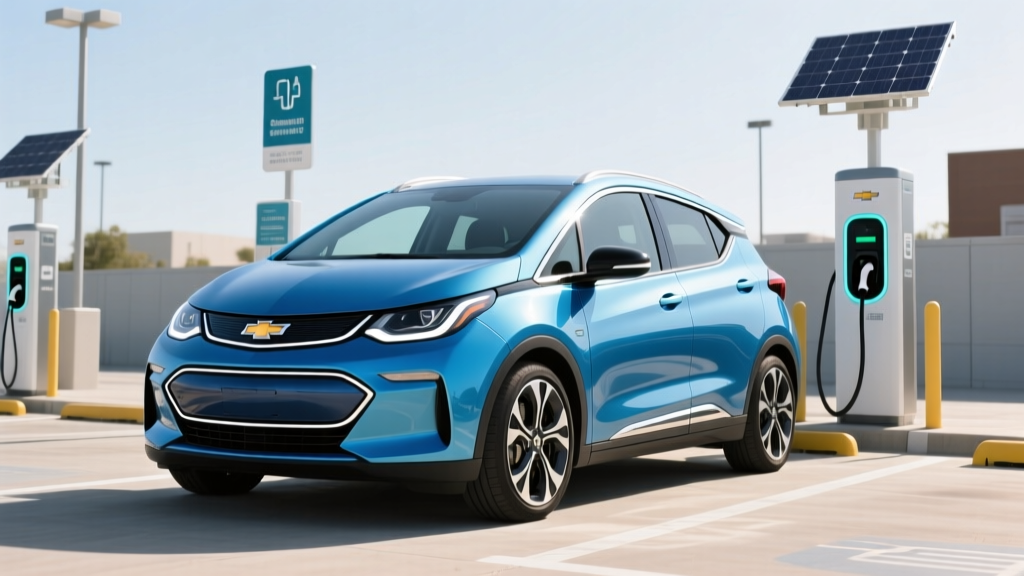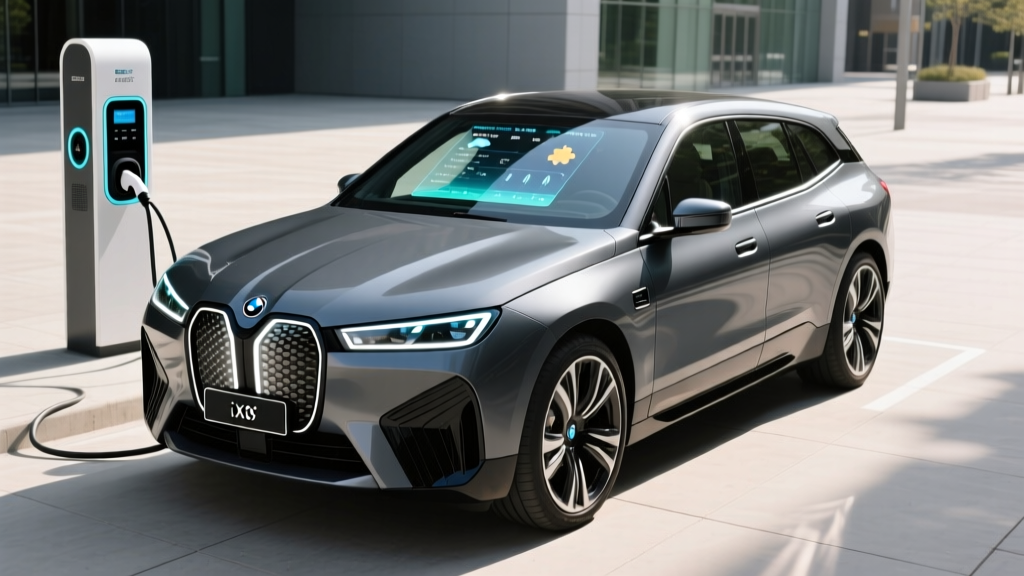
The BMW iX has been the automaker's electric flagship since its debut, and for 2026, it continues to offer a compelling blend of luxury, technology, and genuine long-distance capability. While the headline-grabbing E Ink Flow color-changing exterior remains a low-volume showcase feature, the iX xDrive50 underneath is a thoroughly engineered electric SUV that competes directly with the Audi Q8 e-tron, Mercedes EQE SUV, and Tesla Model X. This review breaks down the real-world numbers that matter to buyers: actual range on the highway, sustained DC fast-charging behavior, total cost after incentives, and whether the iX's premium positioning justifies its six-figure price tag.
2026 BMW iX at a Glance: Core Specifications
| Spec | Value |
|---|---|
| EPA Range | 307 miles (xDrive50, 20" wheels) |
| Battery (usable) | 105.2 kWh net / NMC chemistry |
| Drivetrain | Dual-motor AWD |
| Horsepower | 516 hp (385 kW) |
| 0–60 mph | 4.4 seconds |
| DC Fast Charge (peak) | 195 kW (CCS1) |
| 10–80% DC Charge | ~31 minutes |
| Level 2 Home Charge | 11 kW (~35 miles/hr) |
| EPA Efficiency | 86 MPGe combined / 39 kWh/100mi |
| Cargo (rear seats up/down) | 35.5 / 77.9 cu ft |
| Base MSRP | $87,250 (+ $995 destination) |
| Battery Warranty | 8 years / 100,000 miles |
Range and Efficiency: EPA Sticker vs. Real-World Reality
The xDrive50 trim equipped with 20-inch Aero wheels carries an EPA-estimated 307 miles of range. Opting for the larger 21- or 22-inch wheels drops that figure by roughly 10–15 miles due to increased rolling resistance and weight. The iX M60, with its 610 hp and sport-tuned suspension, is rated at approximately 274 miles.
Efficiency clocks in at 86 MPGe combined (39 kWh per 100 miles) for the xDrive50. That puts it slightly behind the more aerodynamic Tesla Model X (102 MPGe combined) but competitive with the heavier, similarly sized Audi Q8 e-tron (81 MPGe). In practical terms, expect to use roughly 390 kWh to cover 1,000 miles of mixed driving — a useful number for estimating home charging costs.
Battery Chemistry, Degradation, and Warranty Coverage
The iX uses a 111.5 kWh gross (105.2 kWh net/usable) battery pack with NMC (nickel-manganese-cobalt) cell chemistry supplied primarily by CATL and Samsung SDI. BMW engineers included a ~6 kWh buffer below the displayed 0% to protect long-term cell health — meaning the car will never truly drain the cells to a chemically empty state.
NMC chemistry offers higher energy density than LFP (lithium iron phosphate), which is why the iX achieves over 300 miles in a relatively compact underfloor package. The trade-off: NMC cells are more sensitive to prolonged storage at 100% state of charge and extreme heat. BMW's battery management system actively manages thermal conditioning, but owners should aim to charge to 80–90% for daily use and reserve 100% charges for road trips.
BMW covers the high-voltage battery for 8 years or 100,000 miles, whichever comes first. The warranty guarantees the battery will retain at least 70% of its original capacity during that period. If degradation exceeds 30%, BMW will repair or replace modules to bring capacity back above the threshold. The broader powertrain warranty also runs 8 years/100,000 miles, and the basic vehicle warranty is 4 years/50,000 miles.
Charging Speed: DC Fast Charging and Home Level 2
The iX xDrive50 supports DC fast charging at up to 195 kW via its CCS1 connector. On a compatible 200+ kW station (such as Electrify America's latest 350 kW dispensers), the iX can add approximately 90 miles of range in 10 minutes under ideal conditions — specifically, when arriving at a low state of charge with the battery preconditioned via the navigation system.
| Charging Level | Power | Speed / Time |
|---|---|---|
| Level 1 (120V household) | ~1.4 kW | ~4 miles per hour |
| Level 2 (240V, 48A home charger) | 11 kW | ~35 miles per hour (0–100% in ~10.5 hrs) |
| DC Fast Charge (peak) | 195 kW | 10–80% in ~31 minutes |
| DC Fast (10-min burst, low SoC) | ~195 kW avg | ~90 miles added |
Charging curve reality: The 195 kW peak is achieved between roughly 10% and 35% state of charge. From 35–60%, the rate tapers to approximately 150 kW. Above 80%, charging slows dramatically to protect cell longevity — expect 80–100% to take an additional 25–30 minutes. For road-trip planning, targeting 10–80% stops of about 30 minutes is the practical sweet spot.
At home on a 48-amp Level 2 charger (such as the BMW Wallbox or a ChargePoint Home Flex), the iX charges at 11 kW, adding roughly 35 miles of range per hour. A full 0–100% charge takes approximately 10.5 hours — easily achievable overnight. The iX comes with a Flexible Fast Charger that supports both 120V and 240V outlets, though 240V requires a NEMA 14-50 outlet installation by a licensed electrician.
Performance, Driving Dynamics, and the E Ink Flow Feature
The xDrive50's dual-motor all-wheel-drive system produces 516 horsepower and 564 lb-ft of torque, launching the 5,600-pound SUV to 60 mph in 4.4 seconds. The M60 variant bumps output to 610 hp with a 4.6-second 0–60 time (the slight increase over xDrive50 despite more power is due to the M60's sport-tuned suspension calibration prioritizing cornering over straight-line launch). Both versions feature adaptive air suspension with electronically controlled dampers, rear-axle steering (up to 3 degrees), and BMW's xDrive torque-vectoring system.
Driving dynamics are a clear strength. The iX corners with composure that belies its weight, the air suspension absorbs highway expansion joints gracefully, and the cabin remains remarkably quiet even at 80 mph. Regenerative braking offers three levels of intensity, including an adaptive mode that uses radar and navigation data to modulate regen based on traffic and upcoming intersections. One-pedal driving is achievable but not as aggressive as some competitors — BMW intentionally leaves some coasting ability for a more natural feel.
The E Ink Flow Color-Changing Body
The BMW iX Flow with E Ink is a technology showcase that uses electrophoretic ink panels (similar to e-reader technology, but in color) applied to the vehicle's exterior body panels. By applying an electrical charge, the panels shift between colors — from white to grey to darker shades. BMW demonstrated this on the iX at CES and auto shows, and a limited production run of the color-changing feature has been offered in select markets as an ultra-premium option.
Practically speaking, E Ink Flow remains a niche feature in 2026. It adds significant cost (estimated at $10,000+ where available as a special-order option), requires careful body panel maintenance since the E Ink film can be damaged by traditional body-shop repairs, and the color palette is limited to greyscale and muted tones rather than vibrant paints. It's a conversation piece and a personalization tool, but not a reason to choose the iX over a competitor.
Interior, Cargo, and Technology
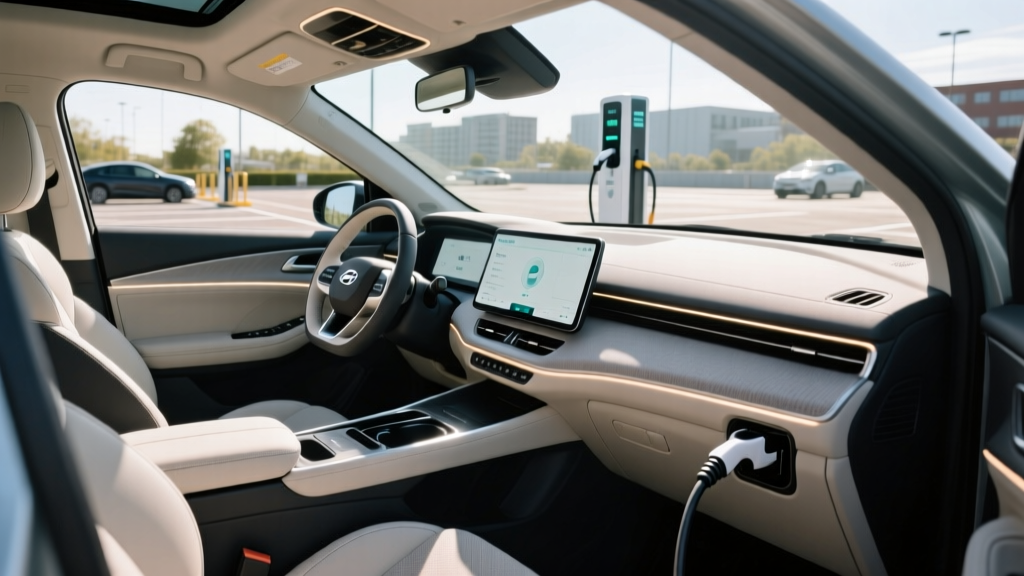
Inside, the iX features BMW's Curved Display — a 14.9-inch central touchscreen merged with a 12.3-inch digital instrument cluster, both running BMW iDrive 8.5. The system supports wireless Apple CarPlay and Android Auto, over-the-air updates, and BMW's Intelligent Personal Assistant voice control. A hexagonal steering wheel, open-pore wood or microfiber trim, and available massaging front seats reinforce the luxury positioning.
Passenger space is generous: front legroom measures 40.2 inches, and rear legroom is 38.5 inches — competitive with midsize luxury SUVs. The flat floor (no transmission tunnel) makes the rear center seat usable for short trips. Cargo volume is 35.5 cubic feet behind the second row and 77.9 cubic feet with the 40/20/40 split rear seats folded. There is no front trunk (frunk) — the space is occupied by HVAC and power electronics.
Driver assistance comes via BMW's Driving Assistant Professional, which includes adaptive cruise control with stop-and-go, lane-keeping assist, automatic lane change (with driver confirmation via turn signal), and Parking Assistant Plus with surround-view cameras. This is an SAE Level 2 system — the driver must remain engaged with hands on or near the wheel at all times. It is not a self-driving system, despite marketing language around "highway assistant." BMW does not currently offer a hands-off, eyes-off system comparable to GM's Super Cruise in the iX.
Pricing, Trim Levels, and Federal Tax Credit Eligibility
The 2026 BMW iX lineup breaks down as follows:
| Trim | Base MSRP | With Destination | EPA Range |
|---|---|---|---|
| xDrive50 (20" Aero) | $87,250 | $88,245 | 307 miles |
| xDrive50 (21" Sport) | $88,750 | $89,745 | 296 miles |
| M60 | $111,500 | $112,495 | 274 miles |
A well-equipped xDrive50 with the Premium Package (harman/kardon audio, heated rear seats, panoramic sunroof), Driving Assistant Professional, and 21-inch wheels typically lands in the $95,000–$100,000 range before incentives.
Federal Tax Credit: §30D Eligibility
The BMW iX faces a significant tax credit challenge. Under IRS §30D rules for 2026, the full $7,500 federal tax credit requires meeting battery component and critical minerals sourcing requirements. Because BMW sources battery cells and minerals globally (including from suppliers with Chinese-sourced materials), the iX's credit eligibility has been inconsistent and subject to change as supply chains shift.
- MSRP cap: SUVs must be under $80,000 MSRP. The xDrive50 at $87,250 exceeds this cap — the iX does NOT qualify for the new-vehicle §30D credit based on MSRP alone.
- Income cap: $150,000 single / $300,000 joint MAGI (irrelevant if MSRP cap is already exceeded).
- Battery sourcing: Must meet critical minerals and battery component thresholds (also moot if MSRP cap is exceeded).
- Point-of-sale transfer: Available for qualifying vehicles — but the iX does not qualify.
- Used EV credit (§25E): A pre-owned iX under $25,000 could potentially qualify for up to $4,000, but 2024–2026 models will not reach this price point for several years.
Pros, Cons, and Who Should Buy the iX
Pros
- 307-mile EPA range is competitive for the luxury SUV segment
- Refined ride quality with standard air suspension
- Strong 195 kW DC fast-charging with effective preconditioning
- Spacious, well-insulated cabin with premium materials
- Rear-axle steering adds agility uncommon in this size class
- Generous 77.9 cu ft cargo volume with seats folded
Cons
- Exceeds $80,000 MSRP cap — no federal tax credit
- No front trunk (frunk) for additional storage
- 195 kW peak charge rate trails Hyundai/Kia's 800V platforms (240+ kW)
- Level 2 driver assist requires hands-on engagement (no hands-off system)
- E Ink Flow feature is extremely expensive and impractical for most buyers
- iDrive 8.5 menu complexity has a learning curve
Who the BMW iX Suits Best
Buy it if: You want a luxury electric SUV with genuine 300-mile range, a refined ride, strong build quality, and you have reliable Level 2 home charging. The iX excels as a daily commuter and family hauler that can handle 250-mile road-trip legs with a 30-minute fast-charge stop. It's ideal for buyers coming from a BMW X5 or 7 Series who want to electrify without sacrificing interior quality.
Look elsewhere if: Federal tax credit eligibility is a priority (consider the Tesla Model X or a fully qualified SUV under $80K), you want the fastest possible DC charging (Hyundai Ioniq 5 or Kia EV9 on 800V architecture), or you need hands-free highway driving (GM's Super Cruise on the Cadillac Lyriq).
Frequently Asked Questions
What is the real-world highway range of the BMW iX xDrive50?
Expect 250–270 miles on a full charge during sustained 70–75 mph highway driving in moderate temperatures. In cold weather (below freezing), that drops to approximately 210–230 miles. City and suburban driving returns closer to the 307-mile EPA estimate thanks to regenerative braking recapturing energy.
How fast does the BMW iX charge at home and on the road?
At home on a 48-amp Level 2 charger, the iX adds about 35 miles per hour and fully charges in roughly 10.5 hours. On a DC fast charger, it peaks at 195 kW and charges from 10–80% in approximately 31 minutes when the battery is preconditioned. A 10-minute stop at low SoC can add around 90 miles.
Does the 2026 BMW iX qualify for the $7,500 federal EV tax credit?
No. The iX xDrive50's base MSRP of $87,250 exceeds the $80,000 SUV cap set by IRS §30D rules, making it ineligible for the new clean vehicle credit regardless of battery sourcing. Buyers should budget for the full purchase price. Always verify current rules at IRS.gov and consult a tax professional.
Is the BMW iX worth buying over the Tesla Model X or Audi Q8 e-tron?
The iX offers superior interior material quality and ride comfort compared to the Model X, though the Tesla wins on Supercharger network convenience and efficiency (102 MPGe vs. 86 MPGe). Against the Audi Q8 e-tron, the iX delivers about 30 more miles of EPA range and a more engaging driving experience. If build quality and cabin refinement are your top priorities, the iX is the strongest choice in this segment.
What is the BMW iX Flow E Ink feature and is it available?
E Ink Flow is an electrophoretic color-changing exterior panel system demonstrated on the iX. It allows the body panels to shift between greyscale tones via electrical charge. In 2026, it remains a limited-availability special-order option at significant additional cost (estimated $10,000+). It is a novelty feature rather than a practical one and is not available on standard iX configurations at most dealers.
How does the iX handle cold weather and snow?
The iX's standard heat pump, dual-motor AWD, and battery thermal management system make it a capable winter vehicle. Expect 20–25% range loss in sub-freezing temperatures. The AWD system provides confident traction, and the available heated steering wheel, heated front and rear seats, and heated windshield washer nozzles improve comfort. Preconditioning the cabin and battery while plugged in at home is the most effective way to preserve range in cold weather.