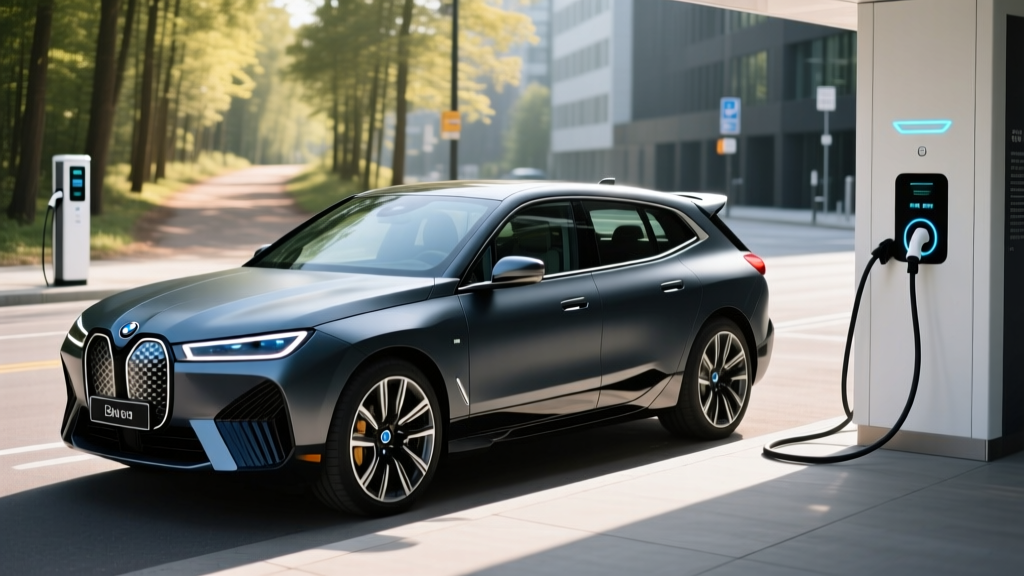
The BMW iX is a luxury electric SUV that balances performance and refinement, but its substantial mass is the single most important factor shaping its real-world efficiency, range, and charging behavior. If you've been searching for detailed BMW iX weight data and how that curb weight translates into daily ownership, this profile breaks down every critical number — from EPA range to DC fast-charging curves — so you can decide whether this Bavarian flagship fits your driveway.
BMW iX Weight and Key Specs at a Glance
The iX rides on BMW's dedicated CLAR-based EV architecture, pairing an aluminum spaceframe with a carbon-fiber-reinforced plastic (CFRP) inner structure to offset the mass of its large battery pack. Despite these lightweighting measures, the iX remains a heavy vehicle by any standard.
| Specification | xDrive50 | M60 |
|---|---|---|
| Curb Weight | 5,660 lbs | 5,860 lbs |
| Gross Vehicle Weight Rating | 6,390 lbs | 6,500 lbs |
| Battery (Usable / Gross) | 105.2 kWh / 111.5 kWh | 105.2 kWh / 111.5 kWh |
| Battery Chemistry | NMC (Nickel Manganese Cobalt) | |
| EPA Range | 307–324 mi | 288–296 mi |
| MPGe (Combined) | 86 MPGe | 78–82 MPGe |
| Efficiency | 39 kWh/100 mi | 41–43 kWh/100 mi |
| Drivetrain | Dual-Motor AWD | |
| Horsepower | 516 hp | 610 hp |
| 0–60 mph | 4.4 sec | 3.6 sec |
| Max DC Fast Charge | 195 kW (CCS1) | |
| Level 2 Charge Rate | 11 kW (AC) | |
| Towing Capacity | 3,500 lbs | |
How BMW iX Weight Impacts Range and Efficiency
At 5,660 to 5,860 pounds, the BMW iX is heavier than rivals like the Tesla Model X (~5,185 lbs) and the Audi Q8 e-tron (~5,765 lbs). That mass directly affects energy consumption, particularly in stop-and-go driving and at sustained highway speeds where aerodynamic drag compounds the penalty.
The xDrive50 achieves 39 kWh per 100 miles combined — competitive for a large luxury SUV, but noticeably thirstier than lighter midsize options. For context, the Hyundai Ioniq 5 consumes just 30 kWh/100 mi. The iX's weight means you'll spend more per mile at public DC fast chargers, where rates of $0.35–$0.55/kWh can make a 10–80% top-up cost $30–$45 depending on your local network pricing.
Regenerative braking partially offsets the weight penalty in city driving, where the iX's one-pedal mode recovers energy effectively. But on long highway descents, the sheer mass means brake-by-wire blending works harder than in lighter EVs. Owners who primarily commute in urban settings will see range closer to the EPA sticker; frequent highway road-trippers should plan for ~260 miles between stops to maintain a comfort buffer.
Charging Speed: DC Fast and Level 2 Breakdown
The iX supports a maximum DC fast-charging rate of 195 kW via its CCS1 port. BMW quotes a 10–80% charge in approximately 35 minutes under ideal conditions, though real-world charging curves tell a more nuanced story.
| Charging Level | Power / Voltage | Speed | Typical Use |
|---|---|---|---|
| Level 1 (120V) | ~1.4 kW | ~3–4 mi/hr | Emergency / overnight trickle |
| Level 2 (240V) | 11 kW (48A) | ~25–28 mi/hr (~11 hours 0–100%) | Home / workplace daily |
| DC Fast Charge | 195 kW peak (CCS1) | ~10–80% in 35 min | Road trips / public stations |
The charging curve peaks near 195 kW only between roughly 10–30% State of Charge, then tapers to ~120 kW through 50%, and drops further above 80%. This is typical of NMC chemistry with active thermal management, but it means the final 20% can add 15–20 minutes to your stop. For road-trip planning, target 10–80% sessions and skip topping off unless you need the extra miles.
At home on a Level 2 wallbox, the iX's 11 kW onboard charger is a strong point — it replenishes roughly 25–28 miles of range per hour, meaning a full charge from empty takes about 10–11 hours. This is faster than many competitors limited to 7.2 or 9.6 kW onboard charging. Plan on a 60-amp circuit with a hardwired Level 2 unit (such as a ChargePoint Home Flex or BMW Wallbox) for best results. Expect a home installation cost of $800–$2,000 depending on your panel capacity and run length — consult a licensed electrician for a site-specific quote.
Performance: Heavy but Surprisingly Quick
Despite its curb weight exceeding 5,600 pounds, the iX delivers sports-sedan acceleration. The xDrive50's dual-motor AWD system produces 516 horsepower, reaching 60 mph in 4.4 seconds. Step up to the M60 and you get 610 hp with a 3.6-second sprint — performance that defies the vehicle's mass.
BMW's adaptive air suspension and rear-axle steering (optional) help mask the weight through corners, though you'll feel the inertia during hard braking and quick direction changes. The brake pedal feel is firm and progressive — a welcome trait given the regenerative blending required in a heavy EV.
The iX's towing capacity is rated at 3,500 lbs, adequate for a small boat or utility trailer but below the Rivian R1S (7,700 lbs). Towing will slash range by roughly 35–45%, bringing real-world range under tow down to approximately 160–180 miles for the xDrive50.
Interior, Cargo, and Technology
The iX seats five across two rows with a flat floor thanks to the skateboard battery layout. Rear legroom measures a generous 38.9 inches, and the minimalist cabin uses sustainable materials including recycled microfiber and FSC-certified wood.
Cargo volume stands at 35.5 cubic feet behind the rear seats and 77.9 cubic feet with them folded. Notably, the iX has no front trunk (frunk) — the space under the hood houses electronics and the HVAC system. This is a missed opportunity for bonus storage that rivals like the Rivian R1S and Ford F-150 Lightning offer.
Tech highlights include BMW's iDrive 8.5 running on a curved display (12.3-inch instrument cluster + 14.9-inch infotainment), wireless Apple CarPlay/Android Auto, a head-up display with augmented-reality navigation, and the available Driving Assistant Professional package with highway assist and lane-change automation. This is SAE Level 2 driver assistance — you must keep hands on the wheel and eyes on the road at all times.
Pricing, Trims, and Federal Tax Credit Eligibility
For the 2026 model year, the BMW iX is offered in two trims:
| Trim | Base MSRP | As-Tested (Typical) | §30D Federal Credit Eligible? |
|---|---|---|---|
| xDrive50 | $87,250 | $94,000–$102,000 | No — exceeds $80,000 SUV cap |
| M60 | $111,500 | $115,000–$125,000 | No — exceeds $80,000 SUV cap |
Under current IRS §30D rules, the federal EV tax credit for new vehicles is capped at $80,000 MSRP for SUVs. Both iX trims exceed this threshold, meaning no new BMW iX qualifies for the $7,500 federal credit. Additionally, the buyer income cap ($300,000 joint / $150,000 single) and battery critical-mineral sourcing requirements apply to qualifying vehicles — but the MSRP cap alone disqualifies the iX regardless of your income.
Buyers may still benefit from state-level incentives (check your local DMV or energy office), and the used EV credit (up to $4,000 under §25E) may apply if you find a qualifying pre-owned iX under $25,000 — though that price point is unlikely for this model in the near term.
Battery Warranty, Longevity, and Ownership Costs
BMW provides a 8-year / 100,000-mile high-voltage battery warranty, guaranteeing a minimum of 70% capacity retention over that period. The standard limited warranty covers 4 years / 50,000 miles, and complimentary scheduled maintenance is included for 3 years / 36,000 miles.
The iX uses NMC (nickel manganese cobalt) cell chemistry, which offers high energy density but is more sensitive to sustained high-State-of-Charge storage and extreme heat than LFP (lithium iron phosphate). Best practices for longevity include:
- Set daily charge limit to 80–85% for routine driving
- Avoid leaving the vehicle at 100% SoC for extended periods
- Use preconditioning before DC fast charging in cold weather
- Minimize repeated back-to-back DC fast charges when possible
Insurance costs for the iX run higher than average for the luxury EV segment — expect annual premiums of $2,800–$3,800 depending on your state, driving record, and coverage level. Get quotes before purchasing to avoid surprises.
BMW iX vs. Key Competitors
The iX competes in the premium midsize/large electric SUV space. Here's how it stacks up on the metrics that matter:
| Vehicle | Curb Weight | EPA Range | Max DC kW | Base MSRP | §30D Credit |
|---|---|---|---|---|---|
| BMW iX xDrive50 | 5,660 lbs | 324 mi | 195 kW | $87,250 | No |
| Tesla Model X LR | 5,185 lbs | 326 mi | 250 kW | $79,990 | Possible* |
| Audi Q8 e-tron | 5,765 lbs | 285 mi | 170 kW | $74,400 | No |
| Mercedes EQE SUV | 5,400 lbs | 305 mi | 170 kW | $77,900 | Possible* |
| Rivian R1S Dual | 6,400 lbs | 321 mi | 200 kW | $79,900 | Possible* |
*Credit eligibility depends on battery sourcing, buyer income, and exact MSRP configuration. Verify on fueleconomy.gov before purchasing.
The iX holds its own on range and interior quality, but its weight, lack of tax credit eligibility, and absence of a frunk are genuine drawbacks against this field. The Tesla Model X charges faster and may qualify for the credit; the Rivian R1S offers three-row seating and off-road capability.
- Refined ride quality with adaptive air suspension
- Strong 11 kW Level 2 onboard charger
- Premium, sustainable interior materials
- Competitive 307–324 mi EPA range
- Spacious rear seat and flat floor
- Heavy: 5,660–5,860 lbs impacts efficiency
- No federal tax credit (MSRP exceeds $80K cap)
- No front trunk (frunk)
- 195 kW DC peak is slower than Tesla/Rivian
- High insurance premiums
Who Should Buy the BMW iX?
The iX is best suited for luxury buyers who prioritize cabin quality, ride comfort, and brand prestige over maximum efficiency or value. It excels as a daily commuter and family hauler for households with reliable home Level 2 charging. Road-trippers will appreciate the 300+ mile range but should plan around the 195 kW charge ceiling and CCS1 network availability.
If you need a third row, want to tow heavy loads, or need federal tax credit eligibility, look to the Rivian R1S or Tesla Model X instead. If cabin serenity, build quality, and BMW's driving dynamics matter most, the iX delivers — just know that its weight is the trade-off for its substantial battery and premium construction.
Frequently Asked Questions
What is the real-world range of the BMW iX?
The xDrive50 achieves an EPA-estimated 324 miles (with 20-inch wheels). Real-world highway driving at 75 mph yields approximately 270–290 miles. In cold weather below 30°F, expect 230–250 miles without preconditioning. The M60 delivers roughly 288 miles EPA, with real-world highway figures around 250–265 miles.
How fast does the BMW iX charge?
On a DC fast charger, the iX peaks at 195 kW and charges from 10–80% in about 35 minutes, though the curve tapers significantly above 50% SoC. At home on Level 2 (240V, 48A), it charges at 11 kW, adding roughly 25–28 miles per hour — a full charge from empty takes approximately 10–11 hours.
Does the BMW iX qualify for the federal EV tax credit?
No. Under current IRS §30D rules, the new-vehicle credit caps SUV MSRP at $80,000. The iX starts at $87,250, disqualifying both trims regardless of buyer income or battery sourcing. State incentives may still apply.
How much does the BMW iX weigh, and does it matter?
The iX xDrive50 weighs 5,660 lbs and the M60 weighs 5,860 lbs. This weight directly reduces efficiency (39–43 kWh/100 mi), increases tire wear, extends braking distances, and limits towing range. It also contributes to the iX's planted, stable ride feel at highway speeds — mass is a trade-off, not purely a penalty.
Is the BMW iX worth buying over the Tesla Model X or Rivian R1S?
Choose the iX if you value interior refinement, BMW driving dynamics, and don't need a third row or tax credit. Choose the Model X for faster charging (250 kW), Supercharger access, and potential credit eligibility. Choose the R1S for three-row seating, off-road capability, and higher towing capacity. All three are strong — the right pick depends on your priorities.