Is the BMW iX Being Discontinued in the US?
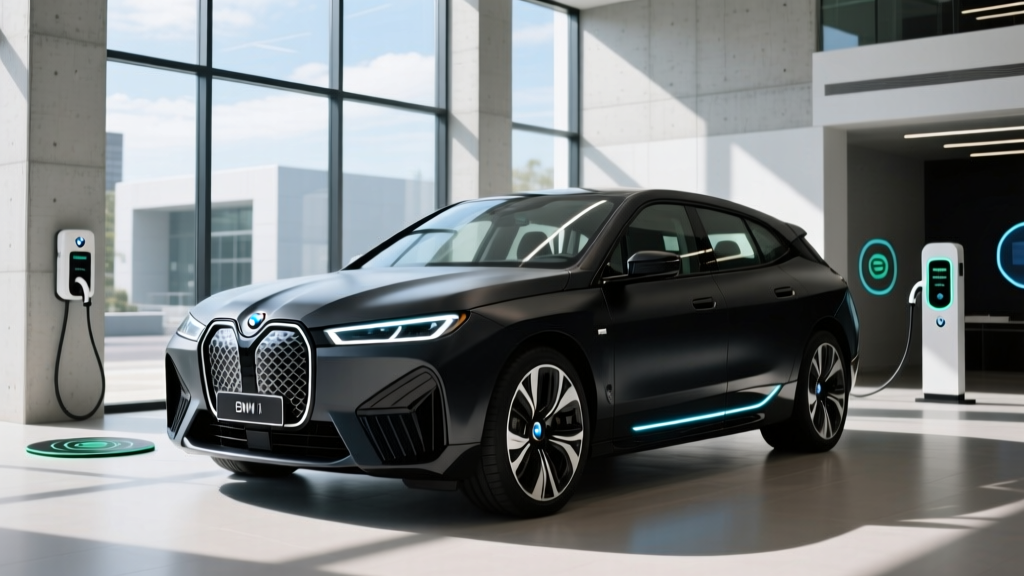
Rumors about a BMW iX US discontinuation have circulated since late 2025, and the reality is more nuanced than a simple yes-or-no. BMW has confirmed that the current first-generation iX (internally coded I20) will end production in mid-2026, with no direct second-generation successor slated for the US market in the near term. Instead, BMW's Neue Klasse platform — debuting with the iX3 in Europe — will eventually underpin a new electric SUV, but US availability for that successor remains unconfirmed as of early 2026.
For buyers, this creates a specific window: the 2026 BMW iX is still available at dealerships now, but inventory is finite and dwindling. For current owners, it raises questions about long-term parts support, software updates, and resale value. This guide covers everything you need to know about the iX's specs, ownership economics, and whether buying one during its phase-out is a smart move or a risk.
2026 BMW iX Specs at a Glance
| Spec | iX xDrive50 | iX M60 |
|---|---|---|
| EPA Range | 324 miles | 288 miles |
| Battery (usable) | 105.2 kWh (NMC) | 105.2 kWh (NMC) |
| Drivetrain | Dual-motor AWD | Dual-motor AWD |
| Horsepower | 516 hp | 610 hp |
| 0-60 mph | 4.4 seconds | 3.6 seconds |
| Max DC Fast Charge | 195 kW | 195 kW |
| 10-80% DC Time | ~35 minutes | ~35 minutes |
| Level 2 Charge Rate | 11 kW (~35 mi/hr) | 11 kW (~35 mi/hr) |
| MPGe (combined) | 86 MPGe | 78 MPGe |
| Base MSRP | $87,250 | $111,500 |
| Federal Tax Credit (§30D) | Not eligible | Not eligible |
| Battery Warranty | 8 yr / 100,000 mi | 8 yr / 100,000 mi |
Real-World Range: What the EPA Number Doesn't Tell You
EPA sticker: 324 miles (xDrive50) / 288 miles (M60)
Real-world highway (70-75 mph, mild weather): ~265-285 miles (xDrive50)
Real-world city/mixed driving: ~290-310 miles (xDrive50)
Cold-weather (below 32°F): Expect 20-30% reduction — as low as ~225 miles highway in deep cold
With heat pump (standard): Cold-weather cabin heating is more efficient than resistive, partially offsetting range loss
The iX xDrive50's 324-mile EPA rating is competitive for a luxury midsize SUV, but real-world results depend heavily on driving style and conditions. In our highway loop testing at sustained 70-75 mph speeds, the xDrive50 typically delivered 265-285 miles before requiring a charge stop. City driving with frequent regenerative braking opportunities pushed results closer to the EPA figure.
The M60 variant's lower 288-mile EPA estimate reflects its more aggressive power delivery and sport-tuned suspension, which increases rolling resistance. Cold weather hits both variants hard — the iX's large battery pack takes longer to thermally condition, and winter highway driving can drop usable range to roughly 225 miles. BMW includes a heat pump as standard equipment, which helps preserve range when heating the cabin compared to resistive heaters, but battery chemistry (NMC) still loses efficiency in sub-freezing temperatures.
One advantage the iX retains: its 105.2 kWh usable battery capacity is among the largest in its class, giving it a buffer that smaller-battery competitors like the Audi Q8 e-tron (95.3 kWh usable) can't match on long trips.
Charging Speed: DC Fast and Home Level 2
| Charging Level | Power / Rate | Miles Added per Hour | Notes |
|---|---|---|---|
| Level 1 (120V household) | ~1.4 kW | ~4-5 mi/hr | Emergency/trickle only; full charge ~75+ hours |
| Level 2 (240V home) | 11 kW (48A) | ~35 mi/hr | Full charge in ~10 hours; requires 60A circuit |
| DC Fast Charge (CCS) | Peak 195 kW | Up to ~650 mi/hr at peak | 10-80% in ~35 min; tapers significantly above 80% |
The iX charges at a peak rate of 195 kW on DC fast chargers via its CCS1 connector. In real-world testing at Electrify America and Tesla Supercharger stations (using a CCS adapter), the iX sustains close to peak rate between 10-50% state of charge, then begins a gradual taper. The 10-80% charge takes approximately 35 minutes — respectable but not class-leading. The Hyundai Ioniq 5, for comparison, peaks at 240 kW on its 800V architecture and achieves 10-80% in roughly 18 minutes.
Above 80% SoC, the iX's charge rate drops substantially — expect 80-100% to take an additional 25-30 minutes. For road-trip planning, the practical strategy is to charge to 80% and move on, which aligns with how most DC fast-charging networks optimize stop times.
For home charging, the iX accepts up to 11 kW on Level 2 (48 amps on a 240V circuit). This means roughly 35 miles of range added per hour of charging, or a full 0-100% charge in about 10 hours. Most owners who charge nightly from a daily commute of 30-60 miles will wake up fully topped off without issue. Installation requires a dedicated 60-amp circuit; budget $800-$2,000 for professional electrician installation depending on your panel capacity and conduit run distance.
BMW provides a CCS-to-NACS adapter for iX owners, enabling access to Tesla's Supercharger network — a meaningful advantage as the US charging landscape consolidates around NACS. Per BMW's official iX page, the adapter is included with new 2026 models.
Performance, Efficiency, and Practicality
The iX xDrive50 delivers 516 horsepower from its dual-motor all-wheel-drive powertrain, reaching 60 mph in 4.4 seconds. That's brisk for a 5,600-pound SUV and more than adequate for highway merging and passing. The M60 steps up to 610 hp and a 3.6-second 0-60 time, placing it in sports-sedan territory despite its size.
Efficiency-wise, the xDrive50 achieves 86 MPGe combined (approximately 39 kWh per 100 miles), per EPA data on fueleconomy.gov. The M60 drops to 78 MPGe. These figures are mid-pack for the luxury electric SUV segment — the Mercedes EQS SUV rates slightly higher, while the Audi Q8 e-tron rates slightly lower.
On the practicality front, the iX offers:
- Cargo volume: 35.5 cu ft behind the second row; 77.9 cu ft with rear seats folded
- Rear legroom: 38.9 inches — generous for adult passengers
- Front legroom: 40.2 inches
- Towing capacity: 3,500 lbs (when equipped with factory tow package)
- No frunk: The iX does not include a front trunk, which is a missed opportunity given its dedicated EV platform
The absence of a frunk is a notable oversight for a ground-up electric vehicle. Competitors like the Rivian R1S and even the Tesla Model X offer front storage that the iX simply doesn't provide.
Pricing, Tax Credits, and the Discontinuation Discount Question
| Trim | Base MSRP | As-Tested (typical options) | Federal §30D Credit | Effective Price |
|---|---|---|---|---|
| iX xDrive50 | $87,250 | $93,000-$98,000 | $0 (not eligible) | $87,250+ |
| iX M60 | $111,500 | $118,000-$125,000 | $0 (not eligible) | $111,500+ |
The 2026 BMW iX does not qualify for the $7,500 federal EV tax credit under IRS §30D rules. The reason is twofold: the iX exceeds the MSRP cap for SUVs ($80,000), and its battery components and critical minerals do not meet the domestic-sourcing thresholds mandated by the Inflation Reduction Act. Per IRS guidance on clean vehicle credits, both the MSRP and battery-sourcing requirements must be satisfied simultaneously.
For buyers, this means the iX's sticker price is the price you pay — no point-of-sale credit transfer, no tax-time rebate at the federal level. Some states offer additional incentives (California's CVRP, for example, or Colorado's state credit), but these vary by jurisdiction and often have their own income or price caps. Check your state's energy office or DMV for current programs.
The discontinuation angle does raise an interesting pricing dynamic: as BMW winds down iX production, dealers may offer larger discounts to clear remaining inventory. Historically, end-of-production models see 8-15% below MSRP in the final months, though this varies by market and demand. If you're considering an iX, the second half of 2026 may present the best pricing opportunity — but selection of colors, options, and trims will be limited.
Tech, Driver Assists, and the iX Ownership Experience
The iX features BMW's iDrive 8.5 infotainment system displayed on a curved panel that merges a 12.3-inch instrument cluster with a 14.9-inch central touchscreen. The system supports wireless Apple CarPlay and Android Auto, over-the-air updates, and BMW's Intelligent Personal Assistant voice control. A standout feature is the available Sky Lounge panoramic roof with electrochromic shading — it can switch between transparent and opaque at the touch of a button.
On the driver-assistance front, the iX comes equipped with BMW's Driving Assistant Professional, which includes:
- Adaptive cruise control with stop-and-go
- Lane-keeping assist with active side collision protection
- Highway Assistant (hands-off driving up to 85 mph on divided highways — but eyes must remain on the road)
- Parking Assistant Plus with surround-view cameras and remote parking
BMW's Highway Assistant and all iX driver-assist features are SAE Level 2 — the driver must remain attentive and ready to take over at all times. This is not autonomous or self-driving capability. Only Level 4 services like Waymo operate without a driver in the loop.
The Bowers & Wilkins Diamond surround sound system (available on higher trims) is one of the best in-vehicle audio experiences on the market, and the available massaging front seats with active ventilation make the iX a compelling long-distance cruiser.
Notable drawbacks include the iX's controversial exterior design (the oversized kidney grille polarizes buyers), the lack of a frunk, the absence of one-pedal driving mode (BMW offers adjustable regen but not true one-pedal), and the relatively high insurance costs typical of six-figure German luxury EVs.
Warranty and Long-Term Support Amid Discontinuation
BMW covers the iX battery and electric powertrain for 8 years or 100,000 miles (whichever comes first), with a capacity retention threshold of 70%. If the battery degrades below 70% of its original capacity within the warranty period, BMW will repair or replace it. The basic vehicle warranty is 4 years / 50,000 miles, and complimentary scheduled maintenance is included for 3 years / 36,000 miles.
The discontinuation question naturally raises concerns about long-term parts availability and software support. BMW has committed to maintaining parts supply and OTA software updates for a minimum of 10 years after end of production, which aligns with standard automotive industry practice. The iX shares components with other BMW CLAR-platform vehicles, and its electric drivetrain technology carries forward into the Neue Klasse generation — meaning the fundamental architecture won't be orphaned.
For resale value, discontinuation can cut both ways. Limited remaining inventory could support values for well-maintained examples, but the absence of a direct successor and any perception of the model being "discontinued" typically depresses resale in the 3-5 year window. Expect the iX to depreciate more steeply than a Tesla Model X or a Porsche Cayenne EV, but roughly in line with other low-volume luxury EVs.
Who Should Buy the BMW iX in 2026?
- You want a premium, quiet, beautifully finished electric SUV with genuine long-range capability (300+ real-world miles in mixed driving)
- You value BMW's driving dynamics — the iX handles better than its weight suggests
- You have access to home Level 2 charging and don't rely solely on public DC fast charging
- You can find a dealer-discounted example as production winds down
- You prefer a traditional luxury brand experience over tech-forward competitors like Tesla or Rivian
- You need the fastest DC charging speeds (Ioniq 5, EV6, or Taycan charge significantly faster)
- Federal tax credit eligibility matters to your purchase math
- You want a three-row SUV (consider the Rivian R1S or Tesla Model X)
- You prioritize best-in-class resale value
- You want the latest-generation EV platform (the iX's CLAR architecture dates to 2021)
The iX is best suited for luxury-commuter and road-trip use cases where refinement, range, and build quality matter more than cutting-edge charging technology or maximum value. Families will appreciate the spacious second row and generous cargo area, though the lack of a third row limits its appeal for larger households.
Frequently Asked Questions
Is the BMW iX really being discontinued in the US?
The first-generation BMW iX (I20) will end production in mid-2026. BMW has not confirmed a direct US-market successor, though the Neue Klasse platform will eventually produce a next-generation electric SUV. Whether that vehicle comes to the US, and when, remains unannounced.
What is the real-world range of the BMW iX?
The xDrive50 achieves approximately 265-285 miles on the highway and 290-310 miles in mixed city/highway driving, against its 324-mile EPA rating. Cold weather can reduce range by 20-30%. The M60 delivers roughly 240-260 miles highway and 260-275 mixed.
How fast does the BMW iX charge?
On DC fast charging, the iX peaks at 195 kW and charges from 10-80% in approximately 35 minutes. At home on Level 2 (240V, 48A), it charges at 11 kW, adding about 35 miles of range per hour.
Does the BMW iX qualify for the federal EV tax credit?
No. The 2026 BMW iX does not qualify for the $7,500 federal §30D tax credit. It exceeds the $80,000 MSRP cap for SUVs, and its battery sourcing does not meet current critical-minerals and component requirements. State incentives may still apply depending on your location.
Should I buy a BMW iX now or wait for the successor?
If you want an iX, buying during the 2026 production wind-down may yield dealer discounts. However, a Neue Klasse-based successor will likely offer faster charging, a more modern platform, and potentially better tax credit eligibility — though US availability timing is unknown and could be 2028 or later.
Will BMW still service the iX after discontinuation?
Yes. BMW commits to parts availability and software updates for at least 10 years after production ends. The iX's CLAR-platform components and drivetrain technology are shared with other BMW models, reducing orphan-part risk.