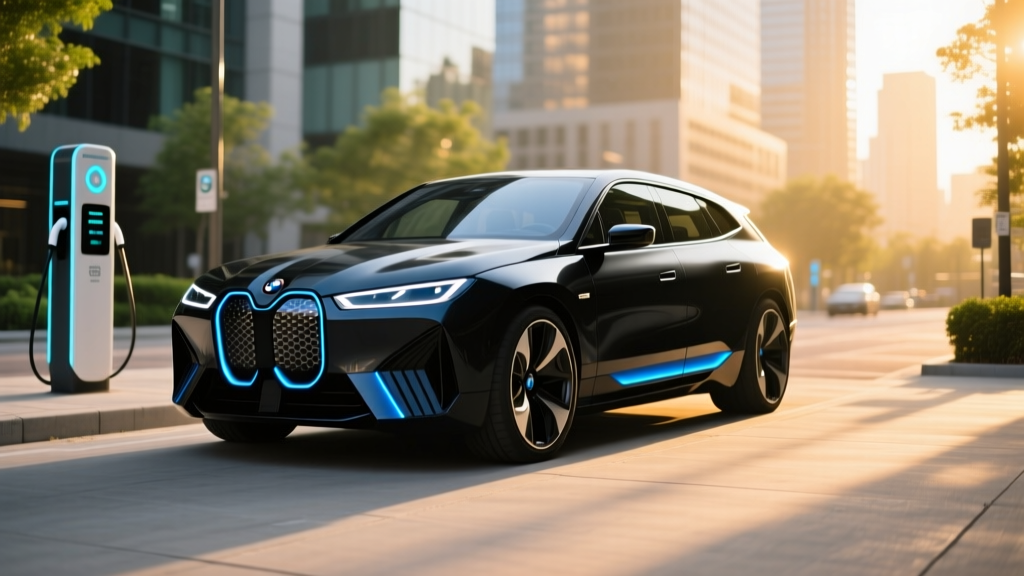
BMW's flagship electric SUV is disappearing from U.S. showrooms — at least in its current form. Reports confirm that BMW ends U.S. iX allocation for new models as the automaker prepares a next-generation electric platform built on its Neue Klasse architecture. For buyers eyeing the current iX, the window is narrowing: remaining 2026 inventory is finite, and once dealers sell through their allocations, the first-generation iX will be gone.
But should you rush to grab one before they vanish? The iX xDrive50 remains one of the most refined luxury electric SUVs on the market, with strong range, competitive charging, and a cabin that sets the standard for its class. Below is a comprehensive breakdown of what the 2026 iX delivers — and what you lose if you wait for whatever BMW builds next.
2026 BMW iX: Quick Verdict and Key Specs
The 2026 BMW iX is available in the United States primarily as the iX xDrive50 — a dual-motor, all-wheel-drive luxury SUV. The high-performance iX M60 was discontinued after the 2024 model year, leaving the xDrive50 as the sole offering for U.S. buyers in the final production run.
| Spec | Value |
|---|---|
| EPA Range | 324 miles (20" wheels) / 307 miles (21" wheels) |
| Battery (usable) | 105.2 kWh, NMC lithium-ion |
| Drivetrain | Dual-motor AWD (xDrive) |
| Horsepower | 516 hp |
| 0–60 mph | 4.4 seconds |
| Max DC Fast Charge | 195 kW (CCS) |
| 10–80% DC Fast Charge | ~31 minutes |
| Level 2 Charge Rate | 11 kW (~35 miles/hr) |
| EPA Efficiency | 86 MPGe combined (29 kWh/100 mi) |
| Cargo Volume | 35.5 cu ft (rear seats up) / 77.9 cu ft (folded) |
| Rear Legroom | 38.9 inches |
| Base MSRP | $87,250 (before destination) |
| Battery Warranty | 8 years / 100,000 miles |
Real-World Range: Beyond the EPA Sticker
Real-World Expectation: ~265–290 miles highway; ~240–260 miles in cold weather (below 32°F). City driving with regen braking can approach or slightly exceed the EPA figure.
The iX xDrive50's 324-mile EPA rating (with 20-inch wheels) places it among the upper tier of luxury electric SUVs. That figure is achievable in mixed suburban and city driving where regenerative braking recovers energy frequently. However, as with all EVs, the real-world picture depends heavily on conditions.
On sustained highway driving at 70–75 mph, expect to see roughly 265–290 miles before needing a charge. The iX's tall, wide profile creates more aerodynamic drag than a sedan like the i4, which is the tradeoff for its spacious cabin. In cold weather — particularly below freezing — battery chemistry becomes less efficient and cabin heating draws significant power. Plan for 240–260 miles of usable range in winter conditions, or roughly 20–25% below the EPA sticker.
One practical advantage: the iX includes a heat pump as standard equipment, which significantly reduces the range penalty of cabin heating compared to resistive heaters. BMW's thermal management system also precondition the battery when a DC fast charger is set as your navigation destination, optimizing charge speed on arrival.
Charging Speed: DC Fast and Home Level 2
The iX charges via CCS1 (Combined Charging System) — not the NACS connector that Tesla and an increasing number of automakers have adopted. BMW has not announced a NACS retrofit or adapter program for the current-generation iX, which is worth noting for buyers who rely heavily on the Tesla Supercharger network.
| Charging Level | Power (kW) | Speed / Time |
|---|---|---|
| Level 1 (120V household) | ~1.4 kW | ~4 miles/hr (overnight recovery only) |
| Level 2 (240V home/public) | Up to 11 kW | ~35 miles/hr; full charge in ~10 hours |
| DC Fast Charge (CCS) | Up to 195 kW peak | 10–80% in ~31 minutes |
The iX's 195 kW peak DC fast-charge rate is competitive but not class-leading. The Hyundai Ioniq 5 and Kia EV6, for example, peak at 240 kW on 800V architectures and can hit 10–80% in roughly 18 minutes. The iX's 10–80% time of approximately 31 minutes is perfectly adequate for road-trip stops — grab a coffee and a snack — but it's worth understanding the charging curve.
Like most EVs, the iX does not sustain peak kW for the entire session. The 195 kW figure is achievable between roughly 10–40% state of charge (SoC). Above 50%, the rate tapers to approximately 120–130 kW, and above 80% it drops further to protect battery longevity. This is why the 10–80% metric matters more than the peak number alone.
At home on a Level 2 charger, the 11 kW onboard charger adds about 35 miles of range per hour. A full overnight charge from near-empty takes roughly 10 hours — easily manageable with a standard 48-amp home wallbox installation. According to fueleconomy.gov, most EV owners do over 80% of their charging at home, making Level 2 speed the more relevant daily metric.
Performance, Drivetrain, and Efficiency
The iX xDrive50 uses a dual-motor all-wheel-drive setup producing 516 horsepower and 564 lb-ft of torque. The 0–60 mph sprint takes 4.4 seconds — brisk for a 5,600-pound SUV, though not in Tesla Model X Plaid territory. In practice, the instant torque delivery makes the iX feel quicker than the numbers suggest, particularly in city and suburban driving.
BMW's xDrive system manages torque distribution between front and rear motors seamlessly, and the available adaptive air suspension smooths out rough pavement while keeping body roll in check during cornering. The steering is precise if slightly numb — a BMW hallmark in the electric era.
Efficiency comes in at 86 MPGe combined (29 kWh per 100 miles), which is respectable for a large luxury SUV. For comparison, the Audi Q8 e-tron achieves 78 MPGe combined, while the lighter, smaller Genesis GV60 manages 95 MPGe. The iX sits in a sensible middle ground — it's a big vehicle with a big battery, and its efficiency reflects that.
Pricing, Trims, and Federal Tax Credit Eligibility
The 2026 BMW iX xDrive50 starts at a base MSRP of $87,250 (before the $995 destination charge). Popular option packages — such as the Dynamic Handling Package, Executive Package (with massaging seats and soft-close doors), and the Bowers & Wilkins surround sound system — can push well-equipped examples above $100,000.
| Item | Cost |
|---|---|
| Base MSRP | $87,250 |
| Destination Charge | $995 |
| Typical As-Tested (with options) | $95,000–$104,000 |
| Federal Tax Credit (§30D) | See eligibility notes below |
Does the iX Qualify for the Federal EV Tax Credit?
This is where the iX faces a significant hurdle. Under IRS §30D rules, the federal clean vehicle credit of up to $7,500 has strict eligibility requirements:
- MSRP Cap: SUVs must have an MSRP at or below $80,000. The iX xDrive50's base price of $87,250 exceeds this cap, making it ineligible for the new-vehicle federal tax credit.
- Buyer Income Limits: Even if the price qualified, buyers must fall under adjusted gross income caps ($150,000 single / $225,000 head of household / $300,000 joint).
- Battery Sourcing: The credit requires that critical minerals and battery components meet North American sourcing thresholds that tighten each year. BMW's supply chain for the iX battery (sourced from CATL and other global suppliers) may not satisfy 2026 sourcing requirements even if the MSRP qualified.
- Point-of-Sale Transfer: For vehicles that do qualify, the credit can now be transferred to the dealer at the point of sale as an immediate price reduction. This does not apply to the iX.
The bottom line: the 2026 iX xDrive50 does not qualify for the $7,500 federal tax credit due to its MSRP exceeding the $80,000 SUV cap. Buyers should not factor the federal credit into their purchase math. Some state-level incentives may still apply — check your state's energy or DMV website for current programs — but these vary widely.
Interior, Cargo, and Standout Technology
The iX cabin is where BMW justifies its premium pricing. The interior uses sustainable materials — recycled plastics, FSC-certified wood, and olive-leaf-tanned leather — that feel genuinely upscale rather than like cost-cutting measures. The hexagonal steering wheel is polarizing in design but comfortable in use.
Infotainment: BMW's iDrive 8.5 system runs on a curved display that merges a 12.3-inch instrument cluster with a 14.9-inch central touchscreen. The system supports wireless Apple CarPlay and Android Auto, 5G connectivity, and over-the-air updates. Voice control via BMW Intelligent Personal Assistant is among the better natural-language systems in the luxury segment.
Driver Assistance: The iX comes standard with BMW's Driving Assistant Professional, which includes adaptive cruise control with stop-and-go, lane-keeping assist, and automatic emergency braking. The available Highway Assistant (a SAE Level 2 system) allows hands-off driving at speeds up to 85 mph on divided highways — but the driver must keep eyes on the road, monitored by a driver-attention camera. This is not autonomous driving; it is a sophisticated driver-assist feature that requires active supervision.
Cargo and Passenger Space: With 35.5 cubic feet behind the second row and 77.9 cubic feet with the rear seats folded, the iX offers practical utility for families. Rear legroom of 38.9 inches is generous. Notably, the iX does not have a front trunk (frunk) — the space under the hood houses electronics and the HVAC system.
Pros
- 324-mile EPA range is excellent for the class
- Premium, sustainably-sourced interior materials
- Standard heat pump reduces cold-weather range loss
- Quiet, refined ride with adaptive air suspension
- Strong 516 hp dual-motor performance
- iDrive 8.5 is responsive and feature-rich
Cons
- Ineligible for $7,500 federal tax credit (MSRP over $80K cap)
- CCS connector only — no NACS / Supercharger access
- 195 kW peak charge rate trails 800V rivals
- No front trunk (frunk)
- Hexagonal steering wheel design is divisive
- Discontinued model — future support/resale uncertainty
Who Should Buy the iX — and Who Should Wait?
The allocation wind-down creates a specific decision framework for buyers:
- You want a proven, refined luxury EV SUV with 300+ miles of range available now
- You primarily charge at home and road-trip a few times per year
- You value interior quality and ride comfort over cutting-edge charge speed
- You can find remaining dealer inventory at a competitive price
- You need NACS / Supercharger compatibility for frequent road trips
- You want faster 800V-class charging (250+ kW)
- Federal tax credit eligibility is important to your budget
- You prefer to buy a model with a long production run ahead for parts and resale stability
For commuters and families who charge at home and need a spacious, quiet daily driver, the iX remains an outstanding choice — and remaining dealer inventory may come with attractive incentives as BMW clears stock. For road-trip-heavy buyers who depend on public fast-charging infrastructure, the CCS-only connector and 195 kW peak rate make rivals like the Rivian R1S or the upcoming Neue Klasse BMW more practical long-term bets.
How the iX Stacks Up Against Key Competitors
Even as allocations end, the iX competes against several strong luxury electric SUVs. Here's how the numbers compare:
| Vehicle | EPA Range | Peak DC kW | 0–60 mph | Base MSRP |
|---|---|---|---|---|
| BMW iX xDrive50 | 324 mi | 195 kW | 4.4 sec | $87,250 |
| Audi Q8 e-tron | 288 mi | 170 kW | 5.4 sec | $75,600 |
| Rivian R1S (Dual-Motor) | 352 mi | 220 kW | 4.5 sec | $79,900 |
| Mercedes EQE SUV | 305 mi | 170 kW | 4.7 sec | $77,900 |
| Tesla Model X (LR) | 348 mi | 250 kW | 3.8 sec | $79,990 |
The iX leads on interior quality and rides more comfortably than the Tesla Model X, but the Rivian R1S offers more range, NACS compatibility (and thus Supercharger access), and qualifies for the federal tax credit at its $79,900 base price. The Audi Q8 e-tron is less efficient but starts at a lower price point. Cross-shopping against these alternatives is essential given the iX's tax-credit ineligibility.
Warranty and Long-Term Battery Outlook
BMW covers the iX battery with an 8-year / 100,000-mile warranty, guaranteeing at least 70% capacity retention over that period. This is standard for the industry and aligns with NHTSA-referenced norms for EV battery warranties. The general vehicle warranty is 4 years / 50,000 miles, with 4 years of complimentary scheduled maintenance.
The iX uses an NMC (nickel manganese cobalt) battery chemistry, which offers higher energy density than LFP but is more sensitive to sustained high state-of-charge. For maximum longevity, BMW recommends setting daily charge limits to 80–90% and only charging to 100% for long trips. Real-world degradation data from European iX fleets suggests approximately 5–8% capacity loss over the first 60,000 miles — well within the warranty threshold.
One concern with the allocation ending: long-term parts availability and resale value. BMW is obligated to support the vehicle for years, but as production ceases, some trim-specific or cosmetic parts may become harder to source. Historically, discontinued EV models have seen steeper depreciation than ongoing ones — a factor to weigh if you plan to sell within 3–4 years.
Frequently Asked Questions
Why is BMW ending U.S. iX allocation?
BMW is transitioning to its next-generation Neue Klasse electric platform, which will underpin future models starting in the late 2020s. The current iX, built on a modified CLAR platform shared with ICE vehicles, will be replaced by a dedicated EV architecture with improved efficiency, faster charging, and NACS compatibility.
Can I still buy a new 2026 BMW iX?
Yes — but only while remaining dealer allocations last. BMW has not set a public cutoff date, but once dealers sell through their final inventory, no new orders will be accepted. Check with local BMW dealers for current availability.
Does the BMW iX qualify for any tax credits?
The iX xDrive50 does not qualify for the $7,500 federal clean vehicle credit under §30D because its $87,250 base MSRP exceeds the $80,000 SUV cap. Some state and utility incentives may still apply — consult your state energy office or a tax professional for specifics.
Is the iX CCS or NACS?
The current-generation iX uses the CCS1 connector exclusively. BMW has not announced a NACS adapter for this model. Future Neue Klasse-based BMW EVs are expected to adopt NACS for the North American market.
What is the real-world range of the BMW iX?
Expect approximately 265–290 miles on highway trips and 240–260 miles in cold weather, versus the 324-mile EPA estimate. City driving with regenerative braking can approach or slightly exceed the EPA figure.
How fast does the BMW iX charge at home?
On a Level 2 (240V) home charger, the iX accepts up to 11 kW, adding roughly 35 miles of range per hour. A full charge from near-empty takes approximately 10 hours — easily done overnight.