Quick Verdict: A Luxury EV SUV That Prioritizes Refinement Over Flash
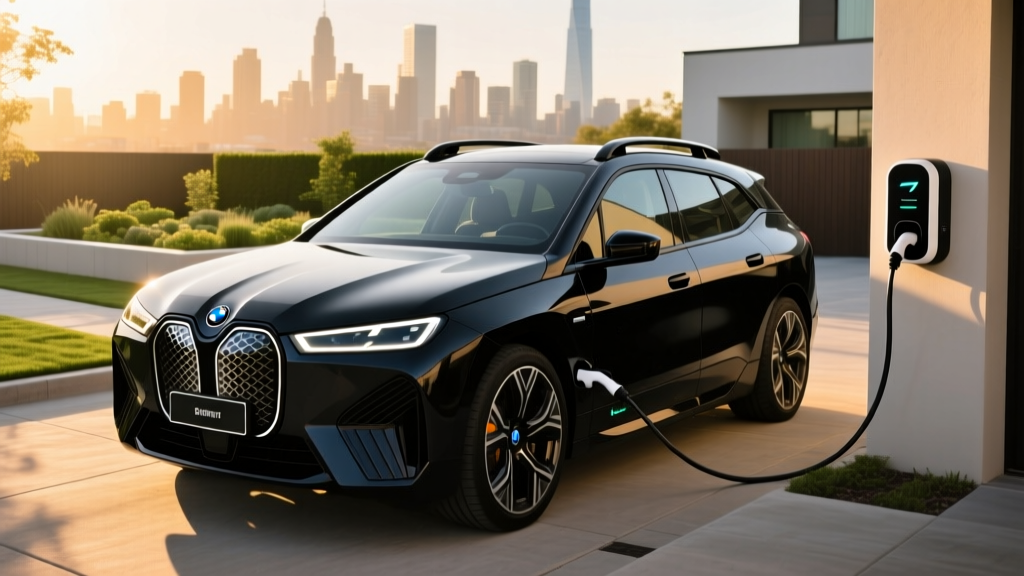
The BMW iX occupies a specific niche in the electric luxury SUV market: it's not the fastest, the longest-range, or the most affordable — but it may be the most comfortable and well-built. With the 2026 model year, BMW has streamlined the iX lineup into three core trims (xDrive45, xDrive50, and the performance M70), each riding on the same 105.1 kWh (usable) NMC battery pack and dual-motor all-wheel-drive architecture. If you're researching BMW iX specifications to decide whether this flagship electric SAV earns a spot in your garage, this review breaks down every number that matters — from real-world range and charging curves to tax-credit eligibility and total ownership cost.
The iX rewards buyers who value cabin materials, ride quality, and highway cruising composure over headline-grabbing acceleration. It penalizes those who need three rows, maximum cargo space, or a sub-$70,000 entry price. Let's get into the data.
BMW iX Specifications at a Glance
| Specification | xDrive45 | xDrive50 | M70 |
|---|---|---|---|
| EPA Range | ~312 mi | 324 mi | ~296 mi |
| Battery (Usable) | 105.1 kWh, NMC (nickel-manganese-cobalt) | ||
| Horsepower | ~402 hp | 516 hp | 610 hp |
| 0–60 mph | ~4.9 s | 4.4 s | 3.6 s |
| Drivetrain | Dual-motor AWD | ||
| Max DC Fast Charge | 195 kW (CCS1) | ||
| 10–80% DC Time | ~35 min | ||
| Level 2 Charge Rate | 11 kW (AC, ~32 mi/hr) | ||
| EPA Efficiency | ~87 MPGe | 86 MPGe | ~79 MPGe |
| kWh/100 mi | ~39 | ~39 | ~43 |
| Base MSRP | ~$75,150 | ~$87,250 | ~$111,500 |
| Federal Tax Credit (§30D) | Eligible up to $7,500 (see rules below) | ||
| Battery/Powertrain Warranty | 8 years / 100,000 miles | ||
Range and Efficiency: EPA vs. Real World
The xDrive50's EPA-estimated 324 miles is competitive against rivals like the Audi Q8 e-tron (285 mi) and the Mercedes EQE SUV (279 mi). The base xDrive45 sacrifices a small amount of range for its lower price, while the M70's stickier tires and more aggressive powertrain tuning drop it below 300 miles.
EPA Sticker: 324 mi (xDrive50)
Highway driving (70–80 mph): Expect ~265–285 mi. The iX's tall SAV profile creates more aerodynamic drag than a sedan, and EVs lose efficiency disproportionately at highway speeds.
Mixed city/highway: ~290–310 mi in moderate temperatures.
Cold weather (below 32°F): ~220–260 mi depending on cabin heating demand. The iX includes a heat pump, which mitigates losses compared to resistive heating, but expect a 15–25% reduction in freezing conditions.
Towing: BMW rates the iX at 3,500 lbs max. Towing near capacity can cut range by 40–50%.
The iX uses BMW's fifth-generation eDrive motors, which are current-excited synchronous designs rather than permanent-magnet motors. This means no rare-earth magnets in the rotors — an interesting engineering choice that slightly trades peak efficiency for reduced dependency on critical minerals, though it doesn't meaningfully change your driving experience.
Charging Speed: DC Fast Charging and Home Level 2
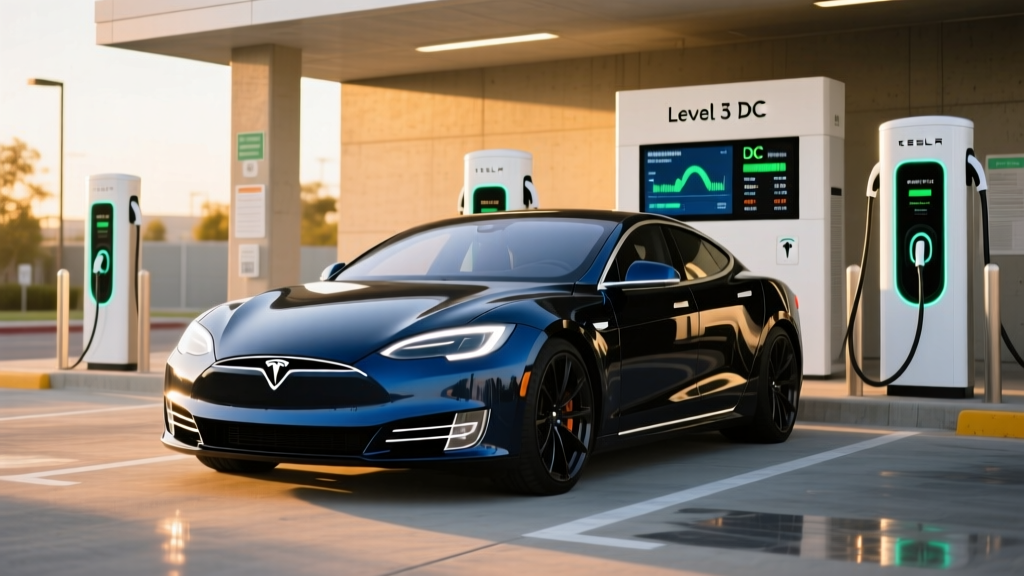
Charging speed is where the iX shows its age relative to 800-volt competitors like the Hyundai Ioniq 5 and Porsche Macan EV. The iX runs on a 400-volt architecture and tops out at 195 kW peak DC fast charging. That's respectable but not class-leading.
| Charging Level | Power | Speed (Approx.) | Typical Use Case |
|---|---|---|---|
| Level 1 (120V) | ~1.4 kW | ~4 mi/hr | Emergency / overnight trickle |
| Level 2 (240V, 48A) | 11 kW | ~32 mi/hr | Home overnight charging |
| DC Fast (CCS1) | Peak 195 kW | 10–80% in ~35 min | Road trips, public stations |
Charging curve reality: The iX doesn't sustain 195 kW for the full session. Peak rate holds roughly from 10–30% state of charge, then tapers progressively. From 50–80%, expect ~90–120 kW. This is why the 10–80% time is 35 minutes rather than the ~22 minutes you'd calculate from peak rate alone. For comparison, an 800V vehicle like the Ioniq 5 (peak 240 kW) achieves 10–80% in about 18 minutes.
At home on a Level 2 wall connector (11 kW / 48 amps), a full 0–100% charge takes roughly 11 hours. Most owners who plug in nightly will rarely charge from empty — a typical 50-mile daily commute replenishes in under 2 hours on Level 2. Note: the iX ships with a CCS1 connector. If you want access to Tesla Supercharger stalls (which now number over 25,000 in North America), you'll need BMW's NACS adapter or an aftermarket CCS-to-NACS adapter. BMW has announced native NACS ports for future models, but the 2026 iX still uses CCS1.
Performance and Drivetrain
All three iX trims use dual electric motors — one on each axle — providing standard all-wheel drive. There is no rear-wheel-drive iX variant.
- xDrive45: ~402 hp, 0–60 in approximately 4.9 seconds. Adequate for daily driving and highway merging; this trim is about value, not performance.
- xDrive50: 516 hp, 0–60 in 4.4 seconds. This is the sweet spot — genuinely quick without the M-badge price premium.
- M70: 610 hp, 0–60 in 3.6 seconds. Legitimately fast for a 5,600-lb SUV, with launch control and M-specific chassis tuning. You pay for it in reduced range and a $25,000+ premium over the xDrive50.
Ride quality is where the iX distinguishes itself. Standard adaptive air suspension on the xDrive50 and M70 delivers a plush, isolated ride that absorbs highway expansion joints with minimal feedback. The xDrive45 uses conventional steel springs, which are still comfortable but less supple. All trims include BMW's xDrive torque-vectoring logic, which can brake individual wheels and redistribute torque for confident all-weather traction.
Pricing, Trims, and Federal Tax Credit Eligibility
| Trim | Base MSRP | Est. As-Tested | §30D Credit Potential | Effective Price |
|---|---|---|---|---|
| xDrive45 | ~$75,150 | ~$80,000–$85,000 | Up to $7,500 | ~$67,650+ |
| xDrive50 | ~$87,250 | ~$95,000–$105,000 | Up to $7,500 | ~$79,750+ |
| M70 | ~$111,500 | ~$120,000+ | $0 (over MSRP cap) | ~$111,500+ |
Critical tax credit detail: Under the IRS §30D New Clean Vehicle Credit, the iX faces specific eligibility hurdles:
- MSRP cap: SUVs must have a base MSRP at or below $80,000. The xDrive45 qualifies; the xDrive50's base MSRP of ~$87,250 exceeds the cap, making it ineligible for the federal credit in most configurations. The M70 is well over the cap.
- Buyer income limits: Modified AGI cannot exceed $300,000 (married filing jointly), $225,000 (head of household), or $150,000 (single).
- Battery sourcing requirements: A percentage of critical minerals and battery components must be sourced from the U.S. or free-trade-agreement countries. BMW's supply chain has been evolving, and the exact credit amount ($3,750 for minerals, $3,750 for components, or the full $7,500) depends on the specific build date and battery batch. Confirm eligibility at the point of sale with your dealer.
- Point-of-sale transfer: You can transfer the credit to the dealer at purchase to reduce the purchase price directly, rather than waiting to claim it on your tax return.
Bottom line: Only the base xDrive45 is likely to qualify for any portion of the federal credit, and even that depends on your income and the battery-sourcing status of your specific vehicle. Consult a tax professional and verify on fueleconomy.gov before purchasing.
Interior, Cargo, and Technology
The iX's cabin is its strongest selling point. BMW uses a mix of open-pore wood, microfiber, and available synthetic leather (Sensafic) with a hexagonal steering wheel that's polarizing in design but comfortable in use. The curved display runs BMW iDrive 8.5 on a 14.9-inch touchscreen paired with a 12.3-inch instrument cluster.
Passenger space:
- Front headroom: ~40.2 in | Legroom: ~40.2 in
- Rear headroom: ~38.7 in | Legroom: ~37.7 in
- Seating for five — there is no third-row option
Cargo volume:
- Behind second row: ~35.5 cu ft
- With rear seats folded: ~77.9 cu ft
- No front trunk (frunk) — the space is occupied by HVAC and power electronics
The lack of a frunk and the 35.5 cu ft rear cargo area are genuine drawbacks versus the Tesla Model X (behind the third row: ~37 cu ft, folded: ~88 cu ft) and the Rivian R1S (which offers three rows). If cargo hauling or family road trips with lots of gear are priorities, the iX's utility is limited by luxury-SUV standards.
Notable tech features:
- BMW Highway Assistant (Level 2 hands-on/hands-off assist on divided highways up to 85 mph in certain conditions)
- Parking Assistant Professional with Reversing Assistant (retraces your last 50 meters)
- Harman Kardon or optional Bowers & Wilkins 4D surround sound
- Available panoramic electrochromic glass roof (Sky Lounge) that dims electrically
- Wireless Apple CarPlay and Android Auto, wireless charging pad
- Over-the-air software updates
Driver assistance note: BMW Highway Assistant is a SAE Level 2 system. Despite "hands-off" capability at highway speeds, you must remain attentive and ready to take over. The system monitors driver engagement via a cabin camera. This is not autonomous driving — it's an advanced cruise-and-lane-centering feature.
Ownership Costs, Warranty, and Long-Term Value
BMW covers the iX battery and high-voltage components for 8 years or 100,000 miles (whichever comes first), with a capacity retention threshold of 70%. If the battery degrades below 70% of its original usable capacity within the warranty period, BMW will repair or replace it. The basic vehicle warranty is 4 years / 50,000 miles, and BMW includes 3 years / 36,000 miles of complimentary scheduled maintenance.
Insurance: Expect premiums 15–25% higher than a comparably priced gas BMW X5, reflecting the iX's higher repair costs and battery replacement value. Average annual insurance runs approximately $2,400–$3,200 depending on your state, driving record, and coverage level.
Charging cost vs. gasoline: At the national average electricity rate of ~$0.17/kWh and the iX's consumption of ~39 kWh/100 mi, you're spending roughly $6.63 per 100 miles on home charging. A comparable gas SUV at 22 MPG and $3.40/gallon costs ~$15.45 per 100 miles. That's roughly $880 in annual fuel savings for a 12,000-mile/year driver — meaningful, though it takes years to offset the iX's higher purchase price.
Depreciation: Luxury EVs have experienced steeper depreciation than gas counterparts in recent years, with 3-year retained values in the 45–55% range for vehicles in this segment. The iX is no exception. If you plan to trade in after 3–4 years, factor in significant value loss.
BMW iX vs. Key Competitors
How does the iX stack up against the luxury electric SUVs it competes with directly?
- vs. Tesla Model X: The Model X offers more range (~348 mi Long Range), a frunk, available third row, and access to the Supercharger network natively. But its interior quality, panel gaps, and ride refinement don't match the iX. Choose the iX for luxury; choose the Model X for utility and charging infrastructure.
- vs. Audi Q8 e-tron: The Q8 e-tron has a lower starting price (~$74,400), slightly less range (285 mi), and comparable interior quality. Its 170 kW peak DC charging is slower than the iX's 195 kW. A close match — the iX wins on range and charging speed, the Q8 e-tron wins on entry price.
- vs. Mercedes EQE SUV: The EQE SUV offers similar luxury but with only ~279 mi EPA range and a smaller 90.6 kWh battery. The iX is the more practical road-trip vehicle.
- vs. Rivian R1S: The R1S offers three rows, genuine off-road capability, and a more adventure-oriented character. Its range (~352 mi Max Pack) edges past the iX, but ride comfort on pavement favors BMW.
- You prioritize cabin refinement, ride comfort, and brand prestige
- You primarily drive solo or with one passenger (two-row SUV)
- You have home Level 2 charging and rarely need DC fast charging
- You value BMW's dealer/service network over startup brands
- You need a third row or maximum cargo volume (Rivian R1S, Tesla Model X)
- Fastest possible DC charging is a priority (800V competitors charge significantly faster)
- You want native NACS / Supercharger access without an adapter
- Your budget tops out under $70,000
Pros and Cons
- Class-leading ride quality and cabin isolation
- 324 mi EPA range (xDrive50) beats most German luxury EV SUVs
- Standard AWD with confident all-weather traction
- Premium interior materials and build quality
- Heat pump included standard (better cold-weather efficiency)
- 8-yr/100,000-mi battery warranty
- 3 years of complimentary scheduled maintenance
- 400V architecture limits DC charging to 195 kW (slower than 800V rivals)
- No frunk — cargo space is limited for the vehicle's size
- Only two rows of seating; no third-row option
- High entry price; most trims exceed the $80K §30D MSRP cap
- CCS1 port requires adapter for Tesla Supercharger access
- Hexagonal steering wheel design is divisive
- Insurance premiums higher than comparable gas SUVs
Frequently Asked Questions
What is the real-world range of the BMW iX?
The EPA rates the xDrive50 at 324 miles, but in real-world highway driving at 70–80 mph, expect approximately 265–285 miles. In cold weather (below freezing), range drops to roughly 220–260 miles depending on heating use. City driving with regenerative braking can approach or slightly exceed the EPA figure.
How fast does the BMW iX charge?
On a DC fast charger, the iX peaks at 195 kW and charges from 10–80% in about 35 minutes. At home on a Level 2 (240V) wall connector, it charges at 11 kW, adding approximately 32 miles of range per hour. A full 0–100% Level 2 charge takes roughly 11 hours.
Does the BMW iX qualify for the federal EV tax credit?
Only the base xDrive45 (MSRP ~$75,150) falls under the $80,000 SUV MSRP cap required by IRS §30D. The xDrive50 and M70 exceed the cap and are not eligible. Even for the xDrive45, eligibility depends on buyer income limits ($150K single / $300K joint), battery critical-mineral sourcing, and component sourcing requirements. Verify with your dealer and consult a tax professional before relying on the credit.
Is the BMW iX worth buying over the Tesla Model X or Rivian R1S?
The iX is worth buying if ride comfort, interior luxury, and traditional dealership service are your top priorities. The Model X wins on range, Supercharger access, and available third-row seating. The R1S wins on cargo versatility, off-road capability, and adventure readiness. The iX wins on highway refinement and cabin quality.
What is the BMW iX battery warranty?
BMW covers the high-voltage battery for 8 years or 100,000 miles, guaranteeing at least 70% capacity retention. If degradation exceeds 30% within that period, BMW will repair or replace the battery at no cost. The standard vehicle warranty is 4 years / 50,000 miles.
Can I charge the BMW iX at Tesla Superchargers?
Not natively. The 2026 iX uses a CCS1 charge port. You can use a BMW-provided or aftermarket CCS-to-NACS adapter to access Tesla Superchargers that support non-Tesla vehicles, but charging speeds may be limited by adapter compatibility. BMW is expected to adopt native NACS ports in future model years.
Does the BMW iX have a frunk (front trunk)?
No. The space under the hood houses power electronics, the HVAC system, and the windshield washer fluid reservoir. All cargo goes in the rear, which offers 35.5 cu ft behind the second row and 77.9 cu ft with seats folded.