The 2026 BMW iX at a Glance: Specs That Shape the Deal
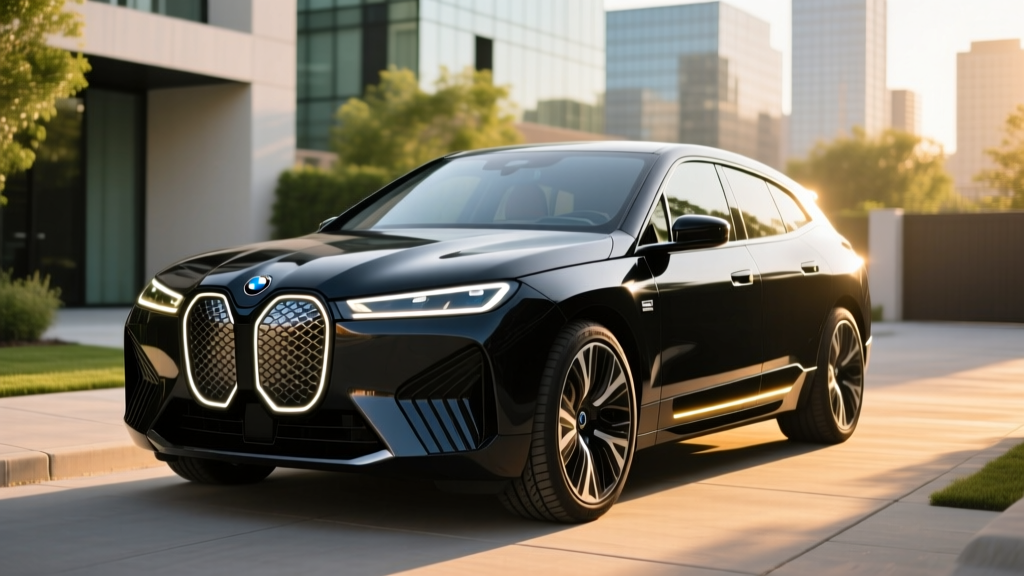
The BMW iX is the automaker's flagship electric SUV — a tech-dense, luxury mid-size crossover built on BMW's dedicated CLAR platform. For buyers hunting a BMW iX deal, the value proposition hinges on understanding the exact specs, real-world efficiency, and current federal incentive landscape. Let's put the numbers on the table first.
| Spec | iX xDrive50 | iX M60 |
|---|---|---|
| EPA Range | 324 miles | 288 miles |
| Battery (usable) | 105.5 kWh, NMC | 105.5 kWh, NMC |
| Horsepower | 516 hp | 610 hp |
| 0–60 mph | 4.4 sec | 3.6 sec |
| Drivetrain | Dual-motor AWD | Dual-motor AWD |
| Max DC Fast Charge | 200 kW (CCS/NACS) | 200 kW (CCS/NACS) |
| 10–80% DC Time | ~34 min | ~34 min |
| Level 2 Charge Rate | 11 kW (~35 mi/hr) | 11 kW (~35 mi/hr) |
| MPGe (combined) | 86 MPGe | 78 MPGe |
| kWh/100 mi | 39 kWh | 43 kWh |
| Base MSRP | $87,250 | $111,500 |
| Battery Warranty | 8 yr / 100,000 mi | 8 yr / 100,000 mi |
Sources: EPA fueleconomy.gov, BMW USA Press.
Real-World Range: What the EPA Sticker Doesn't Tell You
EPA sticker: 324 miles
Expect on the highway (70–75 mph, 65°F): ~270–290 miles
Cold weather (below 32°F, mixed driving): ~220–250 miles
City/regen-heavy driving (55°F): ~310–330 miles
The iX xDrive50's 324-mile EPA estimate is competitive among luxury electric SUVs, but real-world results depend heavily on how and where you drive. The iX is a heavy vehicle — roughly 5,660 lbs — and that mass shows up at sustained highway speeds where aerodynamic drag dominates. In our experience with similar BMW CLAR-platform EVs, highway efficiency drops to around 2.4–2.6 mi/kWh, translating to roughly 270–290 real miles before you need to find a charger.
Cold weather compounds this. BMW equips the iX with a heat pump (standard, not optional — a meaningful advantage over some competitors that charge extra), which mitigates cabin-heating energy draw. Still, expect a 20–30% range reduction in sub-freezing conditions. The 105.5 kWh usable NMC (nickel manganese cobalt) battery provides a substantial energy buffer, but NMC chemistry also prefers not to sit at 100% SoC for extended periods. For daily driving, BMW recommends an 80% charge limit, which nets you roughly 260 EPA-equivalent miles — still plenty for most commutes.
Charging Speed: DC Fast Charging and Home Level 2
Charging speed is where many luxury EV buyers get burned by marketing peak numbers versus sustained rates. Here's what the iX actually delivers:
| Level | Power / Rate | Speed | Notes |
|---|---|---|---|
| Level 1 (120V) | ~1.4 kW | ~4–5 mi/hr | Emergency / trickle only |
| Level 2 (240V, 48A) | 11 kW | ~35 mi/hr | Full charge in ~10 hr |
| DC Fast Charge | Peak 200 kW | 10–80% in ~34 min | Sustains ~150 kW to 50%, tapers above |
The 200 kW peak DC rate is respectable but not class-leading — the Hyundai Ioniq 5 and Kia EV6 hit 350 kW peaks on 800V architectures. In practice, BMW's charge curve holds around 150 kW through the 10–50% SoC window before stepping down progressively. You'll add roughly 180 miles of range in 20 minutes at a functioning 200+ kW Electrify America or Tesla Supercharger (with NACS adapter).
For home charging, the 11 kW onboard charger is a strong point. On a 48-amp Level 2 circuit (requiring a 60-amp breaker), you'll recover about 35 miles of range per hour — meaning an overnight session from 20% to 80% takes roughly 6 hours. If your home panel only supports a 40-amp circuit (32-amp charge), expect closer to 25 mi/hr. Budget $800–$2,000 for a professional Level 2 installation depending on panel proximity and local permit costs.
Preconditioning matters: The iX will precondition its battery when a DC fast charger is set as your navigation destination. This warms the pack to optimal temperature, enabling the full 200 kW peak. Skip preconditioning on a cold day and you may see peak rates closer to 100–120 kW until the pack warms up.
Performance and Driving Dynamics
The xDrive50's 516 hp dual-motor AWD setup delivers a 4.4-second 0–60 mph time — genuinely quick for a 5,600-lb SUV. The M60 bumps output to 610 hp and drops the sprint to 3.6 seconds, with a sportier suspension tune and rear-axle steering. Both variants use BMW's fifth-generation eDrive motors, which are externally excited synchronous designs (no permanent magnets, no rare-earth dependency).
On the road, the iX rides with composed authority. The optional air suspension (standard on M60) irons out highway imperfections while maintaining taut body control. Regenerative braking offers three levels plus an adaptive mode that uses radar and navigation data to modulate regen based on traffic and upcoming intersections. It's not true one-pedal driving in the Nissan Leaf sense — BMW lets you choose your deceleration preference rather than forcing aggressive regen.
Pricing, Trims, and How to Structure a BMW iX Deal
Finding a genuine BMW iX deal requires understanding the trim ladder, current incentives, and where negotiation leverage exists.
| Trim | Base MSRP | Typical As-Tested | §30D Credit Eligible? |
|---|---|---|---|
| iX xDrive50 | $87,250 | $92,000–$98,000 | No (MSRP cap: $80,000 for SUVs) |
| iX xDrive50 Sport | $90,750 | $96,000–$102,000 | No |
| iX M60 | $111,500 | $118,000–$125,000 | No |
Critical tax credit reality: Under IRS §30D rules, new electric SUVs must have an MSRP at or below $80,000 to qualify for the up-to-$7,500 federal tax credit. Every 2026 BMW iX trim exceeds this cap. Additionally, buyer income limits apply ($150K single / $300K joint AGI), and battery critical-mineral and component sourcing requirements must be met. The iX's battery is manufactured with significant non-US-sourced content, which would further limit eligibility even if MSRP allowed it.
So how do you actually find a BMW iX deal? Consider these approaches:
- CPO or low-mileage used: The used EV tax credit (§25E) offers up to $4,000 (30% of sale price, capped) for EVs priced at $25,000 or less. A 2023–2024 iX may not hit that price point yet, but it's worth monitoring.
- BMW lease incentives: BMW Financial Services frequently offers lease credits on the iX — often $5,000–$7,500 in "lease cash" that effectively replicates the tax credit BMW can't claim on a purchase. This has been the most common path to an iX "deal" since the §30D MSRP cap took effect.
- Model-year clearance: As BMW transitions model years, dealers discount prior-year inventory. Late 2025, expect $5,000–$10,000 off MSRP on remaining 2025 units.
- Dealer demo / loaner vehicles: These often carry 2,000–5,000 miles and sell at $8,000–$12,000 below MSRP while retaining the full new-vehicle warranty.
Interior, Cargo, and Daily Practicality
The iX cabin is a deliberate departure from traditional BMW interiors. A hexagonal steering wheel, curved display running BMW iDrive 8.5 (a 14.9-inch touchscreen merged with a 12.3-inch instrument cluster), and a floating center console define the aesthetic. Material quality is excellent — SensaTec synthetic leather is standard, with available Vernasca leather and an open-pore wood trim option.
Passenger space is generous:
- Front legroom: 40.2 inches
- Rear legroom: 38.9 inches
- Front headroom: 40.5 inches
- Rear headroom: 38.8 inches
Cargo volume behind the second row is 35.5 cu ft, expanding to 77.9 cu ft with the 40/20/40 rear seats folded. There is no frunk — the space under the hood houses electronics and the HVAC system. For comparison, the Tesla Model X offers more cargo volume (about 44 cu ft behind the second row plus a frunk), while the Mercedes EQE SUV trails slightly at 31 cu ft.
Towing capacity is rated at 3,500 lbs with the factory hitch — adequate for a small boat or bike trailer but not for heavy trailers. If towing is a priority, the Rivian R1S (7,700 lb rating) is the segment leader.
Technology and Driver Assistance
The iX comes equipped with BMW's Driving Assistant Professional package, which includes:
- Adaptive cruise control with stop-and-go
- Lane-keeping assist with active side collision protection
- Highway Assistant (hands-off driving up to 85 mph on divided highways — eyes-on, SAE Level 2)
- Parking Assistant Plus with 360-degree cameras and remote maneuver assist
The iDrive 8.5 system is responsive and supports wireless Apple CarPlay and Android Auto, a built-in Wi-Fi hotspot, and over-the-air updates. One notable tech feature: the iX includes a 5G-capable connected module and supports BMW Digital Key Plus (UWB-based phone-as-key). The available Bowers & Wilkins Diamond Surround Sound system (a $3,400 option) is among the best in any production vehicle.
Drawbacks: iDrive's menu depth can frustrate — climate controls are buried in the touchscreen (no physical knobs for temperature), and the hexagonal steering wheel, while distinctive, obstructs the instrument cluster for some drivers. BMW has addressed some of this in iDrive 8.5 updates, but it remains a common complaint.
Pros, Cons, and the Verdict on the iX
- 324-mile EPA range (xDrive50) is top-tier for the luxury SUV segment
- 11 kW Level 2 onboard charger — faster than many competitors
- Heat pump standard (not an upcharge)
- Exceptional ride quality with available air suspension
- 8-year/100,000-mile battery warranty with 70% capacity retention guarantee
- Strong lease incentive availability offsets MSRP-cap tax-credit exclusion
- No federal purchase tax credit — MSRP exceeds $80K SUV cap
- 200 kW peak DC charging trails 800V competitors (350 kW capable)
- No frunk — cargo space limited to the rear hatch area
- Hexagonal steering wheel and touchscreen-only climate controls polarize
- Heavy at 5,660 lbs — efficiency suffers at highway speeds
- $87K+ starting price puts it in direct competition with proven alternatives
How the BMW iX Compares to Key Rivals
Before finalizing a BMW iX deal, cross-shop these alternatives:
- Tesla Model X Long Range: 348-mile EPA range, faster Supercharger access (250 kW), standard Autopilot, and available FSD (Supervised). More cargo space and a frunk. But interior quality and ride comfort don't match the iX.
- Mercedes-Benz EQE 350+ SUV: Starts lower (~$78K), 305-mile range, more traditional luxury feel. Less range and slower charging than the iX.
- Rivian R1S Dual-Motor: 352-mile range (Max Pack), 7,700-lb towing, genuine off-road capability. Less polished on-road refinement but far more versatile for active lifestyles.
- Genesis Electrified GV70: Significantly cheaper (~$66K), 236-mile range. Shorter range and smaller, but qualifies for some incentives and offers strong value.
The iX wins on a combination of range, ride quality, and cabin technology. It loses on charging speed (versus 800V platforms), tax-credit eligibility, and cargo versatility (no frunk, modest towing).
Who Should Buy the BMW iX?
- You want a luxury electric SUV with 300+ miles of range and prioritize ride comfort over sportiness
- You charge primarily at home (the 11 kW onboard charger maximizes Level 2 value)
- You can access BMW lease incentives to offset the lack of federal purchase credits
- You value cabin material quality, quiet refinement, and advanced driver-assist features
- You need frequent DC fast charging on road trips and want 350 kW peak capability
- You need a frunk, heavy towing capacity, or third-row seating
- You require federal purchase tax credit eligibility (consider the Genesis GV70 Electrified or Tesla Model Y)
- Sub-$70K pricing is a hard requirement
Frequently Asked Questions
What is the real-world range of the BMW iX?
The xDrive50 achieves an EPA-estimated 324 miles, but real-world highway driving at 70–75 mph yields approximately 270–290 miles. In cold weather (below 32°F), expect 220–250 miles. The standard heat pump helps mitigate winter losses compared to EVs without one.
How fast does the BMW iX charge?
On a DC fast charger, the iX peaks at 200 kW and charges from 10–80% in approximately 34 minutes. At home on a 48-amp Level 2 charger (11 kW), it adds about 35 miles of range per hour, with a full charge taking roughly 10 hours.
Does the BMW iX qualify for the federal EV tax credit?
No. Under IRS §30D, new electric SUVs must have an MSRP of $80,000 or less. The cheapest 2026 iX starts at $87,250, disqualifying all trims. However, BMW frequently offers lease credits of $5,000–$7,500 that effectively replicate the credit's value. Always verify current incentive details with your dealer and a tax professional.
Is the BMW iX worth buying vs. the Tesla Model X?
It depends on priorities. The iX offers a quieter, more refined cabin with superior ride quality and a more traditional luxury experience. The Model X wins on range (348 mi), Supercharger network access, cargo space (including a frunk), and software features. If luxury comfort matters most, the iX. If range, charging infrastructure, and practicality lead, the Model X.
What battery chemistry does the BMW iX use?
The iX uses NMC (nickel manganese cobalt) lithium-ion cells supplied by CATL and Samsung SDI, with a usable capacity of 105.5 kWh. NMC offers high energy density but benefits from staying between 20–80% SoC for daily use. BMW's battery management system includes a buffer to protect long-term health, backed by an 8-year/100,000-mile warranty guaranteeing at least 70% capacity retention.
How much does it cost to charge the BMW iX at home?
At the US average residential electricity rate of ~$0.17/kWh, charging the iX xDrive50's 105.5 kWh battery from 10% to 80% costs approximately $12.50, adding about 260 miles of range — roughly $0.05 per mile. Compare that to a gasoline SUV averaging 22 MPG at $3.50/gallon: about $0.16 per mile.