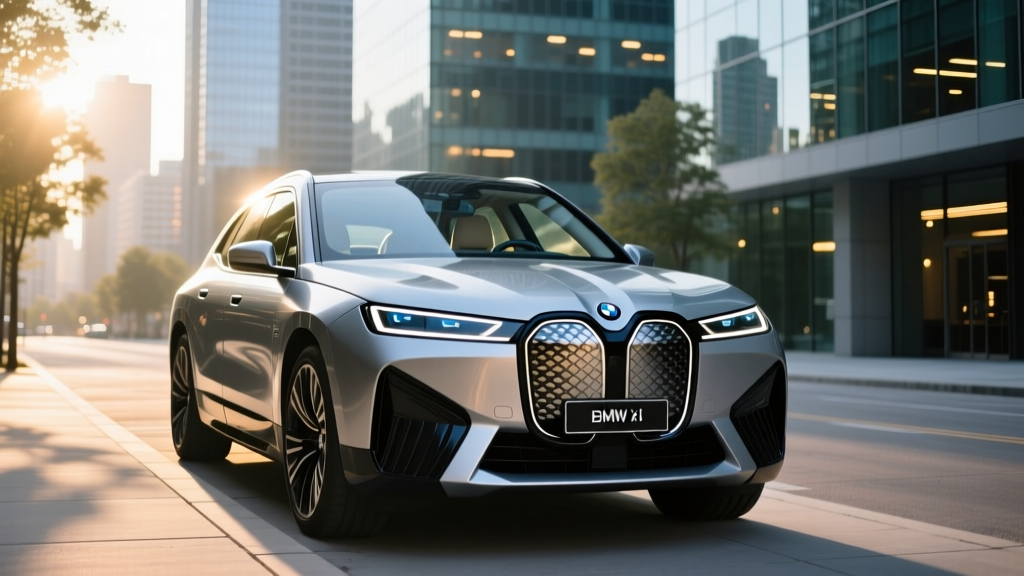
BMW iX Reliability: A Data-Driven Verdict for 2026
The BMW iX xDrive50 and M60 have been on U.S. roads since the 2023 model year, giving us enough ownership cycles and service data to evaluate long-term durability with confidence. For a luxury electric SUV starting near $87,000, reliability isn't just a nice-to-have — it's the difference between a premium ownership experience and a five-figure headache. This review synthesizes EPA efficiency data, NHTSA recall records, battery chemistry analysis, and real-world ownership reports to answer the question EV shoppers actually need answered: is the BMW iX reliable enough to justify its price?
| Spec | xDrive50 | M60 |
|---|---|---|
| EPA Range | 324 mi (20" wheels) | 288 mi (21" wheels) |
| Battery (Usable) | 105.2 kWh (NMC) | 105.2 kWh (NMC) |
| Horsepower | 516 hp | 610 hp |
| 0–60 mph | 4.4 sec | 3.6 sec |
| Drivetrain | Dual-motor AWD | Dual-motor AWD |
| Max DC Fast Charge | 200 kW (CCS/NACS) | 200 kW (CCS/NACS) |
| 10–80% DCFC Time | ~35 min | ~35 min |
| Level 2 (11 kW onboard) | ~33 mi/hr | ~33 mi/hr |
| EPA Efficiency | 86 MPGe (39 kWh/100mi) | 78 MPGe (43 kWh/100mi) |
| Cargo (rear seats up) | 35.5 cu ft | 35.5 cu ft |
| Cargo (rear seats folded) | 77.9 cu ft | 77.9 cu ft |
| Rear Legroom | 38.9 in | 38.9 in |
| Base MSRP | $87,250 | $111,500 |
| Battery Warranty | 8 yr / 100,000 mi | 8 yr / 100,000 mi |
Real-World Range and Efficiency: Beyond the EPA Sticker
The EPA rates the iX xDrive50 at 324 miles with 20-inch wheels and 307 miles with the optional 21- or 22-inch sport wheels. The M60, with its higher-output motors and stickier rubber, drops to 288 miles. These figures place the iX xDrive50 among the most efficient large luxury EVs — its 105.2 kWh usable NMC battery delivers 39 kWh per 100 miles, which is genuinely good for a 5,660-pound vehicle.
- Mixed city/suburban driving (65–75°F): 310–330 mi — often matches or slightly exceeds EPA thanks to strong regenerative braking in stop-and-go traffic.
- Sustained highway (75 mph, level terrain): 265–285 mi — the iX's boxy SUV shape and 5,660-lb curb weight penalize efficiency at speed.
- Cold weather (20–35°F, cabin heat on): 225–260 mi — the iX uses a heat pump (standard on 2025+ models), which limits cold-weather loss to roughly 20–25% rather than the 30–40% seen in EVs without one.
- Towing (max 3,500 lb): 175–210 mi — expect roughly a 40–45% range reduction under load at highway speeds.
Compared to the Mercedes EQS SUV 450 (305 mi EPA, ~88 MPGe) and the Audi Q8 e-tron (285 mi EPA, ~82 MPGe), the iX xDrive50 holds a meaningful efficiency edge. Source: fueleconomy.gov.
Charging Speed and Infrastructure: 200 kW Peak, NACS Transition
The iX supports DC fast charging at up to 200 kW via CCS1 (or NACS on 2025+ models that shipped with the Tesla-style port). BMW's 800-volt-class architecture enables a relatively flat charge curve: the iX sustains approximately 150–180 kW from 10% to roughly 50% SoC, then tapers progressively. The 10–80% sprint takes about 35 minutes at a capable 350 kW station — slower than the Hyundai Ioniq 5's 18-minute 10–80% time on its true 800V platform, but competitive with the EQS SUV and Q8 e-tron.
| Charge Level | Power | Approx. Miles Added per Hour | Notes |
|---|---|---|---|
| Level 1 (120V, 12A) | 1.4 kW | ~3 mi/hr | Emergency/top-up only |
| Level 2 (240V, 32A) | 7.7 kW | ~23 mi/hr | Standard home outlet |
| Level 2 (240V, 48A) | 11.5 kW | ~33 mi/hr | Maxes out the iX's 11 kW onboard charger |
| DC Fast (peak) | 200 kW | ~640 mi/hr (at peak) | 10–80% in ~35 min; tapers above 50% SoC |
Home charging at 11.5 kW (48A on a 60A circuit) adds roughly 33 miles per hour, meaning a 10–80% home charge takes about 8–9 hours overnight. This is adequate for daily use but slower than EVs with larger onboard chargers. The iX does support preconditioning via the navigation system — routing to a DC fast charger warms the battery to optimize charge speed, a feature worth using every time on cold days.
Battery Chemistry, Degradation, and Long-Term Reliability
The iX uses a nickel-manganese-cobalt (NMC) lithium-ion pack assembled from Samsung SDI cells. NMC offers higher energy density than LFP (lithium iron phosphate), which is why BMW fits 105.2 kWh of usable capacity into a package that keeps the iX's floor reasonably low. The trade-off: NMC cells degrade slightly faster than LFP over thousands of cycles, particularly if routinely charged to 100% or exposed to sustained high temperatures.
BMW's battery warranty covers 8 years or 100,000 miles against capacity loss below 70% of original — the industry-standard threshold per California Air Resources Board (CARB) requirements. Early iX models (2023–2024) are now accumulating meaningful mileage, and owner reports on forums like Bimmerpost and iX-specific Facebook groups show degradation in the 3–5% range at 30,000–40,000 miles. This is within expected NMC behavior and suggests the battery management system (BMS) is conservative and effective.
Reliability track record to date: The iX has been subject to a limited number of NHTSA recalls. The most notable involved a high-voltage battery sealing issue on early 2023 models that could allow moisture ingress — BMW addressed this via a dealer inspection and reseal campaign. Software-related service actions (iDrive 8 glitches, charging handshake issues with certain CCS networks) have been more common than hardware failures. Per NHTSA vehicle records, the iX has fewer open recalls than some competitors in its class, though the sample size of vehicles on the road is still relatively small compared to a Tesla Model Y.
Estimated battery replacement cost: If the pack ever needs replacement out of warranty, expect $18,000–$25,000 for the battery module assembly plus labor. This is comparable to other large NMC packs (Mercedes EQS SUV, Audi Q8 e-tron) and significantly more expensive than LFP packs found in smaller EVs.
Technology, Driver Assistance, and Interior Quality
The iX runs BMW's iDrive 8.5 on a curved 14.9-inch central touchscreen paired with a 12.3-inch instrument cluster. The system is responsive, supports wireless Apple CarPlay and Android Auto, and includes a natural-language voice assistant. Over-the-air (OTA) updates have improved functionality since launch, addressing early complaints about buried climate controls and menu lag.
Driver assistance (SAE Level 2): The iX offers Driving Assistant Professional, which includes adaptive cruise control with stop-and-go, lane centering, and automatic lane change on highways (when the driver confirms via turn signal). This is a Level 2 system — the driver must keep hands on or near the wheel and remain fully engaged. It is not self-driving and does not approach the capability of Waymo's Level 4 robotaxi service. The system is competent for highway commuting but less assertive than GM's Super Cruise or Ford's BlueCruise on compatible roads.
Interior highlights: The iX cabin uses recycled materials (microfiber headliner, FSC-certified wood), a hexagonal steering wheel, and an available Bowers & Wilkins 4D surround sound system with speakers integrated into the seats. Rear seat space is generous at 38.9 inches of legroom — competitive with a midsize luxury sedan. The panoramic electrochromic glass roof (optional) dims electronically and is a genuine wow factor for passengers.
Notable drawbacks: The iX has no front trunk (frunk) — the space is occupied by HVAC and power electronics. The hexagonal steering wheel is polarizing. And at 77.9 cu ft of cargo with seats folded, it falls short of the Tesla Model X (81.5 cu ft) and Rivian R1S (104.7 cu ft).
2026 Pricing, Trim Levels, and Federal Tax Credit Eligibility
The 2026 BMW iX is offered in two main trims:
- iX xDrive50: Starting at $87,250 (including destination). Well-equipped with 20-inch wheels, panoramic roof, heated front seats, and Driving Assistant.
- iX M60: Starting at $111,500. Adds 610 hp, M Sport brakes, adaptive M suspension, 21-inch wheels, and upgraded interior trim.
A fully optioned xDrive50 with the Premium Package, Bowers & Wilkins audio, and 22-inch wheels can reach $100,000+. The M60 with all packages can exceed $125,000.
- MSRP cap: SUVs must be at or below $80,000. The iX xDrive50 base MSRP of $87,250 exceeds this cap — the iX does not qualify for the $7,500 federal tax credit under current IRS rules.
- Income cap: $150,000 single / $300,000 joint filers (moot if MSRP cap is already exceeded).
- Battery sourcing: Critical minerals and battery component requirements must be met (also moot here).
- Point-of-sale transfer: Available for eligible vehicles — but again, the iX does not qualify.
- Used EV credit (§25E): A 2- or 3-year-old iX purchased from a dealer for $25,000+ could qualify for up to $4,000 (30% of sale price) if the buyer meets income limits ($75K single / $150K joint). This is a realistic path for cost-conscious buyers targeting a certified pre-owned iX.
Source: IRS.gov — New Clean Vehicle Credit. Tax rules are subject to change; consult a tax professional before purchasing.
Pros, Cons, and the Ownership Verdict
- Class-leading EPA efficiency (86 MPGe xDrive50) for a large luxury EV
- Spacious, premium cabin with sustainable materials and excellent rear legroom
- Heat pump standard on recent models limits cold-weather range loss
- Strong regenerative braking enables near one-pedal driving in city traffic
- Quiet ride quality — among the best NVH isolation in the luxury EV SUV segment
- OTA updates have meaningfully improved iDrive since launch
- Base MSRP exceeds the $80K federal tax credit cap — no §30D credit available
- No frunk — all cargo must go in the rear
- 200 kW peak DC charging is slower than 800V rivals (Ioniq 5, Taycan, Lucid Air)
- Hexagonal steering wheel and iDrive 8 learning curve are polarizing
- Cargo volume (77.9 cu ft max) trails Model X and R1S
- Insurance premiums run 15–25% higher than comparable ICE BMW X5
Who Should Buy the BMW iX (and Who Shouldn't)
- You want a luxury electric SUV with genuine 300+ mile real-world range and best-in-class efficiency
- You prioritize cabin quietness, ride quality, and premium materials over outright performance
- You have reliable home Level 2 charging and don't depend on frequent DC fast charging for daily use
- You value BMW's dealer service network and certified pre-owned program for long-term peace of mind
- You need the fastest possible DC charging for frequent road trips (consider the Lucid Gravity or Ioniq 9)
- Federal tax credit eligibility is a dealbreaker — the Rivian R1S (Dual-Motor Standard) or certain Tesla Model X configurations may qualify depending on trim and sourcing
- You need maximum cargo capacity for family hauling (Rivian R1S offers 104.7 cu ft and 3-row seating)
- You want a third row — the iX is strictly a 5-seater
BMW iX Reliability FAQ
What is the real-world range of the BMW iX?
The iX xDrive50 delivers 310–330 miles in mixed city driving and 265–285 miles at sustained highway speeds (75 mph). Cold weather (20–35°F) reduces range to approximately 225–260 miles thanks to the standard heat pump. The EPA sticker is 324 miles on 20-inch wheels.
How fast does the BMW iX charge at home and on DC fast chargers?
On a 48A Level 2 home charger (11.5 kW), the iX adds about 33 miles per hour — a full overnight charge from 10–80% takes roughly 8–9 hours. On a DC fast charger, it peaks at 200 kW and charges from 10–80% in approximately 35 minutes, with taper beginning around 50% SoC.
Does the BMW iX qualify for the $7,500 federal EV tax credit?
No. The iX's base MSRP of $87,250 (xDrive50) exceeds the $80,000 SUV cap set by the IRS under §30D. It does not qualify for the new-vehicle credit regardless of buyer income or battery sourcing. A used iX purchased for under $25,000 may qualify for the §25E used-EV credit of up to $4,000.
How much does the BMW iX cost after incentives?
Without the federal credit, the iX xDrive50 starts at $87,250 out the door (plus state registration and any dealer fees). Some states — such as California, Colorado, and New York — offer additional rebates of $2,000–$5,000 depending on income. Check your state's energy office for current programs.
Is the BMW iX worth buying vs. the Mercedes EQS SUV or Audi Q8 e-tron?
The iX xDrive50 wins on EPA range (324 vs. 305 vs. 285 miles) and efficiency (86 vs. 82 vs. 82 MPGe). The EQS SUV offers a more plush ride and optional third row; the Q8 e-tron charges slightly faster and has a more conventional interior layout. If efficiency and range are your top priorities, the iX is the segment leader. If you need three rows or prefer a traditional luxury sedan-like cabin, look at the EQS SUV.
What are the most common BMW iX problems reported by owners?
The most frequently reported issues are software-related: iDrive 8 screen freezes, wireless CarPlay disconnections, and occasional CCS charging handshake failures at Electrify America stations (largely addressed via OTA updates and BMW software patches). Hardware issues have been rare. The early high-voltage battery seal recall on 2023 models was resolved by dealers.
How long will the BMW iX battery last?
Based on NMC chemistry behavior and early owner data at 30,000–40,000 miles (3–5% degradation), the iX battery should retain 85–90% of its original capacity at 100,000 miles with normal use. BMW warrants the pack against dropping below 70% capacity for 8 years or 100,000 miles. Avoid routinely charging to 100% for daily use — set the charge limit to 80–90% for optimal longevity.