Quick Verdict: What the BMW iX Offers in 2026
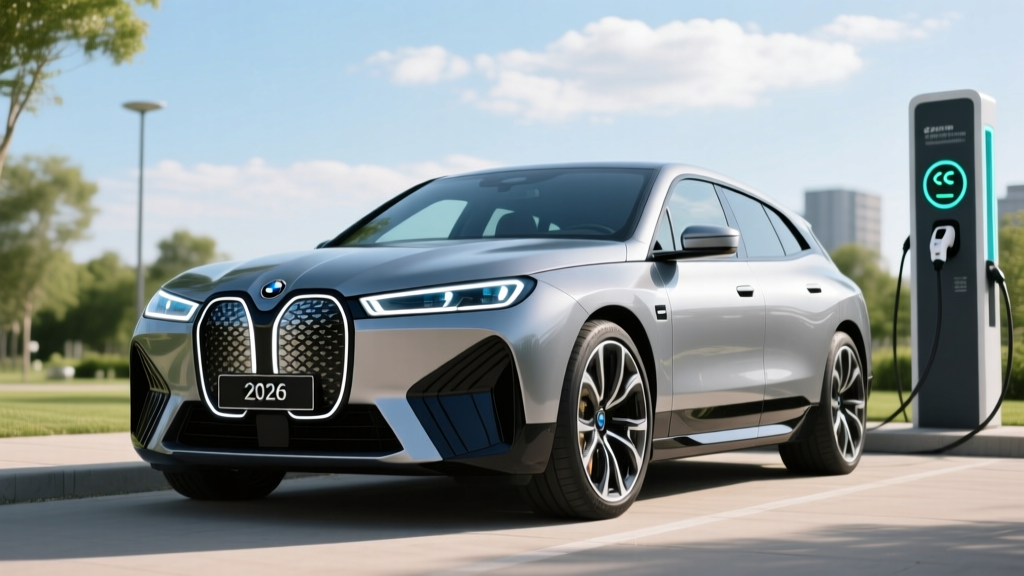
The BMW iX remains one of the most refined luxury electric SUVs on the market, blending a premium cabin with genuine long-distance capability. For 2026, the iX lineup spans three trims — the efficiency-focused xDrive50, the performance-oriented M60, and the newly available xDrive45 entry point — each built on BMW's 5th-generation eDrive platform with an NMC (nickel-manganese-cobalt) battery pack. The xDrive50 delivers the best combination of range, value, and daily usability, while the M60 sacrifices roughly 30 miles of EPA range for a 3.6-second 0-60 time that rivals sports sedans.
Where the iX genuinely stands out is charging speed and highway composure. At a DC fast charger, the xDrive50 peaks at 200 kW, reaching 10-80% in roughly 31 minutes — competitive with the Audi Q8 e-tron and slightly behind the Tesla Model X's peak rate. Inside, BMW's iDrive 8.5 system with a curved display, available Highway Assistant (a Level 2 hands-free system), and a cabin that uses recycled materials extensively make it a compelling daily driver. The trade-off? The iX is heavy, the styling polarizes, and federal tax credit eligibility is limited by battery-sourcing rules that have tightened significantly since 2024.
Range, Efficiency, and the Real-World Reality
The EPA range numbers tell only part of the story. Here's how the 2026 iX lineup stacks up on paper and on pavement:
| Trim | Battery (Usable kWh) | EPA Range | MPGe (City/Hwy/Combined) | kWh/100 mi |
|---|---|---|---|---|
| xDrive45 | 85.7 kWh (NMC) | 305 mi | 84 / 82 / 83 | 40 |
| xDrive50 | 105.2 kWh (NMC) | 324 mi | 86 / 83 / 85 | 39 |
| M60 | 105.2 kWh (NMC) | 296 mi | 78 / 77 / 78 | 43 |
Efficiency varies meaningfully by trim. The xDrive45, with its smaller battery and slightly lower curb weight, actually achieves competitive MPGe numbers despite less total range. The M60's dual high-output motors and wider 22-inch wheel option push its consumption to 43 kWh/100 mi — you'll notice the difference on road trips where charging stops come roughly every 220-240 real-world miles.
Charging: DC Fast, Level 2, and the Charge Curve
Charging speed is where buyers should focus beyond peak kW numbers. The iX uses a 400-volt architecture (not the 800V systems found in Hyundai/Kia/Porsche), which limits its absolute peak rate but delivers a relatively flat charge curve through the mid-range.
| Charging Level | Power / Rate | Time (10-80%) | Miles Added per Hour |
|---|---|---|---|
| Level 1 (120V household) | 1.3 kW | N/A (overnight trickle) | ~3-4 mi/hr |
| Level 2 (240V, 48A home) | 11.5 kW | ~8.5 hours (0-100%) | ~30-33 mi/hr |
| DC Fast Charge (CCS) | Peak 200 kW (xDrive50/M60) Peak 175 kW (xDrive45) | ~31 min (xDrive50) ~34 min (xDrive45) | ~550-620 mi/hr at peak |
Charge curve reality: The iX sustains close to its peak 200 kW from roughly 10-30% State of Charge (SoC), then tapers progressively. Between 50-80%, expect an average of 120-140 kW rather than the headline 200 kW figure. This means the second half of your 10-80% session takes noticeably longer than the first. On Electrify America or EVgo 350 kW stations, the iX won't bottleneck the charger — it'll pull what it can handle. On a road trip, plan charging stops around the 20-80% window for the best time efficiency; charging above 80% slows dramatically and is best reserved for overnight at home or at a destination.
For home charging, the iX's 11.5 kW onboard charger is a strong point. With a properly installed 48-amp Level 2 circuit (requiring a 60-amp breaker), you'll recover roughly 30-33 miles of range per hour — enough to fully replenish the xDrive50's 105.2 kWh pack overnight in about 9-10 hours. Most daily driving of 30-50 miles requires only 1-2 hours of Level 2 charging, making home charging effortless for homeowners with garage access.
Performance, Drivetrain, and Driving Dynamics
Every 2026 iX uses BMW's dual-motor all-wheel-drive system, but output varies dramatically by trim:
| Trim | Horsepower | Torque (lb-ft) | 0-60 mph | Drivetrain | Curb Weight |
|---|---|---|---|---|---|
| xDrive45 | 402 hp | 516 | 4.9 sec | Dual-motor AWD | ~5,500 lbs |
| xDrive50 | 516 hp | 564 | 4.4 sec | Dual-motor AWD | ~5,660 lbs |
| M60 | 610 hp | 811 | 3.6 sec | Dual-motor AWD | ~5,840 lbs |
Even the base xDrive45 feels quick in real-world driving — 402 hp and instant electric torque make merging and passing effortless. The xDrive50 is the sweet spot for most buyers: 4.4 seconds to 60 mph is genuinely fast for a family SUV, and the additional battery capacity gives it the range advantage. The M60 is a performance statement, but its 811 lb-ft of torque and adaptive M suspension come at the cost of efficiency, ride comfort on rough pavement, and roughly $30,000 more than the xDrive50.
Regenerative braking is adjustable through three levels, and the iX supports one-pedal driving in its highest regen setting (B mode). The adaptive regen feature — which uses radar and navigation data to modulate regen based on traffic and upcoming curves — is one of the best implementations in the luxury EV segment.
Interior, Cargo, and Technology
The iX cabin is a deliberate departure from BMW's traditional layouts. A hexagonal steering wheel, a curved display panel housing a 12.3-inch instrument cluster and 14.9-inch infotainment screen, and a floating center console define the space. Materials include FSC-certified wood, recycled microfiber, and available olive-leaf-tanned leather. Rear legroom measures 38.5 inches — generous for the class — and the panoramic electrochromic glass roof (standard) can switch between transparent and opaque with a button press.
Cargo volume: 35.5 cubic feet behind the second row, expanding to 77.9 cubic feet with the 40/20/40 rear seats folded. There is no front trunk (frunk) — the space is occupied by HVAC and power electronics. For comparison, the Tesla Model X offers slightly more cargo volume (behind the second row) but less premium material quality. The Rivian R1S provides three-row seating the iX does not offer.
Tech highlights:
- iDrive 8.5: Wireless Apple CarPlay and Android Auto, over-the-air updates, BMW Digital Key Plus (UWB-based phone-as-key), and QuickSelect shortcuts on the home screen.
- Highway Assistant: BMW's Level 2 hands-free driving system for divided highways up to 85 mph. Requires driver eye monitoring via infrared camera. This is not self-driving — you must remain attentive and ready to resume control at any time (NHTSA automation level definitions).
- Parking Assistant Professional: Automated parking with Reversing Assistant (records the last 50 meters driven to retrace your path out of tight spaces).
- Available Bowers & Wilkins Diamond Surround Sound: 36-speaker, 1,965-watt system with 4D audio shakers in the seats.
Notable drawbacks: The hexagonal steering wheel is polarizing and can obstruct the instrument cluster for some drivers. The iDrive system, while powerful, has deep menus that require a learning curve. Touch-sensitive climate controls below the screen lack physical feedback. And the absence of a frunk means all cargo goes in the rear — a missed opportunity for cable storage or a small cooler on road trips.
Pricing, Trims, and Federal Tax Credit Eligibility
| Trim | Base MSRP | As-Tested (Typical Options) | Federal §30D Credit | Effective Price After Credit |
|---|---|---|---|---|
| xDrive45 | $75,150 | $79,000-$82,000 | $0 (battery sourcing) | $75,150+ |
| xDrive50 | $87,250 | $92,000-$98,000 | $0 (battery sourcing) | $87,250+ |
| M60 | $111,500 | $115,000-$122,000 | $0 (MSRP cap + sourcing) | $111,500+ |
Federal tax credit reality: As of 2026, the BMW iX does not qualify for the $7,500 federal EV tax credit under IRS §30D rules. The iX fails the critical-minerals and battery-component sourcing requirements, as BMW's battery cells (supplied by CATL and Samsung SDI) do not meet the percentage thresholds for North American or FTA-partner extraction and processing. Additionally, the M60 exceeds the $80,000 MSRP cap for SUVs, independently disqualifying it. The xDrive50 and xDrive45 fall under the MSRP cap but still fail the sourcing test.
- ✔ MSRP under $80,000 for SUVs — xDrive45 and xDrive50 qualify; M60 does not
- ✔ Buyer AGI under $150K single / $300K joint — buyer-dependent
- ✘ Critical minerals sourced from US or FTA partners — iX does not meet threshold
- ✘ Battery components manufactured in North America — iX does not meet threshold
- ✔ Final assembly in North America — iX is assembled in Dingolfing, Germany (fails this requirement too)
The lack of a federal credit is a meaningful $7,500 disadvantage versus competitors like the Tesla Model X (which qualifies for partial credit depending on configuration) and domestically assembled options. BMW has acknowledged this gap and occasionally offers lease credits or loyalty bonuses through BMW Financial Services that can partially offset the difference — check current offers at your dealer.
Warranty, Ownership Costs, and Long-Term Value
BMW backs the iX with its standard EV warranty package:
- High-voltage battery: 8 years / 100,000 miles, covering capacity loss below 70% of original (State of Health)
- Electric drivetrain (motors, power electronics): 8 years / 100,000 miles
- New vehicle limited warranty: 4 years / 50,000 miles
- Complimentary maintenance: 3 years / 36,000 miles (covers brake fluid, cabin filters, wiper inserts)
- Roadside assistance: 4 years / unlimited miles
The 70% battery capacity retention threshold is standard for the luxury segment — matching Mercedes-Benz and Audi, though some competitors like Hyundai guarantee 70% at 10 years/100,000 miles. Real-world NMC degradation data for the iX is still maturing (the model launched for 2022), but BMW's thermal management system with liquid cooling and heating suggests moderate degradation curves. Plan for roughly 5-8% capacity loss over the first 5 years / 75,000 miles based on comparable BMW i4 and iX3 fleet data.
Insurance costs run higher than average for the segment. Expect annual premiums of $2,400-$3,800 depending on your state, driving record, and trim level (the M60 commands a significant surcharge). Get quotes before purchasing — the iX's aluminum-intensive structure and expensive sensor suite make collision repairs costly.
Charging cost comparison: At the US average residential electricity rate of ~$0.16/kWh (EIA data), fully charging the xDrive50's 105.2 kWh battery costs roughly $16.83, or about $0.052 per mile. Compare this to a BMW X5 xDrive40i averaging 23 MPG combined at $3.50/gallon — $0.152 per mile. Over 15,000 miles annually, home charging saves roughly $1,500 per year in fuel costs.
How the BMW iX Stacks Up Against Competitors
| Spec | BMW iX xDrive50 | Tesla Model X LR | Audi Q8 e-tron | Mercedes EQE SUV |
|---|---|---|---|---|
| EPA Range | 324 mi | 348 mi | 285 mi | 305 mi |
| Battery (kWh) | 105.2 NMC | ~100 NMC | 106 NMC | 90.6 NMC |
| DC Fast Charge (peak kW) | 200 kW | 250 kW | 170 kW | 170 kW |
| 10-80% DCFC Time | ~31 min | ~25 min | ~31 min | ~32 min |
| 0-60 mph | 4.4 sec | 3.8 sec | 5.4 sec | 4.8 sec |
| Horsepower | 516 hp | 670 hp | 402 hp | 402 hp |
| Cargo (behind 2nd row) | 35.5 cu ft | 37.1 cu ft | 28.5 cu ft | 14.0 cu ft |
| Base MSRP | $87,250 | $79,990 | $74,400 | $77,900 |
| Federal Tax Credit | $0 | Up to $7,500* | $0 | $0 |
*Tesla Model X credit eligibility varies by configuration and buyer income. Verify at fueleconomy.gov.
Choose the BMW iX if:
- You prioritize cabin quality and material innovation over raw performance numbers
- You want a composed, quiet highway cruiser with excellent adaptive cruise and lane-keeping
- Home Level 2 charging is your primary refueling method
- You value BMW's dealer service network and CPO program for long-term ownership
- Panoramic electrochromic roof and premium audio are high on your list
Look elsewhere if:
- Federal tax credit eligibility is a dealbreaker (consider Model X or Cadillac Lyriq)
- You need three-row seating (Rivian R1S, Tesla Model X)
- You want the fastest DC charging in the segment (Hyundai Ioniq 5, Porsche Macan EV at 800V)
- You prefer a frunk for charging cable and gear storage
- The polarizing exterior design doesn't resonate with you
Pros and Cons at a Glance
✔ Pros
- 324-mile EPA range (xDrive50) is genuinely usable for road trips
- Exceptional cabin quietness and ride comfort with adaptive air suspension
- 200 kW DC fast charging with a usable charge curve
- Highway Assistant hands-free driving (Level 2) is smooth and confidence-inspiring
- Strong regenerative braking system with adaptive mode
- Premium materials and sustainable interior design choices
- Generous rear legroom (38.5 inches) for a mid-size luxury SUV
✘ Cons
- No federal tax credit eligibility — a $7,500 disadvantage vs. some rivals
- No front trunk (frunk) for cable or accessory storage
- Hexagonal steering wheel obstructs instrument cluster for some drivers
- High insurance premiums relative to segment
- Heavy curb weight (5,660+ lbs) affects tire wear and handling limits
- iDrive 8.5 menu depth requires a learning curve
- 400V architecture limits peak charging vs. 800V competitors
Who the BMW iX Suits Best
Ideal for: Luxury-minded professionals and families who prioritize cabin refinement, quiet highway cruising, and strong (if not class-leading) range. The xDrive50 is the best all-rounder — it handles the school run, the 200-mile weekend trip, and the daily commute with equal composure. If you have home Level 2 charging and drive 30-60 miles daily, the iX will spend most of its life charging overnight and never visiting a public station.
Not ideal for: Budget-conscious buyers (the lack of a federal credit stings), those who need three rows, road-trippers who want the fastest possible DC charging (800V rivals recharge 10-80% in under 20 minutes), or anyone who wants the Tesla Supercharger network's seamlessness without adapter hassle (the iX uses the CCS connector, though a NACS adapter is available for 2026).
Towing note: The iX is rated for up to 3,500 lbs of towing capacity (with factory hitch) — adequate for a small boat or utility trailer but well below the Rivian R1S (7,700 lbs) or Tesla Model X (5,000 lbs). Towing will reduce real-world range by 30-50% depending on trailer aerodynamics and weight.
Frequently Asked Questions
What is the real-world range of the 2026 BMW iX?
The xDrive50 achieves 324 miles EPA combined. In real-world highway driving at 70-75 mph in moderate temperatures, expect 270-290 miles. In cold weather (below 32°F) with cabin heating, plan for 245-275 miles. The xDrive45 delivers roughly 260-280 miles real-world highway, and the M60 drops to 230-255 miles under the same conditions.
How fast does the BMW iX charge at home and on the road?
At home on a 48-amp Level 2 charger (240V), the xDrive50 adds roughly 30-33 miles of range per hour and charges fully in about 9-10 hours. On a DC fast charger, it peaks at 200 kW and reaches 10-80% in approximately 31 minutes, though the charge curve tapers significantly above 50% SoC. Level 1 (120V) adds only 3-4 miles per hour — useful only for emergencies or very low daily mileage.
Does the BMW iX qualify for the federal EV tax credit?
No. As of 2026, no BMW iX trim qualifies for the $7,500 federal §30D tax credit. The vehicle fails the battery critical-minerals sourcing requirement, the battery-component manufacturing requirement, and the final-assembly-in-North-America requirement (the iX is built in Dingolfing, Germany). The M60 additionally exceeds the $80,000 MSRP cap for SUVs. Always verify current rules at IRS.gov, as requirements can shift with updated guidance.
Is the BMW iX worth buying over the Tesla Model X or Audi Q8 e-tron?
It depends on priorities. The iX wins on cabin material quality, ride comfort, and highway refinement. The Tesla Model X offers more range (348 mi), faster DC charging (250 kW), Supercharger network access, falcon-wing rear doors, and partial tax credit eligibility — but its interior quality and panel consistency don't match BMW. The Audi Q8 e-tron is the most affordable entry point and has a comfortable ride but trails on range (285 mi) and charging speed. If cabin luxury and daily comfort are paramount, the iX xDrive50 is the strongest choice. If charging speed and tax credits matter most, the Model X has the edge.
What's the biggest drawback of owning a BMW iX?
The combination of no federal tax credit (a $7,500 gap vs. qualifying competitors), high insurance costs ($2,400-$3,800/year), and the absence of a frunk are the most frequently cited ownership frustrations. Additionally, BMW's 400V charging architecture, while capable, won't match the 18-minute 10-80% times of 800V competitors as DC fast-charging infrastructure continues to scale to higher power levels.
How long will the BMW iX battery last?
BMW warranties the high-voltage NMC battery for 8 years or 100,000 miles against capacity loss below 70% of original. Based on comparable BMW EV fleet data and NMC chemistry behavior, expect roughly 5-8% degradation in the first 5 years with normal use. To maximize longevity, avoid routinely charging to 100% for daily use (set a charge limit of 80-90%), use preconditioning before DC fast charging, and minimize repeated deep discharges below 10% SoC. Full battery replacement, if ever needed outside warranty, is estimated at $18,000-$25,000 depending on the trim's pack size.