2026 BMW iX: The Executive Electric SUV That Actually Delivers
If you've been cross-shopping luxury electric SUVs and the BMW iX keeps appearing in your research, you're not alone. The iX occupies a specific niche: a midsize two-row crossover that prioritizes cabin refinement, highway composure, and genuine long-distance capability over third-row practicality or Nürburgring lap times. For 2026, BMW continues offering the iX in two main flavors — the volume-selling xDrive50 and the performance-oriented M60 — both riding on the company's dedicated EV architecture with updated battery management and software.
This review breaks down the exact numbers that matter for ownership decisions: real-world range reconciliation, DC fast-charge curve behavior, Level 2 home charging practicality, and the often-confusing federal tax credit landscape. No marketing superlatives — just the data you need to decide whether the iX fits your garage and your budget.
Core Specs at a Glance
| Specification | iX xDrive50 | iX M60 |
|---|---|---|
| Base MSRP | $87,250 | $111,500 |
| EPA Range | 324 miles | 296 miles |
| Battery (usable) | 105.2 kWh (NMC) | 105.2 kWh (NMC) |
| Drivetrain | Dual-motor AWD | Dual-motor AWD |
| Horsepower | 516 hp | 610 hp |
| 0–60 mph | 4.4 seconds | 3.6 seconds |
| Peak DC Charge Rate | 195 kW | 195 kW |
| 10–80% DC Time | ~34 minutes | ~34 minutes |
| Level 2 Rate | 11 kW (AC) | 11 kW (AC) |
| Combined MPGe | 86 MPGe | 78 MPGe |
| Efficiency (kWh/100 mi) | 39 kWh/100 mi | 43 kWh/100 mi |
| Cargo (rear seats up) | 35.5 cu ft | 35.5 cu ft |
| Cargo (seats folded) | 77.9 cu ft | 77.9 cu ft |
| Battery Warranty | 8 yr / 100,000 mi | 8 yr / 100,000 mi |
Source: fueleconomy.gov and BMW USA product specifications. Prices reflect 2026 model year MSRP before destination.
Range and Efficiency: What the EPA Sticker Doesn't Tell You
The xDrive50's 324-mile EPA estimate is genuinely competitive in the luxury midsize segment — it edges past the Audi Q8 e-tron (288 miles) and sits close to the Mercedes EQE SUV (305 miles with the larger battery). The M60's 296-mile figure reflects its stickier tires, sport-tuned suspension drag, and less aggressive coasting regen calibration.
EPA sticker: 324 mi (xDrive50) / 296 mi (M60)
Highway (70–80 mph, 75°F): Expect 270–290 mi for the xDrive50; 245–265 mi for the M60
Cold weather (below 32°F, mixed driving): Plan for 230–260 mi (xDrive50) due to cabin heating load and increased battery resistance
Best-case city/regenerative driving: 310–330 mi is achievable in mild conditions with light throttle use
The iX uses a nickel-manganese-cobalt (NMC) lithium-ion pack. BMW doesn't publish the exact cell supplier for the 2026 model year, but the pack features a liquid thermal management system with active preconditioning. That preconditioning matters: when you navigate to a DC fast charger using the iDrive navigation, the battery management system begins warming the pack to its optimal charge temperature window, which is critical for hitting that 195 kW peak. Skip preconditioning on a cold morning and your peak charge rate may start closer to 120 kW until the pack warms up.
Efficiency-wise, the xDrive50's 39 kWh per 100 miles is respectable for a 5,600-pound AWD crossover. For context, the Tesla Model X Long Range achieves roughly 33 kWh/100mi thanks to its lower curb weight and more aerodynamic profile, while the heavier, boxier EQE SUV 450 4MATIC lands around 42 kWh/100mi.
Charging Speed: DC Fast Charging and Home Level 2
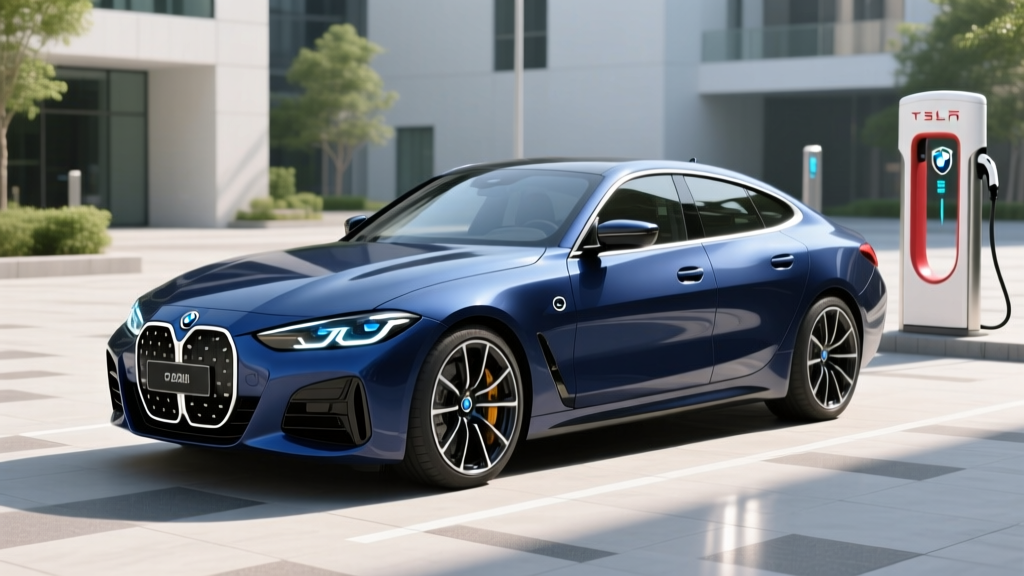
The iX's charging architecture supports up to 195 kW on DC fast chargers via its CCS1 connector (a NACS adapter is available from BMW for Tesla Supercharger access). Here's the critical nuance that spec sheets gloss over: peak kW is not sustained kW. The iX hits 195 kW only between roughly 10–30% state of charge, then tapers progressively. By 60% SoC, you're typically seeing 130–140 kW; above 80%, the rate drops below 50 kW to protect cell longevity.
| Charging Level | Power (kW) | Speed (mi/hr added) | Typical Use Case |
|---|---|---|---|
| Level 1 (120V household) | ~1.4 kW | ~3–4 mi/hr | Emergency/overnight trickle only |
| Level 2 (240V, 48A home) | 11 kW (max) | ~28–32 mi/hr | Daily home charging (~10 hrs for 10–100%) |
| DC Fast (peak) | 195 kW | ~500+ mi/hr equivalent | Road trips; 10–80% in ~34 min |
| DC Fast (sustained avg 10–80%) | ~140 kW avg | — | Realistic road-trip planning figure |
At home on a 48-amp Level 2 circuit (the most common hardwired home charger setup), the iX's 11 kW onboard charger will add roughly 30 miles of range per hour of charging. A full 10–100% session takes approximately 10–11 hours — fine for overnight replenishment, but if your daily commute burns 80+ miles, you'll want to ensure your home charger is operational every night rather than relying on opportunistic top-ups.
Home charging install note: The iX's 11 kW acceptance rate requires a 60-amp breaker circuit (EVSE rated at 48 amps continuous). If your electrical panel is near capacity, budget for a panel upgrade — typically $1,500–$3,500 depending on your utility and local code. Always have a licensed electrician evaluate your panel before committing to equipment.
Performance and Driving Dynamics
The xDrive50's 516 horsepower and 4.4-second 0–60 time make it quick by any measure, though BMW clearly tuned it for effortless highway merging rather than sports-car theatrics. The dual-motor all-wheel-drive system provides confident traction in rain and light snow, and the available rear-axle steering (optional) noticeably tightens the turning radius in parking situations.
The M60 adds 94 horsepower, firmer adaptive dampers, and a more aggressive regen profile. Its 3.6-second 0–60 time puts it in genuine performance territory, but the trade-off is a slightly busier ride on imperfect pavement and the aforementioned range penalty. For most buyers who aren't tracking lap times, the xDrive50's powertrain is the more rational choice — you save $24,250 and gain nearly 30 miles of range.
One-pedal driving is available but not default; BMW lets you select from multiple regen levels via paddle shifters, including a coasting (sail) mode that disengages regen entirely for maximum highway efficiency. This flexibility appeals to drivers who dislike the aggressive deceleration of true one-pedal setups but want regen braking available in stop-and-go traffic.
Interior, Tech, and Cargo Practicality
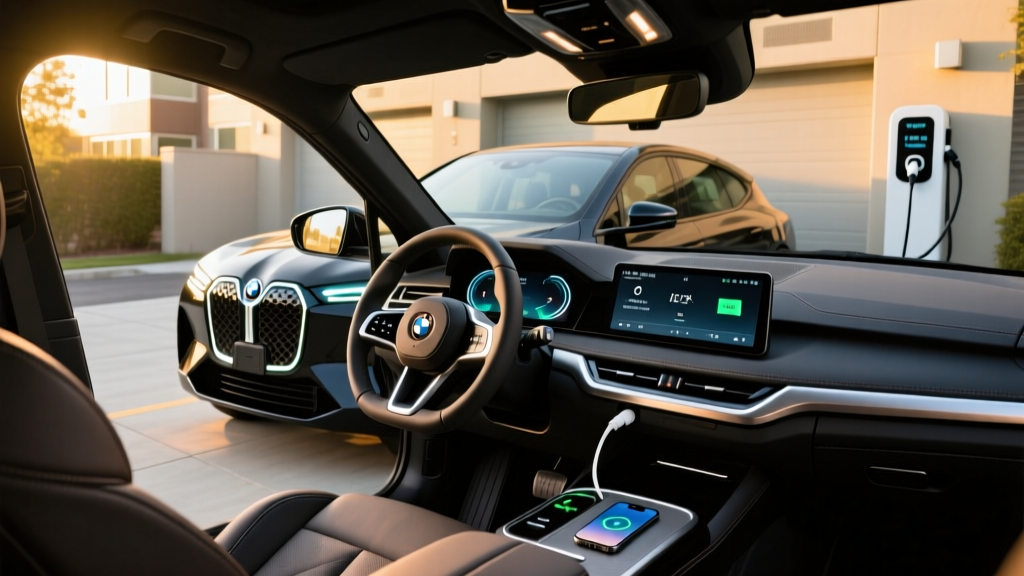
The iX's cabin is where BMW's investment shows most clearly. The curved display panel houses a 14.9-inch infotainment screen running iDrive 8.5 (updated for 2026 with improved voice recognition and faster route recalculation). The hexagonal steering wheel is a love-it-or-hate-it design choice, but the open-pore wood and microfiber trim options feel genuinely premium — a step above the plasticky touchpoints you'll find in some competing luxury EVs.
Passenger space: Front legroom measures 40.2 inches; rear legroom is 38.9 inches. Two adults in the rear will have generous knee and headroom. The iX is strictly a two-row, five-passenger vehicle — if you need three rows, you're looking at the Tesla Model X or Rivian R1S instead.
Cargo: 35.5 cubic feet behind the rear seats is adequate for weekly groceries and a couple of checked bags, but it trails the Model X (roughly 40 cu ft behind the second row). Folding the 40/20/40 split rear seats opens up 77.9 cubic feet. There is no front trunk (frunk); BMW uses that space for HVAC and power electronics.
Driver assistance: The iX comes standard with BMW's Driving Assistant Professional, which includes adaptive cruise control with stop-and-go, lane-keeping assist, and evasive steering assist. The available Highway Assistant (a Level 2 hands-free system on compatible divided highways up to 85 mph) is competitive with GM's Super Cruise in coverage area, though it requires periodic driver confirmation via steering-wheel touch rather than eye-tracking. This is not autonomous driving — SAE Level 2 means you must remain attentive and ready to take over at any moment.
Pricing, Trims, and Federal Tax Credit Eligibility
The 2026 iX lineup breaks down as follows:
- iX xDrive50: $87,250 base MSRP (before $1,175 destination)
- iX M60: $111,500 base MSRP (before $1,175 destination)
Common option packages — Premium Package ($2,800), Driving Assistant Professional ($1,700), 22-inch wheels ($2,300) — can push a well-equipped xDrive50 to $95,000–$100,000 before incentives.
The iX faces a complex tax credit picture under current IRS §30D rules:
- MSRP cap: SUVs/vans/pickups are capped at $80,000 MSRP. The iX xDrive50's $87,250 base price exceeds this cap, making it ineligible for the new-vehicle §30D credit as configured at base.
- Buyer income limits: Even if pricing qualified, AGI caps apply ($300K joint / $225K head of household / $150K individual).
- Battery sourcing: The critical minerals and battery component requirements add additional eligibility layers that change annually.
- Lease loophole (§45W): If you lease the iX through BMW Financial Services, the lessor may receive a $7,500 commercial clean vehicle credit and pass some or all of the savings to you as a capitalized cost reduction. This has been a common strategy for luxury EVs above the MSRP cap — confirm current lease offers with your dealer.
Consult a tax professional for your specific eligibility. Rules are subject to legislative change.
This is a significant consideration: the iX is effectively a full-price purchase for most buyers unless you pursue the lease route or your state offers separate rebates (check afdc.energy.gov for state-level incentives).
Pros, Cons, and the Verdict
- Genuine 300+ mile real-world range in mixed conditions (xDrive50)
- Exceptionally quiet and well-isolated cabin at highway speeds
- 195 kW DC fast-charge capability with battery preconditioning
- Standard AWD with confident wet/snow traction
- Highway Assistant hands-free driving on divided highways
- Premium interior materials that justify the price point
- Base MSRP exceeds the $80K federal tax credit SUV cap
- No third-row option; strictly a two-row, five-passenger SUV
- Cargo volume trails the Tesla Model X and Rivian R1S
- No frunk for additional storage
- 11 kW Level 2 acceptance means slower home charging than some competitors with 19–22 kW onboard chargers
- Controversial exterior styling and large kidney grille polarize buyers
Who Should Buy the BMW iX?
The iX is best suited for executive commuters and couples who prioritize cabin serenity, brand cachet, and highway comfort over maximum cargo space or third-row seating. If your typical week involves a 40–80 mile round-trip commute, occasional 200–300 mile road trips, and you have reliable Level 2 home charging, the xDrive50 delivers a compelling ownership experience.
Choose the iX xDrive50 if: You want a luxury badge, genuine 300-mile range, and don't need three rows or maximum cargo space.
Look elsewhere if: You need a third row (Rivian R1S, Tesla Model X), want to maximize federal tax credit eligibility (consider vehicles under the $80K cap), or prioritize the lowest possible cost-per-mile efficiency (Tesla Model X or Hyundai Ioniq 5 offer better kWh/100mi figures).
The iX won't win every spec-sheet comparison, but its combination of real-world highway range, cabin quality, and charging speed makes it one of the most livable luxury EVs currently on the market — if the price and tax-credit limitations don't disqualify it from your shortlist.
Frequently Asked Questions
What is the real-world range of the BMW iX?
The xDrive50 achieves an EPA-estimated 324 miles, but expect 270–290 miles in real-world highway driving at 70–80 mph and 230–260 miles in cold weather below freezing. The M60 delivers approximately 245–265 miles on the highway.
How fast does the BMW iX charge at home and on the road?
On a DC fast charger, the iX peaks at 195 kW and charges from 10–80% in approximately 34 minutes. At home on a 48-amp Level 2 charger, the 11 kW onboard charger adds about 30 miles of range per hour, taking roughly 10–11 hours for a full 10–100% charge.
Does the BMW iX qualify for the $7,500 federal EV tax credit?
Under current IRS §30D rules, the iX's base MSRP ($87,250 for the xDrive50, $111,500 for the M60) exceeds the $80,000 SUV cap, making a purchase ineligible for the new-vehicle credit. However, leasing may allow the lessor to claim the commercial credit (§45W) and pass savings to you. Consult a tax professional for your situation.
Is the BMW iX worth buying over the Tesla Model X or Audi Q8 e-tron?
The iX offers a quieter, more traditionally luxurious cabin than the Model X and significantly more real-world range than the Q8 e-tron. However, the Model X provides a third row and faster Supercharger network access, while the Q8 e-tron starts at a lower price. Your decision should hinge on seating needs, brand preference, and whether the iX's price premium over the Q8 e-tron is justified by its range advantage.
What battery chemistry does the BMW iX use?
The iX uses a nickel-manganese-cobalt (NMC) lithium-ion battery with a usable capacity of 105.2 kWh. NMC chemistry offers high energy density, which is why the iX achieves over 300 miles of range despite its substantial curb weight. BMW covers the battery with an 8-year/100,000-mile warranty against defects and excessive capacity loss (typically defined as dropping below 70% state of health).
Can the BMW iX use Tesla Superchargers?
Yes. BMW offers a NACS adapter that enables iX owners to charge at Tesla Supercharger stations equipped with the North American Charging Standard connector. As of 2026, the Supercharger network remains the most reliable and widespread DC fast-charging infrastructure in the U.S., making this adapter a valuable accessory for road-trip-heavy owners.