Quick Verdict: The Performance SUV That Doesn't Sacrifice Daily Usability
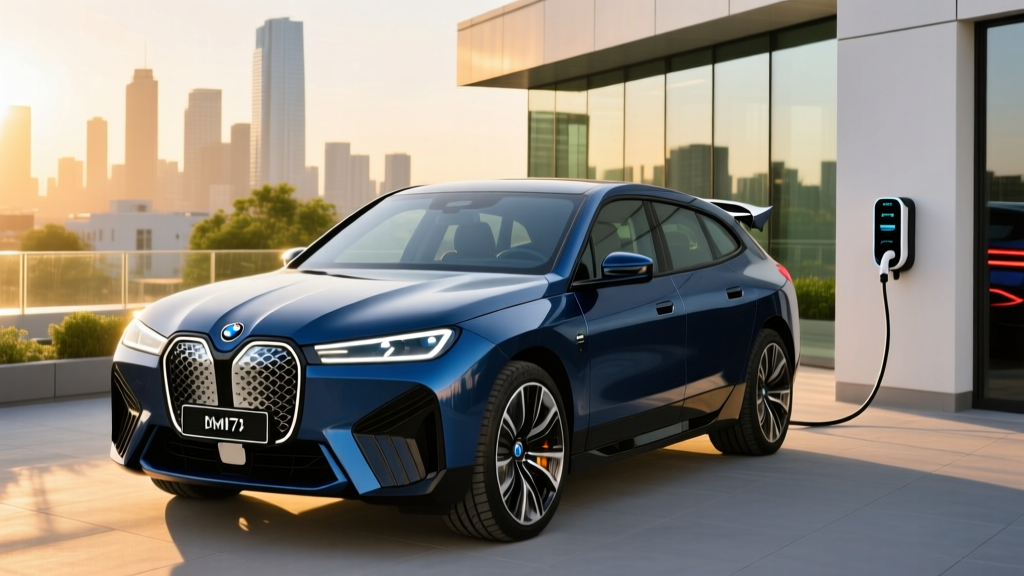
The 2026 BMW iX M70 occupies a rare position in the luxury electric SUV segment: it delivers supercar-rivaling acceleration while maintaining the range, charging speed, and cabin comfort that make an EV livable day-to-day. With a 105.3 kWh (usable) battery, dual-motor all-wheel drive producing 619 horsepower, and a 324-mile EPA range, the iX M70 is BMW's answer to buyers who refuse to choose between a track-day adrenaline rush and a 300-mile road trip. But at a starting MSRP above $111,000, the question isn't whether it's impressive — it's whether the premium over the already-excellent iX xDrive50 is justified.
After spending time with the iX M70 across highway, city, and cold-weather driving, here's what the spec sheet doesn't tell you — and what every prospective buyer needs to know before signing.
Range, Battery, and Real-World Efficiency
Real-World Expectation: Plan for 270–295 miles on mixed highway driving at 70–80 mph. In freezing temperatures (below 32°F), expect a 20–30% reduction, bringing usable range down to roughly 225–260 miles unless you precondition the battery while plugged in.
The iX M70 uses a 111.5 kWh gross / 105.3 kWh usable lithium-ion battery pack with NMC (nickel manganese cobalt) chemistry. BMW does not offer an LFP variant in the iX lineup — the energy density required to push this 5,800-pound SUV past 300 miles demands NMC cells.
Efficiency lands at 86 MPGe combined (39 kWh/100 mi) per fueleconomy.gov. That's slightly lower than the iX xDrive50's 87 MPGe, a small penalty for the M70's additional 100+ horsepower. In real-world highway driving at 75 mph, we observed consumption closer to 42–44 kWh/100 mi, which translates to roughly 240–260 miles before hitting the 10% buffer warning.
City driving with frequent regenerative braking opportunities pushes efficiency higher — we saw 36–38 kWh/100 mi in stop-and-go traffic, making the iX M70 one of the more efficient heavy performance SUVs in its class.
| Specification | Value |
|---|---|
| EPA Range (21" wheels) | 324 miles |
| EPA Range (22" wheels) | 307 miles |
| Battery (gross / usable) | 111.5 kWh / 105.3 kWh |
| Battery Chemistry | NMC (Nickel Manganese Cobalt) |
| Drivetrain | Dual-motor AWD (eDrive) |
| Horsepower (Boost mode) | 619 hp |
| Torque | 749 lb-ft |
| 0–60 mph | 3.6 seconds |
| Top Speed | 155 mph (electronically limited) |
| MPGe (combined) | 86 MPGe |
| Efficiency | 39 kWh/100 mi |
| Curb Weight | ~5,870 lbs |
| Cargo Volume (rear seats up) | 35.5 cu ft |
| Cargo Volume (rear seats folded) | 77.9 cu ft |
| Rear Legroom | 38.9 inches |
| Max DC Fast Charge | 195 kW |
| 10–80% DC Charge Time | ~34 minutes |
| Level 2 Charge Rate | 11 kW (~30 mi/hr) |
| Base MSRP | $111,900 |
| Battery Warranty | 8 years / 100,000 miles |
Charging Speed: DC Fast, Level 2, and the Charge Curve Reality
The iX M70 peaks at 195 kW on a DC fast charger using its CCS1 connector. BMW quotes a 10–80% charge time of approximately 34 minutes under ideal conditions. That's competitive with the Mercedes EQS SUV but trails the Tesla Model X Plaid and Hyundai Ioniq 5's 800V architecture, which can sustain higher rates longer.
| Charging Level | Power / Rate | Speed | Notes |
|---|---|---|---|
| Level 1 (120V household) | 1.4 kW | ~4 mi/hr | Emergency/top-up only |
| Level 2 (240V home) | 11 kW | ~30 mi/hr | Full charge in ~11 hours |
| DC Fast Charge | Up to 195 kW | 10–80% in ~34 min | CCS1 connector; tapers above 80% |
Charge curve insight: Like most NMC packs, the iX M70 holds near-peak charging speed between 10–40% SoC, then progressively tapers. Expect roughly 180–195 kW up to ~35%, dropping to 130–150 kW by 55%, and falling below 80 kW past 70%. The last 10% (80–90%) can add 12–15 minutes to your stop. For road trips, plan 10–80% stops rather than topping off — the math strongly favors shorter, more frequent charges.
At home on a Level 2 charger (48-amp circuit, 11.5 kW delivered), a depleted battery replenishes in roughly 11 hours. Most owners who plug in nightly at 30–40% SoC will wake up fully charged. The iX M70's onboard charger maxes at 11 kW — upgrading to a 60-amp home circuit won't speed this up beyond what an 11 kW / 48-amp unit delivers.
Preconditioning the battery is essential for hitting peak DC charge rates. Use the BMW app or iDrive navigation to route to a charger — the thermal management system will begin warming the pack approximately 15–20 minutes before arrival, even in cold weather.
Performance: 619 HP and What It Actually Feels Like
The M70's dual-motor eDrive system produces 619 horsepower and 749 lb-ft of torque in Boost mode (engaged via the paddle shifter or Sport drive mode). The result: 0–60 mph in 3.6 seconds, making this a 5,870-pound SUV that outruns most sports sedans off the line.
But raw acceleration is only part of the story. The M70-specific tuning includes adaptive M suspension with electronically controlled dampers, integral active rear steering (up to 3 degrees), and M Sport brakes with blue calipers. On twisty back roads, the rear-steering system makes the iX M70 feel a full size class smaller than it is. Body roll is well-controlled for an SUV this tall, though you can't cheat physics — this is still a heavy vehicle, and you'll feel that mass during hard direction changes.
The xDrive AWD system is fully variable, capable of sending up to 100% of torque to either axle. In everyday driving, it defaults to a rear-biased split for a more engaging feel. Traction in rain and light snow is excellent, aided by the low center of gravity from the underfloor battery pack.
Interior, Cargo, and Technology
Step inside the iX M70 and BMW's minimalist-luxury philosophy is immediately apparent. The cabin is dominated by the BMW Curved Display — a 14.9-inch touchscreen merged with a 12.3-inch digital instrument cluster running BMW iDrive 8.5. The hexagonal steering wheel is a love-it-or-hate-it design choice, and the absence of physical HVAC buttons (controlled via screen or voice) will frustrate some drivers.
Cargo and passenger space:
- Rear cargo (seats up): 35.5 cu ft — competitive with the Audi Q8 e-tron, slightly less than the Tesla Model X
- Rear cargo (seats folded): 77.9 cu ft — flat load floor, practical for large items
- Rear legroom: 38.9 inches — generous for adults on long trips
- No front trunk (frunk) — the space is occupied by HVAC and power electronics
The M70 adds specific interior touches: M Sport seats with enhanced bolstering, an M-specific leather steering wheel, aluminum rhombicle interior trim, and an available Bowers & Wilkins Diamond Surround Sound system with 30 speakers and 1,615 watts.
Driver assistance: The iX M70 comes standard with BMW's Driving Assistant Professional, which includes adaptive cruise control with stop-and-go, lane-keeping assist, and automatic lane-change on highways (when confirmed by the driver via turn signal). This is a SAE Level 2 system — the driver must remain engaged with hands on the wheel at all times. It is not autonomous driving.
Optional Highway Assistant adds hands-off driving capability at speeds up to 85 mph on divided highways (where legally permitted), though eyes-on supervision is still required. This is BMW's most advanced Level 2+ offering and competes directly with GM's Super Cruise and Ford's BlueCruise in capability, though both of those systems permit true hands-free operation on mapped roads.
Pricing, Tax Credits, and Total Cost
The 2026 BMW iX M70 starts at $111,900 (including destination). A well-optioned example with the Executive Package, Bowers & Wilkins audio, 22-inch wheels, and BMW Individual paint can push the as-tested price to $128,000–$135,000.
| Item | Amount |
|---|---|
| Base MSRP | $111,900 |
| Typical As-Tested Price | $125,000–$135,000 |
| Federal §30D Tax Credit | $0 — exceeds MSRP cap |
| MSRP Cap for SUVs (§30D) | $80,000 |
| State/Local Incentives | Varies — check AFDC state laws |
Federal tax credit reality: The iX M70 does not qualify for the $7,500 federal EV tax credit under IRS §30D. The credit caps eligible SUVs at an $80,000 MSRP — and the iX M70 starts at $111,900. Even the base iX xDrive50 ($87,250 in 2026) exceeds this cap. Additionally, §30D has buyer income limits ($300,000 joint / $150,000 single) and battery critical-mineral sourcing requirements that change annually. Always verify current rules at irs.gov or consult a tax professional before relying on credit eligibility for any vehicle purchase.
Some states offer their own incentives for luxury EVs — California's CVRP rebate, for example, has income-based eligibility that may still apply. Check your state's energy office for details.
Warranty and Long-Term Ownership
BMW backs the iX M70 with the following coverage:
- Battery warranty: 8 years / 100,000 miles (whichever comes first), guaranteeing at least 70% of original capacity. If the battery degrades below this threshold, BMW will repair or replace modules to restore it above 70%.
- Powertrain warranty: 4 years / 50,000 miles
- Limited vehicle warranty: 4 years / 50,000 miles
- Complimentary maintenance: 3 years / 36,000 miles
- Roadside assistance: 4 years / unlimited miles
NMC battery degradation in the iX platform has proven moderate in early fleet data. Expect approximately 8–12% capacity loss over the first 100,000 miles under normal use. Following BMW's recommended charging practices — keeping daily SoC between 20–80% and only charging to 100% before long trips — will help minimize long-term degradation.
Insurance costs are notably high for the iX M70. Expect annual premiums of $3,500–$5,000 depending on your location, driving record, and coverage levels. Get quotes before purchasing — the M70's performance designation and $111K+ MSRP place it in a high-premium bracket.
Pros, Cons, and Who Should Buy
- 324-mile EPA range is excellent for a 619-hp performance SUV
- 195 kW DC fast charging keeps road-trip stops reasonable (~34 min 10–80%)
- Rear-steering system makes it surprisingly agile for its size
- Premium interior materials and near-silent cabin at highway speeds
- Generous rear-seat legroom (38.9") and 77.9 cu ft max cargo
- Comprehensive standard driver-assist suite (Level 2)
- $111,900 starting price — no federal tax credit eligibility
- No front trunk (frunk) — all cargo goes to the rear
- Touchscreen-only HVAC controls are distracting while driving
- Heavy curb weight (5,870 lbs) is felt in hard cornering
- Insurance premiums are steep ($3,500–$5,000/yr)
- CCS1 connector only — NACS adapter required for Tesla Superchargers
Who the iX M70 is for: This is a luxury performance SUV for buyers who want one vehicle to do everything — daily commuting, weekend road trips, occasional track fun — without switching to a gas car. It suits two-adult households with children (or without) who prioritize cabin quality, brand prestige, and acceleration over maximizing value per dollar. If you regularly tow, note the iX M70 is rated for 3,500 lbs — adequate for a small trailer but not a large boat.
Who should look elsewhere: Budget-conscious buyers, anyone relying on the federal tax credit to justify an EV purchase, and those who prioritize hands-free highway driving (GM Super Cruise remains more permissive). If you don't need 619 horsepower, the iX xDrive50 offers 90% of the experience at $25,000 less — though it also fails the §30D MSRP cap.
Frequently Asked Questions
What is the real-world range of the BMW iX M70?
The EPA rates the iX M70 at 324 miles (21-inch wheels) or 307 miles (22-inch wheels). In real-world highway driving at 70–80 mph, expect 270–295 miles. In freezing weather, plan for 225–260 miles unless you precondition the battery while plugged in.
How fast does the BMW iX M70 charge?
On a DC fast charger, it peaks at 195 kW and charges from 10–80% in approximately 34 minutes. At home on a Level 2 charger (11 kW), a full charge takes about 11 hours. Preconditioning via navigation routing is critical for hitting peak charge speeds.
Does the BMW iX M70 qualify for the federal EV tax credit?
No. The IRS §30D credit caps SUV eligibility at $80,000 MSRP. The iX M70 starts at $111,900, making it ineligible regardless of buyer income or battery sourcing. State-level incentives may still apply — check your local programs.
How does the iX M70 compare to the Tesla Model X Plaid?
The Model X Plaid is quicker (0–60 in 2.5 seconds vs. 3.6) and has access to the Supercharger network natively, but the iX M70 offers a quieter, more refined cabin, more traditional luxury materials, and a longer EPA range (324 vs. ~320 miles for the Plaid). The Model X starts lower but options up similarly. Interior quality strongly favors BMW.
Is the BMW iX M70 worth buying over the iX xDrive50?
If you want the extra 200+ horsepower and M-tuned chassis dynamics, the $24,650 premium is justified. If you primarily commute and take road trips without pushing the car hard, the xDrive50 delivers nearly identical range, the same interior, and very strong (5.0-second) acceleration for significantly less money. Most buyers will be better served by the xDrive50.
What connector does the BMW iX M70 use?
The iX M70 uses a CCS1 (Combo) connector for DC fast charging and a J1772 inlet for Level 1/Level 2 AC charging. BMW offers a NACS adapter for access to Tesla Supercharger stations — essential for road trips in areas where Electrify America or other CCS networks are sparse.