Quick Verdict: Who the BMW iX Is Really For
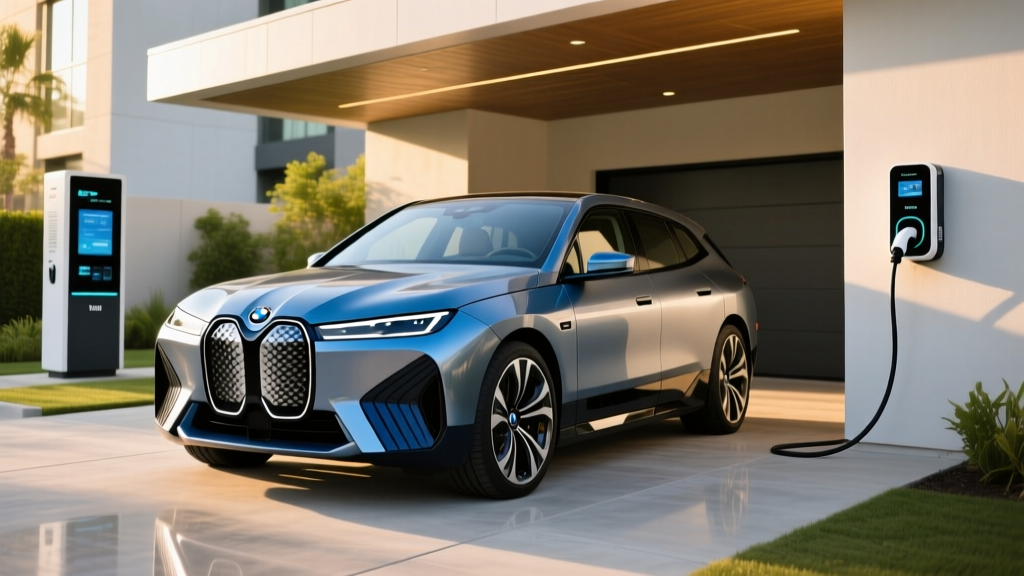
The 2026 BMW iX remains one of the most refined luxury electric SUVs on the market, pairing a quiet, tech-dense cabin with genuinely competitive range and charging speed. If you're researching BMW iX finance offers, know this upfront: the iX starts at $87,250 (xDrive50) and climbs past $112,000 for the M70. Federal tax credit eligibility is limited by IRS §30D income and battery-sourcing rules — and BMW Financial Services' own promotional APRs change monthly. This guide breaks down the exact numbers you need before signing anything.
The xDrive50 posts an EPA-estimated 324 miles on its 101.9 kWh (usable) NMC battery. In real-world highway driving at 70-75 mph, expect 265–290 miles. In freezing temperatures (below 30°F), that drops to roughly 220–250 miles without preconditioning. The M70 trim, with its larger motors and stickier tires, nets 283 miles EPA — figure 230–255 real-world highway.
2026 BMW iX Pricing, Trims & Finance Considerations
| Trim | MSRP | 0-60 mph | HP | Drivetrain | EPA Range |
|---|---|---|---|---|---|
| xDrive50 | $87,250 | 4.4 sec | 516 | Dual-motor AWD | 324 mi |
| M70 | $112,500 | 3.6 sec | 610 | Dual-motor AWD | 283 mi |
Destination charges add $995. A well-optioned xDrive50 with the Premium Package, Driving Assistance Professional, and 22-inch wheels typically lands around $95,000–$98,000 before incentives. The M70 easily exceeds $120,000 with carbon-fiber exterior mirrors, Bowers & Wilkins audio, and the Executive Package.
Does the BMW iX Qualify for the Federal EV Tax Credit?
This is where BMW iX finance offers get complicated. Under current IRS §30D rules, the iX faces several hurdles:
- MSRP cap: SUVs must be under $80,000. The xDrive50 at $87,250 exceeds this — the iX does not qualify for the $7,500 federal credit based on MSRP alone.
- Income limits: Even if pricing were eligible, adjusted gross income caps apply ($300K joint, $225K head of household, $150K individual).
- Battery sourcing: Critical-mineral and battery-component requirements from FEOC (Foreign Entity of Concern) rules further restrict eligibility for vehicles using Samsung SDI cells manufactured outside compliant supply chains.
- Point-of-sale transfer: Would allow dealer price reduction at purchase — but only if the vehicle qualifies first.
Bottom line: The 2026 BMW iX does not qualify for the §30D federal tax credit. Budget accordingly. Some states offer separate rebates — check your local DMV or energy office, and consult a tax professional for your specific situation. Reference the IRS clean vehicle credit page for the latest rules.
BMW Financial Services vs. Third-Party Financing
BMW Financial Services periodically offers promotional APRs (e.g., 1.9%–3.9% for 36–60 months to well-qualified buyers), but these are model-specific and rotate monthly. As of early 2026, the iX has not consistently appeared in BMW's subvented-rate programs the way the i4 or iX1 have. Expect to compare:
- BMW FS standard rates: Typically 5.5%–7.5% APR for 60–72 months at current Fed rates for excellent credit (750+ FICO).
- Credit unions: Often 0.5%–1.5% below captive lender rates for members.
- Leasing: BMW FS leases on the iX have shown residual values around 52–56% at 36 months/10K miles, with money factors equivalent to roughly 5.5%–6.5% APR. Lease cash (dealer incentives) can offset this — ask your dealer for the current "lease cash" bulletin.
Range, Battery & Efficiency Breakdown
| Spec | xDrive50 | M70 |
|---|---|---|
| Battery (usable) | 101.9 kWh (NMC) | 101.9 kWh (NMC) |
| EPA Range | 324 mi | 283 mi |
| MPGe (combined) | 86 MPGe | 76 MPGe |
| kWh/100 mi | 39 kWh | 44 kWh |
| Real-World Highway (70 mph) | ~265–290 mi | ~230–255 mi |
| Cold-Weather (20°F, no precondition) | ~220–250 mi | ~190–215 mi |
The iX uses Samsung SDI NMC (nickel manganese cobalt) cells in a skateboard-style pack. NMC offers higher energy density than LFP chemistry — that's how BMW fits 324 miles into a relatively compact footprint — but NMC degrades slightly faster over thousands of cycles and prefers daily charging to 80% rather than 100%. For daily commuting, set your charge limit to 80% and you'll still have 260 real-world miles available.
Efficiency of 39 kWh/100 mi (xDrive50) is competitive with the Mercedes EQE SUV (41 kWh/100 mi) but trails the more aerodynamic Tesla Model X (36 kWh/100 mi). At a national average electricity rate of $0.16/kWh, fueling the xDrive50 costs roughly $6.24 per 100 miles — about a third of what a comparable gas-powered BMW X5 xDrive40i would burn.
Charging Speed: DC Fast, Level 2 & Home Setup
| Charging Level | Power (kW) | Time / Rate | Connector |
|---|---|---|---|
| Level 1 (120V outlet) | ~1.4 kW | ~3 mi/hr added | J1772 / NACS adapter |
| Level 2 (240V home) | 11 kW (onboard max) | ~32 mi/hr; 0–100% in ~10 hrs | J1772 / NACS |
| DC Fast Charge (peak) | 195 kW | 10–80% in ~31 min | CCS1 (NACS via adapter) |
Charging curve reality: The iX peaks near 195 kW only between roughly 10% and 35% state of charge. Above 50% SoC, the rate tapers to ~120 kW, and above 80% it drops further to ~50 kW. That 31-minute 10–80% figure assumes preconditioned battery and a capable 350 kW station (Electrify America, EVgo, or a Tesla Supercharger with the BMW-provided NACS adapter).
For 2026, BMW includes a complimentary NACS adapter, granting access to Tesla's Supercharger network — the most reliable DC fast-charging infrastructure in North America. This is a significant practical advantage over CCS-only vehicles still dependent on third-party networks with variable uptime.
Home charging setup: The iX's 11 kW onboard charger means you'll want a 48-amp (60-amp circuit) Level 2 wallbox to get the full 32 miles of range per hour of charging. A typical overnight session (10 hours) fully replenishes the pack. Expect $800–$2,200 for a quality Level 2 unit (ChargePoint Home Flex, Emporia Level 2, or BMW's Wallbox) plus $500–$2,000 for electrician installation depending on panel capacity and run length. See our DOE charging technology guide for basics.
Performance, Drivetrain & Daily Driving
Both trims use BMW's fifth-generation eDrive dual-motor all-wheel-drive system. The xDrive50's 516 hp and 564 lb-ft of torque deliver effortless highway merging and a 4.4-second 0–60 time — quick enough to feel urgent without being excessive. The M70 bumps output to 610 hp and 826 lb-ft (with Launch Control), dropping the 0–60 to 3.6 seconds, firmly in sports-sedan territory.
Ride quality is where the iX distinguishes itself. Standard adaptive two-axle air suspension absorbs potholes and expansion joints with a composure that the stiffer Model X and EQE SUV can't match. The available rear-axle steering (standard on M70) shrinks the turning circle and adds low-speed agility. Noise isolation is exceptional — at 70 mph, cabin noise levels rival the 7 Series.
Towing: The iX is rated for 3,500 lbs when properly equipped — adequate for a small utility trailer or a pair of dirt bikes, but not for a large boat or camper. If towing is a priority, the Rivian R1S (7,700 lbs) or Model X (5,000 lbs) offer more capacity.
Interior, Cargo & Technology
The iX cabin is a study in minimalist luxury. BMW's curved display runs iDrive 8.5 on a 14.9-inch touchscreen paired with a 12.3-inch instrument cluster. Wireless Apple CarPlay and Android Auto are standard. The hexagonal steering wheel and floating center console take getting used to, but material quality — open-pore wood, microfiber headliner, available olive-leaf-tanned leather — is genuinely premium.
| Dimension | Measurement |
|---|---|
| Cargo (behind 2nd row) | 35.5 cu ft |
| Cargo (2nd row folded) | 77.9 cu ft |
| Rear legroom | 38.9 in |
| Front headroom | 40.2 in |
| Seating capacity | 5 passengers |
Cargo space is generous for the class — 35.5 cu ft with seats up beats the EQE SUV (28 cu ft) and rivals the Model X (37.1 cu ft). There is no front trunk (frunk); the space under the hood houses power electronics.
Driver assistance: The iX comes standard with Active Driving Assistant (adaptive cruise, lane-keeping, blind-spot monitoring). The optional Driving Assistance Professional Package adds Highway Assistant — BMW's SAE Level 2 system that allows hands-off driving at speeds up to 85 mph on divided highways, provided you keep your eyes on the road (monitored via interior camera). This is not autonomous driving — you remain the responsible driver at all times.
BMW's Highway Assistant requires continuous driver supervision. Your eyes must remain on the road, and you must be ready to take over instantly. Only Level 4 systems (e.g., Waymo robotaxis in defined geofenced areas) operate without a human driver.
Warranty & Long-Term Ownership
| Coverage | Terms |
|---|---|
| Limited warranty | 4 years / 50,000 miles |
| Powertrain | 4 years / 50,000 miles |
| High-voltage battery | 8 years / 100,000 miles (below 70% capacity) |
| Corrosion | 12 years / unlimited miles |
| Complimentary maintenance | 3 years / 36,000 miles |
The 8-year/100,000-mile battery warranty guarantees that BMW will repair or replace the pack if usable capacity drops below 70% of original. Real-world NMC degradation data from similar BMW i4 and iX3 packs suggests 5–8% capacity loss over the first 100,000 miles — well within the warranty threshold. A full battery replacement out of warranty is estimated at $18,000–$25,000, though individual module replacement (for isolated cell failures) costs significantly less.
Insurance: Expect premiums 15–25% higher than a comparable gas-powered X5. The iX's aluminum-intensive construction, high-voltage components, and luxury repair costs all factor in. Get quotes before committing — we've seen annual premiums range from $2,400 to $4,100 depending on zip code, driving record, and coverage level.
Pros, Cons & Competitor Comparison
- Class-leading ride comfort with air suspension
- 324-mile EPA range (xDrive50) covers most road trips with one stop
- NACS adapter included — full Tesla Supercharger access
- Exceptional cabin quietness and material quality
- Strong real-world charging infrastructure compatibility
- Does not qualify for $7,500 federal tax credit (MSRP cap)
- High starting price ($87,250) before options
- No front trunk (frunk)
- Controversial exterior styling (large kidney grille)
- Insurance costs above segment average
vs. Mercedes-Benz EQE 350+ SUV: The EQE SUV starts lower ($77,900) and may squeeze under the $80K MSRP cap for tax-credit eligibility, but offers only 305 miles EPA and less cargo space. The iX is the better driver's car with more range.
vs. Tesla Model X: The Model X offers 335 miles EPA, a frunk, and standard Supercharger-native access, but its interior build quality and ride comfort don't match the iX. If tech minimalism and performance are priorities, the Model X wins. For luxury and comfort, the iX does.
vs. Rivian R1S: The R1S is more off-road capable, tows 7,700 lbs, and seats up to seven — but it's larger, less efficient, and its interior isn't as refined. Choose the R1S for adventure and family hauling; choose the iX for luxury commuting and road trips.
Who Should Buy the BMW iX?
- You want a luxury electric SUV that prioritizes ride comfort and cabin refinement above all else
- You commute 40–80 miles daily and want to charge only at home overnight
- You take 2–4 road trips per year and can plan around 30-minute DC fast-charge stops
- You value Tesla Supercharger access but prefer a traditional luxury-brand experience
- You need the $7,500 federal tax credit to make the math work (consider the EQE SUV or a loaded iX1)
- You need three-row seating or serious towing capacity (Rivian R1S, Model X)
- You want maximum performance per dollar (Tesla Model X Plaid, Audi RS e-tron GT)
- You live in a cold climate and need 300+ real-world winter miles (no current luxury EV delivers this without preconditioning)
Frequently Asked Questions
What is the real-world range of the 2026 BMW iX?
The xDrive50 is EPA-rated at 324 miles, but expect 265–290 miles in real-world highway driving at 70–75 mph, and 220–250 miles in freezing temperatures. The M70 delivers 283 miles EPA, or roughly 230–255 miles highway.
How fast does the BMW iX charge at home and on the road?
At home on a 240V Level 2 charger (48 amps), the iX charges at up to 11 kW, adding about 32 miles of range per hour — a full charge takes roughly 10 hours. On DC fast chargers, it peaks at 195 kW and reaches 10–80% in about 31 minutes under ideal conditions (preconditioned battery, 350 kW-capable station).
Does the BMW iX qualify for the $7,500 federal EV tax credit?
No. The 2026 BMW iX xDrive50 starts at $87,250, which exceeds the IRS §30D MSRP cap of $80,000 for SUVs. Battery-sourcing requirements add a further barrier. Consult a tax professional and check the IRS clean vehicle credits page for the latest eligibility details.
What BMW iX finance offers are currently available?
BMW Financial Services periodically offers promotional APRs, but the iX has not consistently appeared in subvented-rate programs as of early 2026. Expect standard rates of 5.5%–7.5% APR for well-qualified buyers. Compare with credit unions and consider leasing — BMW FS lease residuals hover around 52–56% at 36 months. Always ask your dealer for current "lease cash" and loyalty incentives.
Is the BMW iX worth buying over the Tesla Model X or Mercedes EQE SUV?
The iX wins on ride quality, cabin materials, and comfort. The Model X wins on native Supercharger access, cargo versatility (frunk), and software. The EQE SUV wins on price (and potential tax-credit eligibility). Your priority — luxury, tech, or value — determines the right choice.
How long will the BMW iX battery last?
BMW warranties the high-voltage battery for 8 years or 100,000 miles against dropping below 70% capacity. Based on NMC degradation data from similar BMW EVs, expect 5–8% capacity loss over 100,000 miles with normal use (charging to 80% daily, occasional DC fast charging). A full out-of-warranty pack replacement is estimated at $18,000–$25,000.