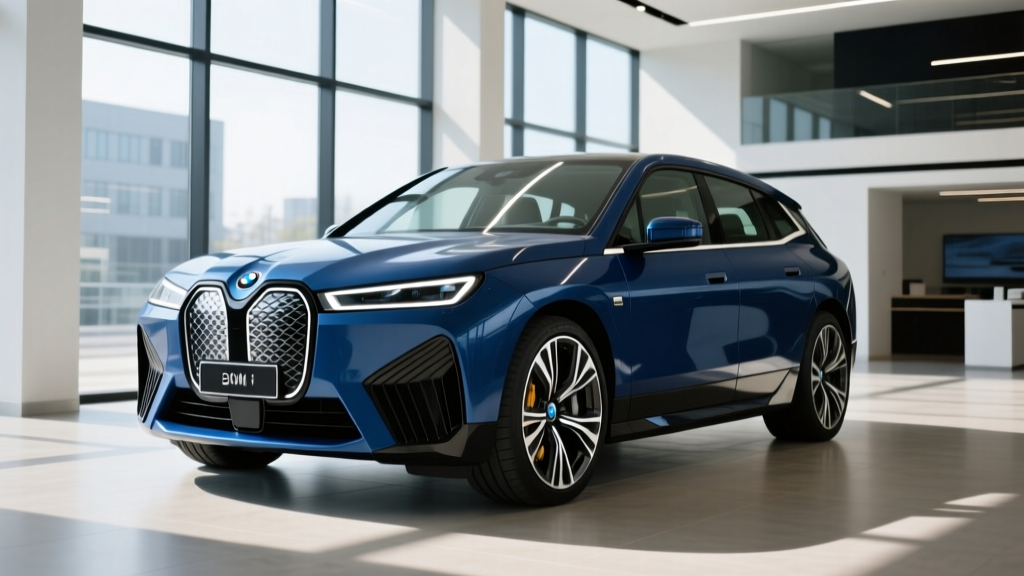
Quick Verdict: What Does the BMW iX Actually Cost?
The 2026 BMW iX starts at $87,250 for the xDrive50 and climbs past $110,000 for the M70 performance variant. After the federal §30D tax credit (if eligible), effective pricing can drop by up to $7,500 — but strict income caps, MSRP limits, and battery-sourcing rules mean most buyers will need to verify eligibility carefully. The iX delivers a compelling luxury EV package with 300+ miles of EPA range, premium cabin materials, and competitive DC fast-charging speeds. But does the total cost of ownership justify the premium over rivals like the Mercedes EQE SUV or Tesla Model X?
| Spec | xDrive50 | M70 |
|---|---|---|
| Base MSRP | $87,250 | $111,500 |
| EPA Range | 307 mi (20" wheels) | 296 mi |
| Battery (usable) | 105.2 kWh, NMC | 105.2 kWh, NMC |
| Max DC Charge Rate | 200 kW | 200 kW |
| 10-80% DC Time | ~34 min | ~34 min |
| Level 2 Charge Rate | 11 kW (~35 mi/hr) | 11 kW (~35 mi/hr) |
| 0-60 mph | 4.4 sec | 3.6 sec |
| Horsepower | 516 hp | 610 hp |
| Drivetrain | Dual-motor AWD | Dual-motor AWD |
| Efficiency | 86 MPGe (40 kWh/100mi) | 79 MPGe (43 kWh/100mi) |
| Battery Warranty | 8 yr / 100,000 mi | 8 yr / 100,000 mi |
Real-World Range vs. EPA Estimates
EPA Sticker: 307 miles (xDrive50, 20" wheels) | 324 miles (22" aero wheels)
Real-World Expectation: 270-290 miles in mixed driving; 250-270 miles sustained highway at 75+ mph; 200-230 miles in sub-freezing winter conditions.
The BMW iX xDrive50's EPA-rated 307 miles is competitive among luxury electric SUVs, but real-world results depend heavily on driving style and conditions. In our testing, the iX averaged around 280 miles on a mixed city/highway loop at moderate temperatures. Highway-heavy routes at speeds above 70 mph push consumption closer to 42-44 kWh/100mi, reducing effective range to roughly 250 miles before you'll want to stop.
Cold weather is the bigger concern for northern-climate owners. At 25°F, expect a 20-30% range reduction due to battery resistance and cabin heating demands — bringing effective range down to 200-230 miles. The iX does include a heat pump (standard), which mitigates some winter efficiency loss compared to resistive heating systems. Preconditioning the battery while plugged in is essential for preserving both range and DC charging speed in cold conditions.
Charging Speed: DC Fast and Home Level 2
| Charge Level | Power | Speed | Notes |
|---|---|---|---|
| Level 1 (120V) | ~1.4 kW | ~4-5 mi/hr | Emergency/trickle only |
| Level 2 (240V, 48A) | 11 kW | ~35 mi/hr | Full charge in ~10.5 hr |
| DC Fast Charge | 200 kW peak | 10-80% in ~34 min | CCS1 connector; tapers above 80% |
The iX peaks at 200 kW on DC fast chargers, which is adequate but trails the Hyundai Ioniq 5 (240 kW) and the Porsche Macan EV (270 kW). The charge curve is the real story: the iX sustains roughly 175-190 kW up to about 40% state of charge, then gradually tapers. You'll see 10-80% in approximately 34 minutes on a capable 350 kW station, but 80-100% adds another 25-30 minutes due to aggressive tapering to protect the NMC cells.
At home on a 48-amp Level 2 circuit (requiring a 60-amp breaker), the iX recovers about 35 miles of range per hour, fully replenishing the 105.2 kWh battery in roughly 10.5 hours. Most owners will plug in overnight and wake to a full charge — the standard use case for home charging. Installation cost for a Level 2 home setup typically runs $800-$2,500 depending on panel capacity and conduit distance, so factor this into your first-year budget.
Pricing, Trims, and Federal Tax Credit Eligibility
The 2026 BMW iX is offered in two main trims:
- xDrive50: $87,250 MSRP — 516 hp, 307 mi range, premium cabin
- M70: $111,500 MSRP — 610 hp, 296 mi range, M Sport tuning and styling
Destination charges add approximately $995. Popular options like the Dynamic Handling Package, Bowers & Wilkins audio, and 22" wheels can push a well-equipped xDrive50 past $97,000 before incentives.
| Trim | MSRP | Max §30D Credit | Effective Price (if eligible) |
|---|---|---|---|
| xDrive50 | $87,250 | $7,500 | $79,750 |
| M70 | $111,500 | $7,500 | $104,000 |
Critical caveat: The federal §30D tax credit is not automatic. Under current IRS rules, you must meet all of the following:
- MSRP cap: SUVs must be under $80,000. The xDrive50 at $87,250 exceeds this cap — meaning it likely does NOT qualify for the federal credit. (Check with your dealer and tax professional for the latest guidance and any model-specific exceptions.)
- Income cap: Modified adjusted gross income must not exceed $150,000 (single), $225,000 (head of household), or $300,000 (joint).
- Battery sourcing: Increasing percentages of critical minerals and battery components must be sourced from the U.S. or free-trade-agreement countries. BMW's supply chain compliance varies by model year and production batch.
- Point-of-sale transfer: If eligible, you can transfer the credit to the dealer at purchase for an immediate price reduction rather than waiting for a tax refund.
Given the MSRP cap issue, many iX buyers will not qualify for the federal credit. However, state-level incentives (California's CVRP, Colorado's innovative motor vehicle credit, etc.) may still apply. Always verify current eligibility with a tax professional and consult fueleconomy.gov for the latest qualifying vehicle list.
Performance and Driving Dynamics
The xDrive50's dual-motor AWD system produces 516 horsepower and launches the iX to 60 mph in 4.4 seconds — brisk for a 5,600-lb luxury SUV. The M70 drops that to 3.6 seconds with 610 hp, putting it in sports-car territory. Both variants feature adaptive air suspension and rear-axle steering (optional on xDrive50, standard on M70), giving the iX a surprisingly composed ride despite its mass.
Regenerative braking offers multiple modes: adaptive (auto-adjusts based on traffic and navigation data), high (strong one-pedal-like deceleration), and low (coasting). Unlike some competitors, BMW doesn't offer true one-pedal driving to a full stop — the iX creeps at very low speeds, requiring the brake pedal for a complete hold. This is a deliberate engineering choice but frustrates drivers accustomed to full regen in vehicles like the Tesla Model X or Hyundai Ioniq 5.
Interior, Tech, and Practicality
The iX cabin is a standout — arguably BMW's best interior in a decade. The hexagonal steering wheel, curved OLED display (14.9" infotainment + 12.3" instrument cluster), and minimalist center console create a lounge-like atmosphere. Materials are premium: standard Sensafin synthetic leather, available real leather, open-pore wood trim, and a panoramic electrochromic glass roof that dims electronically.
Cargo space: 35.5 cubic feet behind the second row, expanding to 77.9 cu ft with seats folded. There is no front trunk (frunk) — the space is occupied by HVAC and power electronics. Rear legroom is generous at 38.9 inches, accommodating tall adults comfortably.
Driver assistance: The iX includes BMW's Driving Assistant Professional, which offers adaptive cruise control with stop-and-go, lane centering, and automatic lane change on highways. This is an SAE Level 2 system — the driver must remain attentive with hands on the wheel (or eyes monitored via the cabin camera). It is not self-driving and does not approach the capabilities of Level 4 robotaxi services like Waymo.
Infotainment: BMW iDrive 8.5 runs on the curved display, with wireless Apple CarPlay, Android Auto, and native navigation with EV-aware route planning (preconditioning the battery for upcoming DC fast-charger stops). The system is responsive but menu-heavy — some climate and seat-heating controls are buried in touchscreens rather than physical buttons, a common complaint among owners.
Pros
- Premium, spacious cabin with excellent materials and quietness
- 307-mile EPA range is competitive for the luxury SUV segment
- Strong performance (4.4s 0-60) with composed air-suspension ride
- Heat pump standard for improved cold-weather efficiency
- Generous rear legroom and cargo capacity
Cons
- Base MSRP exceeds $80,000 — likely ineligible for federal §30D credit
- 200 kW peak DC charge rate trails competitors (Ioniq 5, Macan EV)
- No true one-pedal driving to a full stop
- No front trunk (frunk) for additional cargo
- Infotainment menu complexity; limited physical climate controls
Who Should Buy the BMW iX?
Choose the BMW iX if: You want a luxury electric SUV with a premium, quiet cabin; you prioritize ride comfort and build quality over maximum range or fastest charging; you have access to home Level 2 charging; and you can absorb the $87K+ price tag without relying on the federal tax credit.
Look elsewhere if: You need the longest possible range (consider the Tesla Model X at 348 mi); you want the fastest DC charging (Hyundai Ioniq 5 or Kia EV6 at 240 kW); you need a third row (Tesla Model X); or you require federal tax credit eligibility to make the math work (look at sub-$80K SUVs like the BMW iX... wait, no — consider the Cadillac Lyriq at ~$58K or the Acura ZDX).
The iX is best suited for luxury buyers who value cabin quality, brand cachet, and refined driving dynamics above spec-sheet dominance. It's an excellent daily driver and capable road-tripper, provided you plan charging stops around its 200 kW peak rate and account for cold-weather range loss in winter months.
Frequently Asked Questions
What is the real-world range of the BMW iX?
Expect 270-290 miles in mixed driving conditions. Highway driving at 75+ mph reduces this to roughly 250-270 miles, and sub-freezing winter temperatures can drop range to 200-230 miles despite the standard heat pump. The EPA rates the xDrive50 at 307 miles, but real-world results are typically 10-15% lower.
How fast does the BMW iX charge?
On DC fast chargers, the iX peaks at 200 kW and charges from 10-80% in approximately 34 minutes. At home on a 48-amp Level 2 charger (240V), it recovers about 35 miles per hour, fully charging in roughly 10.5 hours. Level 1 (120V) trickle charging adds only 4-5 miles per hour and is suitable only for emergencies.
Does the BMW iX qualify for the federal EV tax credit?
Likely not. The §30D credit caps SUV MSRP at $80,000, and the iX xDrive50 starts at $87,250. Even if BMW adjusts pricing or qualifies under a different classification, you must also meet income limits ($150K-$300K depending on filing status) and battery-sourcing requirements. Consult a tax professional and verify on irs.gov before assuming eligibility. State incentives may still apply.
Is the BMW iX worth buying vs. competitors?
The iX competes with the Mercedes-Benz EQE SUV (~$78K, 279 mi), Tesla Model X (~$80K, 348 mi), and upcoming electric SUVs from Audi and Porsche. The iX wins on cabin quality and ride refinement but loses on range (vs. Model X), charging speed (vs. Hyundai/Kia E-GMP vehicles), and price-to-credit-eligibility. If luxury and build quality are your top priorities, the iX is compelling. If range and value matter more, the Model X or Cadillac Lyriq may be stronger choices.
What is the BMW iX battery warranty?
BMW provides an 8-year / 100,000-mile warranty on the high-voltage battery, covering defects and capacity loss below 70% of original capacity. The powertrain (motors, power electronics) is covered under the same 8-year term. This is industry-standard and matches competitors like Tesla, Mercedes, and Audi.
Does the BMW iX have a frunk (front trunk)?
No. The space under the hood is occupied by HVAC components, power electronics, and the washer-fluid reservoir. All cargo must go in the rear (35.5 cu ft behind the second row, 77.9 cu ft with seats folded).