Quick Answer: Is There a BMW M3 Electric Car?
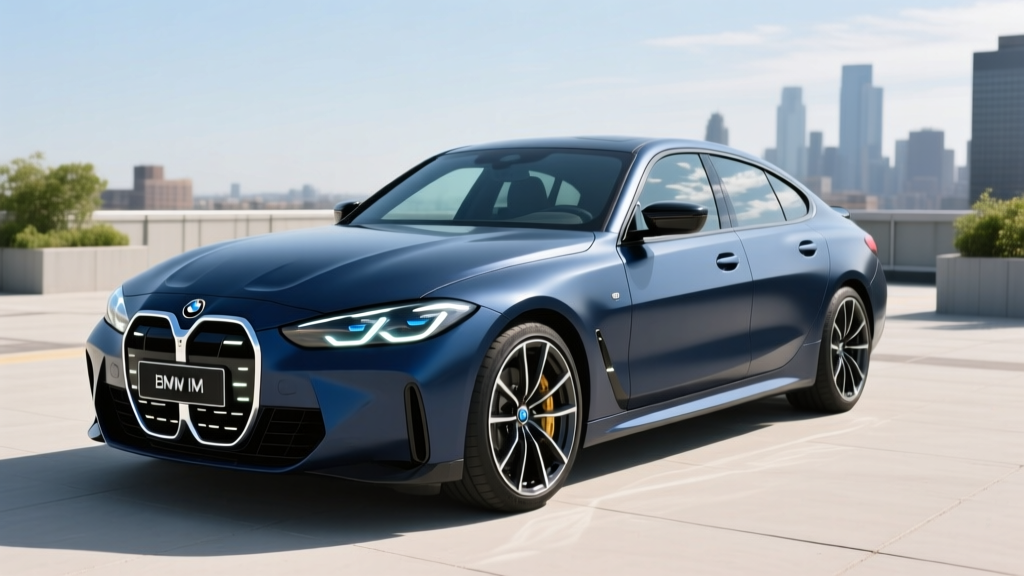
Yes — BMW's electric M3, marketed as the iM3 (built on the Neue Klasse platform), is expected to begin production in late 2026 as a 2027 model year vehicle. Based on BMW's confirmed previews, the iM3 will feature a dual-motor all-wheel-drive layout producing an estimated 600+ horsepower, a usable battery capacity around 100 kWh (NMC chemistry), and a targeted EPA range of approximately 300–330 miles. Pricing is anticipated to start near $85,000–$90,000 MSRP, placing it above the federal §30D tax credit's MSRP cap for sedans ($55,000). If you need an electric BMW performance sedan today, the i4 M50 ($69,700 MSRP, EPA 245–271 mi) is the closest current option.
What the BMW iM3 Electric M3 Actually Is
For years, enthusiasts have searched for a "BMW M3 electric car" — and BMW has finally confirmed it's happening. The next-generation M3 will go fully electric, riding on BMW's dedicated Neue Klasse EV architecture. Unlike the current i4 M50, which shares a platform with combustion 4 Series models, the iM3 will be engineered from the ground up as an electric performance machine.
BMW has previewed the Neue Klasse platform with the Vision Neue Klasse concept and confirmed several key specifications:
- Sixth-generation eDrive powertrain with cylindrical battery cells (similar form factor to Tesla's 46mm cells)
- 800-volt architecture enabling significantly faster DC charging than BMW's current 400V models
- Up to 30% more energy density compared to current BMW EV battery packs
- Four electric motors in the top M variant (one per wheel) for torque vectoring, based on BMW M's prototype testing disclosures
These specs position the electric M3 squarely against the Tesla Model S Plaid, Porsche Taycan Turbo GT, and upcoming Mercedes-AMG electric sedans.
Projected Specs: Range, Battery, Charging, and Performance
Because the iM3 is still pre-production, the following figures are based on BMW's official previews, Neue Klasse platform disclosures, and industry analysis. Final EPA-certified numbers will be confirmed closer to launch.
| Specification | Projected Figure | Notes |
|---|---|---|
| Battery (usable) | ~100 kWh | NMC chemistry, 6th-gen cylindrical cells |
| EPA Range (target) | 300–330 mi | Real-world highway: ~250–280 mi; cold weather: ~220–250 mi |
| Drivetrain | AWD (quad-motor) | Individual wheel torque vectoring |
| Horsepower | 600+ hp | BMW M has hinted at figures rivaling the current M3 Competition |
| 0–60 mph | ~3.0 sec (est.) | Comparable to Model S Plaid (1.99s) is unlikely; closer to Taycan Turbo GT |
| Architecture | 800V | Enables peak DC charge rates above 300 kW |
| Peak DC Fast Charge | ~300+ kW (est.) | 10–80% in ~20 min (projected) |
| Level 2 Charge Rate | ~11–22 kW | Depends on onboard charger config |
| Base MSRP (est.) | $85,000–$90,000 | Final pricing TBD |
| Federal Tax Credit (§30D) | Not eligible | Exceeds $55,000 sedan MSRP cap |
| Battery Warranty | 8 yr / 100,000 mi (est.) | BMW's current standard; minimum 70% capacity retention |
Real-World Range Reality Check
BMW targets 300–330 miles EPA, but performance sedans with aggressive driving profiles lose range quickly. Expect 250–280 miles on highway road trips at 70–80 mph, and 220–250 miles in sub-freezing temperatures. The current BMW i4 M50 (EPA 271 mi) consistently delivers 220–240 mi in real-world highway testing — a ~12% reduction. Apply similar expectations to the iM3.
How the Electric M3 Compares to the Gas M3
The current-generation BMW M3 Competition (G80) produces 503 hp from its twin-turbo 3.0L inline-six, with an EPA rating of 16/23/19 MPG. Here's how the two stack up on paper and in projected ownership costs:
| Factor | iM3 Electric (Projected) | M3 Competition (Gas) |
|---|---|---|
| Horsepower | 600+ hp | 503 hp |
| 0–60 mph | ~3.0 sec | 3.4 sec |
| EPA Range / MPG | ~310 mi / ~85 MPGe | 19 MPG combined |
| Fuel/Energy Cost (annual, 12k mi) | ~$600–$900 (home charging) | ~$2,800–$3,200 (premium fuel) |
| Base MSRP | ~$85,000–$90,000 | $80,200 (2025 M3 Comp.) |
| Federal Tax Credit | $0 (MSRP cap exceeded) | $0 |
| Annual Maintenance (est.) | ~$400–$600 | ~$1,200–$1,800 |
| 5-Year Fuel/Energy Cost | ~$3,000–$4,500 | ~$14,000–$16,000 |
The electric M3's biggest ownership advantage is fuel savings — approximately $2,000–$2,500 per year if you charge primarily at home at average US electricity rates (~$0.16/kWh). Over five years, that's $10,000–$12,500 in energy savings alone. Maintenance savings add another $3,000–$5,000 over the same period (no oil changes, fewer brake replacements due to regenerative braking, no transmission fluid).
However, the iM3's higher purchase price and likely higher insurance premiums (EV performance cars carry 15–25% higher insurance costs on average) partially offset these savings. The gas M3 also avoids the dependency on charging infrastructure, which matters if you lack reliable home charging.
Total Cost of Ownership: 5-Year Breakdown
| Cost Category | iM3 Electric (Est.) | M3 Competition (Gas) |
|---|---|---|
| Purchase Price (MSRP) | $87,500 | $80,200 |
| Federal Tax Credit | $0 | $0 |
| State Incentives (varies) | $0–$2,000 | $0 |
| Energy/Fuel (5 years) | $3,750 | $15,000 |
| Maintenance (5 years) | $2,500 | $7,500 |
| Insurance (5 years, est.) | $17,500 | $14,000 |
| Depreciation (est. 50%) | $43,750 | $40,100 |
| Total 5-Year Cost | ~$155,000 | ~$156,800 |
On a pure cost basis, the iM3 and gas M3 Competition project to near parity over five years. The electric M3's fuel and maintenance savings roughly cancel out its higher purchase price and insurance costs. Depreciation is the wildcard — BMW EVs have historically depreciated faster than their gas counterparts, though this gap is narrowing as the market matures.
Key takeaway: You buy the electric M3 for the driving experience and technology, not for dramatic cost savings. If total cost of ownership is your primary concern, neither variant of M3 is the economical choice.
Federal Tax Credit and Incentive Reality
Here's where the numbers get less favorable for the electric M3:
§30D Federal Tax Credit — Why the iM3 Won't Qualify
- MSRP Cap for sedans: $55,000 (per IRS §30D rules)
- iM3 Projected MSRP: $85,000–$90,000 — well above the cap
- Buyer Income Cap: $150,000 single / $300,000 joint (AGI)
- Battery Sourcing: Critical minerals and battery components must meet phased-in domestic/free-trade requirements
- Result: The iM3 will not qualify for the $7,500 federal credit regardless of buyer income
Some state-level incentives may still apply. California's CVRP program, Colorado's state EV credit, and various utility rebates can reduce the effective price by $2,000–$5,000 depending on your location and income. Check your state's energy office and local utility for current programs — these vary significantly by jurisdiction and change annually.
Charging the Electric M3: What Owners Need to Know
The iM3's 800-volt architecture is its most consequential ownership feature. Here's what that translates to in practice:
| Level | Power | Miles Added per Hour | Use Case |
|---|---|---|---|
| Level 1 (120V) | ~1.4 kW | ~4–5 mi/hr | Emergency/trickle only |
| Level 2 (240V, 48A) | ~11.5 kW | ~35–40 mi/hr | Daily home charging (8–10 hr for full charge) |
| Level 2 (240V, Wall Connector) | ~22 kW (if dual onboard charger) | ~70–80 mi/hr | Faster home/workplace charging |
| DC Fast Charge | ~300+ kW peak | ~900+ mi/hr (peak) | 10–80% in ~20 min (projected) |
Understanding kW vs. kWh: kW (kilowatts) measures charging power — how fast energy flows into the battery. kWh (kilowatt-hours) measures battery capacity — how much energy it holds. A 300 kW charger filling a 100 kWh battery can theoretically add 3 kWh per minute at peak rate, but the charge curve tapers significantly above 80% state of charge to protect battery health. That 10–80% time of ~20 minutes is the practical benchmark; 80–100% can take nearly as long.
Home charging installation for a Level 2 charger typically costs $800–$2,500 for the equipment and electrician if your electrical panel has capacity. A panel upgrade (200A service) adds $1,500–$4,000. For the iM3, a 48-amp hardwired Level 2 station is the practical minimum — plan for a dedicated 240V/60A circuit.
Common Misconceptions About the Electric M3
| Myth | Fact |
|---|---|
| "The electric M3 is available now" | Pre-production; expected late 2026 start of production as a 2027 model. The i4 M50 is the closest current BMW EV. |
| "It will get the $7,500 tax credit" | No — it exceeds the $55,000 sedan MSRP cap under IRS §30D. |
| "Electric means it won't feel like an M car" | BMW M is developing quad-motor torque vectoring specifically to replicate (and exceed) the agility of the gas M3. Instant electric torque delivery changes the character but not necessarily the capability. |
| "300+ miles of range means 300+ miles in all conditions" | Highway driving at 75+ mph, cold weather below 32°F, and aggressive acceleration all reduce range 15–30%. Plan for 220–280 real-world miles. |
| "I can charge it anywhere" | The iM3 will use the NACS (Tesla-style) connector based on BMW's 2024 announcement. Access to Tesla Superchargers is confirmed, but CCS-only stations will require an adapter. |
Who Should Wait for the iM3 — and Who Should Buy Now
Decision Framework: Wait for the Electric M3 or Buy an Alternative?
Wait for the iM3 if:
- You have reliable home Level 2 charging (or can install it)
- Your daily driving is under 200 miles round-trip with occasional 300+ mile road trips
- You want cutting-edge EV performance tech (800V, quad-motor torque vectoring)
- You're not in a rush — production likely starts late 2026, with deliveries extending into 2027
- You live in a state with additional EV incentives (CA, CO, NY, etc.)
Buy the i4 M50 now if:
- You want an electric BMW performance sedan today ($69,700 MSRP, EPA 245–271 mi)
- You don't need 600+ hp — the i4 M50 delivers 536 hp and a 3.3-second 0–60
- You want proven reliability data and existing owner reviews
Buy the gas M3 Competition if:
- You lack home charging access and rely on street parking or apartment living
- You track your car regularly (EV battery thermal management under sustained high-load track use is still a developing area)
- You value the inline-six sound and manual-adjacent engagement (the M3 offers a 6-speed manual)
- You want immediate availability and established depreciation data
Consider the Tesla Model S Plaid or Porsche Taycan Turbo GT if:
- You want proven electric performance sedans available now
- Model S Plaid: $89,990 MSRP, EPA 396 mi, 1.99s 0–60 (per fueleconomy.gov)
- Taycan Turbo GT: $230,000+ MSRP, EPA 269–276 mi, 2.1s 0–60
Real-World Ownership Considerations for First-Time EV Buyers
If the electric M3 would be your first EV, these practical factors matter more than the spec sheet:
Home charging is non-negotiable for daily satisfaction. Public DC fast charging works for road trips, but 90%+ of EV charging happens at home. If you can't install a Level 2 charger (due to apartment living, HOA restrictions, or electrical panel limitations), an $85,000+ EV that you're forced to trickle-charge at 120V or rely on public infrastructure for will frustrate you daily.
Cold climate buyers should plan for 20–30% range loss. Lithium-ion batteries lose efficiency below freezing, and cabin heating draws significant energy. If you live in Minnesota, Michigan, or New England, a 310-mile EPA rating becomes a 220–250-mile practical range in January. The iM3's expected heat pump will mitigate this somewhat, but physics can't be eliminated.
Insurance will cost more. Performance EVs carry higher premiums due to repair costs (battery replacement, aluminum body panels, specialized labor), higher vehicle values, and the instant torque that statistically correlates with higher claim frequencies. Budget $3,000–$4,000/year for insurance on an $85,000+ performance EV, compared to $2,500–$3,000 for the gas M3.
Tire costs are higher on EVs. The instant torque and additional weight of EVs (the iM3 will likely weigh 4,800–5,200 lbs) wear tires 20–30% faster than equivalent gas cars. Budget $1,200–$2,000 for a set of performance summer tires every 20,000–25,000 miles.
Frequently Asked Questions
When will the BMW M3 electric car (iM3) be available to buy?
BMW has confirmed the electric M3 is in development on the Neue Klasse platform. Production is expected to begin in late 2026 at BMW's Regensburg plant, with first deliveries likely in early-to-mid 2027 as a 2027 model year vehicle. Pre-orders have not yet opened as of early 2026.
Will the electric M3 have a manual transmission?
No. Electric vehicles don't use multi-speed transmissions in the traditional sense. BMW has discussed simulated gear-shift programming (similar to Hyundai's Ioniq 5 N) to replicate the engagement of shifting, but there is no physical manual gearbox in an EV powertrain.
What connector will the iM3 use — CCS or NACS?
BMW announced in 2024 that all future North American EVs will adopt the NACS (Tesla-style) connector. The iM3 will charge natively at Tesla Superchargers and any NACS-equipped public station. For legacy CCS stations, BMW is expected to provide or offer an adapter.
How does the electric M3 compare to the Tesla Model S Plaid?
The Model S Plaid has a significant head start: EPA 396 miles of range, 1.99-second 0–60, and an established Supercharger network advantage. The iM3 will likely compete on build quality, chassis dynamics, and BMW M's handling pedigree rather than straight-line acceleration. Pricing will be similar (~$85,000–$90,000).
Can I charge the iM3 at home on a standard outlet?
Yes, but impractically. A standard 120V outlet (Level 1) adds roughly 4–5 miles of range per hour — a full charge from empty would take over 20 hours. A dedicated 240V Level 2 home charger is strongly recommended and will fully replenish the battery overnight in approximately 8–10 hours.
What is the expected battery warranty?
BMW currently provides an 8-year/100,000-mile high-voltage battery warranty on all its EVs, guaranteeing a minimum of 70% capacity retention. The iM3 is expected to carry the same or improved terms. This is consistent with industry standards and federal requirements for emissions-related component coverage.
Note: All projected specifications for the BMW iM3 are based on BMW's official platform disclosures and industry analysis as of early 2026. Final EPA-certified range, pricing, and performance figures will be confirmed by BMW prior to launch. Federal tax credit rules under IRS §30D are subject to change. Consult a tax professional for eligibility guidance specific to your situation.