The BMW i8 in 2026: A Plug-In Hybrid Lease Reality Check
If you've been searching for a BMW electric car i8 lease, you're likely drawn to the i8's futuristic design and plug-in hybrid powertrain. But before signing any lease agreement, it's critical to understand what you're actually getting in 2026. The BMW i8 was discontinued after the 2020 model year, meaning any "lease" today is either a certified pre-owned arrangement, a third-party leasing company offering used vehicles, or a mislabeled listing for the newer BMW i4, i5, or iX. This guide breaks down the real ownership economics of the BMW i8 as a used PHEV, compares it against current BMW electric alternatives, and walks through every cost factor — from federal tax credits to insurance premiums — so you can make a data-driven decision.
5-Year Total Cost of Ownership: BMW i8 PHEV Breakdown
Leasing a used BMW i8 in 2026 means navigating a unique cost landscape. Below is a realistic 5-year total cost of ownership (TCO) estimate based on a certified pre-owned 2020 BMW i8 Coupe with approximately 30,000 miles at acquisition.
| Cost Category | 5-Year Estimate | Notes |
|---|---|---|
| Acquisition (CPO Purchase) | $52,000 – $68,000 | 2020 i8 Coupe CPO market range |
| Depreciation | $18,000 – $26,000 | ~35-40% over 5 years; collector interest may slow decline |
| Insurance | $14,000 – $19,000 | $2,800-$3,800/year; exotic/sports car premium |
| Fuel (Gasoline + Electricity) | $6,500 – $9,000 | Assumes 12,000 mi/yr, $3.80/gal, $0.16/kWh |
| Maintenance & Repairs | $5,500 – $9,500 | BMW luxury labor rates; hybrid system complexity |
| Financing / Lease Interest | $4,000 – $7,500 | At 6.5-8.5% APR for used vehicle |
| Total 5-Year TCO | $100,000 – $139,000 | ~$20,000-$27,800/year |
The i8's exotic construction — carbon fiber reinforced plastic (CFRP) chassis, mid-engine layout, and hybrid powertrain — means maintenance costs are significantly higher than a mainstream PHEV like the Toyota RAV4 Prime. Body repair after even minor collisions can be extraordinarily expensive due to the carbon fiber structure.
Federal Tax Credit: Does a Used BMW i8 Qualify?
This is where many prospective i8 buyers encounter disappointment. Under the current IRS §30D clean vehicle credit rules, the federal tax credit of up to $7,500 applies only to new qualifying vehicles. Since the BMW i8 is no longer in production, you cannot claim the new-vehicle credit.
However, the used clean vehicle credit (IRS §25E) may apply if you purchase a qualifying pre-owned i8 from a licensed dealer:
- Credit amount: 30% of the sale price, up to a maximum of $4,000
- Vehicle price cap: Sale price must be $25,000 or less — the i8's market value ($52K-$68K CPO) far exceeds this threshold
- Buyer income limits: AGI must not exceed $75,000 (single), $112,500 (head of household), or $150,000 (joint)
- Vehicle age: Must be at least 2 model years old (i8 qualifies)
- Battery requirement: Must have a battery capacity of at least 7 kWh (i8's 11.6 kWh qualifies)
- Dealer sale: Must be purchased from a licensed dealer, not private party
Charging vs. Gasoline: Real Cost Per Mile for the BMW i8
The BMW i8's PHEV powertrain gives you flexibility, but its small battery means most driving happens on gasoline. Here's the math based on EPA data from fueleconomy.gov:
| Driving Mode | Efficiency | Cost per Mile | Annual Cost (12K mi) |
|---|---|---|---|
| Electric-only (18 mi range) | 76 MPGe (29 kWh/100mi) | $0.046 | Limited by range |
| Gasoline (charge-sustaining) | 28 MPG combined | $0.136 | $1,632 |
| Blended (realistic mix) | ~30 MPG equiv. | $0.125 | $1,500 |
| Comparable gas sports car (350 HP) | 20 MPG combined | $0.190 | $2,280 |
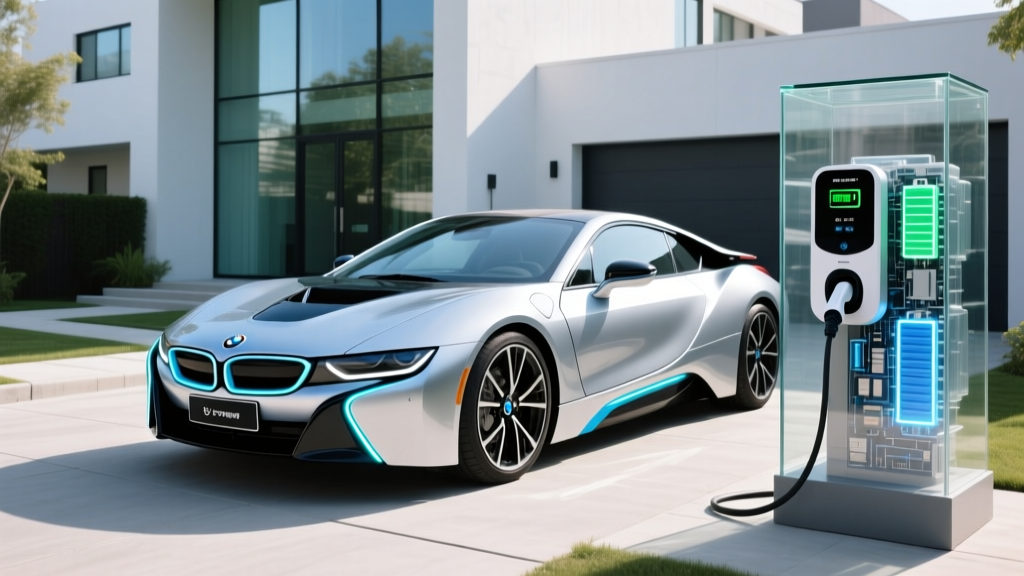
Assuming you charge nightly at home at $0.16/kWh and use electric mode for short commutes (under 18 miles), you'll save roughly $600-$800 per year on fuel compared to a gasoline-only sports car. But the i8's tiny battery means you'll burn gasoline for the vast majority of highway and longer trips. The 7.1 kWh usable battery charges fully in about 3.5 hours on a standard 120V outlet or roughly 1.5 hours on a Level 2 (240V, 3.6 kW) charger. DC fast charging is not supported.
Maintenance Costs: PHEV Complexity vs. Pure EV Simplicity
The BMW i8's powertrain combines a turbocharged gasoline engine with an electric motor, a 6-speed automatic transmission, and a high-voltage battery system. This means you get maintenance obligations from both worlds:
| Service Item | BMW i8 (PHEV) | Pure BEV (e.g., BMW i4) | Gas Sports Car |
|---|---|---|---|
| Oil changes | Required ($200-$300/yr) | None | Required ($150-$250/yr) |
| Brake pads | Reduced wear (regen) | Minimal wear (regen) | Regular replacement |
| Transmission fluid | Required | Minimal / sealed | Required |
| Coolant systems | Dual (engine + battery) | Single (battery thermal) | Single |
| Spark plugs | Required (3-cyl) | None | Required |
| Exhaust / emissions | Required | None | Required |
| Est. annual maintenance | $1,100 – $1,900 | $400 – $700 | $800 – $1,500 |
The i8's carbon fiber body and exotic construction also mean collision repair costs are dramatically higher than conventional steel or aluminum vehicles. A minor fender bender that might cost $2,000 on a conventional car can run $8,000-$15,000+ on an i8 due to CFRP repair requirements and BMW specialist labor rates.
Insurance Costs: The Exotic Car Premium
Insurance is where the BMW i8 lease equation gets painful. Insurers classify the i8 as an exotic/sports car, and the carbon fiber construction drives up comprehensive and collision premiums. Expect to pay:
- $2,800 – $3,800 per year for full coverage on a used i8 (varies by ZIP code, driving record, and coverage limits)
- That's 40-70% higher than insuring a BMW i4 eDrive40 (a fully electric sedan at roughly $1,800-$2,400/year)
- Specialty insurers like Hagerty or Grundy may offer agreed-value policies for collector-condition i8s, potentially at lower rates if you limit annual mileage
Why the premium? The i8's MSRP (originally $147,500-$164,000), carbon fiber repair costs, limited parts availability, and sports-car performance profile all factor into actuarial risk models. Even as a used vehicle, the replacement cost remains high.
Depreciation and Resale Value: A Collector's Curve
The BMW i8 has followed an unusual depreciation trajectory compared to mainstream EVs:
- 2014-2018: Heavy initial depreciation (40-50% in first 3 years), typical for luxury exotics
- 2019-2023: Depreciation slowed as the car gained collector interest post-discontinuation
- 2024-2026: Prices have stabilized and even appreciated for low-mileage, well-maintained examples
A 2020 BMW i8 Coupe in excellent condition with under 20,000 miles currently commands $65,000-$80,000 in the private market. Roadsters trade higher, at $75,000-$95,000. This is atypical — most EVs depreciate faster than gas cars due to battery degradation concerns and rapid technology obsolescence. The i8 benefits from limited production numbers, iconic design, and its status as BMW's first plug-in hybrid halo car.
However, the high-voltage battery is a wildcard. BMW warranties the i8 battery for 8 years/80,000 miles (whichever comes first) against defects and excessive capacity loss. For a 2020 model, that warranty expires in 2028. Out-of-warranty battery replacement is estimated at $12,000-$18,000 — a significant liability for buyers of older examples.
Better Alternatives: Current BMW Electric Vehicles for Lease
If your goal is a modern, efficient, and warranty-protected BMW electrified vehicle, current production models offer dramatically better economics and technology:
| Model | EPA Range | Battery | 0-60 mph | Base MSRP | §30D Credit |
|---|---|---|---|---|---|
| 2026 BMW i4 eDrive40 | 307 mi | 81.5 kWh (NMC) | 5.5 sec | $57,900 | Check eligibility* |
| 2026 BMW i5 eDrive40 | 295 mi | 81.2 kWh (NMC) | 5.8 sec | $70,200 | Check eligibility* |
| 2026 BMW iX xDrive50 | 324 mi | 105.2 kWh (NMC) | 4.4 sec | $87,250 | MSRP cap exempt (SUV) |
*§30D eligibility depends on battery component and critical mineral sourcing requirements that change annually. Verify current-year status at IRS.gov before purchasing. The i4 and i5 sedan MSRP must be under $55,000 to qualify; the iX qualifies under the $80,000 SUV cap. Buyer income limits also apply: $150K single / $300K joint.
All three current models support DC fast charging at up to 205 kW (i4/i5) or 195 kW (iX), achieving 10-80% in approximately 30-35 minutes. They also feature BMW's latest iDrive 8.5 infotainment, Level 2 Highway Assistant driver-assist, and full over-the-air update capability — technology the discontinued i8 lacks entirely.
Frequently Asked Questions
Can I lease a new BMW i8 in 2026?
No. BMW discontinued the i8 after the 2020 model year. Any "lease" you find will be through a third-party company offering used/pre-owned vehicles, or it may be a mislabeled listing for a current BMW i4, i5, or iX. Always verify the exact model and model year before signing paperwork.
How much does it really cost to own a BMW i8 over 5 years?
Between $100,000 and $139,000 over five years, including acquisition, depreciation, insurance, fuel, maintenance, and financing. That averages $20,000-$27,800 per year. The exotic carbon fiber construction, hybrid system complexity, and sports-car insurance premiums drive costs well above mainstream PHEVs.
Does the BMW i8 qualify for any federal tax credit?
Not the new-vehicle §30D credit (the car is discontinued). The used-vehicle §25E credit requires a sale price of $25,000 or less — far below the i8's $52,000-$68,000 market value. In practice, no federal tax credit is available for the i8 in 2026. Check your state's incentive database for any regional rebates, though most also have price caps.
How much do I save on fuel and maintenance vs. a gas sports car?
Fuel savings are modest: roughly $600-$800 per year if you charge nightly and commute within the 18-mile electric range. Maintenance costs are actually higher than a pure BEV and comparable to a gas sports car, because you're maintaining both a gasoline engine and a hybrid electric system. The i8's regenerative braking does reduce brake pad wear, saving $200-$400 per brake service.
Are EVs and PHEVs more expensive to insure than gas cars?
Generally yes, though the gap has narrowed for mainstream models. The BMW i8 is an extreme case — its exotic construction, high repair costs, and sports-car classification push premiums 40-70% above comparable electric sedans. For mainstream EVs like the Tesla Model Y or Hyundai Ioniq 5, insurance premiums are typically 10-20% higher than equivalent gas vehicles, primarily due to higher repair costs after collisions and elevated purchase prices.
How well does the BMW i8 hold its value?
Better than most EVs, thanks to collector interest, limited production, and its halo-car status. Low-mileage examples have stabilized or appreciated since 2023. However, the high-voltage battery warranty expires at 8 years/80,000 miles, and out-of-warranty replacement costs ($12,000-$18,000) represent a significant long-term risk that could suppress values as the fleet ages.
What should I lease instead if I want an electrified BMW?
The 2026 BMW i4 eDrive40 offers the best value proposition: 307 miles of EPA range, DC fast charging to 205 kW, modern tech, full factory warranty, and potential §30D tax credit eligibility — all starting at $57,900. For SUV buyers, the iX xDrive50 provides 324 miles of range and flagship luxury. Both will cost dramatically less to own over 5 years than a used i8.