Quick Answer: Is the BMW i8 Electric?
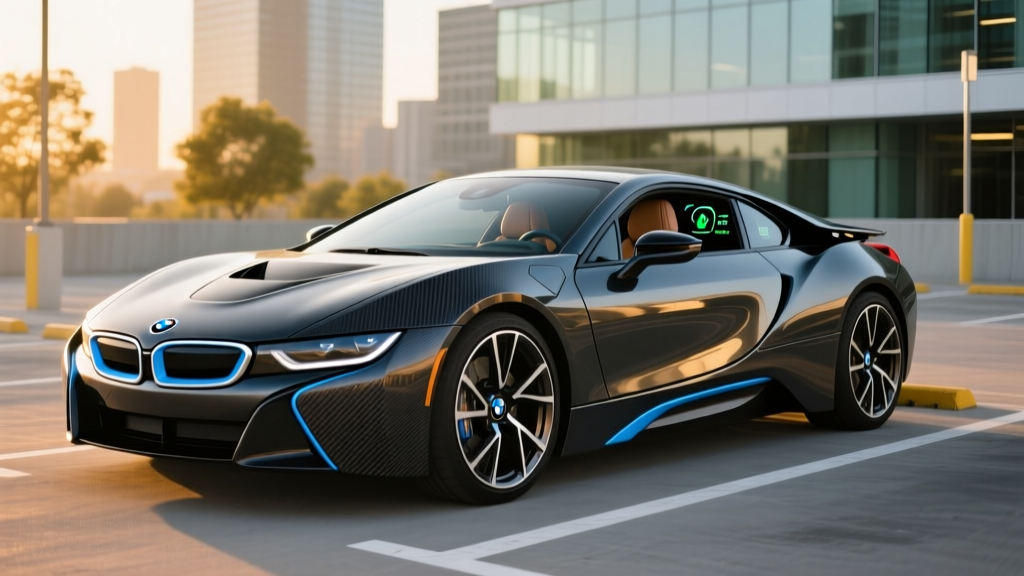
No, the BMW i8 is not a fully electric vehicle. It is a plug-in hybrid electric vehicle (PHEV) that pairs a 1.5-liter turbocharged three-cylinder gasoline engine with an electric motor and a small battery pack. The i8 can drive on electric power alone for a limited distance — the EPA rated it at 18 miles of electric-only range (15 miles for earlier 2015–2017 models). Once the battery depletes, the gas engine takes over, delivering a combined EPA fuel economy of 28 MPG in hybrid mode, or 69 MPGe when factoring in electric driving.
BMW discontinued the i8 after the 2020 model year. There is no 2026 i8. If you're considering one today, you're shopping the used market, where prices typically range from $45,000 to $85,000 depending on year, mileage, and condition.
BMW i8 Powertrain: How the Plug-In Hybrid System Works
The i8 uses BMW's eDrive PHEV architecture, but in a configuration unlike most plug-in hybrids. The electric motor (96 kW / 129 hp) drives the front wheels, while the mid-mounted 1.5L turbo three-cylinder (228 hp) drives the rear wheels. Combined system output is 369 horsepower and 420 lb-ft of torque in later models (2018–2020), with a 0–60 mph time of approximately 4.2 seconds.
The battery pack is an 11.6 kWh total capacity (9.4 kWh usable) lithium-ion unit for 2018–2020 models. Earlier 2015–2017 cars carried a smaller 7.1 kWh pack (5.2 kWh usable), which is why their EV range is lower at 15 miles.
| Spec | Value |
|---|---|
| Powertrain Type | Plug-In Hybrid (PHEV) |
| Battery Capacity | 11.6 kWh total / 9.4 kWh usable |
| EV-Only Range (EPA) | 18 miles |
| Combined MPG (Hybrid Mode) | 28 MPG |
| MPGe (EV + Gas Combined) | 69 MPGe |
| Total System Output | 369 hp / 420 lb-ft |
| 0–60 mph | 4.2 seconds |
| Level 1 Charging (120V) | ~7 hours (0–100%) |
| Level 2 Charging (240V, 3.6 kW) | ~2.5 hours (0–100%) |
| DC Fast Charging | Not supported |
| Original MSRP (2020) | ~$147,500 (Coupe) / ~$163,300 (Roadster) |
Real-World Electric Range: What 18 Miles Actually Means
The EPA's 18-mile EV range figure assumes moderate temperatures and mixed driving. In practice, expect variation:
- Warm weather, city driving: 16–19 miles on a full charge — close to the sticker.
- Highway at 70 mph: 12–14 miles. The i8's electric motor works harder at sustained speed, and the small battery depletes quickly.
- Cold weather (below 40°F): 10–13 miles. Lithium-ion batteries lose usable capacity in the cold, and cabin heating draws from the pack unless the gas engine runs.
For context, most 2026 PHEVs offer significantly more electric range. The Toyota RAV4 Prime delivers 42 miles electric-only, and the Jeep Wrangler 4xe manages 22 miles. The i8's 18-mile figure was respectable in 2015 but is now below average for the PHEV segment.
i8 Charging: Level 1 and Level 2 Only
The BMW i8 supports AC charging only — no DC fast charging capability. This is typical for PHEVs with small batteries, but it's a key ownership detail.
| Charging Level | Power | 0–100% Time | Miles of EV Range per Hour |
|---|---|---|---|
| Level 1 (120V household) | ~1.4 kW | ~7 hours | ~2.5 mi/hr |
| Level 2 (240V, 16A) | 3.6 kW | ~2.5 hours | ~7 mi/hr |
Because the battery is small, a full Level 2 charge is practical overnight or even during a workday. However, if you rely on public Level 2 chargers, plan accordingly — a 2.5-hour charge session isn't quick.
Common i8 Misconceptions
| Myth | Fact |
|---|---|
| "The i8 is a fully electric sports car." | It's a PHEV. The gas engine is essential for performance driving and longer trips. |
| "I can fast-charge it on road trips." | No DC fast charging. You're limited to 3.6 kW AC charging. |
| "It gets amazing fuel economy." | 28 MPG combined in hybrid mode is good for a sports car but average versus a mainstream PHEV. The 69 MPGe figure only applies if you recharge frequently and drive short distances. |
| "The battery will need expensive replacement." | PHEV batteries are smaller and less stressed than BEV packs. However, any replacement out of warranty can cost $8,000–$15,000 at a BMW dealer. Check State of Health before buying used. |
Used BMW i8 Ownership Costs: What to Budget
Since the i8 is a used purchase, the federal §25E used clean vehicle credit may apply — up to $4,000 or 30% of the sale price (whichever is less), subject to income caps ($75,000 single / $150,000 joint), a $25,000 maximum vehicle price cap, and dealer registration requirements. Important caveat: The i8's typical used price of $45,000–$85,000 exceeds the $25,000 sale-price cap, meaning most i8 buyers will not qualify for the used-EV credit. You may find high-mileage or salvage-title examples near $25,000, but those carry other risks.
| Cost Category | BMW i8 PHEV (Used) | Gas Sports Car Baseline (e.g., Porsche 911, Used) |
|---|---|---|
| Purchase Price | $50,000–$80,000 | $60,000–$100,000 |
| Annual Fuel/Energy (12,000 mi) | $900–$1,400 (gas + electricity) | $2,000–$3,000 (premium gas) |
| Insurance (Annual) | $2,500–$4,000 | $2,000–$3,500 |
| Maintenance (Annual Avg) | $1,200–$2,000 | $1,500–$3,000 |
| Estimated 5-Year Total Cost | $72,500–$120,000 | $87,500–$147,500 |
Key cost notes:
- Fuel savings are modest. With only 18 miles of EV range, most i8 owners burn gas on any trip over 20 miles. If your commute is under 18 miles round-trip and you charge nightly, you'll save significantly. Otherwise, expect hybrid-mode MPG of 25–30.
- Insurance is higher than expected. The i8's carbon-fiber-reinforced plastic (CFRP) body structure is expensive to repair after collision damage. Insurers price this in.
- Maintenance is BMW-tier. Expect premium pricing at dealerships. The hybrid system adds complexity — two powertrains, high-voltage components, and a small 12V auxiliary battery that tends to die if the car sits unplugged.
BMW i8 vs. a 2026 PHEV: What You're Giving Up
If you're cross-shopping a used i8 against a new 2026 PHEV, the technology gap is significant:
| Attribute | BMW i8 (2018–2020) | Toyota RAV4 Prime (2026) |
|---|---|---|
| EV Range | 18 miles | 42 miles |
| Battery Capacity | 11.6 kWh total | 18.1 kWh total |
| Combined MPG (Hybrid) | 28 MPG | 38 MPG |
| DC Fast Charging | No | No (typical for PHEVs) |
| Warranty Remaining | Expired or near-expired | 3 yr/36k basic, 5 yr/60k powertrain, 10 yr/150k hybrid battery |
| Starting Price | $50,000–$80,000 (used) | ~$44,500 (new MSRP) |
| Federal Tax Credit | Unlikely (over $25k cap) | Varies by battery sourcing — check IRS §30D rules |
The i8 wins on design, performance, and exotic-car presence. The RAV4 Prime wins on daily usability, range, efficiency, and warranty coverage. They serve entirely different buyer profiles.
Decision Framework: Should You Buy a Used BMW i8?
Buy the i8 If:
- You want an exotic-looking PHEV sports car and accept its limitations as a daily driver.
- Your daily commute is under 18 miles and you can charge at home every night, maximizing EV-mode usage.
- You have a second vehicle for longer trips, since the i8's fuel tank is only 11.1 gallons (roughly 300 miles of total range at 28 MPG).
- You're comfortable with used-car risk — no warranty, potential high-voltage battery degradation, and expensive CFRP body repairs.
- You value design and driving dynamics over efficiency metrics and practicality.
Skip the i8 If:
- You want a true electric vehicle. The i8 is not a BEV. If you're seeking zero tailpipe emissions and 200+ mile range, look at a used Tesla Model S, BMW i4, or Porsche Taycan instead.
- You can't charge at home. Without nightly Level 1 or Level 2 charging, the i8 operates as a 28-MPG gas car with extra weight. Public charging infrastructure won't help — 2.5-hour Level 2 sessions aren't practical for a daily top-up.
- You live in a cold climate and need reliable winter EV range. Expect 10–13 miles of electric range in freezing temperatures.
- You're budget-conscious on maintenance. Out-of-warranty BMW hybrid service is costly. A pre-purchase inspection by a BMW-certified technician is essential.
Battery Health: What Used i8 Buyers Must Check
The i8's high-voltage battery is its most expensive component. Before purchasing any used i8:
- Request a battery State of Health (SoH) report from a BMW dealer or use an OBD-II scanner compatible with BMW's high-voltage system. A healthy pack should show 85%+ capacity retention.
- Check the hybrid battery warranty status. BMW originally warranted the i8's high-voltage battery for 8 years / 80,000 miles (or 10 years / 150,000 miles in CARB states like California). A 2015 i8's 8-year warranty expired in 2023; a 2020 model's warranty expires in 2028.
- Look for charging consistency. If the car's displayed EV range has dropped significantly below 18 miles (or 15 for pre-2018), cells may be degrading.
- Budget for replacement. A dealer-installed replacement battery can cost $8,000–$15,000. Third-party repair shops may offer cell-level repair for $3,000–$6,000, but availability varies.
Frequently Asked Questions
Is the BMW i8 a self-driving car?
No. The i8 has basic driver-assistance features (cruise control, parking sensors) but nothing approaching modern SAE Level 2 systems like BMW's current Driving Assistant Professional. It is a driver's car, not an autonomous one.
Can the BMW i8 charge itself while driving?
Yes, partially. The i8's gas engine can recharge the battery in "Save Battery" mode, and regenerative braking recovers energy during deceleration. However, this is less efficient than plugging in — you're burning gasoline to generate electricity. Plugging in is always cheaper per mile.
Is the BMW i8 eligible for any federal tax credit?
As a new vehicle, the i8 was eligible for a partial federal credit when it was sold (up to $7,500 under older rules). Today, as a used purchase, it would need to meet the §25E used clean vehicle credit requirements — including a $25,000 maximum sale price. Since most used i8s sell well above that threshold, the credit is effectively unavailable for this model.
How does the i8 compare to the BMW i4 or iX?
The BMW i4 and iX are fully electric vehicles (BEVs) with 250–300+ miles of EPA range, DC fast charging up to 200+ kW, and modern BMW tech. The i8 is a generation older in technology, with far less electric capability. If you want a BMW electric driving experience in 2026, the i4 or iX are substantially more practical.
What is the total driving range of the BMW i8?
With a full battery and full 11.1-gallon fuel tank, the i8's total range is approximately 320–340 miles (18 miles electric + ~310 miles on gasoline at 28 MPG). This is less than most conventional cars and significantly less than long-range BEVs.
Is the i8's carbon-fiber body expensive to repair?
Yes. The i8's CFRP (carbon-fiber-reinforced plastic) passenger cell requires specialized repair facilities. Even minor collision damage can result in five-figure repair bills. This is a significant factor in the i8's high insurance premiums.