Quick Verdict: The Electric Flagship That Actually Drives Like a BMW
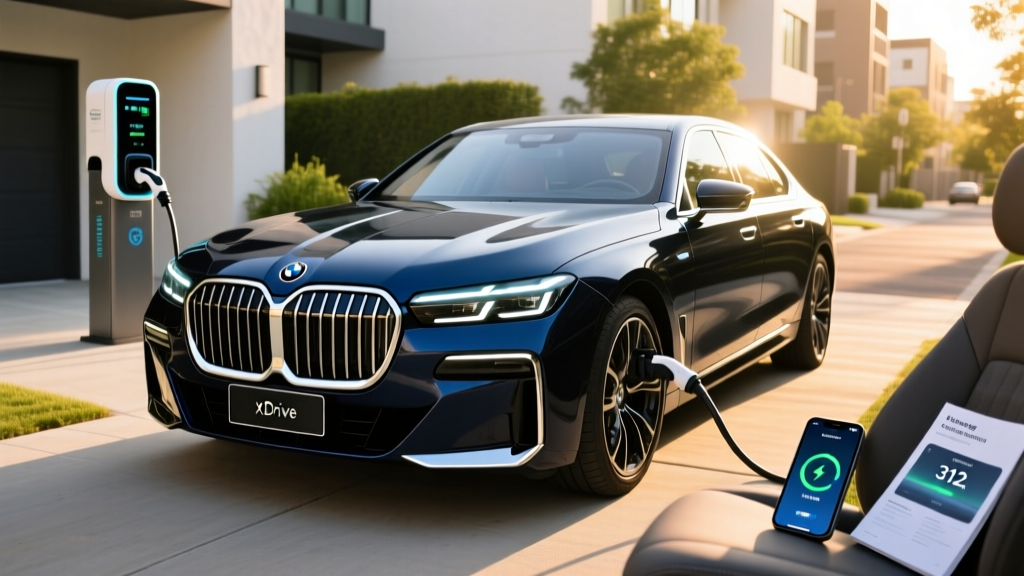
The BMW i7 xDrive60 is the automaker's all-electric flagship sedan — a full-size luxury cruiser that trades the V8 rumble of its 7 Series sibling for dual-motor silence and 536 horsepower. For 2026, it remains one of the few EVs that genuinely competes with the Mercedes-Benz EQS and Tesla Model S on prestige, technology, and long-distance comfort. But with a starting MSRP above $106,000 and no federal tax credit eligibility due to price caps, the i7 xDrive60 is a statement purchase, not a value play.
After spending time with the i7 xDrive60 on highway routes, in city traffic, and at DC fast chargers, the takeaway is clear: BMW engineered this car for people who already own luxury vehicles and want to electrify without compromise. The ride quality, cabin isolation, and tech suite are exceptional. The trade-offs are weight (nearly 6,000 lbs), efficiency that trails lighter rivals, and a price that locks most buyers out of federal incentives.
Range, Efficiency, and Real-World Expectations
The BMW i7 xDrive60 carries a 101.7 kWh usable battery pack (gross capacity approximately 105.7 kWh) using NMC (nickel-manganese-cobalt) lithium-ion chemistry. This chemistry prioritizes energy density — necessary in a sedan this large — over the cycle-life longevity of LFP packs found in some lower-cost EVs.
Real-World Expectation: Plan for 260–285 miles on highway road trips at 70–75 mph. In cold weather (below 32°F), expect a 15–25% reduction, bringing effective range to roughly 220–250 miles. City driving with regenerative braking can push closer to or slightly above the EPA figure.
The EPA rates the i7 xDrive60 at 82 MPGe combined (approximately 41 kWh per 100 miles). That efficiency figure is honest for mixed driving, but sustained highway travel at higher speeds will push consumption closer to 45–48 kWh/100mi due to the car's 5,975-lb curb weight and large frontal area. For context, the lighter Tesla Model S Long Range achieves roughly 124 MPGe combined — a significant gap driven by mass and aerodynamic trade-offs inherent in a traditional luxury sedan shape.
| Spec | Value |
|---|---|
| EPA Range | 318 miles (19" wheels) |
| Battery (usable) | 101.7 kWh, NMC chemistry |
| Efficiency | 82 MPGe / 41 kWh/100mi |
| Powertrain | Dual-motor AWD (xDrive) |
| Horsepower | 536 hp / 549 lb-ft torque |
| 0–60 mph | 4.5 seconds |
| Max DC Fast Charge | 195 kW (CCS1) |
| 10–80% DC Charge | ~34 minutes |
| Level 2 Charge Rate | 11 kW (~30 miles/hr) |
| Curb Weight | 5,975 lbs |
| Cargo Volume | 17.7 cu ft trunk |
| Rear Legroom | 42.8 inches |
| Base MSRP | $106,695 (excl. destination) |
| Battery Warranty | 8 years / 100,000 miles |
Charging Speed: DC Fast, Level 2, and What to Expect
The i7 xDrive60 supports DC fast charging at up to 195 kW via its CCS1 inlet. BMW quotes a 10–80% charge time of approximately 34 minutes under optimal conditions. In practice, the charging curve is respectable but not class-leading. The pack accepts peak power through roughly the 30–50% state-of-charge window before tapering progressively. Above 80%, charging slows significantly — as it does in all NMC packs — to protect cell longevity. Plan for 45–50 minutes if you need to push past 90% on a road trip.
| Charge Level | Power (kW) | Miles Added per Hour | Notes |
|---|---|---|---|
| Level 1 (120V) | ~1.4 kW | ~3 mi/hr | Emergency/trickle only |
| Level 2 (240V, 48A) | 11 kW | ~30 mi/hr | Full charge in ~9.5 hrs |
| DC Fast (peak) | 195 kW | ~180 mi in 10 min (peak) | 10–80% in ~34 min |
For home charging, the onboard charger maxes out at 11 kW (48 amps on a 240V circuit). A full charge from empty takes roughly 9.5 hours — practical for overnight replenishment if you have a properly installed Level 2 home station. Most owners driving 40–60 miles daily will only need to top up for a few hours each night.
Preconditioning note: The i7's navigation system will automatically precondition the battery when a DC fast charger is set as your destination. This is essential in cold weather — arriving at a charger with a cold battery can cut peak charging rates by 40–60%. Always navigate to the charger rather than just driving there.
Performance and Driving Dynamics
The dual-motor xDrive powertrain delivers 536 horsepower and 549 lb-ft of torque to all four wheels. BMW claims a 4.5-second 0–60 mph time, and independent testing confirms this figure is achievable with launch control engaged. For a nearly 6,000-lb sedan, that's genuinely quick — the instant torque delivery makes highway merging effortless and the car feels lighter on its feet than the spec sheet suggests.
Ride quality is where the i7 justifies its flagship positioning. The standard adaptive air suspension isolates occupants from road imperfections with the composure expected of a six-figure luxury sedan. Rear-axle steering (Integral Active Steering) is included and noticeably improves low-speed maneuverability — the turning circle is surprisingly tight for a car with a 126.6-inch wheelbase.
Regenerative braking offers multiple levels, selectable via steering-wheel paddles. In its highest setting, the i7 approaches one-pedal driving behavior, though BMW stops short of a true one-pedal mode that brings the car to a complete hold without brake input. Drivers transitioning from a Tesla or Chevrolet Bolt may need a day or two to adjust.
Interior, Technology, and Driver Assistance
The cabin is dominated by BMW's Curved Display — a 12.3-inch instrument cluster merged with a 14.9-inch touchscreen running iDrive 8.5. The system is responsive, supports wireless Apple CarPlay and Android Auto, and includes a natural-language voice assistant. The optional 31.3-inch 8K Theater Screen for rear passengers is a genuine showpiece, transforming the back seat into a cinema with integrated Amazon Fire TV.
BMW's Driving Assistant Professional package (standard or included on most trims) provides Level 2 driver assistance under the SAE automation scale. This includes adaptive cruise control with stop-and-go, lane-centering steering, and automatic lane-change assist when the turn signal is tapped. Highway Assistant allows hands-off driving at speeds up to 85 mph on divided highways — but the driver must keep eyes on the road, monitored by a driver-attention camera. This is not self-driving. The driver remains fully responsible for the vehicle at all times.
Notable drawbacks: The i7's touch-sensitive climate and volume controls on the center console are a step backward in usability compared to physical buttons. The massive kidney grille is polarizing. And at 17.7 cubic feet, trunk space is adequate but not generous for a car of this size — there is no frunk (front trunk), as BMW uses that space for power electronics and HVAC components.
Pricing, Trims, and Federal Tax Credit Eligibility
The 2026 BMW i7 xDrive60 starts at $106,695 (excluding $995 destination). A well-equipped example with the Premium Package, Driving Assistant Professional, Executive Package (rear massaging seats, sky lounge panoramic roof), and the Theater Screen can easily reach $125,000–$135,000 before options like BMW Individual paint or 21-inch wheels.
The BMW i7 xDrive60 does not qualify for the $7,500 federal EV tax credit under current IRS rules. The reason is straightforward: the IRS §30D credit caps eligible sedans at an MSRP of $55,000. At $106,695, the i7 exceeds this limit by nearly double.
Additionally, buyers must meet income caps ($150,000 single / $300,000 joint modified AGI) and the vehicle must meet critical-mineral and battery-component sourcing requirements. Even if the i7 were under the MSRP cap, its battery sourcing would require verification against the latest IRS guidance.
Bottom line: Budget the full purchase price. No federal credit applies. State or local incentives may still be available — check your jurisdiction's official energy or DMV website for current programs.
| Item | Amount |
|---|---|
| Base MSRP (xDrive60) | $106,695 |
| Destination Charge | $995 |
| Typical As-Tested Price | $120,000–$135,000 |
| Federal Tax Credit (§30D) | $0 (exceeds $55K sedan MSRP cap) |
| Effective Price After Federal Credit | Same as MSRP (no reduction) |
How It Compares: i7 vs. EQS vs. Model S
The i7 xDrive60 exists in a small competitive set. The Mercedes-Benz EQS 450+ (RWD, ~350-mile EPA range, ~$105,000) offers more range and a more futuristic interior but less engaging driving dynamics. The Tesla Model S Long Range (~402-mile EPA range, ~$80,000) dominates on efficiency and range at a lower price but can't match the i7's cabin quality or ride refinement. The Lucid Air Pure (~419-mile EPA range, ~$70,000) offers the best range-per-dollar in the segment but lacks BMW's dealer network and service infrastructure.
- Exceptional ride quality with standard air suspension
- 536 hp provides effortless acceleration for the class
- 31.3" Theater Screen is a genuine differentiator for rear passengers
- Level 2 Highway Assistant is polished for long-distance cruising
- Quiet cabin with outstanding sound isolation
- BMW's dealer and service network is well-established
- No federal tax credit due to MSRP cap
- Efficiency (82 MPGe) trails every major rival
- No frunk; trunk space (17.7 cu ft) is modest for the footprint
- 195 kW peak DC charging is slower than Lucid Air or Porsche Taycan
- Touch-sensitive controls are frustrating in daily use
- Curb weight of 5,975 lbs is felt in cornering and tire wear
Who Should Buy the BMW i7 xDrive60?
- You want a full-size luxury sedan with electric powertrain and don't need to maximize range-per-dollar
- Rear-seat comfort and in-car entertainment (Theater Screen) are priorities for chauffeured or family use
- You value BMW's driving dynamics and dealer service network over pure efficiency
- Your daily driving is under 200 miles and you have reliable home Level 2 charging
- Federal tax credit eligibility matters to your purchase decision (consider the Lucid Air Pure or Tesla Model S)
- You regularly drive 300+ miles between charging stops and want maximum range buffer
- You prioritize the fastest DC charging available (Porsche Taycan or Lucid Air charge significantly faster)
Battery Warranty and Long-Term Ownership
BMW covers the i7's high-voltage battery for 8 years or 100,000 miles, whichever comes first, against defects and capacity loss below 70% of original capacity. This is consistent with industry standards and matches the coverage offered by Mercedes-Benz and Audi. The powertrain (motors, power electronics) is also covered under the same 8-year/100,000-mile term.
For long-term ownership, the NMC chemistry in the i7 will experience gradual degradation. Based on industry data from similar BMW battery packs (i4, iX), expect approximately 10–15% capacity loss over 150,000 miles under normal use patterns. DC fast charging exclusively will accelerate degradation slightly; mixing in regular Level 2 home charging and avoiding frequent 100% charges will help preserve battery health over the long haul.
Frequently Asked Questions
What is the real-world range of the BMW i7 xDrive60?
The EPA rates the i7 xDrive60 at 318 miles with 19-inch wheels. In real-world highway driving at 70–75 mph, expect 260–285 miles. Cold weather (below freezing) can reduce range to 220–250 miles. City driving with regenerative braking may match or slightly exceed the EPA estimate.
How fast does the BMW i7 xDrive60 charge?
On a DC fast charger, the i7 peaks at 195 kW and charges from 10–80% in approximately 34 minutes. At home on a Level 2 (240V, 48A) charger, it accepts up to 11 kW, adding about 30 miles of range per hour — a full charge takes roughly 9.5 hours.
Does the BMW i7 qualify for the federal EV tax credit?
No. Under IRS §30D rules, new sedans must have an MSRP at or below $55,000 to qualify. The i7 xDrive60 starts at $106,695, making it ineligible. State and local incentives may still apply — check official sources in your area.
How much does the BMW i7 xDrive60 cost to charge?
At the U.S. average residential electricity rate of ~$0.17/kWh, a full home charge (101.7 kWh) costs approximately $17.30. Public DC fast charging is typically more expensive — $0.35–$0.55/kWh at networks like Electrify America or EVgo, making a 10–80% session roughly $25–$40 depending on local rates.
Is the BMW i7 xDrive60 self-driving?
No. The i7's driver-assistance features operate at SAE Level 2, meaning the driver must remain attentive and ready to take control at all times. Highway Assistant allows hands-off operation on divided highways but requires eyes-on-road monitoring via an interior camera. This is not autonomous driving.
How does the i7 compare to the Mercedes EQS and Tesla Model S?
The i7 prioritizes driving engagement and traditional luxury craftsmanship. The EQS offers more range (~350 mi) and a more avant-garde interior. The Model S offers far more range (~402 mi) and a lower price but less cabin refinement. The i7 is the driver's choice; the EQS is the comfort choice; the Model S is the efficiency choice.
Sources: EPA Fuel Economy (fueleconomy.gov), IRS Clean Vehicle Credits (irs.gov), BMW USA official specifications.