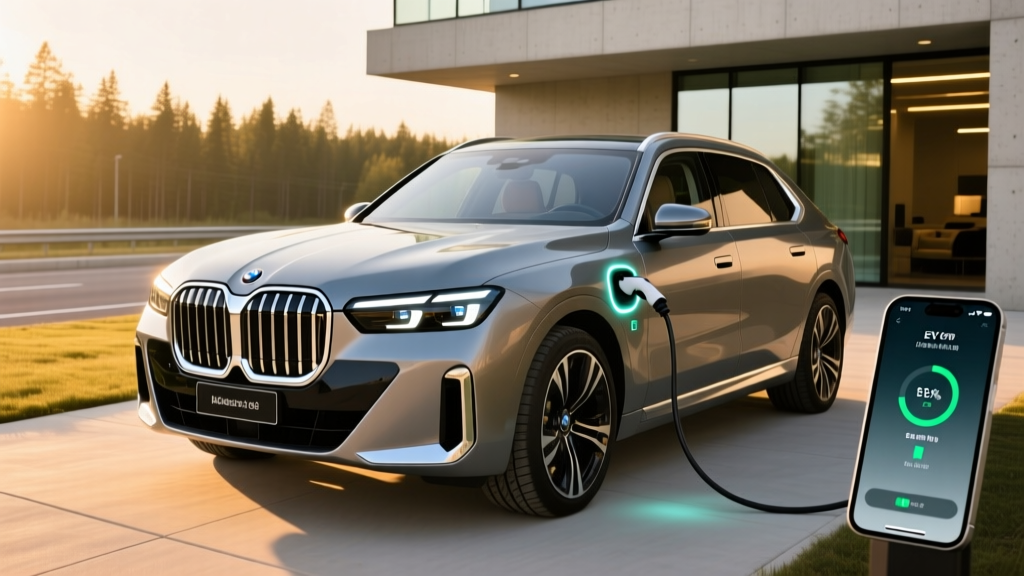
If you have been searching for a BMW i7 SUV, here is the clarification every luxury EV buyer needs: the BMW i7 is a full-size electric sedan, not an SUV. BMW's flagship electric vehicle competes directly with the Mercedes-Benz EQS Sedan, Lucid Air, and Tesla Model S. For buyers specifically wanting a BMW electric SUV, the automaker offers the iX (mid-size) and the upcoming iX3 (compact). However, the i7 sedan delivers the elevated ride height feel, cavernous interior, and commanding road presence that many luxury SUV shoppers are actually seeking — with superior aerodynamics and range that a boxy SUV shape simply cannot match.
This review covers the 2026 BMW i7 lineup — the i7 xDrive60 and the high-performance i7 M70 — with exact specs, real-world range expectations, charging performance, pricing, and federal tax credit eligibility under current IRS §30D rules.
2026 BMW i7 Spec Sheet at a Glance
| Specification | i7 xDrive60 | i7 M70 |
|---|---|---|
| EPA Range | 318 miles | 295 miles |
| Battery (usable) | 101.7 kWh (NMC) | 101.7 kWh (NMC) |
| Horsepower | 536 hp | 650 hp |
| Torque | 549 lb-ft | 749 lb-ft |
| 0–60 mph | 4.5 seconds | 3.5 seconds |
| Drivetrain | Dual-motor AWD | Dual-motor AWD |
| DC Fast Charge (peak) | 195 kW | 195 kW |
| 10–80% DCFC Time | ~34 minutes | ~34 minutes |
| Level 2 Rate | 11 kW (AC) | 11 kW (AC) |
| MPGe (combined) | 82 MPGe | 74 MPGe |
| Base MSRP | $106,695 | $143,795 |
| Battery Warranty | 8 yr / 100,000 mi | 8 yr / 100,000 mi |
Range and Efficiency: EPA vs. Real-World Driving
The i7's 101.7 kWh usable battery pack uses NMC (nickel manganese cobalt) chemistry — the standard for BMW's Gen5 eDrive platform. NMC delivers higher energy density than LFP, which is critical in a vehicle this heavy (5,975 lbs curb weight for the xDrive60). The trade-off is that NMC batteries benefit from daily charging limits around 80–90% to maximize long-term longevity, whereas LFP packs can be routinely charged to 100%.
Efficiency figures from the EPA place the xDrive60 at 82 MPGe combined (approximately 41 kWh per 100 miles). The M70 drops to 74 MPGe combined due to its more aggressive power delivery and stickier performance tires. For context, the Lucid Air Grand Touring achieves 131 MPGe combined — a substantial efficiency advantage owed to its lighter weight and class-leading aerodynamics.
Charging Performance: DC Fast, Level 2, and Home Setup
The i7 supports a peak DC fast-charge rate of 195 kW via its CCS1 connector (NACS adapter available for Tesla Supercharger access). BMW's battery preconditioning system activates automatically when you navigate to a charger via the iDrive system, warming the pack for optimal charge acceptance.
| Charging Level | Power | Speed (mi/hr added) | Notes |
|---|---|---|---|
| Level 1 (120V) | ~1.4 kW | ~3–4 mi/hr | Emergency/trickle only |
| Level 2 (240V, 48A) | 11 kW | ~28–31 mi/hr | Full charge in ~10 hrs |
| DC Fast (peak) | 195 kW | ~650+ mi/hr (peak) | 10–80% in ~34 min |
Charging curve reality: The i7 sustains close to its 195 kW peak from roughly 10–35% state of charge, then progressively tapers. From 80–100%, charging slows dramatically to protect the battery — adding that final 20% can take as long as the initial 10–80% session. For road trips, plan stops around the 10–80% window for the most efficient use of time.
For home Level 2 charging, the i7's 11 kW onboard charger is slightly slower than the 11.5–19.2 kW chargers found in some competitors. On a 48-amp Level 2 circuit (the most common residential installation), a full charge from 10% takes approximately 10 hours — sufficient for overnight replenishment. If your electrical panel supports a 60-amp circuit, you will still be limited by the car's 11 kW onboard charger, not the wall connector's output.
Performance and Driving Dynamics
The i7 xDrive60's dual-motor all-wheel-drive system produces 536 horsepower and 549 lb-ft of torque, launching the 6,000-pound sedan to 60 mph in 4.5 seconds. That is genuinely quick for a vehicle of this size, though the Tesla Model S Plaid and Lucid Air Sapphire exist in an entirely different performance stratosphere.
The i7 M70 escalates output to 650 hp and 749 lb-ft, cutting the 0–60 time to 3.5 seconds. M-specific tuning includes a sport rear-axle steering system, M Sport brakes, and an adaptive M suspension that can switch between a compliant grand-touring setup and firm, body-controlled sport damping.
Standard rear-axle steering on all i7 models reduces the turning circle to 40.4 feet — remarkable for a 213-inch-long sedan. At low speeds, the rear wheels turn opposite the fronts for tighter maneuvering; at highway speeds, they turn in-phase for sharper lane changes. This system makes the i7 feel substantially smaller than its dimensions suggest in parking lots and city driving.
Interior Space, Cargo, and Technology
The i7 seats five passengers with generous proportions:
- Front headroom: 39.8 inches
- Front legroom: 41.3 inches
- Rear headroom: 38.2 inches
- Rear legroom: 40.7 inches
- Trunk volume: 17.7 cubic feet
The 17.7 cu-ft trunk is competitive with the Mercedes EQS (22 cu ft) but falls short of the Lucid Air's 32 cu-ft combined cargo space (trunk + frunk). The i7 does not offer a front trunk (frunk), which is a missed opportunity given the packaging freedom EVs provide.
BMW's iDrive 8.5 powers the curved display array — a 12.3-inch digital instrument cluster merged with a 14.9-inch central touchscreen. The system supports wireless Apple CarPlay, Android Auto, and over-the-air updates. The available 31.3-inch BMW Theater Screen (8K resolution, mounted behind the front seats) transforms the rear cabin into a cinema — a standout feature for chauffeured executives and families on road trips alike. Amazon Fire TV integration is built in.
Driver-assistance tech includes BMW's Driving Assistant Professional, which provides adaptive cruise control with stop-and-go, lane-keeping assist, and automatic lane-change on highways. This is a Level 2 SAE system — the driver must keep hands on the wheel and remain fully engaged. BMW's Highway Assistant (available in select markets) allows hands-free driving up to 85 mph on divided highways but still requires eye monitoring via the cabin camera.
Pricing, Trim Levels, and Federal Tax Credit Eligibility
The 2026 BMW i7 starts at $106,695 for the xDrive60 (including destination). The M70 begins at $143,795. Options such as the Executive Package, Bowers & Wilkins Diamond Surround Sound, and the Theater Screen can push a well-equipped xDrive60 past $125,000.
| Trim | Base MSRP | As-Tested (typical options) |
|---|---|---|
| i7 xDrive60 | $106,695 | $118,000–$128,000 |
| i7 M70 | $143,795 | $155,000–$165,000 |
Does the BMW i7 Qualify for the Federal EV Tax Credit?
Under current IRS §30D rules, the BMW i7 faces a significant tax credit hurdle: the $55,000 MSRP cap for sedans. Because the i7 starts at $106,695 — well above the sedan cap — it does not qualify for the $7,500 federal clean vehicle credit. This cap applies to all new sedan purchases regardless of the buyer's income.
Additionally, §30D requires that the vehicle's battery components and critical minerals meet North American sourcing thresholds that tighten annually. Even if the MSRP cap did not apply, the i7's battery supply chain would need independent verification. Buyers should consult a tax professional and verify current-year rules on the IRS website before making purchase decisions based on credit assumptions.
Lease workaround: Vehicles leased (not purchased) may qualify for the $7,500 commercial clean vehicle credit (§45W), which is passed through to the lessee as a capitalized cost reduction. This loophole does not have MSRP or income caps. Ask your BMW dealer whether lease incentives reflecting the credit are available.
Pros, Cons, and Who Should Buy the BMW i7
- Supremely quiet, well-isolated cabin at highway speeds
- Rear-axle steering makes it agile despite its size
- 318-mile EPA range is competitive in the luxury EV sedan class
- Theater Screen is a genuinely unique rear-seat feature
- Strong build quality and materials throughout
- Not an SUV — buyers searching "i7 SUV" will need to look at the BMW iX
- No federal tax credit eligibility due to MSRP cap
- 195 kW peak charge rate trails Hyundai/Kia's 350 kW E-GMP platform
- No front trunk (frunk) — 17.7 cu-ft trunk is modest for the class
- 11 kW onboard Level 2 charger is slower than some competitors
- Heavy at ~6,000 lbs; efficiency trails Lucid Air significantly
Who the BMW i7 Suits Best
- Executive commuters who prioritize ride comfort, cabin silence, and a commanding road presence over outright efficiency
- Families wanting luxury EV space with the Theater Screen for rear-seat entertainment on long trips
- Current 7 Series owners transitioning to electric who want to retain BMW's driving character and dealer network
- Not ideal for: Buyers who need SUV cargo versatility, maximum range per dollar, or tax-credit-dependent pricing
BMW i7 vs. Key Competitors
| Metric | BMW i7 xDrive60 | Mercedes EQS 580 | Lucid Air Grand Touring | Tesla Model S |
|---|---|---|---|---|
| EPA Range | 318 mi | 345 mi | 512 mi | 402 mi |
| Battery | 101.7 kWh NMC | 107.8 kWh NMC | 112 kWh NMC | 100 kWh (est.) |
| 0–60 mph | 4.5 sec | 4.1 sec | 3.0 sec | 3.1 sec |
| Peak DC Charge | 195 kW | 200 kW | 300+ kW | 250 kW |
| Base MSRP | $106,695 | $105,550 | $127,400 | $79,990 |
| Cargo (cu ft) | 17.7 | 22.0 | 32.0 | 28.0 |
The Lucid Air Grand Touring dominates on range and cargo space but lacks BMW's dealer network and interior material quality. The EQS offers slightly more range and trunk volume but has drawn criticism for its brake pedal feel and MBUX learning curve. The Model S remains the value and Supercharger-network leader, though its interior finishes cannot match the i7. If you want a true BMW electric SUV alternative, the BMW iX xDrive50 (EPA 324 mi, ~$87,250) is worth cross-shopping.
Frequently Asked Questions
What is the real-world range of the BMW i7?
The EPA rates the i7 xDrive60 at 318 miles. In real-world highway driving at 70–75 mph, expect 270–290 miles. Cold weather (below freezing) can reduce range to 230–260 miles. City driving with regenerative braking can match or slightly exceed the EPA figure.
How fast does the BMW i7 charge?
On a DC fast charger, the i7 peaks at 195 kW and charges from 10–80% in approximately 34 minutes. On a home Level 2 charger (240V, 48A), it charges at 11 kW, adding roughly 28–31 miles of range per hour — a full charge takes about 10 hours.
Does the BMW i7 qualify for the $7,500 federal tax credit?
No. Under IRS §30D rules, the i7 exceeds the $55,000 MSRP cap for sedans and is not eligible for the new clean vehicle purchase credit. However, leasing may unlock the commercial credit (§45W) as a capitalized cost reduction — check with your dealer and tax advisor.
Is the BMW i7 an SUV?
No. The BMW i7 is a full-size electric sedan. BMW does not currently produce an "i7 SUV." Buyers seeking a BMW electric SUV should consider the BMW iX (mid-size crossover, EPA 324 mi) or the BMW iX1 (subcompact, where available).
How does the BMW i7 compare to the BMW iX?
The i7 sedan offers a quieter ride, more rear-seat luxury features (Theater Screen), and slightly better efficiency. The iX SUV provides more cargo versatility (35.5 cu ft behind rear seats), a higher seating position, and a lower starting price (~$87,250). Both share BMW's Gen5 eDrive architecture and similar infotainment.
What is the battery warranty on the BMW i7?
BMW covers the i7's high-voltage battery for 8 years or 100,000 miles, whichever comes first. The warranty guarantees the battery will retain at least 70% of its original capacity during that period. The general vehicle warranty is 4 years / 50,000 miles.