Quick Verdict: The BMW i7 Series in 2026
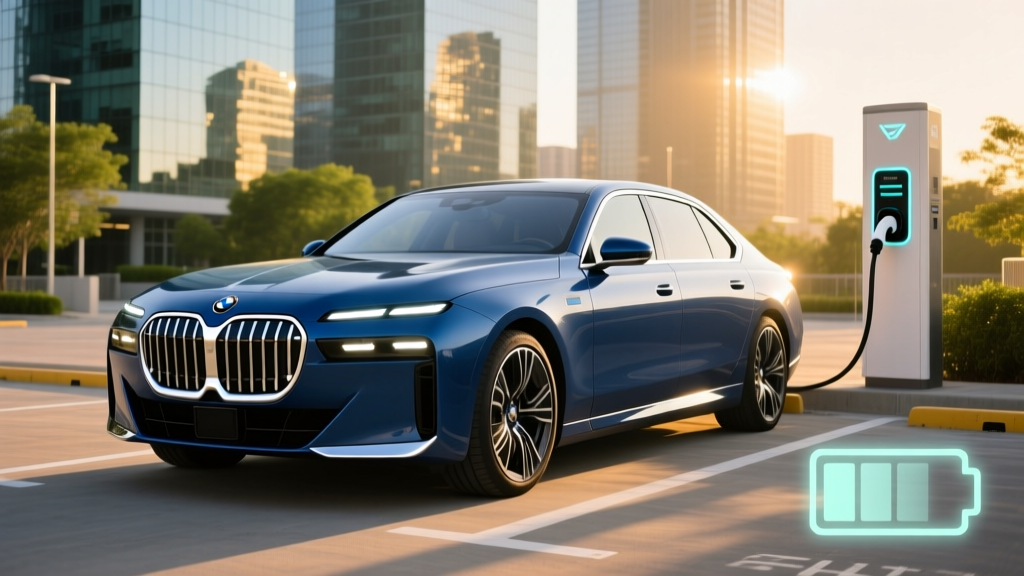
The BMW i7 Series occupies a rare position in the luxury EV sedan market: it pairs flagship comfort and technology with genuine long-distance capability. The 2026 i7 xDrive60 delivers an EPA-estimated 318 miles of range from a 101.7 kWh battery, charges at up to 195 kW on DC fast chargers, and accelerates to 60 mph in 4.5 seconds with 536 horsepower on tap. Starting at $124,200, it competes directly with the Mercedes-Benz EQS and Lucid Air but carves out its own identity through BMW's driving dynamics, iDrive 8.5 infotainment, and the available Theater Screen for rear passengers.
For buyers who need a full-size luxury sedan with zero tailpipe emissions and the ability to road-trip without excessive charging stops, the i7 is one of the strongest contenders in its class. However, its weight, limited federal tax credit eligibility, and the reality of cold-weather range loss demand an honest look before signing the lease or purchase agreement.
Range and Efficiency: EPA Numbers vs. Real-World Driving
Real-World Expectation: 265–290 miles on highway trips at 70+ mph; approximately 220–250 miles in sub-freezing temperatures with climate control active. City driving with regenerative braking can match or slightly exceed the EPA figure.
The i7 xDrive60 earns its 318-mile EPA rating primarily through a large usable battery capacity and BMW's fifth-generation eDrive powertrain efficiency. The sedan achieves 78 MPGe combined (79 city / 77 highway) according to fueleconomy.gov, which translates to roughly 39 kWh per 100 miles in mixed driving.
That efficiency figure is respectable for a 5,860-pound luxury sedan, but physics is unforgiving at highway speeds. Expect consumption to climb to 42–45 kWh/100 mi on flat interstate runs at 75 mph, which reduces effective range to around 270 miles. Add winter conditions — where battery preconditioning and cabin heating draw significant energy — and 230 miles between charges is a prudent planning target. BMW's heat pump (standard on the i7) mitigates cold-weather losses compared to resistive heating systems, but a 20–25% range reduction in sustained 25°F weather is typical for any EV of this mass.
Wheel choice matters: the 21-inch M Sport wheels reduce EPA range to approximately 295 miles. If range is a priority, stick with the standard 19-inch Aero wheels.
Battery, Charging Speeds, and Infrastructure
| Specification | Value |
|---|---|
| Battery Chemistry | NMC (Nickel Manganese Cobalt) |
| Total Battery Capacity | 105.7 kWh |
| Usable Battery Capacity | 101.7 kWh |
| Max DC Fast Charge Rate | 195 kW |
| 10–80% DC Fast Charge Time | ~34 minutes |
| Level 2 AC Charge Rate | 11 kW (48A) |
| Level 2 Miles Added Per Hour | ~27 miles/hr |
| Charge Port / Connector | CCS1 (J1772 + DC pins) |
| Battery Warranty | 8 years / 100,000 miles |
The i7 uses an NMC lithium-ion pack — the chemistry of choice for energy-dense luxury EVs that prioritize range over cycle-life longevity. BMW guarantees at least 70% capacity retention over the 8-year/100,000-mile warranty period, which aligns with industry standards.
On DC fast charging, the i7 peaks at 195 kW, which is competitive but not class-leading. The Lucid Air, for instance, sustains higher charge rates. BMW's charge curve is relatively flat between 10–50% SoC before tapering noticeably above 60%. In practice, you'll see 190–195 kW at low state of charge, dropping to approximately 120 kW around 55% and further to 60–80 kW past 70%. The 10–80% session takes roughly 34 minutes at a capable charger (Electrify America 350 kW stations, Tesla Superchargers with CCS adapter, or any 200+ kW unit).
At home on a Level 2 charger, the 11 kW onboard charger adds about 27 miles of range per hour, meaning a full 0–100% charge takes approximately 10.5 hours. Most owners charging overnight from 20% will wake up to a full battery — this is perfectly adequate for daily use. A 48-amp hardwired Level 2 station (such as a ChargePoint Home Flex or BMW Wallbox) on a 60-amp circuit is the recommended home setup.
One practical note: the i7 ships with a CCS1 connector. BMW now provides a complimentary NACS adapter for access to Tesla Supercharger stations, expanding the usable DC fast-charging network significantly. Confirm adapter availability at time of purchase, as program terms can shift.
Performance and Driving Dynamics
| Metric | i7 xDrive60 | i7 M70 |
|---|---|---|
| Horsepower | 536 hp | 650 hp |
| Torque | 549 lb-ft | 749 lb-ft |
| 0–60 mph | 4.5 seconds | 3.5 seconds |
| Drivetrain | Dual-motor AWD | Dual-motor AWD |
| Top Speed | 149 mph | 155 mph |
| Curb Weight | ~5,860 lbs | ~6,030 lbs |
The xDrive60 is the volume model and the one most buyers should consider. Its 4.5-second 0–60 time is brisk for a sedan that weighs nearly three tons, and the instant electric torque makes highway merging and city acceleration effortless. The dual-motor all-wheel-drive system provides confident traction in rain and light snow.
The M70 variant exists for those who want supercar-rivaling acceleration in a full-size luxury package, but the 650 hp comes at a $20,000+ premium and a roughly 15-mile EPA range penalty. Unless you're specifically seeking M-badge performance, the xDrive60 delivers more than enough power for any real-world driving scenario.
Ride quality is where the i7 justifies its price. The adaptive air suspension with automatic self-leveling absorbs highway imperfections with composure, and the cabin isolation is among the best in any production vehicle. Rear-axle steering (standard) shrinks the turning circle and adds agility surprising for a 17-foot sedan.
Pricing, Tax Credits, and Total Cost
| Trim | Base MSRP | As-Tested (Typical) | Federal §30D Credit |
|---|---|---|---|
| i7 xDrive60 | $124,200 | $135,000–$145,000 | Not eligible (MSRP cap exceeded) |
| i7 M70 | $168,500 | $175,000+ | Not eligible (MSRP cap exceeded) |
The BMW i7 Series does not qualify for the federal §30D new EV tax credit. The IRS caps eligible sedans at an MSRP of $55,000, and the i7 starts at more than double that threshold. This is a straightforward disqualification — no amount of income eligibility or battery-sourcing compliance changes the outcome when the MSRP cap is exceeded.
Some buyers may qualify for state-level incentives depending on jurisdiction. California, Colorado, and a handful of other states offer rebates or tax credits that may apply to higher-priced EVs, but these programs vary by income, residency, and funding availability. Check your state's energy office or DMV for current programs.
For ownership cost context, the i7's electricity expense is dramatically lower than the 7 Series gasoline equivalent. At a national average of $0.16/kWh for home charging, filling the 101.7 kWh battery costs approximately $16.27 — versus $75+ for a full tank of premium fuel in a gas 740i. Over 15,000 miles annually, the i7 saves roughly $1,800–$2,200 in fuel costs versus its ICE sibling. However, insurance premiums for the i7 run 15–25% higher than equivalent gas luxury sedans, and depreciation on six-figure EVs remains steeper than on mainstream models.
- ❌ MSRP cap for sedans: $55,000 (i7 starts at $124,200)
- ✅ Buyer income cap: $300K MFJ / $150K single (would pass if MSRP qualified)
- ⚠️ Battery sourcing and critical mineral requirements (moot due to MSRP)
- ⚠️ Point-of-sale transfer available for eligible vehicles (not applicable here)
Interior, Technology, and Cargo
The i7 cabin is a showcase of BMW's current design language, dominated by the Curved Display — a 12.3-inch digital instrument cluster merged with a 14.9-inch touchscreen running iDrive 8.5. The system supports wireless Apple CarPlay and Android Auto, over-the-air updates, and BMW's Intelligent Personal Assistant voice control.
The available Theater Screen — a 31.3-inch 8K display that deploys from the ceiling for rear passengers — is the i7's signature feature and a genuine differentiator versus competitors. Paired with the available Bowers & Wilkins Diamond Surround Sound system (36 speakers, 1,965 watts) and rear-door touchscreens, the rear-seat experience rivals a private lounge. Executive Lounge seating with heated, ventilated, and massaging rear seats is available.
Driver assistance includes BMW's Driving Assistant Professional, which provides highway assist with lane centering and adaptive cruise control. This is a SAE Level 2 system — the driver must maintain attention and keep hands on or near the wheel. It is not self-driving. The system is competent and well-calibrated but does not match the hands-free capability of GM's Super Cruise on mapped highways.
Cargo space measures 17.7 cubic feet in the trunk, which is generous for a luxury sedan but notably lacks a front trunk (frunk) — the space is occupied by power electronics and the HVAC system. Rear legroom is 42.0 inches, accommodating adults comfortably for long trips. The i7 seats five, though the rear center position is best reserved for short trips due to the transmission tunnel hump carried over from the CLAR platform's ICE compatibility.
Pros, Cons, and Who Should Buy
- 318-mile EPA range is competitive in the luxury EV sedan segment
- Exceptional ride quality with adaptive air suspension
- Theater Screen and rear-seat luxury are class-leading
- 195 kW DC charging provides practical road-trip capability
- Quiet, refined cabin with premium materials throughout
- NACS adapter access expands charging network significantly
- $124,200+ starting price with no federal tax credit eligibility
- 5,860 lb curb weight impacts efficiency and tire wear
- No front trunk (frunk) for additional storage
- Level 2 driver assist requires constant supervision
- 21-inch wheels reduce range by ~23 miles EPA
- Steep depreciation typical of six-figure luxury EVs
Best for: Luxury sedan buyers who want flagship comfort, strong real-world range, and the latest in-cabin technology without switching to an SUV format. The i7 suits executives who are chauffeured occasionally (the Theater Screen justifies the rear-seat investment), long-distance commuters with home charging access, and EV-curious luxury buyers who want a BMW badge without the 7 Series fuel bill.
Not ideal for: Budget-conscious buyers (the tax credit disqualification is a real financial hit), those who need maximum cargo versatility (consider the iX SUV), or anyone expecting autonomous driving capability — this is a driver's luxury sedan with assist features, not a robotaxi.
BMW i7 vs. Key Competitors
| Specification | 2026 BMW i7 xDrive60 | 2026 Mercedes EQS 580 | 2026 Lucid Air Grand Touring |
|---|---|---|---|
| EPA Range | 318 mi | 330 mi | 512 mi |
| Battery (usable) | 101.7 kWh NMC | 107.8 kWh NMC | 112 kWh NMC |
| DC Fast Charge Peak | 195 kW | 200 kW | 300 kW |
| 10–80% Time | ~34 min | ~31 min | ~20 min |
| 0–60 mph | 4.5 sec | 4.1 sec | 3.0 sec |
| Horsepower | 536 hp | 536 hp | 819 hp |
| Base MSRP | $124,200 | $127,350 | $138,400 |
| Federal Tax Credit | None (MSRP) | None (MSRP) | None (MSRP) |
The Lucid Air wins on paper with 512 miles of range and blistering 300 kW charging, but BMW's build quality, dealer network, and proven reliability track record carry weight for conservative luxury buyers. The EQS offers slightly more range and a comparable tech suite, but its interior design polarizes and its driving dynamics feel less engaging than the BMW. The i7 occupies a defensible middle ground: not the longest-range option, but the most well-rounded as a daily-driver luxury sedan with genuine road-trip capability.
Frequently Asked Questions
What is the real-world range of the BMW i7 Series?
The EPA rates the i7 xDrive60 at 318 miles. In real-world highway driving at 70–75 mph, expect 265–290 miles. In cold weather below freezing, plan for 220–250 miles between charges. City driving with regenerative braking can approach or slightly exceed the EPA number.
How fast does the BMW i7 charge at home and on the road?
On a DC fast charger, the i7 peaks at 195 kW and charges from 10–80% in approximately 34 minutes. At home on a Level 2 charger (11 kW / 48A), it adds about 27 miles of range per hour, fully recharging overnight in roughly 10.5 hours from empty.
Does the BMW i7 qualify for the $7,500 federal EV tax credit?
No. The IRS §30D credit caps eligible sedans at $55,000 MSRP. The i7 starts at $124,200, making it ineligible regardless of buyer income or battery sourcing. Some state incentives may apply — check your local programs.
Is the BMW i7 worth buying over the Mercedes EQS or Lucid Air?
The i7 is worth considering if you prioritize ride quality, BMW's driving dynamics, and the Theater Screen rear-seat experience. The Lucid Air offers superior range and charging speed; the EQS provides slightly more range and a different design philosophy. Test-drive all three, but the i7's well-rounded package and BMW dealer support make it a strong choice for traditional luxury sedan buyers going electric.
What is the battery warranty on the BMW i7?
BMW covers the i7's high-voltage battery for 8 years or 100,000 miles, whichever comes first, guaranteeing at least 70% capacity retention. The powertrain and standard vehicle warranty covers 4 years / 50,000 miles.
Can the BMW i7 use Tesla Superchargers?
Yes. BMW provides a NACS adapter that allows the i7 to access Tesla's Supercharger network, which significantly expands available DC fast-charging locations across the United States. The i7's native CCS1 port also works with Electrify America, EVgo, and other public networks.