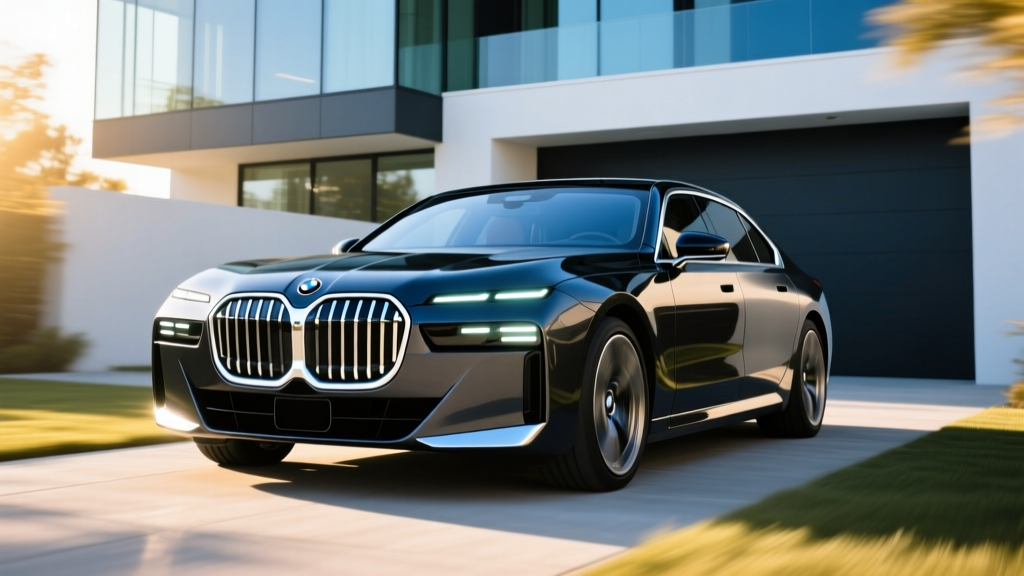
The BMW i7 is the brand's flagship electric sedan — a 5,000-pound luxury barge that pairs whisper-quiet refinement with genuine long-range capability. For buyers eyeing BMW i7 lease specials, the calculus is different than an outright purchase: lease incentives, money-factor discounts, and manufacturer-to-dealer cash can dramatically lower the monthly cost of this six-figure EV. But before you sign, you need to understand what you're actually getting in terms of range, charging infrastructure compatibility, and whether the federal tax credit flows through to your lease.
This profile covers the 2026 BMW i7 lineup — the xDrive50, the performance-oriented M70, and the ultra-luxury Alpina XB7 variant — with the exact numbers that matter for lease evaluation.
2026 BMW i7 Lineup: Quick Specs at a Glance
| Spec | i7 xDrive50 | i7 M70 |
|---|---|---|
| EPA Range | 318 miles | 295 miles |
| Battery (usable) | 101.7 kWh (NMC) | 101.7 kWh (NMC) |
| Horsepower | 536 hp | 650 hp |
| 0–60 mph | 4.5 seconds | 3.5 seconds |
| Drivetrain | Dual-motor AWD | Dual-motor AWD |
| Max DC Fast Charge | 195 kW | 195 kW |
| 10–80% DC Time | ~34 minutes | ~34 minutes |
| Level 2 Home Rate | 11 kW (~30 mi/hr) | 11 kW (~30 mi/hr) |
| MPGe (combined) | 82 MPGe | 76 MPGe |
| kWh/100 mi | 41 kWh | 44 kWh |
| Base MSRP | $124,200 | $168,800 |
| Battery Warranty | 8 yr / 100,000 mi | 8 yr / 100,000 mi |
Range & Efficiency: What the EPA Number Doesn't Tell You
The xDrive50's 318-mile EPA range is legitimate for mixed driving — city errands, suburban commutes, moderate climate-control use. The M70 drops to 295 miles due to stickier performance tires and more aggressive power delivery. Both trims use a 101.7 kWh usable NMC (nickel-manganese-cobalt) battery pack, which offers higher energy density than LFP but requires more careful long-term state-of-charge management.
- City/suburban (mild weather): 300–330 mi — regen-heavy driving favors the i7's efficiency.
- Highway (70–80 mph, 75°F): ~250–270 mi — aerodynamic drag cuts range ~15–20%.
- Cold weather (below 30°F, highway): ~210–240 mi — the i7's heat pump helps, but battery chemistry still loses 20–30% at freezing temps.
- Mountain/towing: Not rated for towing; steep grades with full passenger load can push consumption above 50 kWh/100 mi.
Source: fueleconomy.gov EV range methodology. Real-world figures based on owner-reported data and third-party testing.
At 41 kWh/100 miles (xDrive50), the i7 is reasonably efficient for its size, but it's no Tesla Model S — which returns about 30 kWh/100 mi. The penalty of 5,000+ pounds of luxury insulation, massaging seats, and sound deadening shows up at the charger.
Charging Speed: Home and DC Fast Charging Breakdown
The i7 supports a peak DC fast-charge rate of 195 kW, which is respectable but not class-leading — the Lucid Air peaks at 300 kW, and the Porsche Taycan at 270 kW. BMW's charging curve is relatively flat through 50% state-of-charge, then tapers progressively above 80%. Expect 10–80% in approximately 34 minutes at a functioning 200+ kW stall.
| Charging Level | Power / Rate | Speed | Notes |
|---|---|---|---|
| Level 1 (120V outlet) | ~1.4 kW | ~4 mi/hr | Emergency/trickle only; ~80 hr for full charge |
| Level 2 (240V, 48A) | 11 kW | ~30 mi/hr | Full charge in ~10 hours; ideal overnight home setup |
| DC Fast (CCS) | Peak 195 kW | 10–80% in ~34 min | Requires preconditioning; tapers sharply above 80% |
Home charging reality: The i7's 11 kW onboard charger means you'll want a 48-amp Level 2 wall connector on a 60-amp circuit. A full overnight session from 20% to 100% takes roughly 9–10 hours. For lease buyers without a garage or dedicated parking, this is the single biggest ownership friction point — confirm your charging situation before signing.
The i7 uses the CCS1 connector for DC fast charging. BMW has announced NACS (Tesla-style) adoption for future models, but the 2026 i7 still ships with CCS1. A BMW-provided adapter allows Supercharger access at participating Tesla stations.
Performance & Driving Dynamics
The xDrive50's dual-motor all-wheel-drive system delivers 536 hp and a 4.5-second 0–60 mph time — brisk for a sedan that weighs over 5,800 pounds. The M70 variant bumps output to 650 hp and drops the sprint to 3.5 seconds, which is genuinely quick by any measure.
What stands out in real driving is the i7's air suspension and active anti-roll bars, which keep the body remarkably flat through corners despite the massive curb weight. Rear-wheel steering (standard on M70, optional on xDrive50) tightens the turning circle to a manageable 41.3 feet — important when parking a 212-inch-long sedan.
One-pedal driving is available but not as aggressive as Tesla or Hyundai/Kia implementations. BMW defaults to adaptive regen, which uses radar to modulate braking force based on traffic ahead. Most owners find this more natural in mixed traffic than full one-pedal mode.
Pricing, Lease Specials & Federal Tax Credit
The 2026 BMW i7 xDrive50 starts at $124,200 (including destination), while the M70 opens at $168,800. Well-optioned xDrive50 examples with the Premium and Executive packages regularly land between $135,000 and $145,000 before incentives.
| Item | xDrive50 | M70 |
|---|---|---|
| Base MSRP | $124,200 | $168,800 |
| As-Tested (typical options) | $138,500 | $182,000 |
| Federal Tax Credit (§30D) | Up to $7,500* | Up to $7,500* |
| BMW Lease Bonus Cash (varies by region) | $5,000–$7,500 | $5,000–$10,000 |
| Estimated 36-mo Lease (well-qualified) | ~$1,450–$1,650/mo | ~$2,100–$2,400/mo |
*Federal tax credit caveats: Under IRS §30D rules, the $7,500 credit requires the buyer (or leasing entity) to meet income caps ($300,000 joint / $150,000 single), the vehicle must be under the $80,000 sedan MSRP cap — however, the i7 exceeds this cap. This means the i7 does NOT qualify for the new-vehicle §30D credit when purchased.
The lease loophole: Under the commercial clean vehicle credit (§45W), the leasing company (BMW Financial Services) can claim the $7,500 credit and pass it as a capitalized-cost reduction to the lessee. This is why BMW i7 lease specials often advertise "$7,500 lease credit" — it's the commercial credit flowing through, not the consumer credit. Confirm with your dealer that this credit is applied to your specific lease agreement.
Interior, Technology & Cargo
The i7's cabin is a showcase of BMW's latest tech: a curved display housing a 12.3-inch instrument cluster and 14.9-inch infotainment screen running iDrive 8.5. The standout feature is the optional 31.3-inch 8K Theater Screen that deploys from the roof for rear passengers — a genuine conversation piece, though it blocks the rearview mirror when deployed.
Driver assistance includes BMW's Driving Assistant Professional, which is an SAE Level 2 system offering adaptive cruise, lane centering, and automatic lane changes with turn-signal confirmation. Highway Assistant allows hands-off driving up to 85 mph on mapped divided highways, but requires eyes-on supervision at all times — this is not autonomous driving.
Cargo and passenger space:
- Trunk: 17.7 cu ft (no frunk — the hood houses HVAC and electronics)
- Rear legroom: 43.1 inches (executive-lounge seating with power recline optional)
- Front headroom: 40.2 inches
- Turning circle: 41.3 feet
The 17.7 cu ft trunk is generous for a sedan, but the lack of a frunk is a missed opportunity at this price point. Competitors like the Lucid Air offer front-trunk storage.
Pros, Cons & Who Should Lease the i7
- Genuine 300+ mile real-world range in mixed driving
- Class-leading rear-seat luxury with available Theater Screen
- Whisper-quiet cabin even at highway speeds
- Air suspension delivers a magic-carpet ride quality
- Lease credit loophole allows $7,500 incentive despite MSRP cap
- 8-year/100,000-mile battery warranty
- $124,200+ starting price — steep even for the luxury segment
- 195 kW peak charge rate trails Lucid, Porsche, and Hyundai competitors
- No front trunk (frunk) for additional storage
- 5,800+ lb curb weight hurts efficiency vs lighter EVs
- CCS1 connector requires adapter for Tesla Supercharger access
- Highway range drops to ~250 mi at sustained 75+ mph
Best for: Luxury sedan buyers who want a quiet, long-range EV for commuting and occasional road trips, have reliable Level 2 home charging, and prefer leasing to avoid depreciation risk. The i7 is ideal for executives who spend time in the rear seat and value cabin technology.
Consider alternatives if: You need maximum DC charging speed for frequent long-distance travel (look at the Lucid Air), you want a frunk for cargo flexibility, or you're buying outright and need the §30D consumer credit (the i7's MSRP disqualifies it for purchase).
BMW i7 Lease FAQ
What is the real-world range of the BMW i7?
The xDrive50 achieves approximately 300–330 miles in city/suburban driving and 250–270 miles at sustained highway speeds (70–80 mph). Cold weather below freezing can reduce range to 210–240 miles on the highway. The M70 trim returns about 10–15 fewer miles across all conditions.
How fast does the i7 charge at home and on the road?
At home on a Level 2 (240V, 48A) charger, the i7 adds about 30 miles per hour, fully charging in roughly 10 hours. On a DC fast charger, it peaks at 195 kW and reaches 10–80% in approximately 34 minutes. Always precondition the battery via the iDrive navigation system for optimal charging speed.
How much does the BMW i7 cost after lease incentives?
With BMW's lease bonus cash ($5,000–$7,500 depending on region and trim) and the pass-through commercial clean vehicle credit ($7,500), a well-qualified lessee might see an effective capitalized cost reduction of $12,500–$15,000. Typical 36-month leases for the xDrive50 run $1,450–$1,650/month with ~$10,000 due at signing.
Does the BMW i7 qualify for the federal EV tax credit?
Not for purchase — the i7's MSRP exceeds the $80,000 sedan cap under IRS §30D. However, when leased through BMW Financial Services, the lessor can claim the §45W commercial clean vehicle credit and pass $7,500 to you as a cap-cost reduction. Verify this is written into your lease agreement.
Is the BMW i7 worth leasing vs the Mercedes EQS or Lucid Air?
The i7 wins on rear-seat luxury and ride quality. The EQS Sedan offers slightly more range (350 mi EPA) but a less intuitive interior. The Lucid Air Grand Touring delivers 516 miles of range and 300 kW charging at a lower starting price, but with less brand prestige and a smaller service network. Lease the i7 if cabin refinement and BMW dealer support matter most.
What's the battery warranty and expected degradation?
BMW covers the i7's high-voltage battery for 8 years or 100,000 miles against defects and capacity loss below 70% of original. NMC chemistry typically degrades 8–12% over the first 100,000 miles. Avoid routinely charging to 100% or letting the battery sit below 10% for extended periods to maximize longevity.