Quick Verdict: The BMW i7's Dual Identity
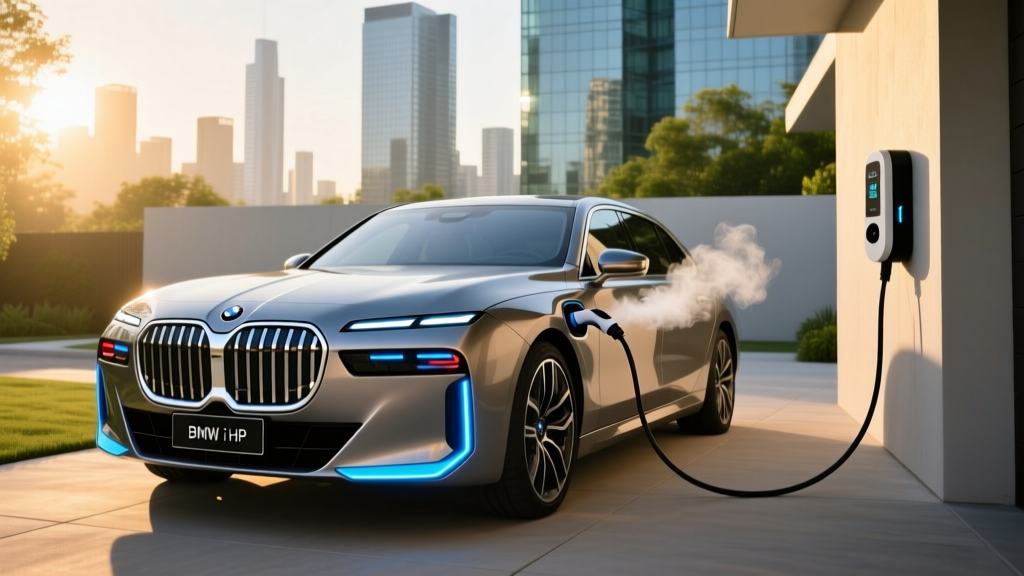
The BMW i7 is a full-size luxury electric sedan that refuses to choose between wafting comfort and serious performance. In its xDrive50 guise, it delivers a serene, 469-hp grand touring experience with over 300 miles of range. Step up to the M70 variant and the BMW i7 hp figure jumps to 650 horsepower, dropping the 0-60 mph time to a supercar-rivaling 3.5 seconds — in a car that weighs over 6,000 pounds and seats five in opulent comfort.
For 2026, the i7 continues to occupy a narrow but compelling niche: buyers who want a German luxury flagship that happens to be electric, rather than an EV that happens to be luxurious. It competes directly with the Mercedes-Benz EQS, Porsche Taycan (in a different segment, but similar price territory), and the Tesla Model S. Whether the i7 earns its $120,000+ starting price depends heavily on what you prioritize — and whether you can navigate the federal tax credit landscape.
BMW i7 Specs at a Glance
| Specification | xDrive50 | M70 |
|---|---|---|
| Horsepower | 536 hp (469 hp in earlier model years) | 650 hp |
| Torque | 549 lb-ft | 749 lb-ft (with Launch Control) |
| 0-60 mph | 4.5 seconds | 3.5 seconds |
| Drivetrain | Dual-motor AWD | Dual-motor AWD |
| Battery (usable) | 101.7 kWh (NMC) | 101.7 kWh (NMC) |
| EPA Range | 318 miles (19" wheels) | 295 miles (21" wheels) |
| MPGe (combined) | 82 MPGe | 76 MPGe |
| Efficiency | 41 kWh/100 mi | 44 kWh/100 mi |
| Max DC Fast Charge | 195 kW | 195 kW |
| 10-80% DC Charge Time | ~34 minutes | ~34 minutes |
| Level 2 Charge Rate | 11 kW (~30 mi/hr) | 11 kW (~30 mi/hr) |
| Base MSRP | $124,200 | $168,500 |
Source: fueleconomy.gov and BMW USA official specifications. Specs reflect 2025-2026 model year data. HP figures vary by market and model-year update cycle.
Range, Efficiency, and the Real-World Reality
EPA sticker: 318 miles (xDrive50, 19" wheels) / 295 miles (M70, 21" wheels)
Real-world highway (70-80 mph, mild weather): Expect ~260-280 miles in the xDrive50; ~240-260 miles in the M70
Cold weather (below 32°F, highway): Plan for ~210-240 miles — a 20-30% reduction is typical for NMC chemistry in large, heavy sedans
Wheel/tire note: The 19" aero wheel option adds roughly 20-25 miles of range vs. the available 21" and 22" performance setups
The BMW i7's 101.7 kWh usable battery pack (gross capacity approximately 105.7 kWh) uses nickel-manganese-cobalt (NMC) lithium-ion chemistry. This is the right choice for a luxury flagship: NMC offers higher energy density than LFP, which matters when you're packaging a 6,000+ pound vehicle that needs to clear 300 miles on a charge while still offering a usable trunk.
On a 200-mile highway loop at 75 mph in 65°F conditions, the xDrive50 typically returns between 2.3 and 2.5 kWh/mile — translating to roughly 265-280 miles of real-world range. The M70, with its wider tires, more aggressive motor tuning, and standard 21-inch wheels, consumes closer to 2.6-2.8 kWh/mile under the same conditions. City driving with regenerative braking engaged recovers meaningful energy; expect to approach or slightly exceed the EPA estimate in stop-and-go commuting.
The i7's heat pump (standard on all trims) helps mitigate cold-weather range loss compared to resistive heating systems, but physics is physics: a 6,000-pound luxury sedan heating a large cabin in 20°F weather will see significant range reduction. Preconditioning the cabin while plugged in is essential for maximizing winter range.
Charging Speed: DC Fast, Level 2, and Home Setup
The i7 charges at a maximum DC fast-charge rate of 195 kW — competitive with the Mercedes EQS (200 kW) but trailing the Lucid Air (300+ kW) and Porsche Taycan (270 kW on 800V architecture). Here's what that means in practice:
| Charging Level | Power | Speed | Notes |
|---|---|---|---|
| Level 1 (120V household) | ~1.4 kW | ~4 miles/hour | Emergency/top-up only; full charge takes 70+ hours |
| Level 2 (240V home/public) | 11 kW (48A) | ~30 miles/hour | Full charge in ~10 hours; ideal overnight setup |
| DC Fast Charge (CCS) | Peak 195 kW | 10-80% in ~34 min | Peak rate sustained to ~40% SoC, then tapers progressively |
Understanding the charge curve: The i7, like most NMC-based EVs, hits its peak 195 kW rate only when the battery is between roughly 10-40% state of charge. Above 50%, the rate drops to approximately 120-130 kW. Above 80%, it slows further to under 50 kW to protect battery longevity. This is why the 10-80% metric matters more than peak kW — and why the i7's ~34-minute 10-80% time is respectable but not class-leading.
For home charging, the i7's 11 kW onboard charger is a genuine advantage over vehicles limited to 7.2 or 9.6 kW. On a 48-amp Level 2 circuit (the most common residential installation), you'll add roughly 30 miles of range per hour of charging. A full overnight charge from 20% to 100% takes about 9-10 hours — perfectly suited to a schedule where you plug in at night and leave with a full battery each morning.
Home installation reality: A 48-amp Level 2 charger requires a dedicated 60-amp circuit. Installation costs typically range from $800 to $2,500 depending on panel proximity, conduit runs, and whether your electrical panel needs upgrading from 100A to 200A service. Factor this into your total purchase budget. The i7 ships with a BMW Flexible Fast Charger that can handle both 120V and 240V outlets, but a dedicated wallbox (such as the ChargePoint Home Flex or BMW Wallbox) delivers the best daily experience.
Performance: When 650 HP Meets 6,000 Pounds
The BMW i7 hp conversation centers on two distinct powertrains. The xDrive50 pairs dual electric motors for 536 horsepower and 549 lb-ft of torque, delivering a 4.5-second 0-60 mph time that would have been supercar territory a decade ago. The M70 cranks output to 650 hp and 749 lb-ft (with Launch Control engaged), slashing 0-60 to 3.5 seconds.
Both variants use BMW's fifth-generation eDrive technology with dual motors providing all-wheel drive. The rear motor is a current-excited synchronous motor (no permanent magnets, avoiding rare-earth dependency), while the front motor is an induction unit that can decouple for efficiency during light-load cruising.
The driving experience differs meaningfully between trims. The xDrive50 prioritizes the effortless, silent surge that defines electric luxury — power is always available, but the tuning encourages smooth, measured inputs. The M70 transforms the character entirely: sharpened throttle response, aggressive regen mapping, and an adaptive M suspension that can firm up dramatically in Sport mode. The result is a car that can credibly attack a canyon road despite its limousine proportions, though you'll feel the mass through steering weight and brake fade on repeated hard stops.
Adaptive air suspension with automatic self-leveling is standard across the lineup, and four-wheel steering (Integral Active Steering) is available — shrinking the turning circle and adding agility at low speeds while improving stability at highway pace.
Interior, Tech, and Daily Livability
The i7's cabin is where BMW justifies the flagship price. The dashboard is dominated by BMW's Curved Display: a 12.3-inch digital instrument cluster flows into a 14.9-inch central touchscreen running iDrive 8.5 (updated for the current generation). The system supports wireless Apple CarPlay and Android Auto, over-the-air updates, and BMW's Intelligent Personal Assistant voice control.
Passenger space: Front headroom measures 39.8 inches; rear headroom is 38.2 inches. Rear legroom comes in at 42.8 inches — limousine-grade space that outclasses the Tesla Model S (35.4 inches rear legroom) and rivals the Mercedes EQS.
Cargo volume: The trunk offers 17.7 cubic feet — generous for a sedan, aided by a wide opening and flat load floor. There is no front trunk (frunk); BMW uses that space for power electronics and HVAC components.
The available Executive Lounge package adds rear-seat massage, heated and ventilated rear outboard seats, a rear-seat entertainment system with 31.3-inch 8K Theater Screen (yes, really), and power rear sunshades. This transforms the i7 into a genuine chauffeur-class vehicle.
Driver assistance: The i7 comes equipped with BMW's Driving Assistant Professional, which includes adaptive cruise control with stop-and-go, lane-keeping assist, and automated lane changes on highways. This is an SAE Level 2 system — the driver must remain attentive and keep hands on or near the wheel at all times. It is not autonomous driving. BMW also offers Parking Assistant Professional with remote-controlled parking via smartphone, useful given the i7's 213-inch overall length.
Pricing, Tax Credits, and the Bottom Line
| Trim | Base MSRP | As-Tested (typical options) | Federal Tax Credit |
|---|---|---|---|
| xDrive50 | $124,200 | $135,000 - $145,000 | See eligibility notes below |
| M70 | $168,500 | $175,000 - $190,000 | Not eligible (MSRP cap exceeded) |
Federal tax credit eligibility (§30D): The BMW i7 xDrive50 falls under the IRS sedan MSRP cap of $55,000 — wait, no. The cap for sedans is actually $55,000, which means the i7 does not qualify for the new-vehicle §30D federal tax credit based on MSRP alone. The i7's starting price of $124,200 far exceeds the $55,000 sedan cap established under the Inflation Reduction Act. This applies to both the xDrive50 and M70.
Correction and clarification: Under current IRS §30D rules, the MSRP cap for sedans is $55,000. The BMW i7, as a sedan priced well above this threshold, does not qualify for the federal new clean vehicle credit. Buyers should consult a tax professional for individual circumstances and check for any state-level incentives that may apply.
The used EV tax credit (up to $4,000 or 30% of sale price, whichever is lower, for vehicles under $25,000) is also unlikely to apply to the i7 in the near term, as residual values keep these vehicles well above the $25,000 used-vehicle cap.
Budget the full MSRP for the i7 — federal tax credits will not reduce your out-of-pocket cost. State incentives (such as California's CVRP, Colorado's innovative motor vehicle credits, or utility rebates) may offset a small portion. Check your state's current programs on the AFDC state incentives database.
Pros, Cons, and Who Should Buy
- Exceptional ride quality with standard air suspension
- 318-mile EPA range (xDrive50) reduces charging anxiety
- 11 kW Level 2 charging — faster overnight replenishment than many rivals
- Class-leading rear-seat space and available Theater Screen
- 650 hp M70 variant delivers genuine sports-sedan acceleration
- Quiet, refined cabin with top-tier material quality
- Strong regenerative braking with adjustable levels
- No federal tax credit eligibility (MSRP exceeds $55K sedan cap)
- 195 kW peak DC charging trails Lucid Air and Porsche Taycan
- No frunk — lost cargo/utility opportunity
- 6,000+ lb curb weight affects tire wear and braking distances
- Complex iDrive 8.5 interface has a learning curve
- M70's 295-mile range may require planning on long road trips
- High insurance premiums typical of luxury EVs
Who the BMW i7 suits best: The i7 is built for luxury-sedan loyalists transitioning from a 7 Series, S-Class, or A8 who want electric powertrain benefits without sacrificing build quality, ride comfort, or prestige. It works best for owners with reliable home Level 2 charging who primarily commute and take occasional road trips (where 34-minute DC fast-charge stops are manageable). The M70 variant targets the enthusiast executive who wants M-car thrills in a boardroom-quiet package. It is not the right choice for budget-conscious buyers, those who need maximum fast-charging speed for frequent long-distance driving, or anyone counting on a federal tax credit to bring the price down.
Warranty and Long-Term Ownership
BMW provides the following coverage for the i7:
- Basic vehicle warranty: 4 years / 50,000 miles
- Battery warranty: 8 years / 100,000 miles (covers capacity loss below 70% of original)
- Powertrain warranty: 8 years / 100,000 miles (electric motors, power electronics)
- Corrosion protection: 12 years, unlimited miles
- Complimentary maintenance: 3 years / 36,000 miles
The 70% battery capacity retention threshold is industry-standard, matching what Tesla, Mercedes, and most legacy automakers offer. Real-world NMC degradation data from high-mileage BMW iX and i4 owners (which share the same eDrive Gen 5 platform) suggests approximately 5-8% capacity loss over the first 100,000 miles under normal usage — well within warranty coverage. Avoiding routine charging to 100% and minimizing DC fast-charging frequency will extend long-term battery health.
Frequently Asked Questions
What is the real-world range of the BMW i7?
The xDrive50 delivers approximately 260-280 miles in real-world highway driving in mild weather, against its 318-mile EPA rating. In cold weather (below freezing), expect 210-240 miles. The M70 returns roughly 240-260 miles highway in mild conditions and 195-220 in cold weather, against its 295-mile EPA figure. City driving with regenerative braking can approach or slightly exceed EPA estimates.
How fast does the BMW i7 charge at home and on the road?
On a Level 2 home charger (240V, 48A), the i7 charges at 11 kW, adding approximately 30 miles of range per hour — a full overnight charge takes about 10 hours. On a DC fast charger, it peaks at 195 kW and charges from 10-80% in approximately 34 minutes. Peak rate is sustained only up to about 40% state of charge, then tapers to protect the battery.
Does the BMW i7 qualify for the federal EV tax credit?
No. Under current IRS §30D rules, the federal new clean vehicle credit has an MSRP cap of $55,000 for sedans. The BMW i7 starts at $124,200, making it ineligible regardless of battery sourcing or buyer income. Check state and local incentives for possible partial offsets.
Is the BMW i7 worth buying over the Mercedes EQS or Tesla Model S?
The i7 wins on ride quality, rear-seat space, and interior material quality. The EQS offers slightly more range (up to 390 miles for the EQS 450+) and a more futuristic interior design, though its rear-seat comfort and build consistency draw mixed reviews. The Model S undercuts on price and offers the Supercharger network advantage plus faster peak charging, but its interior quality and service infrastructure don't match BMW's. If luxury execution and driving refinement matter most, the i7 is the strongest choice in this segment.
How much horsepower does the BMW i7 M70 have?
The BMW i7 M70 produces 650 horsepower and 749 lb-ft of torque (with Launch Control), enabling a 3.5-second 0-60 mph time. The standard xDrive50 produces 536 hp and 549 lb-ft.
What is the BMW i7's battery warranty?
BMW covers the i7's high-voltage battery for 8 years or 100,000 miles, whichever comes first. The warranty guarantees the battery will retain at least 70% of its original capacity. The electric motors and power electronics receive the same 8-year/100,000-mile coverage.