Quick Verdict: The BMW i7's Power Meets Luxury EV Practicality
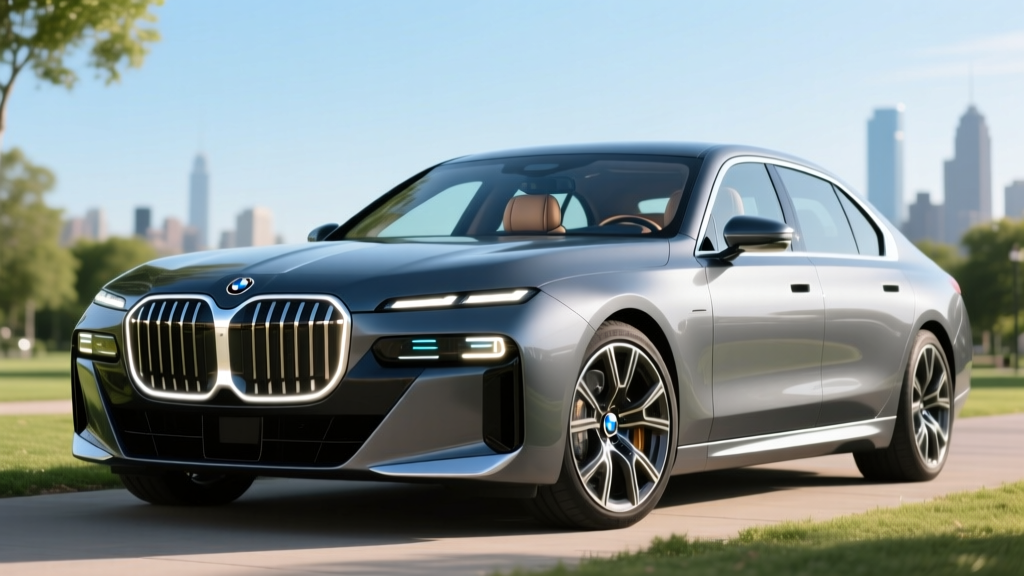
The 2026 BMW i7 xDrive60 and M70 represent BMW's full-size electric flagship — a 5,800-pound luxury sedan that channels up to 650 horsepower through a dual-motor all-wheel-drive system while delivering an EPA-estimated 318 miles of range. It's a vehicle that asks a provocative question: can a two-and-a-half-ton executive cruiser genuinely compete with the Tesla Model S, Mercedes EQS, and Lucid Air when buyers care about both BMW i7 horsepower figures and daily EV usability?
After analyzing EPA data, real-world driving impressions, and charging behavior, the answer is nuanced. The i7 delivers on performance and build quality in ways that justify its six-figure price, but charging speeds and federal tax credit eligibility require careful consideration before signing a purchase order.
| Spec | i7 xDrive60 | i7 M70 |
|---|---|---|
| Horsepower | 536 hp | 650 hp |
| Torque | 549 lb-ft | 749 lb-ft |
| 0-60 mph | 4.5 sec | 3.5 sec |
| Drivetrain | Dual-motor AWD | Dual-motor AWD |
| Battery (usable) | 101.7 kWh (NMC) | 101.7 kWh (NMC) |
| EPA Range | 318 mi (20" wheels) | 295 mi (21" wheels) |
| MPGe (combined) | 82 MPGe | 76 MPGe |
| Max DC Charge Rate | 195 kW | 195 kW |
| 10-80% DC Time | ~34 min | ~34 min |
| Level 2 Charge Rate | 11 kW (~30 mi/hr) | 11 kW (~30 mi/hr) |
| Base MSRP | $120,675 | $169,795 |
| Federal Tax Credit | Not eligible (§30D MSRP cap) | Not eligible (§30D MSRP cap) |
| Battery Warranty | 8 yr / 100,000 mi | 8 yr / 100,000 mi |
BMW i7 Horsepower and Performance: Two Distinct Personalities
The BMW i7 lineup splits into two performance tiers, each with a distinctly different character despite sharing the same 101.7 kWh (usable) NMC battery pack and dual-motor architecture.
i7 xDrive60 (536 hp / 549 lb-ft): The volume seller pairs a front motor producing 258 hp with a rear motor delivering 335 hp for a combined 536 horsepower. The 0-60 mph sprint takes 4.5 seconds — quick enough to merge onto any freeway with authority and overtake without hesitation. At highway speeds, the power delivery remains linear and composed, with BMW's adaptive suspension keeping body roll minimal despite the sedan's substantial curb weight.
i7 M70 (650 hp / 749 lb-ft): BMW's M division retunes both motors — the rear unit jumps to 483 hp — and adds M-specific chassis tuning, larger brakes, and a Sport+ driving mode that sharpens throttle mapping. The result: 0-60 mph in 3.5 seconds, which places the M70 in supercar-rivaling territory. Launch control engages with a firm brake-then-throttle sequence, and the instant torque delivery from the dual motors makes the acceleration feel even more violent than the numbers suggest.
Both variants use BMW's fifth-generation eDrive technology with a single-speed reduction gear. There is no multi-speed transmission — the electric motors' broad torque band (available from 0 RPM) eliminates the need for one. Regenerative braking offers three levels adjustable via steering-wheel paddles, plus an adaptive mode that uses navigation and radar data to modulate regen automatically.
Real-World Range vs. EPA Estimates
EPA Estimated: 318 miles (xDrive60, 20" wheels) / 295 miles (M70, 21" wheels)
Real-World Expectation: 260-290 miles highway (70-75 mph); 230-260 miles in cold weather (below 32°F)
Efficiency: 82 MPGe combined (xDrive60) / 76 MPGe combined (M70), translating to approximately 41-44 kWh/100mi depending on trim and wheel selection.
The EPA's 318-mile figure for the xDrive60 is achievable in mixed suburban driving at moderate speeds with climate control set to a reasonable temperature. However, the i7's aerodynamic profile — while improved over the 7 Series sedan with its flush door handles and active grille shutters — still pushes a relatively high drag coefficient compared to the Lucid Air or Mercedes EQS.
On highway road trips at sustained 70-75 mph speeds, expect range to drop to approximately 260-290 miles. The large battery pack mitigates this somewhat, but the sedan's 5,800-pound mass requires significant energy to maintain speed. In cold weather (below freezing), range loss of 15-25% is typical due to cabin heating demands and reduced battery efficiency, even with the i7's standard heat pump system. Preconditioning the battery while plugged in helps minimize this penalty.
Wheel selection matters considerably. The 20-inch Aero wheels on the xDrive60 deliver the best range; stepping up to 21-inch or 22-inch options reduces efficiency by 5-10%, which is reflected in the M70's lower 295-mile EPA rating with standard 21-inch M wheels.
Charging Speed and Infrastructure
| Charging Level | Power / Rate | Time / Speed |
|---|---|---|
| Level 1 (120V household) | ~1.4 kW | ~3-4 miles per hour |
| Level 2 (240V home/public) | 11 kW (max onboard) | ~30 miles per hour; 0-100% in ~10 hours |
| DC Fast Charge | 195 kW peak | 10-80% in ~34 minutes |
The i7's 195 kW peak DC fast-charge rate is its most significant competitive weakness. The Lucid Air charges at up to 250+ kW, the Porsche Taycan at 270 kW (800V architecture), and Tesla's latest vehicles at 250 kW on V3 Superchargers. While 195 kW is adequate for road trips, the 34-minute 10-80% session means longer stops than some rivals require.
The charging curve tells a more detailed story. The i7 sustains near-peak rates (170-195 kW) from approximately 10-40% state of charge, then tapers progressively through the 40-80% window. Above 80%, charging slows dramatically to protect battery longevity — expect 80-100% to take an additional 25-30 minutes, which is typical for NMC chemistry at this capacity.
For home charging, the i7's 11 kW onboard charger is a strong point. On a 48-amp Level 2 circuit (the most common residential installation), you'll recover roughly 30 miles of range per hour, meaning a depleted battery reaches full overnight in about 10 hours. BMW includes the Flexible Fast Charger with every i7, which adapts to both 120V and 240V outlets, though dedicated Level 2 wallbox installations (like a ChargePoint Home Flex or BMW Wallbox) deliver more consistent results.
The i7 uses the CCS1 connector standard in North America. BMW has announced NACS (Tesla Supercharger) adapter availability, and by the 2026 model year, native NACS port integration is expected. Verify connector compatibility with your preferred charging network before purchase.
Pricing, Trims, and Federal Tax Credit Reality
| Trim | Base MSRP | Federal §30D Credit | Effective Price |
|---|---|---|---|
| i7 xDrive60 | $120,675 | $0 (exceeds MSRP cap) | $120,675 |
| i7 M70 | $169,795 | $0 (exceeds MSRP cap) | $169,795 |
The BMW i7 does not qualify for the federal §30D new clean vehicle tax credit, and the reason is straightforward: the IRS caps eligible sedans at an MSRP of $55,000 (source: IRS §30D guidelines). Both i7 trims far exceed this threshold. This is a hard disqualifier regardless of buyer income, battery sourcing, or any other factor.
State and local incentives may partially offset the cost. California's CVRP program, Colorado's state tax credit, and various utility rebates can reduce out-of-pocket expense by $2,000-$7,500 depending on jurisdiction. Check your state's energy office and local utility for current programs, as these change frequently.
As-tested pricing for a well-equipped xDrive60 with the Premium Package, Driving Assistance Professional, Bowers & Wilkins surround sound, and 21-inch wheels typically lands between $135,000-$142,000 before destination charges. The M70, optioned with Executive Package and individual Manufaktur paint, can approach $185,000.
Interior, Technology, and Daily Usability
The i7's cabin mirrors the 7 Series in architecture but adds EV-specific displays and route-planning integration. BMW's Curved Display combines a 12.3-inch digital instrument cluster with a 14.9-inch central touchscreen running iDrive 8.5. The system supports wireless Apple CarPlay and Android Auto, 5G connectivity, and over-the-air updates.
The standout feature is the optional 31.3-inch 8K Theater Screen that deploys from the roof for rear-seat passengers — a genuinely impressive entertainment system for chauffeured use or family road trips. Rear-seat legroom measures 42.1 inches, rivaling long-wheelbase luxury sedans, and the panoramic glass roof creates an airy cabin atmosphere.
Cargo space is the i7's practical compromise. The trunk offers 17.7 cubic feet — adequate for luggage but less than the liftback-configured Lucid Air (32 cu ft) or Tesla Model S (28 cu ft rear + front trunk). The i7 has no frunk (front trunk), as BMW allocated that space to HVAC components and the power electronics stack.
Driver-assistance technology includes BMW's Driving Assistant Professional, which provides adaptive cruise control with stop-and-go, lane-keeping assist, and automatic lane-change capability on highways. This is an SAE Level 2 system — the driver must maintain hands-on-wheel awareness and full supervisory control at all times. It is not autonomous driving.
Ownership Costs, Warranty, and Depreciation
BMW covers the i7's high-voltage battery and electric drivetrain for 8 years or 100,000 miles, whichever comes first, with a capacity retention threshold of 70%. The basic vehicle warranty runs 4 years / 50,000 miles, and complimentary scheduled maintenance is included for 3 years / 36,000 miles.
Battery chemistry is NMC (nickel-manganese-cobalt), which offers higher energy density than LFP but is more sensitive to sustained high-state-of-charge storage and extreme temperatures. BMW's thermal management system actively conditions the pack, and real-world degradation data from earlier BMW EVs (i4, iX) suggests 5-8% capacity loss over the first 100,000 miles under normal use — well within the warranty buffer.
Insurance premiums for the i7 run 15-25% higher than comparable ICE 7 Series models, reflecting the vehicle's repair costs and parts pricing. Annual insurance typically falls between $3,200-$4,800 depending on driver profile and coverage levels.
Depreciation is the wildcard. Full-size luxury EVs have experienced steeper depreciation curves than their ICE counterparts in recent years, with first-year depreciation of 25-35% not uncommon. The i7's high MSRP and lack of federal tax credit incentive may pressure residual values. Lease structures (often 55-60% residual at 36 months) can mitigate this risk for buyers who prefer predictable monthly costs.
Pros
- 536-650 hp delivers genuine supercar-level acceleration (M70)
- Exceptional ride quality and cabin isolation from road noise
- 318-mile EPA range is practical for most daily and road-trip use
- 11 kW Level 2 charging is faster than many luxury EV rivals
- 31.3-inch rear Theater Screen is a class-exclusive feature
- Comprehensive 8-year/100,000-mile battery warranty
Cons
- 195 kW DC fast-charge peak trails Lucid Air, Taycan, and Tesla
- No federal tax credit eligibility due to $55K sedan MSRP cap
- 17.7 cu ft trunk is small for the vehicle class; no frunk
- High MSRP means steep depreciation risk and costly insurance
- Real-world highway range drops to ~260-290 miles at 75 mph
- Heavy curb weight (5,800+ lbs) reduces efficiency vs. lighter EVs
Who Should Buy the BMW i7?
The i7 is ideal for: Executive sedan buyers who prioritize BMW's driving dynamics, cabin craftsmanship, and brand prestige over maximum range or fastest charging. It suits owners with reliable home Level 2 charging who drive 30-80 miles daily and take occasional 200-300 mile road trips where a 34-minute DC fast-charge stop is acceptable.
Look elsewhere if: You need maximum range (Lucid Air Grand Touring: 516 mi EPA), the fastest charging (Porsche Taycan: 270 kW), cargo versatility (Tesla Model S liftback), or federal tax credit eligibility (any EV sedan under $55,000 MSRP). The i7 also isn't the choice for buyers prioritizing value-per-mile — its cost-per-mile of range is among the highest in the luxury EV segment.
Frequently Asked Questions
What is the real-world range of the BMW i7?
The EPA rates the i7 xDrive60 at 318 miles and the M70 at 295 miles. In real-world highway driving at 70-75 mph, expect 260-290 miles. In cold weather below freezing, range can drop to 230-260 miles due to battery chemistry limitations and cabin heating demands.
How fast does the BMW i7 charge at home and on the road?
On a Level 2 home charger (240V, 48A), the i7 charges at up to 11 kW, adding approximately 30 miles of range per hour and reaching a full charge in about 10 hours. On DC fast chargers, it peaks at 195 kW and charges from 10-80% in approximately 34 minutes.
Does the BMW i7 qualify for the federal EV tax credit?
No. Under IRS §30D rules, the federal new clean vehicle credit caps eligible sedans at $55,000 MSRP. The i7 starts at $120,675, which disqualifies it entirely regardless of buyer income or battery sourcing. State and local incentives may still apply.
How does the BMW i7 compare to the Mercedes EQS and Lucid Air?
The Lucid Air offers significantly more range (up to 516 mi EPA) and faster charging. The Mercedes EQS provides comparable luxury but with a liftback cargo design. The i7 differentiates with BMW's driving dynamics, the optional 31.3-inch rear Theater Screen, and brand loyalty among BMW sedan buyers. Performance is comparable across all three in their top trims.
Is the BMW i7 self-driving?
No. The i7's Driving Assistant Professional is an SAE Level 2 driver-assistance system. It provides adaptive cruise control, lane-keeping, and automatic lane changes on highways, but the driver must remain fully engaged with hands on the wheel and eyes on the road at all times.
What is the battery warranty on the BMW i7?
BMW covers the high-voltage battery and electric powertrain for 8 years or 100,000 miles, whichever comes first, guaranteeing at least 70% of original capacity retention during that period.