Quick Verdict: The BMW i7 EV Balances Luxury and Electrification
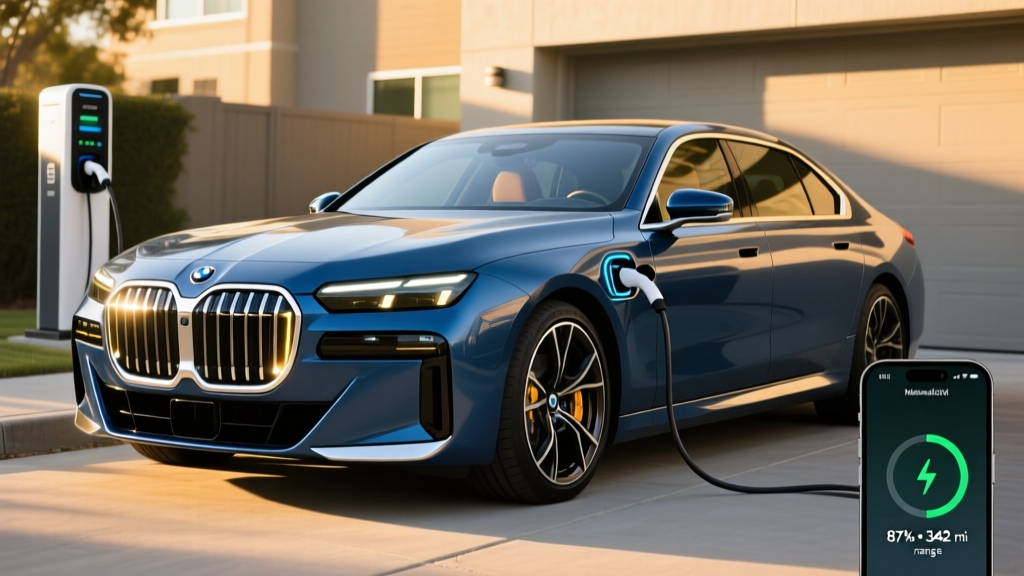
The 2026 BMW i7 is the brand's flagship electric sedan — a full-size luxury cruiser that trades the V12 of its 7 Series sibling for a dual-motor, all-wheel-drive electric powertrain producing up to 650 horsepower. With an EPA-estimated 318 miles of range (xDrive60), 195 kW DC fast charging, and an interior that rivals the S-Class in material quality, the i7 positions itself as the electrified executive express. But at a starting MSRP of $97,275, it occupies a narrow lane: buyers who want silent, effortless electric propulsion wrapped in Bavarian luxury, without stepping into a Tesla Model S or Lucid Air.
After spending time with the i7's powertrain characteristics, charging behavior, and ownership economics, the verdict is clear — this is one of the most refined long-distance electric cruisers on the market, but its weight, price, and tax-credit ineligibility for many buyers are real considerations. Here's the data-driven breakdown.
Range, Efficiency, and Real-World Expectations
The 2026 BMW i7 xDrive60 carries a 101.7 kWh (gross) / 94.8 kWh (usable) lithium-ion battery pack using NMC (nickel manganese cobalt) chemistry. BMW quotes the following EPA figures:
| Trim | EPA Range | MPGe (City/Hwy/Combined) | kWh/100 mi |
|---|---|---|---|
| i7 xDrive60 | 318 miles | 82 / 80 / 81 MPGe | 41 kWh/100 mi |
| i7 M70 xDrive | 295 miles | 73 / 71 / 72 MPGe | 46 kWh/100 mi |
Source: fueleconomy.gov (EPA estimates). Verify current model-year data before purchasing.
EPA Sticker: 318 miles (xDrive60)
Highway Expectation: ~265–285 miles at sustained 70–80 mph. The i7's 5,800+ lb curb weight and large frontal area penalize high-speed efficiency more than city driving, where regen braking recovers energy.
Cold-Weather Impact: Expect 20–30% range reduction in sub-30°F conditions, dropping usable range to roughly 220–255 miles without preconditioning. The i7 includes a heat pump and battery preconditioning for DC charging, which mitigates — but doesn't eliminate — winter losses.
Practical Touring Range: Plan for ~250 miles between stops on road trips to maintain a comfortable buffer.
The i7's efficiency of 41 kWh/100 mi (xDrive60) is respectable for a 6,000-pound luxury sedan, though it trails the lighter Lucid Air Grand Touring (approximately 28 kWh/100 mi) significantly. This matters for charging cost and road-trip stop frequency.
Charging Speed: DC Fast, Level 2, and the Charging Curve
The BMW i7 uses the CCS1 connector standard (note: BMW has announced NACS adoption for future models, but the 2026 i7 ships with CCS1). Here's the full charging picture:
| Charging Level | Power / Rate | Speed | Notes |
|---|---|---|---|
| Level 1 (120V) | 1.4 kW | ~4 miles/hour | Emergency only — full charge takes days |
| Level 2 (240V, 48A) | 11.5 kW | ~30 miles/hour | Full 0–100% in ~9 hours; overnight-ready |
| DC Fast Charge | 195 kW peak | 10–80% in ~34 minutes | Peak rate not sustained — see curve notes below |
Understanding the i7's DC Fast-Charging Curve
The 195 kW peak charge rate sounds competitive, but sustained rate is what determines actual road-trip charging time. The i7's charge curve behaves as follows:
- 10–40% SoC: Holds near peak 180–195 kW — excellent throughput in the lower third of the battery
- 40–60% SoC: Steps down to approximately 140–150 kW
- 60–80% SoC: Further taper to ~100–120 kW
- 80–100% SoC: Sharp taper to under 50 kW (avoid charging past 80% on road trips)
The 10–80% time of approximately 34 minutes is competitive with the Mercedes EQS (which also charges at ~200 kW peak), but trails the Lucid Air's 300+ kW capability. On a 250-mile road-trip segment, expect to add roughly 150–180 miles of range in a 20-minute stop at a 350 kW Electrify America or EVgo station.
Pro tip: Always precondition the battery before DC charging. Navigate to a charger using the i7's built-in navigation, and the thermal management system will warm or cool the pack to optimal temperature, shaving 5–10 minutes off your charge time.
Performance: 0-60, Horsepower, and Drivetrain
The i7 is no sports sedan, but BMW's electric M division has extracted serious acceleration from this 5,800-pound flagship:
| Spec | i7 xDrive60 | i7 M70 xDrive |
|---|---|---|
| Drivetrain | Dual-motor AWD | Dual-motor AWD |
| Horsepower | 536 hp | 650 hp |
| Torque | 549 lb-ft | 749 lb-ft |
| 0–60 mph | 4.5 seconds | 3.5 seconds |
| Top Speed | 149 mph (electronically limited) | 155 mph |
The xDrive60's 4.5-second 0–60 is more than adequate for a full-size luxury sedan — it matches a Porsche Cayenne S and handily outpaces the old 740i. The M70's 3.5-second sprint is genuinely supercar-adjacent, though you'll feel the weight through corners. This is a highway missile, not a canyon carver.
Regenerative braking offers multiple levels via paddle shifters, and a one-pedal-driving mode (B mode) provides enough deceleration for most city driving. The adaptive regen system — which uses radar and navigation data to modulate braking — is one of the best implementations in the luxury segment.
Interior, Tech, and Cargo: Flagship Execution
The i7's cabin is where BMW justifies the six-figure asking price. Key dimensions and features:
- Seating: 5 passengers standard; optional 4-seat Executive Lounge with rear-seat massage, ventilation, and recline
- Rear legroom: 42.8 inches — limousine-class, rivaling the Mercedes S-Class
- Trunk: 17.7 cu ft (adequate for golf bags and luggage, but the battery placement eliminates any frunk)
- No frunk: Unlike the Tesla Model S or Lucid Air, the i7 has no front trunk — the space is occupied by power electronics and HVAC components
Standout Technology
- BMW Curved Display: 12.3-inch instrument cluster + 14.9-inch infotainment on a single curved glass panel, running iDrive 8.5 with wireless Apple CarPlay/Android Auto
- 31-inch 8K Theater Screen (optional): A roof-mounted rear entertainment display that drops down for rear passengers — the segment's most dramatic rear-seat feature
- Highway Assistant (Level 2): BMW's hands-free driving assist up to 85 mph on divided highways. Requires eyes on road (driver monitoring via IR camera). This is SAE Level 2 — not autonomous driving. You remain responsible for the vehicle at all times.
- Parking Assistant Professional: Remote-controlled parking via smartphone — useful given the i7's 212-inch length
- Crystal headlights: BMW's Iconic Glow kidney grille and Swarovski crystal headlight accents (love them or hate them)
Notable Drawbacks
- No front trunk (frunk) — a missed opportunity for an EV-dedicated platform
- iDrive 8.5's menu complexity — climate controls buried in touchscreen layers
- The 31-inch Theater Screen is a $4,800 option that blocks the rear window when deployed
- 212-inch length makes urban parking challenging even with assist systems
- CCS1 connector only — no native NACS, requiring an adapter for Tesla Superchargers
Pricing, Trims, and Federal Tax Credit Eligibility
| Trim | Base MSRP | As-Tested (Typical Options) |
|---|---|---|
| i7 xDrive60 | $97,275 | $110,000–$120,000 |
| i7 M70 xDrive | $142,200 | $150,000–$165,000 |
Federal Tax Credit (§30D): The Hard Truth
MSRP Cap: The §30D credit caps eligible sedans at an MSRP of $55,000. The i7 starts at $97,275 — it does not qualify for the federal EV tax credit based on price alone.
Income Cap: Even if it did qualify, buyers must fall under AGI limits ($150K single / $300K joint).
Battery Sourcing: The i7's battery pack currently does not meet the critical-minerals and battery-component sourcing requirements under the Inflation Reduction Act.
Bottom Line: The BMW i7 is not eligible for the $7,500 federal EV tax credit. Buyers should explore state-level incentives (which vary by jurisdiction — check your state's energy office) and consult a tax professional. Source: IRS §30D guidelines.
The absence of the federal credit is a significant factor when comparing the i7 to EVs that do qualify, such as certain trims of the Cadillac Celestiq (though similarly priced) or more affordable luxury EVs. For most i7 buyers, however, the purchase decision is driven more by brand loyalty and cabin quality than incentive eligibility.
Warranty and Long-Term Ownership
| Coverage | Term |
|---|---|
| New Vehicle Limited Warranty | 4 years / 50,000 miles |
| High-Voltage Battery Warranty | 8 years / 100,000 miles (capacity retention ≥70%) |
| Powertrain / Electric Drive Unit | 8 years / 100,000 miles |
| Corrosion Perforation | 12 years / unlimited miles |
| Roadside Assistance | 4 years / unlimited miles |
BMW's 8-year/100,000-mile battery warranty with a 70% capacity retention guarantee is industry-standard and matches competitors like Mercedes-Benz and Audi. Based on current NMC battery degradation data across BMW's EV lineup (i4, iX), owners can expect approximately 5–8% degradation over the first 100,000 miles under normal use — well within the warranty threshold.
Long-term battery replacement cost (out of warranty) is estimated at $18,000–$25,000 for the i7's ~102 kWh pack, though this figure is expected to decline as cell costs continue falling through the decade.
BMW i7 vs. Key Competitors
| Spec | BMW i7 xDrive60 | Mercedes EQS 580 4MATIC | Lucid Air Grand Touring |
|---|---|---|---|
| EPA Range | 318 mi | 345 mi | 516 mi |
| Battery (usable) | 94.8 kWh (NMC) | 107.8 kWh (NMC) | 112 kWh (NMC) |
| Peak DC Charge | 195 kW | 200 kW | 300+ kW |
| 10–80% Charge | ~34 min | ~31 min | ~20 min |
| 0–60 mph | 4.5 sec | 4.1 sec | 3.0 sec |
| Horsepower | 536 hp | 536 hp | 819 hp |
| Base MSRP | $97,275 | $105,550 | $112,650 |
| Federal Tax Credit | No | No | No |
| Frunk | No | No | Yes (7.1 cu ft) |
- You prioritize cabin material quality and brand prestige over maximum range
- You want BMW's Highway Assistant for hands-free highway driving
- You value the optional Theater Screen for rear-seat entertainment
- You're a current BMW owner with existing service relationships
- Range is your top priority — the Lucid Air Grand Touring's 516 miles is in another league
- Fast charging matters — the Lucid's 300+ kW peak saves 10+ minutes per stop
- You need a frunk for additional cargo
- You want the lowest cost per mile of any luxury EV
Who the BMW i7 Is For
The 2026 BMW i7 is built for a specific buyer profile:
- Executive commuters: If your daily drive is 40–80 miles of highway with home Level 2 charging, the i7's range is more than sufficient and the cabin is a mobile office
- Chauffeur-driven owners: The rear-seat experience — especially with the Executive Lounge and Theater Screen — is the i7's strongest differentiator
- Luxury EV upgraders: Coming from a 7 Series, S-Class, or A8 and want to go electric without learning a new brand ecosystem
- NOT ideal for: High-mileage road-trippers who prioritize charging speed and maximum range (choose Lucid Air), or buyers seeking tax-credit-eligible vehicles under $55,000
Frequently Asked Questions
What is the real-world range of the BMW i7?
The EPA rates the i7 xDrive60 at 318 miles. In real-world highway driving at 70–80 mph, expect 265–285 miles. In cold weather (below 30°F), plan for 220–255 miles without preconditioning. For road trips, budget 250 miles between charging stops for a comfortable buffer.
How fast does the BMW i7 charge at home and on the road?
At home on a 48-amp Level 2 charger (11.5 kW), the i7 gains about 30 miles of range per hour, reaching a full charge from empty in roughly 9 hours — ideal for overnight charging. On DC fast chargers, it peaks at 195 kW and charges from 10–80% in approximately 34 minutes. The charging curve tapers significantly above 80%, so avoid charging past that point on road trips.
Does the BMW i7 qualify for the federal EV tax credit?
No. The BMW i7 exceeds the §30D MSRP cap of $55,000 for sedans (it starts at $97,275), and its battery does not currently meet the critical-minerals and component-sourcing requirements. Consult the IRS §30D page and a tax professional for your specific situation. State incentives may still apply depending on your jurisdiction.
Is the BMW i7 worth buying vs. the Mercedes EQS or Lucid Air?
It depends on your priorities. The i7 offers the best rear-seat experience and BMW brand loyalty in the segment. The Mercedes EQS provides slightly more range (345 mi EPA) and a comparable luxury feel. The Lucid Air Grand Touring dominates in range (516 mi EPA) and charging speed (300+ kW) but has a less established dealer/service network. If cabin quality and BMW's driver-assist tech matter most, the i7 earns its place.
What are the biggest pros and cons of the BMW i7?
- Exceptional cabin quality and rear-seat luxury
- 318-mile EPA range is adequate for most use cases
- Highway Assistant provides confident hands-free driving (Level 2)
- Adaptive regen braking is best-in-class
- Heat pump standard for winter efficiency
- 34-minute 10–80% DC charging is competitive
- $97,275+ starting price; no federal tax credit
- No frunk — missed cargo opportunity
- CCS1 only — needs adapter for Tesla Superchargers
- Efficiency (41 kWh/100 mi) trails lighter competitors
- iDrive 8.5 climate controls require screen taps
- 5,800+ lb weight impacts handling and tire wear
Can I charge the BMW i7 at Tesla Superchargers?
The 2026 i7 uses CCS1 natively. Tesla has opened portions of its Supercharger network to non-Tesla EVs via the built-in Magic Dock adapter at select stations, or through BMW-approved CCS-to-NACS adapters. Check Tesla's Non-Tesla Supercharging page for compatible stations in your area. Charging speed may be limited compared to native CCS stations.
Safety ratings: Check NHTSA and IIHS for the latest crash-test results on the 2026 BMW i7, as testing may be ongoing at publication time.