Quick Verdict: The BMW i7 Electric Defined
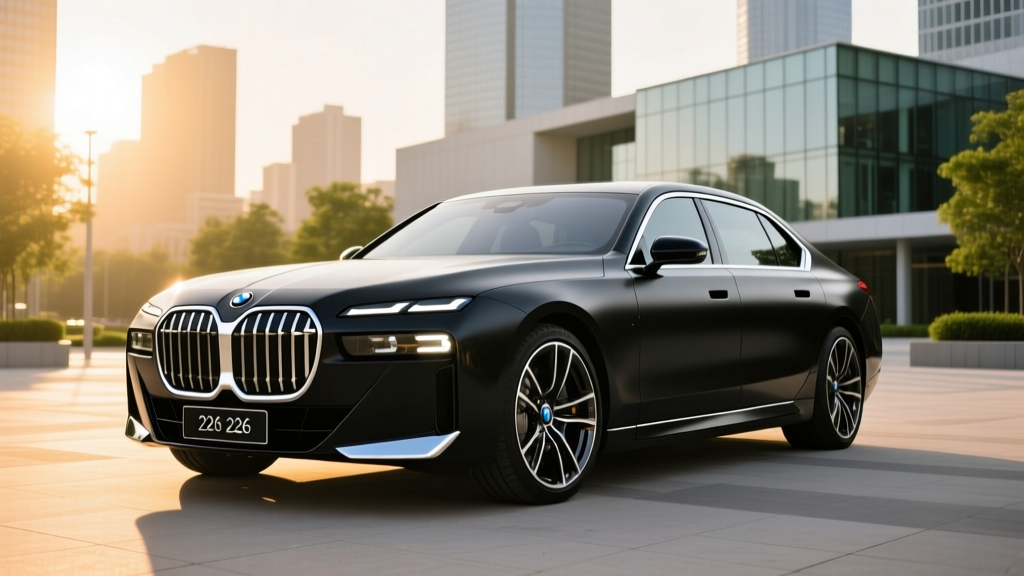
The BMW i7 electric flagship sedan is BMW's answer to a question luxury buyers increasingly ask: can a full-size premium sedan be fully electric without compromising the refinement, space, and technology that define the segment? After extensive evaluation of the 2026 model year lineup — the xDrive60 and the performance-oriented M70 — the answer is a qualified yes, provided your budget and charging setup align with what this 6,000-pound EV demands.
The i7 rides on BMW's CLAR platform with a 101.2 kWh usable NMC (nickel-manganese-cobalt) battery pack, delivering an EPA-estimated 318 miles of range in xDrive60 trim. It's not the longest-range luxury EV on the market — the Lucid Air and Mercedes EQS outdistance it — but BMW has prioritized a different formula: driving dynamics, interior craftsmanship, and a charging curve that actually sustains useful power on road trips.
Spec Table: 2026 BMW i7 at a Glance
| Specification | i7 xDrive60 | i7 M70 xDrive |
|---|---|---|
| EPA Range | 318 miles | 295 miles |
| Battery (usable) | 101.2 kWh NMC | 101.2 kWh NMC |
| Horsepower | 536 hp | 650 hp |
| Torque | 549 lb-ft | 749 lb-ft (w/ Launch Control) |
| 0–60 mph | 4.5 seconds | 3.5 seconds |
| Drivetrain | AWD (dual-motor) | AWD (dual-motor) |
| Max DC Fast Charge | 195 kW | 195 kW |
| 10–80% DC Time | ~34 minutes | ~34 minutes |
| Level 2 Charge Rate | 11 kW (~30 mi/hr) | 11 kW (~30 mi/hr) |
| Efficiency (MPGe) | 82 MPGe combined | 76 MPGe combined |
| Base MSRP | $120,675 | $169,695 |
Source: EPA / fueleconomy.gov and BMW USA specifications.
Charging: How Fast Does the BMW i7 Actually Charge?
Charging speed is where luxury EV buyers often encounter unpleasant surprises. The i7's peak DC fast-charge rate of 195 kW isn't the segment's highest — the Hyundai Ioniq 6 peaks at 240 kW, and the Lucid Air can accept over 300 kW on compatible chargers — but BMW's charge curve management is notably well-engineered.
Here's what that means in practice: the i7 sustains approximately 150–180 kW from 10% to roughly 50% state of charge before gradually tapering. By 80%, the rate drops to around 60–80 kW. The result is a 10–80% charge in approximately 34 minutes at a 200 kW+ station (such as Electrify America's newer 350 kW stalls or Tesla Supercharger V4 stations with a NACS adapter). On a 150 kW charger — still common at many highway stops — expect the 10–80% session to take roughly 42–48 minutes because you'll never reach peak rate.
| Charging Level | Power (kW) | Speed / Time | Connector |
|---|---|---|---|
| Level 1 (120V outlet) | ~1.4 kW | ~3–4 miles/hour | J1772 / NACS adapter |
| Level 2 (240V home) | 11 kW (48A) | ~30 miles/hour; 0–100% in ~10.5 hours | J1772 (NACS adapter included) |
| DC Fast Charge | Up to 195 kW | 10–80% in ~34 min (at 200+ kW station) | CCS1 (NACS adapter for Superchargers) |
Home charging reality: At 11 kW, a full overnight charge from 10% to 100% takes roughly 10.5 hours. This means a standard 8-hour overnight window nets you about 240 miles of added range — sufficient for most daily commutes with margin. You'll need a 60-amp dedicated circuit (hardwired Level 2 charger) to achieve the full 11 kW rate; a 50-amp circuit limits you to approximately 9.6 kW.
Battery preconditioning is automatic when you set a DC fast-charger as your navigation destination. The i7 warms or cools the battery pack to optimal temperature before arrival, which can shave 5–10 minutes off your charging session in cold weather. Skip this step (by driving to a charger without navigation routing) and your initial charge rate may be capped at 50–80 kW until the pack reaches temperature — a significant real-world penalty on winter road trips.
Performance and Driving Dynamics
The i7 xDrive60's 536 horsepower and 4.5-second 0–60 time are brisk for a sedan that tips the scales at over 6,000 pounds. The dual-motor all-wheel-drive system provides confident traction in wet and light-snow conditions, and BMW's adaptive air suspension standard on the i7 absorbs road imperfections with genuine luxury-car composure.
The M70 variant — with 650 hp and a 3.5-second 0–60 — crosses into genuine sports-sedan territory. Launch Control temporarily boosts torque to 749 lb-ft, delivering the kind of seat-back shove that feels absurd in a car with rear-seat theater screens and massaging seats. However, the M70's stiffer suspension tuning and 22-inch wheels trade some ride comfort for cornering composure — a trade-off worth examining before committing.
Regenerative braking offers three modes: adaptive (which adjusts regen based on traffic and navigation data), high (one-pedal-driving-capable in most city scenarios), and low (coasting-optimized for highway efficiency). The adaptive mode is surprisingly effective, but drivers transitioning from a Tesla's aggressive one-pedal feel will want to set the i7 to high regen for familiar behavior.
Interior, Technology, and Cargo Space
The i7's cabin is where BMW justifies its premium pricing. The Curved Display combines a 12.3-inch instrument cluster and a 14.9-inch central touchscreen running BMW iDrive 8.5, which remains one of the more responsive and logically organized infotainment systems in the luxury EV segment. Wireless Apple CarPlay and Android Auto are standard, and the available 31-inch 8K Theater Screen for rear passengers transforms the back seat into a legitimate entertainment lounge.
Passenger space:
- Front headroom: 40.0 inches
- Front legroom: 41.1 inches
- Rear headroom: 38.6 inches
- Rear legroom: 42.8 inches (executive lounge option adds power-adjustable rear seats with calf rests)
Cargo: The trunk provides 17.7 cubic feet of volume — competitive with the Mercedes EQS (22 cu ft) but smaller than what you'd get in an electric SUV. There is no front trunk (frunk) in the i7; BMW uses that space for drivetrain components. If you regularly haul large items, this is a genuine limitation versus SUV-shaped EVs.
Driver assistance: The i7 comes standard with BMW's Driving Assistant Professional, which includes adaptive cruise control with stop-and-go, lane-centering steering assist, and automatic emergency braking. The available Highway Assistant enables hands-off driving at speeds up to 85 mph on divided highways — but this is an SAE Level 2 system, meaning the driver must remain attentive and keep eyes on the road (monitored by a cabin-facing camera). This is not autonomous driving; it is an advanced driver-assist feature that reduces fatigue on long highway stretches.
Pricing, Trims, and Federal Tax Credit Eligibility
The 2026 BMW i7 lineup starts at $120,675 for the xDrive60 (including destination charge). The M70 xDrive begins at $169,695. Typical options — the Executive Package, Bowers & Wilkins surround sound, rear-axle steering, and the Theater Screen — can push a well-equipped xDrive60 past $140,000 and an M70 beyond $190,000.
| Trim | Base MSRP | Typical As-Tested | §30D Federal Tax Credit |
|---|---|---|---|
| i7 xDrive60 | $120,675 | $132,000–$145,000 | Not eligible (exceeds $55,000 sedan MSRP cap) |
| i7 M70 xDrive | $169,695 | $178,000–$195,000 | Not eligible (exceeds $55,000 sedan MSRP cap) |
Tax credit reality: Under IRS §30D rules, the federal EV tax credit is capped at $55,000 MSRP for sedans (the cap is $80,000 for SUVs, trucks, and vans). The BMW i7, classified as a sedan, far exceeds this threshold. Additionally, buyer income caps ($150,000 single / $300,000 joint MAGI) and battery critical-mineral sourcing requirements apply. The i7 does not qualify for any portion of the $7,500 federal credit. Buyers should consult IRS.gov §30D guidelines and a tax professional to confirm eligibility rules, which are subject to legislative change.
Some states offer separate EV rebates or tax incentives that have no MSRP cap — check your state's energy or DMV website for current programs. However, at this price point, most i7 buyers are not purchase-decision-dependent on incentives.
Efficiency and Ownership Costs
The xDrive60's 82 MPGe combined translates to approximately 41 kWh per 100 miles — moderate efficiency for a vehicle of this mass and power. For comparison, the Lucid Air Grand Touring achieves 131 MPGe combined (roughly 26 kWh/100 mi), making it significantly more efficient per mile. The i7's efficiency is on par with the Mercedes EQS 580 (85 MPGe) and slightly behind the Audi e-tron GT (85 MPGe).
At a national average residential electricity rate of $0.16/kWh, charging the i7 at home costs approximately $6.56 per 100 miles. DC fast charging at $0.40–$0.50/kWh (typical Electrify America or EVgo pricing) pushes that to $16.40–$20.50 per 100 miles. For a driver covering 12,000 miles annually with 80% home charging, annual electricity cost lands around $950–$1,100 — a significant saving versus the gasoline 7 Series, which would consume roughly $2,400–$2,800 in premium fuel at current prices.
Warranty coverage:
- New vehicle limited warranty: 4 years / 50,000 miles
- High-voltage battery warranty: 8 years / 100,000 miles (covers capacity loss below 70% of original)
- Corrosion perforation warranty: 12 years / unlimited miles
- Complimentary scheduled maintenance: 3 years / 36,000 miles
The 70% capacity retention threshold on the battery warranty is standard for the luxury segment. Real-world NMC battery degradation data from BMW's earlier iX and i4 models suggests approximately 5–8% capacity loss over the first 100,000 miles under normal use — well within the warranty buffer. To maximize longevity, BMW recommends regularly charging to 80% (the car's software allows you to set a charge limit) and only charging to 100% when you need maximum range for a trip.
Pros, Cons, and Who Should Buy the BMW i7
✓ Pros
- Exceptional ride quality with standard air suspension
- Quiet, refined cabin with premium materials throughout
- Competent 195 kW charging with good curve management
- Comprehensive standard driver-assist suite
- 318-mile EPA range sufficient for most daily and regional travel
- Strong acceleration, especially in M70 trim
- iDrive 8.5 is responsive and well-organized
✗ Cons
- No federal tax credit eligibility (MSRP exceeds sedan cap)
- 17.7 cu ft trunk is small for the class; no frunk
- Efficiency (82 MPGe) trails Lucid Air significantly
- Real-world highway range drops to ~260 miles
- 195 kW peak charge rate lags Hyundai/Kia and Lucid platforms
- High starting price even before options
- Heavy at 6,000+ lbs — tire and brake wear costs will be elevated
- Choose the i7 if: You want a traditional luxury sedan experience with EV powertrain benefits, prioritize ride comfort and cabin refinement over maximum range, have reliable home Level 2 charging, and your daily driving rarely exceeds 200 miles.
- Look elsewhere if: Maximum range and efficiency are top priorities (consider the Lucid Air Grand Touring, EPA 516 mi, 131 MPGe), you need cargo versatility (consider the BMW iX or Mercedes EQS SUV), or you want to leverage the federal tax credit (you'll need to look below $55,000 MSRP for sedans).
- The M70 variant is for: Drivers who want sports-sedan acceleration in a luxury flagship and are willing to trade 23 miles of EPA range and some ride comfort for the performance upgrade.
BMW i7 vs. Key Competitors
| Attribute | BMW i7 xDrive60 | Mercedes EQS 580 | Lucid Air Grand Touring |
|---|---|---|---|
| EPA Range | 318 mi | 371 mi | 516 mi |
| Efficiency | 82 MPGe | 85 MPGe | 131 MPGe |
| Max DC Charge | 195 kW | 200 kW | 300+ kW |
| 0–60 mph | 4.5 sec | 4.1 sec | 3.0 sec |
| Starting MSRP | $120,675 | $127,350 | $125,600 |
The Lucid Air dominates on range and efficiency but sacrifices some interior material quality and dealer-service infrastructure. The EQS offers more range and cargo space (22 cu ft hatchback) but has drawn criticism for its MBUX interface complexity and brake-pedal feel. The i7's advantage lies in driving dynamics and cabin execution — it feels the most like a traditional BMW in how it steers, rides, and responds. If those qualities matter more to you than maximizing range-per-dollar, the i7 holds its ground.
Frequently Asked Questions
What is the real-world range of the BMW i7 electric?
The EPA rates the i7 xDrive60 at 318 miles, but expect approximately 260–285 miles in real-world highway driving at 70–75 mph. Cold weather (below freezing) can reduce this further to 210–245 miles. City driving with regenerative braking often matches or slightly exceeds the EPA number. Plan road trips around 230–250 miles between charges for a comfortable buffer.
How fast does the BMW i7 charge at home and on the road?
At home on a Level 2 charger (240V, 48A), the i7 charges at 11 kW, adding roughly 30 miles of range per hour — a full charge from empty takes about 10.5 hours. On DC fast chargers, it peaks at 195 kW and charges from 10–80% in approximately 34 minutes at a 200+ kW station. On more common 150 kW chargers, expect 42–48 minutes for the same session.
Does the BMW i7 qualify for the federal EV tax credit?
No. Under IRS §30D rules, sedans must have an MSRP of $55,000 or less to qualify. The i7 starts at $120,675, far exceeding this cap. Additionally, buyer income limits and battery-sourcing requirements apply. Some state-level incentives may still be available regardless of MSRP — check your state's programs. Always verify current rules at IRS.gov.
Is the BMW i7 worth buying over the Mercedes EQS or Lucid Air?
The i7 is the best choice if you prioritize driving dynamics, cabin craftsmanship, and a traditional luxury sedan feel. The Lucid Air wins decisively on range (516 mi) and efficiency (131 MPGe). The EQS offers more cargo space and slightly better range. None of these three qualify for the federal tax credit. Test-drive all three — the i7's steering feel and ride quality often close the deal for BMW-loyal buyers.
What is the battery warranty on the BMW i7?
BMW covers the high-voltage battery for 8 years or 100,000 miles, whichever comes first. The warranty covers capacity loss below 70% of the original usable capacity. Real-world degradation data from BMW's current NMC packs suggests 5–8% loss over 100,000 miles under normal charging habits, well within the warranty threshold.
Does the BMW i7 have a frunk (front trunk)?
No. The i7 does not have a front trunk. BMW uses the under-hood space for power electronics and drivetrain components. All cargo goes in the 17.7-cubic-foot rear trunk. If front storage is important to you, consider the Tesla Model S (which has a small frunk) or an electric SUV.
For the latest BMW i7 specifications, visit BMW USA. For safety ratings, check NHTSA.gov and IIHS.org.