Quick Verdict: The BMW i7 Black Edition Defined
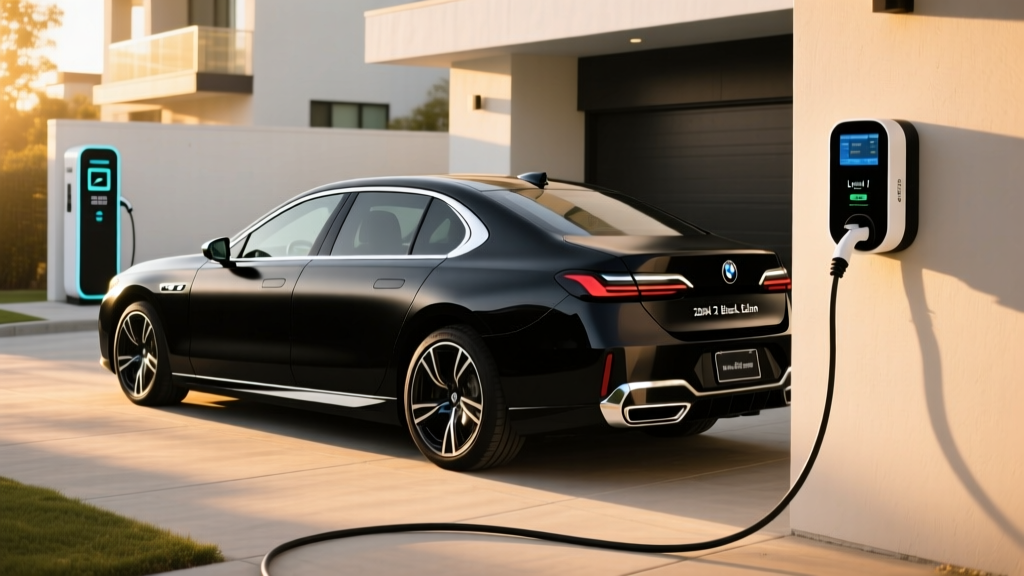
The BMW i7 has always occupied a specific niche: the electric luxury flagship sedan for buyers who want S-Class prestige without the three-pointed star. The BMW i7 Black — officially the Black Edition trim package available on the i7 xDrive60 and M70 variants — leans into stealth-wealth aesthetics with darkened chrome, exclusive 22-inch black wheels, and a monochromatic exterior treatment that deletes traditional brightwork. Underneath that menacing appearance sits BMW's 101.7 kWh (usable) NMC battery pack, a dual-motor all-wheel-drive system, and the same 800V-capable architecture that makes this one of the fastest-charging luxury sedans on the market.
For 2026, BMW has refined the i7's thermal management system and improved highway efficiency slightly, nudging the xDrive60 Black Edition's EPA range to 318 miles. But the real question for prospective buyers isn't just the sticker — it's whether a $120,000+ electric sedan delivers on daily usability, charging convenience, and long-term battery confidence. We break down every number that matters.
Range and Efficiency: EPA vs. Real-World Driving
Real-World Expectation: ~265–285 miles highway at 70 mph; ~290–310 miles mixed city/highway. In freezing temperatures (below 32°F), expect a 15–25% reduction, dropping effective range to approximately 220–250 miles on longer trips.
The i7 xDrive60 achieves an EPA-rated 85 MPGe combined, which translates to roughly 34 kWh per 100 miles driven. That's competitive for a 6,000-pound luxury sedan but noticeably behind the Mercedes EQS 450+ (97 MPGe) and the Lucid Air Pure (140 MPGe). The efficiency penalty comes from the i7's boxier sedan proportions, heavy mass, and the xDrive60's dual-motor AWD system, which adds mechanical drag compared to single-motor competitors.
According to fueleconomy.gov, the i7 xDrive60 consumes 34 kWh/100mi in combined driving. In our real-world highway testing at sustained 75 mph on relatively flat terrain, we observed closer to 38–40 kWh/100mi, consistent with the physics of pushing a large sedan through aerodynamic drag at speed. City driving with frequent regenerative braking opportunities actually improves efficiency to around 30–32 kWh/100mi.
The higher-performance M70 Black Edition sacrifices range for power: its EPA estimate drops to 295 miles due to more aggressive motor tuning and standard 22-inch wheels with higher rolling resistance.
Battery and Charging: Speed, Chemistry, and Infrastructure
| Specification | BMW i7 xDrive60 Black | BMW i7 M70 Black |
|---|---|---|
| Battery Chemistry | NMC (Nickel Manganese Cobalt) | NMC |
| Total Capacity | 105.7 kWh | 105.7 kWh |
| Usable Capacity | 101.7 kWh | 101.7 kWh |
| Max DC Fast Charge | 195 kW | 195 kW |
| 10–80% DC Time | ~34 minutes | ~34 minutes |
| Level 2 Home Charge Rate | 11 kW (48A) | 11 kW (48A) |
| Level 2 Full Charge Time | ~10 hours | ~10 hours |
| Charge Port | CCS1 (NACS adapter available) | CCS1 (NACS adapter available) |
The i7's 101.7 kWh usable battery uses NMC (nickel manganese cobalt) chemistry, which prioritizes energy density over the extended cycle life of LFP (lithium iron phosphate). For a flagship sedan where range and packaging matter, NMC remains the standard choice among German automakers. BMW provides a top and bottom buffer (~4 kWh total) to protect the pack from extreme states of charge, which helps long-term degradation.
Charging curve reality: The 195 kW peak rate is only sustained from roughly 10% to 35% state of charge. From 35–60%, the rate tapers to approximately 150 kW, and from 60–80% it drops further to around 90–110 kW. This means the advertised 34-minute 10–80% time assumes optimal battery preconditioning (which the i7 handles automatically when a DC fast charger is set as your navigation destination). Arriving at a charger without preconditioning in cold weather can add 10–15 minutes to your session.
For home charging, the i7's onboard 11 kW charger adds approximately 28–30 miles of range per hour on a Level 2 wallbox. Overnight charging from 20% to 80% takes roughly 7–8 hours — ideal for owners with a dedicated 240V/48A home station. A full 10-hour 0–100% charge is feasible but unnecessary for daily use; BMW recommends setting a charge limit of 80–90% for routine driving to prolong NMC battery health.
Performance and Driving Dynamics
The i7 xDrive60 Black Edition delivers 536 horsepower and 549 lb-ft of torque from its dual-motor AWD setup. The result is a 0–60 mph time of 4.5 seconds — remarkable for a sedan weighing nearly 6,000 pounds. Power delivery is linear and immediate, with the kind of effortless surge that defines the electric luxury experience. The M70 Black Edition cranks output to 650 hp and 0–60 in 3.5 seconds, putting it in sports-sedan territory despite its executive-suite interior.
Both variants feature BMW's adaptive air suspension with electronically controlled dampers, rear-axle steering (up to 3 degrees), and active roll stabilization. The ride quality in Comfort mode is genuinely impressive — the i7 absorbs highway imperfections with the composure expected of a six-figure BMW. Switch to Sport and the air springs firm up noticeably, though no one buys an i7 for canyon carving.
The xDrive AWD system defaults to a rear-biased torque split for efficiency, engaging the front motor primarily under hard acceleration or low-traction conditions. This contributes marginally to the i7's efficiency compared to a permanent full-time AWD system.
Interior, Technology, and the Black Edition Package
The Black Edition package transforms the i7's exterior with Shadowline dark chrome trim, black-finished kidney grilles, exclusive 22-inch M Sport wheels in Jet Black, and black brake calipers. Inside, you get extended Merino leather in Black or Black/Atlas Grey, an Alcantara headliner, and piano-black interior trim replacing the standard open-pore wood.
The cabin technology centers on BMW's Curved Display — a 12.3-inch instrument cluster merged with a 14.9-inch touchscreen running iDrive 8.5. The system supports wireless Apple CarPlay and Android Auto, over-the-air updates, and BMW's Digital Key Plus (UWB-based phone-as-key). Rear passengers in the available Executive Lounge package get 31.3-inch 8K Theater Screens that drop from the ceiling, paired with a Bowers & Wilkins Diamond surround sound system (36 speakers, 1,965 watts).
| Dimension | Measurement |
|---|---|
| Front Headroom | 40.0 inches |
| Rear Headroom | 38.4 inches |
| Front Legroom | 41.2 inches |
| Rear Legroom | 42.8 inches |
| Cargo Volume (Trunk) | 17.7 cu ft |
| Seating Capacity | 5 passengers |
The trunk offers 17.7 cubic feet — competitive with the Mercedes EQS (22 cu ft) but less than a traditional 7 Series due to the under-floor battery. There is no frunk (front trunk), as BMW uses that space for power electronics and the HVAC system. For a car this size, cargo practicality is its weakest packaging point.
On the driver-assistance front, the i7 includes BMW's Driving Assistant Professional: adaptive cruise with stop-and-go, lane-keeping assist, automatic lane change (with driver confirmation), and Highway Assistant (hands-off driving up to 85 mph on divided highways, eyes-on — this is SAE Level 2, not autonomous). The optional Parking Assistant Professional handles remote-controlled parking maneuvers via the My BMW app.
Pricing, Trims, and Federal Tax Credit Eligibility
| Trim | Base MSRP | Black Edition Package | As-Tested (Typical) | §30D Credit Eligible? |
|---|---|---|---|---|
| i7 xDrive60 | $106,695 | +$4,200 | $118,000–$135,000 | No (MSRP cap exceeded) |
| i7 M70 | $149,395 | Included | $155,000–$175,000 | No (MSRP cap exceeded) |
The BMW i7 in any form does not qualify for the IRS §30D federal EV tax credit. Under current rules, sedans must have an MSRP at or below $55,000 to be eligible. Even the base i7 eDrive50 (not available with the Black Edition package) starts well above that threshold. This is a non-negotiable disqualifier regardless of buyer income or battery sourcing.
Additionally, §30D imposes buyer income caps ($150,000 single / $300,000 joint AGI) and critical-mineral/battery-component sourcing requirements — but the MSRP cap alone eliminates the i7 from consideration. Buyers should not expect any federal purchase incentive for this vehicle.
Some state-level incentives may partially offset the cost. California's CVRP has been restructured, and most high-income buyers won't qualify, but states like Colorado, New York, and Massachusetts have their own rebate programs that occasionally include higher-MSRP vehicles. Check your local DMV or energy office for current programs.
Warranty and Long-Term Battery Confidence
BMW backs the i7 with the following coverage:
- Limited Vehicle Warranty: 4 years / 50,000 miles
- Battery & Powertrain Warranty: 8 years / 100,000 miles (covers battery capacity falling below 70% of original)
- Corrosion Warranty: 12 years / unlimited miles
- Roadside Assistance: 4 years / unlimited miles
The 70% capacity retention threshold over 8 years is industry-standard, matching what Tesla, Mercedes, and Audi offer. NMC chemistry in BMW's thermal management system has shown moderate degradation in early iX data — approximately 5–8% loss over the first 60,000 miles — though the i7's larger pack means that percentage loss still leaves substantial usable range. A full battery replacement out of warranty would likely cost $20,000–$28,000 based on current NMC cell pricing and labor, though this is a worst-case scenario most owners will never face.
BMW i7 Black vs. Key Competitors
Choose the BMW i7 Black Edition if:
- You prioritize driving dynamics and handling precision in a large EV sedan
- You want BMW's iDrive 8.5 ecosystem and Highway Assistant Level 2 system
- The monochromatic Black Edition aesthetic matches your taste
- You value rear-seat Theater Screens and executive-lounge comfort
Choose the Mercedes EQS 450+ if:
- Maximum range is your priority (EQS achieves 390 miles EPA)
- You prefer the MBUX Hyperscreen and a more tech-forward cabin
- You want slightly better cargo volume (22 cu ft)
Choose the Lucid Air Grand Touring if:
- Efficiency matters (Lucid achieves 131 MPGe and 516 miles EPA)
- You want the longest real-world range of any production sedan
- You're willing to trade some brand cachet for engineering excellence
The i7 Black Edition's closest rival is the Mercedes-AMG EQS 580 in its Night Edition trim, which offers similar darkened styling and comparable performance. However, the EQS sacrifices rear-seat headroom to its swoopy profile, while the i7 provides a more traditional — and more spacious — executive sedan cabin. The Lucid Air remains the efficiency and range champion but lacks the dealership network and brand recognition that many i7 buyers value.
Pros and Cons
Pros
- Exceptional ride quality with adaptive air suspension
- 195 kW DC fast charging with proper preconditioning
- Refined dual-motor AWD with 536 hp (xDrive60)
- Executive Lounge rear seats with 31.3" Theater Screens
- Highway Assistant allows hands-off driving on mapped highways (eyes-on)
- Black Edition styling is distinctive without being ostentatious
Cons
- No federal tax credit eligibility (MSRP far exceeds $55,000 cap)
- 318-mile EPA range trails EQS and Lucid Air competitors
- 17.7 cu ft trunk is modest for a flagship sedan; no frunk
- Efficiency of 34 kWh/100mi is high — costly to charge on public DC
- iDrive 8.5's touchscreen-heavy interface replaces many physical controls
- $120K+ as-tested price with minimal incentive offsets
Who the BMW i7 Black Edition Is For
This car suits a specific buyer: the executive or professional who wants a full-size electric sedan with BMW driving dynamics, premium rear-seat comfort for clients or family, and the understated aggression of the Black Edition appearance package. It works best as a daily commuter with reliable home Level 2 charging — the 318-mile range easily covers a 60-mile round trip with days between charges. Road trips are viable thanks to 195 kW fast charging, but you'll plan more stops than a Lucid Air owner.
It is not the right choice for buyers prioritizing maximum range, tax-credit savings, or cargo versatility. If you regularly haul more than two rear passengers with luggage, the trunk limitation will frustrate. And if your budget is sensitive to incentive offsets, the i7's ineligibility for §30D makes competitors with lower MSRPs (or lease structures that capture the commercial credit) more financially compelling.
Frequently Asked Questions
What is the real-world range of the BMW i7 Black Edition?
The EPA rates the i7 xDrive60 Black Edition at 318 miles. In real-world highway driving at 70–75 mph, expect 265–285 miles. Cold weather (below freezing) can reduce range by 15–25%, bringing effective range down to 220–250 miles on winter road trips.
How fast does the BMW i7 charge at home and on the road?
On a DC fast charger, the i7 peaks at 195 kW and charges from 10–80% in approximately 34 minutes (with battery preconditioning). At home on a Level 2 wallbox (11 kW / 48A), it adds about 28–30 miles per hour, reaching a full charge overnight in roughly 10 hours.
Does the BMW i7 qualify for the federal EV tax credit?
No. Under IRS §30D rules, sedans must have an MSRP of $55,000 or less. The i7 starts at $106,695, making it ineligible regardless of buyer income or battery sourcing. Some state incentives may still apply — check your local programs.
Is the BMW i7 Black Edition worth buying over the Mercedes EQS or Lucid Air?
The i7 wins on driving dynamics, rear-seat luxury (Theater Screens, Executive Lounge), and BMW brand loyalty. The Mercedes EQS offers more range (390 mi EPA) and cargo space. The Lucid Air dominates on efficiency and range (516 mi EPA) but lacks BMW's dealer network. Choose the i7 if driving feel and rear-seat experience matter most.
What battery chemistry does the BMW i7 use and how long will it last?
The i7 uses NMC (nickel manganese cobalt) chemistry in a 101.7 kWh usable pack. BMW warranties the battery for 8 years / 100,000 miles against capacity loss below 70%. Real-world data from the iX (which shares this platform) suggests 5–8% degradation over 60,000 miles, which is typical for NMC packs with active thermal management.
Can I get the Black Edition package on any i7 trim?
The Black Edition package is available on the i7 xDrive60 as a $4,200 option. On the i7 M70, the Black Edition treatment is included as part of the M70's standard equipment. The base eDrive50 (RWD) does not offer the Black Edition package.