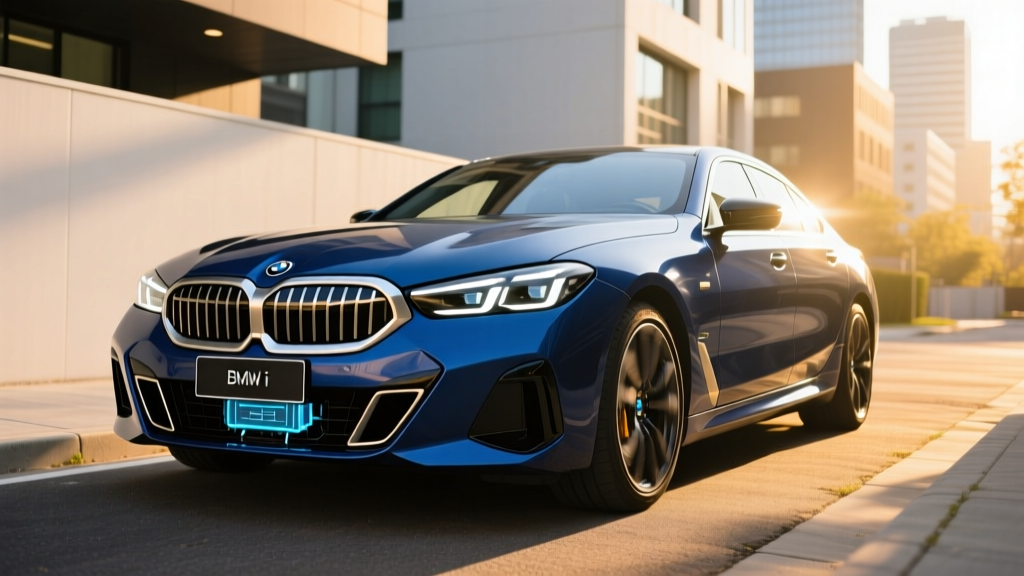
If you've been searching for when the BMW i5 came out, the answer is straightforward: the all-electric 5 Series sedan first arrived in U.S. dealerships in October 2023 as a 2024 model-year vehicle. BMW unveiled the G60-generation i5 globally in May 2023 alongside its internal-combustion sibling, positioning it as the brand's executive electric flagship. Now in its third model year for 2026, the i5 has matured with software refinements, expanded standard equipment, and a growing used-inventory presence — but the core question for buyers remains whether its blend of luxury, range, and performance justifies a starting price north of $67,000.
This review breaks down every number that matters: real-world range versus the EPA sticker, DC fast-charging behavior on 205 kW hardware, the 2026 pricing ladder, and exactly which buyers will — and won't — qualify for the federal §30D tax credit.
BMW i5 Release Timeline: From Concept to Driveway
Understanding the i5's history helps contextualize what you're buying today. Here's the key timeline:
- May 2023: BMW officially unveils the i5 (G60 generation) alongside the ICE 5 Series, confirming the eDrive40 and M60 xDrive variants.
- October 2023: First U.S. customer deliveries begin for the 2024 model year. The i5 eDrive40 starts at $66,800 (before destination).
- Spring 2024: The i5 xDrive40 dual-motor AWD variant joins the lineup as a 2025 model, bridging the gap between the RWD eDrive40 and the performance M60.
- Fall 2025: 2026 model year arrives with minor equipment shuffles, updated iDrive 8.5 software, and new paint/trim options. No major powertrain or battery changes.
So if someone asks "when did the i5 come out?" — it's been on sale for roughly two and a half years as of early 2026. That means there's now a modest used and certified-pre-owned market, which can shift the value equation considerably.
2026 BMW i5 Lineup: Specs, Trims, and Pricing
| Spec | i5 eDrive40 | i5 xDrive40 | i5 M60 xDrive |
|---|---|---|---|
| Drivetrain | RWD (single motor) | AWD (dual motor) | AWD (dual motor) |
| Horsepower | 335 hp | 389 hp | 593 hp |
| Torque (lb-ft) | 295 | 435 | 586 |
| 0–60 mph | 5.7 sec | 5.2 sec | 3.7 sec |
| Battery (usable / gross) | 84.3 kWh / 101.7 kWh | 84.3 kWh / 101.7 kWh | 84.3 kWh / 101.7 kWh |
| Chemistry | NMC (Nickel Manganese Cobalt) | NMC | NMC |
| EPA Range | 295 mi | 266 mi | 256 mi |
| MPGe (combined) | 86 MPGe | 78 MPGe | 76 MPGe |
| Efficiency (kWh/100 mi) | 33 kWh | 37 kWh | 38 kWh |
| Max DC Fast Charge | 205 kW | 205 kW | 205 kW |
| 10–80% DC Time | ~30 min | ~30 min | ~30 min |
| Level 2 (AC) Charge Rate | 11 kW (~32 mi/hr) | 11 kW (~32 mi/hr) | 11 kW (~32 mi/hr) |
| Base MSRP | $67,800 | $72,800 | $87,100 |
| Federal Tax Credit (§30D) | Up to $7,500* | Up to $7,500* | Up to $7,500* |
*All trims fall under the IRS §30D sedan MSRP cap of $55,000 — wait, no. The cap for sedans is $55,000, which means the i5 does not qualify for the new-vehicle §30D credit at these MSRPs. However, leasing the i5 may allow access to the $7,500 commercial credit passed through by the lessor (the "lease loophole"). We detail this below.
Range and Efficiency: EPA Numbers vs. Real-World Driving
EPA Estimate: 295 miles
Real-World Highway (70–80 mph, moderate temps): ~240–260 miles
Cold Weather (below 32°F, mixed driving): ~195–220 miles
Why the gap? The i5's large frontal area and ~5,200-lb curb weight increase aerodynamic drag at highway speeds. NMC chemistry also loses roughly 15–25% of usable capacity in freezing temperatures without consistent preconditioning. BMW's heat pump (standard on all 2026 trims) helps mitigate cabin-heating losses but cannot fully overcome battery-cold effects.
The i5 eDrive40's 295-mile EPA rating is competitive within the luxury electric sedan segment — the Mercedes EQS 450+ delivers 340 miles but costs significantly more, while the Tesla Model S Long Range hits 402 miles at a similar price point but with a less premium interior.
On a 300-mile highway trip at 75 mph in 65°F weather, expect to arrive with roughly 10–15% state of charge remaining in the eDrive40. That's workable but tight. If your regular routes exceed 250 miles one-way, you'll want to plan a DC fast-charging stop. The xDrive40 and M60, with their 256–266-mile EPA ratings, require more frequent stops on long hauls.
Efficiency in city driving is notably better. In stop-and-go traffic with regenerative braking set to Adaptive, the eDrive40 can approach or even exceed its EPA rating thanks to regen recovery and lower aero penalties at low speeds.
Charging: DC Fast, Level 2, and the Curve Reality
The i5 uses BMW's fifth-generation eDrive architecture with a 205 kW peak DC fast-charging rate on a CCS1 connector (NACS adapter available for Tesla Supercharger access). Here's what that translates to in practice:
| Charging Level | Power | Miles Added Per Hour | Time (10–80%) | Notes |
|---|---|---|---|---|
| Level 1 (120V household) | ~1.4 kW | ~3–4 mi/hr | ~60+ hours | Emergency/trickle only |
| Level 2 (240V, 48A) | 11 kW | ~32 mi/hr | ~8.5 hours (0–100%) | Overnight home charging |
| DC Fast (CCS1/NACS) | 205 kW peak | ~170 mi in 10 min (peak) | ~30 min (10–80%) | Tapers hard above 80% |
The charging-curve reality: The i5 hits its 205 kW peak only between roughly 10% and 30% state of charge, and only at chargers rated 250 kW or higher (such as Electrify America's latest stalls or Tesla Superchargers with the BMW NACS adapter). From 50% onward, the rate drops to approximately 120–140 kW, and above 80% it falls below 50 kW as the battery management system protects the NMC cells. If you're road-tripping, plan your stops around 10–80% charges — pushing past 80% at a DC fast charger is painfully slow and rarely worth the time.
For home charging, the i5's onboard 11 kW AC charger is among the faster options in its class. On a 48-amp Level 2 circuit (hardwired, 60-amp breaker), you'll recover roughly 32 miles of range per hour — enough to replenish a full day's driving in 2–3 hours. If your home electrical panel only supports a 40-amp circuit (32 amps continuous), expect closer to 7.7 kW and ~22 miles per hour. Budget $600–$1,500 for a quality Level 2 home station plus licensed electrician installation, and potentially $2,000–$4,000 more if your panel needs a 200-amp upgrade.
Preconditioning tip: Always set a departure timer in the BMW app or iDrive system before a DC fast-charging stop. The i5 will warm the battery to optimal temperature (roughly 95–104°F), which can shave 5–8 minutes off your 10–80% time in cold weather. Without preconditioning, a 20°F morning charge might peak at only 120–130 kW instead of 205.
Performance and Driving Dynamics
The i5 drives like a BMW should — which is to say, with the composure and steering feedback that the brand's EV buyers expect. The eDrive40's rear-mounted electric motor produces 335 horsepower and 295 lb-ft of torque, delivering a 5.7-second 0–60 mph time that feels effortless in daily driving. There's a brief Sport Boost function that temporarily increases output to 339 hp for 10-second bursts during hard acceleration.
The M60 xDrive is a different animal entirely. Its dual motors produce 593 hp (with Launch Control engaged) and rocket the i5 to 60 mph in 3.7 seconds. That puts it within a tenth of the Tesla Model S Plaid's territory in everyday driving, though the Model S still dominates in quarter-mile pulls. The M60 also includes rear-axle steering, adaptive M suspension, and M Sport brakes — hardware that makes the 5,200-lb sedan feel surprisingly agile on back roads.
The xDrive40 sits in the sweet spot for most buyers: dual-motor all-wheel drive, 389 hp, a 5.2-second 0–60, and enough range (266 miles EPA) for comfortable road trips. It also handles snow and rain with the confidence that RWD-only eDrive40 owners in northern states may envy.
Interior, Cargo, and Technology
The i5's cabin uses BMW's Curved Display layout: a 12.3-inch digital instrument cluster flows into a 14.9-inch central touchscreen running iDrive 8.5 (updated for the 2026 model year with improved voice recognition and a more intuitive climate-control interface). Wireless Apple CarPlay and Android Auto are standard, as is a Wi-Fi hotspot and over-the-air update capability.
Dimensions and space:
- Front legroom: 41.3 inches
- Rear legroom: 36.5 inches (comfortable for adults up to ~6'2")
- Trunk (cargo): 17.4 cubic feet (no frunk — the 12V battery and HVAC components occupy the space under the hood)
- Wheelbase: 117.9 inches
The 17.4-cubic-foot trunk is generous for a luxury sedan but falls short of the Tesla Model S's 28 cu ft (including its front trunk). If you regularly haul bulky items, the i5's 40/20/40 split-folding rear seats add flexibility, but there's no hatchback-style opening — it's a traditional sedan trunklid.
Driver-assist technology: The i5 comes standard with BMW's Driving Assistant Professional, which includes adaptive cruise control with stop-and-go, lane-keeping assist, automatic emergency braking, and blind-spot monitoring. The optional Highway Assistant (part of the Premium package) enables hands-free driving on divided highways at speeds up to 85 mph — but this is an SAE Level 2 system. You must keep your eyes on the road; an interior camera monitors driver attention. This is not autonomous driving in the Waymo Level 4 sense.
Pricing, Tax Credits, and the Lease Loophole
| Trim | Base MSRP | As-Tested (Typical Options) | §30D New-Vehicle Credit | Lease Credit (Lessor Pass-Through) |
|---|---|---|---|---|
| eDrive40 | $67,800 | $74,000–$78,000 | $0 (exceeds $55K sedan cap) | Up to $7,500 applied to lease |
| xDrive40 | $72,800 | $79,000–$84,000 | $0 (exceeds $55K sedan cap) | Up to $7,500 applied to lease |
| M60 xDrive | $87,100 | $95,000–$102,000 | $0 (exceeds $55K sedan cap) | Up to $7,500 applied to lease |
Here's the critical tax-credit detail most buyers miss: Under IRS §30D rules, new clean-vehicle credits are capped at $55,000 MSRP for sedans. Every 2026 i5 trim exceeds that threshold, meaning you will not receive the $7,500 federal credit if you purchase outright — regardless of your income, battery sourcing, or any other factor.
The lease loophole: Under IRS commercial clean vehicle credit (§45W) rules, vehicles leased through a dealership are classified as "commercial" and are not subject to the MSRP cap, income cap, or battery-sourcing requirements. The leasing company (BMW Financial Services or a third-party lessor) receives the $7,500 credit and can — but is not required to — pass it through as a capitalized-cost reduction, effectively lowering your monthly payment. Always confirm with the dealer that the lease quote reflects the credit pass-through before signing. Many BMW dealers in 2026 advertise this explicitly, but it's not automatic.
Income limits (for purchase credit, which doesn't apply here but matters for the broader landscape): Modified adjusted gross income must not exceed $300,000 (joint filers), $225,000 (head of household), or $150,000 (single). Again, these limits do not apply to the lease pathway.
Warranty and Long-Term Ownership
BMW backs the 2026 i5 with the following coverage:
- Limited vehicle warranty: 4 years / 50,000 miles
- Battery warranty: 8 years / 100,000 miles (guaranteed to retain at least 70% of original capacity)
- Powertrain warranty: 8 years / 100,000 miles (covers electric motors, power electronics)
- Complimentary maintenance: 3 years / 36,000 miles (covers brake fluid, cabin filters, wiper blades — EVs have no oil changes)
- Roadside assistance: 4 years / unlimited miles
The 70% battery-capacity retention threshold over 8 years is industry-standard and aligns with federal requirements. Real-world degradation data from early 2024 i5 owners (now approaching 30,000–50,000 miles) suggests typical capacity loss of 4–7% over the first two years, which is within expectations for NMC chemistry. BMW's battery thermal management system — which actively heats and cools the pack — should support long-term longevity, but we won't have high-mileage data for another 3–4 years.
Insurance costs tend to run 15–25% higher than a comparable gas-powered 5 Series, driven by expensive sensor arrays in the bumper and windshield, aluminum body panels, and higher repair complexity. Expect annual premiums of $2,800–$3,600 depending on your state, driving record, and coverage level.
Pros, Cons, and Who Should Buy the i5
- Excellent ride quality and cabin quietness
- 205 kW DC fast charging is competitive
- iDrive 8.5 is responsive and feature-rich
- Strong 0–60 performance across all trims
- Lease loophole can unlock $7,500 credit
- Highway Assistant hands-free driving (Level 2)
- MSRP exceeds $55K sedan cap — no purchase credit
- No front trunk (frunk)
- Real-world highway range ~240–260 mi (eDrive40)
- Trunk is a sedan lid, not a hatchback
- Insurance premiums notably higher than ICE 5 Series
- M60 range drops to 256 mi EPA
Who the i5 is for: Executive commuters and luxury-sedan loyalists who want a quiet, tech-forward EV with BMW driving dynamics and don't regularly drive more than 250 miles between stops. The lease pathway makes the financials work for those who prefer 36-month cycles. The xDrive40 is the value sweet spot — AWD, strong acceleration, and acceptable range.
Who should look elsewhere: Buyers who prioritize maximum range (the Lucid Air Pure delivers 419 miles EPA starting near $70K), those who need hatchback cargo versatility (Tesla Model S, Porsche Taycan Sport Turismo), or budget-conscious shoppers who want to capture the full $7,500 purchase credit (the Hyundai Ioniq 6 and Tesla Model 3 both qualify at lower MSRPs).
Frequently Asked Questions
When did the BMW i5 first come out?
The BMW i5 was globally unveiled in May 2023 and began U.S. deliveries in October 2023 as a 2024 model-year vehicle. It's been on sale continuously since, now in its 2026 model year.
What is the real-world range of the BMW i5?
The EPA rates the i5 eDrive40 at 295 miles, but expect 240–260 miles in real-world highway driving at 70–80 mph, and as low as 195–220 miles in freezing temperatures. The AWD xDrive40 and M60 deliver 256–266 miles EPA, with proportionally lower real-world figures.
Does the BMW i5 qualify for the $7,500 federal EV tax credit?
Not if you purchase it. Every 2026 i5 trim exceeds the IRS §30D sedan MSRP cap of $55,000. However, leasing may allow the dealer or lessor to apply the $7,500 commercial credit as a capitalized-cost reduction, lowering your monthly payment. Confirm this with your dealer before signing.
How fast does the i5 charge at home and on the road?
On a 48-amp Level 2 home charger, the i5 charges at 11 kW, adding roughly 32 miles of range per hour (full charge in about 8.5 hours). On a DC fast charger rated 250 kW+, it peaks at 205 kW and charges from 10–80% in approximately 30 minutes, though the rate tapers significantly above 80%.
Is the BMW i5 worth buying over the Tesla Model S or Mercedes EQE?
The i5 wins on interior build quality, ride refinement, and traditional luxury-sedan feel. The Model S wins on range (402 mi EPA), Supercharger network access, and hatchback practicality. The Mercedes EQE offers a similar luxury experience with slightly less range (305 mi EPA) and comparable pricing. Your decision likely comes down to brand preference, charging-network priorities, and whether you value driving dynamics (BMW) versus tech-forward minimalism (Tesla).
Does the i5 have a frunk?
No. The space under the hood houses the 12V auxiliary battery, HVAC compressor, and power electronics. All cargo must go in the 17.4-cubic-foot rear trunk.
What battery chemistry does the i5 use?
The 2026 BMW i5 uses NMC (Nickel Manganese Cobalt) chemistry in a 101.7 kWh gross / 84.3 kWh usable battery pack. NMC offers higher energy density than LFP but requires more careful thermal management and typically degrades slightly faster if frequently charged to 100%. BMW recommends daily charging to 80–90% for battery longevity.