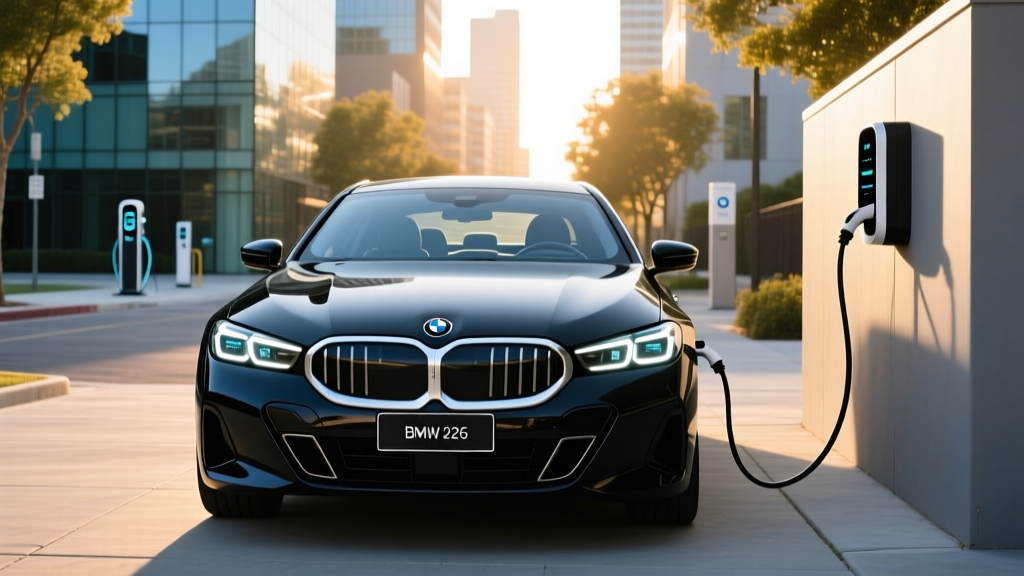
The BMW 5 Series has been the benchmark midsize luxury sedan for decades. The electric BMW i5 carries that legacy into the battery-electric era, blending executive comfort with a battery pack large enough for genuine road trips. For 2026, the i5 lineup expands with the high-performance i5 M60 and the value-oriented i5 eDrive40, giving buyers a spread from refined daily driver to 593-horsepower autobahn missile.
But luxury EV buyers have options — the Mercedes EQE, Tesla Model S, and Genesis Electrified G80 all compete here. This review breaks down the i5's real-world range, charging behavior, ownership economics, and whether BMW's electrified sedan justifies its premium price.
2026 BMW i5 Specs at a Glance
| Specification | i5 eDrive40 | i5 xDrive40 | i5 M60 |
|---|---|---|---|
| Drivetrain | RWD (single motor) | AWD (dual motor) | AWD (dual motor) |
| Horsepower | 335 hp | 389 hp | 593 hp |
| 0–60 mph | 5.7 sec | 5.2 sec | 3.7 sec |
| Usable Battery | 84.3 kWh (NMC) | 84.3 kWh (NMC) | 84.3 kWh (NMC) |
| EPA Range | 295 mi | 266 mi | 256 mi |
| MPGe (combined) | 97 MPGe | 87 MPGe | 82 MPGe |
| Efficiency | 35 kWh/100 mi | 39 kWh/100 mi | 41 kWh/100 mi |
| Max DC Fast Charge | 205 kW | 205 kW | 205 kW |
| 10–80% DCFC Time | ~30 min | ~30 min | ~30 min |
| Level 2 Home Charge | 11 kW (AC) | 11 kW (AC) | 11 kW (AC) |
| Base MSRP | $66,800 | $69,800 | $86,800 |
Real-World Range: What the EPA Sticker Doesn't Tell You
Real-World Expectation: 240–270 miles highway; 200–230 miles in freezing weather with cabin heat
The i5 eDrive40's 295-mile EPA rating is competitive for a luxury sedan with a 4,900-pound curb weight. The 84.3 kWh (gross) NMC lithium-ion pack — approximately 81.2 kWh usable — delivers roughly 3.5 miles per kWh in mixed driving.
On a 70-mph highway loop in moderate temperatures (65–75°F), expect the eDrive40 to return around 255–270 miles before the battery buffer warning. The xDrive40 and M60, with their added motor drag and higher power draw, realistically deliver 225–250 miles at highway speeds.
Cold weather is the equalizer. At 20°F with the heat pump running, plan for 15–25% range reduction across all trims. The i5's standard heat pump helps, but physics wins: a 295-mile EPA car becomes a ~220-mile car in a Minnesota January. EPA data on fueleconomy.gov confirms these efficiency figures under standardized test cycles.
BMW's battery preconditioning — activated when you navigate to a DC fast charger — warms the pack for optimal charge acceptance. Skipping preconditioning in cold weather can cut your peak charge rate in half. Always navigate to the charger.
Charging Speed: DC Fast Charging and Home Setup
| Charge Method | Power | Speed (miles/hr) | Notes |
|---|---|---|---|
| Level 1 (120V outlet) | ~1.4 kW | ~4 mi/hr | Emergency/trickle only |
| Level 2 (240V, home) | 11 kW | ~32 mi/hr | Full charge in ~9 hours |
| DC Fast Charge (peak) | 205 kW | ~580 mi/hr (peak) | 10–80% in ~30 min |
| DC Fast Charge (sustained avg) | ~140 kW | ~400 mi/hr (avg) | Above 80%, rate tapers sharply |
The i5's 205 kW peak DC fast-charge rate is respectable, though it trails the Hyundai Ioniq 6's 350 kW capability. Here's what matters more than the peak number: the charge curve.
On a 350 kW Electrify America or Tesla Supercharger (with NACS adapter), the i5 pulls near its 205 kW peak from roughly 10–35% State of Charge. From 35–65%, it settles into a sustained 130–150 kW range. Above 80%, charging slows dramatically to protect the NMC cells — expect 30–40 kW. This means a 10–80% session takes about 30 minutes, but 80–100% can add another 25 minutes. On road trips, plan your stops around 80% and move on.
For home charging, the i5's 11 kW onboard charger is a strong point. On a 48-amp Level 2 circuit (the common home setup), you'll add roughly 32 miles of range per hour — enough to fully replenish the battery overnight. A dedicated 60-amp circuit with a hardwired charger like the ChargePoint Home Flex or Emporia Level 2 will maximize this. Budget $800–$2,000 for professional Level 2 installation depending on your electrical panel's capacity and distance from the panel to the garage.
Connector note: the 2026 i5 ships with a CCS1 port in the US market. BMW offers a NACS adapter for access to Tesla's Supercharger network. If you're buying new in 2026, confirm adapter inclusion with your dealer — some trims bundle it, others charge $200–$300 separately.
Performance and Driving Dynamics
The i5 eDrive40's single rear motor produces 335 horsepower and 295 lb-ft of torque. The 0–60 mph time of 5.7 seconds is quick by any sedan standard, and the instant torque delivery makes it feel quicker in city driving. BMW tuned the i5's adaptive suspension (optional on eDrive40, standard on xDrive40 and M60) for a firm-but-compliant ride — it absorbs highway expansion joints without floating.
The xDrive40 adds a front motor for 389 hp and all-wheel drive, dropping the 0–60 to 5.2 seconds. The real benefit is traction in rain and snow, not straight-line speed. If you live in a region with real winters, the xDrive40's AWD and slightly lower range are a worthwhile trade.
The M60 is a different animal: 593 hp, 586 lb-ft, and a 3.7-second 0–60 time. It's a legitimate performance sedan that happens to be electric. The trade-off is efficiency — the M60's 256-mile EPA range and 82 MPGe reflect the cost of that power.
Regenerative braking offers three modes: adaptive (auto-adjusts based on traffic and navigation data), high (near one-pedal driving), and low (coasting). BMW's adaptive regen is among the best in the industry — it reads the road ahead and modulates braking seamlessly. Most owners leave it in adaptive and forget about it.
Pricing, Trims, and Federal Tax Credit Eligibility
| Trim | Base MSRP | As-Tested (typical) | §30D Credit Eligibility |
|---|---|---|---|
| i5 eDrive40 | $66,800 | $73,000–$78,000 | Not eligible (MSRP exceeds $55,000 sedan cap) |
| i5 xDrive40 | $69,800 | $76,000–$82,000 | Not eligible (MSRP exceeds $55,000 sedan cap) |
| i5 M60 | $86,800 | $92,000–$98,000 | Not eligible (MSRP exceeds $55,000 sedan cap) |
Here's the hard truth for tax-credit shoppers: no 2026 BMW i5 trim qualifies for the federal §30D clean vehicle credit. The IRS caps sedan eligibility at $55,000 MSRP (vans, SUVs, and trucks get an $80,000 cap). The i5 is classified as a sedan, and every trim starts well above that threshold. Even the base eDrive40 at $66,800 is $11,800 over the limit.
This is a significant disadvantage versus the Tesla Model 3 (eligible for up to $7,500) and the Hyundai Ioniq 6 (also eligible). The IRS §30D guidelines are explicit on MSRP caps, buyer income limits ($150,000 single / $300,000 joint), and battery critical-mineral sourcing requirements.
Some buyers offset this with state-level incentives (California's CVRP, Colorado's state credit, and others), but these vary by jurisdiction and often have their own income or price caps. Check your state's energy office or DMV for current programs. Additionally, leasing the i5 may allow the lessor to claim the commercial clean vehicle credit (§45W) and pass savings through as a lower lease payment — a workaround worth exploring with your dealer's finance team.
Interior, Cargo, and Technology
The i5's cabin is a study in BMW's current design language: a curved display panel housing a 12.3-inch digital instrument cluster and a 14.9-inch iDrive 8.5 touchscreen, angled toward the driver. Material quality is excellent — Sensafin synthetic leather is standard, with Merino leather optional. Build quality is tight, and road noise isolation is among the best in the segment.
Dimensions:
- Front legroom: 41.5 inches
- Rear legroom: 36.6 inches
- Trunk: 17.4 cu ft (no frunk — the front houses electronics and HVAC components)
- Rear seat: 60/40 split folding, expanding cargo to ~38 cu ft
The absence of a frunk (front trunk) is a missed opportunity for small-item storage. The 17.4 cu ft trunk is adequate for a week's luggage for two but trails the Tesla Model S's 25 cu ft rear + 3.1 cu ft frunk.
Tech highlights:
- BMW iDrive 8.5: Fast, responsive, with wireless Apple CarPlay and Android Auto. The voice assistant ("Hey BMW") handles navigation and climate commands reliably.
- BMW Digital Key Plus: Ultra-wideband phone-as-key with no need to remove your phone from your pocket.
- Driving Assistant Professional: Adaptive cruise, lane centering, and automatic lane change on highways. This is SAE Level 2 — you must keep your hands on the wheel and eyes on the road. It is not autonomous driving.
- Parking Assistant Professional: Remote-controlled parking via smartphone — useful for tight garages.
Warranty and Long-Term Battery Outlook
BMW covers the i5 with a competitive warranty package:
- New vehicle: 4 years / 50,000 miles
- Battery and electric drivetrain: 8 years / 100,000 miles (capacity retention guaranteed above 70%)
- Corrosion: 12 years, unlimited miles
- Complimentary maintenance: 3 years / 36,000 miles
The 8-year/100,000-mile battery warranty is standard for the segment. BMW guarantees the 84.3 kWh NMC pack will retain at least 70% of its original capacity during the warranty period. If degradation drops below that threshold, BMW replaces or refurbishes the pack at no cost.
NMC chemistry in the i5 benefits from BMW's sophisticated thermal management system, which actively heats and cools the pack to keep cells in their optimal temperature window. Real-world degradation data from European i5 fleets (the car launched in 2023) suggests approximately 5–8% capacity loss over the first 60,000 miles — well within warranty margins. If you plan to keep the car beyond 100,000 miles, the NMC pack should hold up, but expect gradual range erosion of 1–2% per year under normal use.
Out-of-warranty battery replacement is expensive. BMW has not published official replacement pricing for the i5, but industry estimates for an 84 kWh NMC pack in a luxury sedan run $15,000–$22,000 including labor. This is a long-tail risk worth factoring into 10-year ownership plans.
Pros and Cons
Pros
- Excellent ride quality and cabin isolation — true executive sedan comfort
- 205 kW DC fast charging is practical for road trips
- 11 kW Level 2 home charging fills the battery overnight
- Adaptive regen braking is intuitive and reduces brake wear
- High-quality interior with iDrive 8.5's responsive interface
- Strong performance across all trims, especially the M60
Cons
- No federal §30D tax credit — MSRP exceeds the $55K sedan cap
- No front trunk (frunk) — missed storage opportunity
- EPA range (295 mi max) trails the Tesla Model S (402 mi) and Lucid Air
- Base price starts at $66,800 — premium even for the luxury segment
- CCS1 port requires a NACS adapter for Tesla Supercharger access
- Options and packages add cost quickly — a well-equipped eDrive40 reaches $78K
Who Should Buy the BMW i5?
Choose the i5 eDrive40 if: You want a refined daily-driver luxury sedan with enough range for commuting and weekend road trips, you have Level 2 home charging, and you value ride comfort over maximum range or performance.
Choose the i5 xDrive40 if: You need all-wheel drive for rain or snow, you want the security of dual-motor traction, and you can accept a ~30-mile range reduction for the capability.
Choose the i5 M60 if: Performance is the priority, you want a legitimate sports sedan that happens to be electric, and you don't mind trading range and efficiency for 593 hp.
Look elsewhere if: Federal tax credit eligibility is essential to your budget (consider the Tesla Model 3, Hyundai Ioniq 6, or Polestar 2), you need 350+ miles of range (Lucid Air, Tesla Model S), or you want a frunk for daily cargo flexibility.
The i5's ideal buyer is a luxury-sedan loyalist transitioning from a gas 5 Series who prioritizes build quality, dealer service relationships, and driving refinement over spec-sheet dominance. It's also a strong lease candidate, where the tax-credit workaround and BMW's residual values can make monthly payments competitive with the Mercedes EQE.
Frequently Asked Questions
What is the real-world range of the electric BMW i5?
The i5 eDrive40 has an EPA-estimated 295 miles of range. In real-world highway driving at 70 mph, expect 255–270 miles in moderate temperatures. In cold weather (below 30°F), plan for 200–230 miles. The xDrive40 and M60 deliver 225–250 miles highway in normal conditions due to higher power consumption.
How fast does the BMW i5 charge at home and on the road?
On a Level 2 home charger (240V, 48 amps), the i5 charges at 11 kW, adding roughly 32 miles of range per hour — a full charge takes about 9 hours. On a DC fast charger, the i5 peaks at 205 kW and charges from 10–80% in approximately 30 minutes with battery preconditioning active.
Does the BMW i5 qualify for the $7,500 federal EV tax credit?
No. The BMW i5 does not qualify for the federal §30D clean vehicle credit. The IRS caps sedan MSRP at $55,000 for credit eligibility, and every i5 trim starts above $66,800. State incentives and lease-structure workarounds may provide partial offsets. Always verify current rules at IRS.gov and consult a tax professional.
Is the BMW i5 worth buying over the Tesla Model S or Mercedes EQE?
The i5 wins on interior build quality, ride comfort, and dealer service experience. The Tesla Model S wins on range (402 mi EPA), charging infrastructure (Supercharger network), and tax credit eligibility. The Mercedes EQE offers more rear-seat room but has been criticized for softer driving dynamics. Test-drive all three — the i5 appeals most to traditional luxury-sedan buyers who value refinement over maximum range.
Does the BMW i5 have a front trunk (frunk)?
No. The i5 does not have a frunk. The front compartment houses power electronics, the HVAC system, and structural components. All cargo goes in the 17.4 cu ft rear trunk, expandable with 60/40 split-folding rear seats.
What battery chemistry does the BMW i5 use?
The i5 uses an NMC (nickel-manganese-cobalt) lithium-ion battery with a gross capacity of 84.3 kWh and approximately 81.2 kWh usable. NMC offers higher energy density than LFP (lithium iron phosphate), which is why BMW chose it for a sedan where packaging space is limited. The trade-off is that NMC cells degrade slightly faster than LFP and are more sensitive to sustained 100% charges — BMW recommends daily charging to 80–90% for longevity.
What is the BMW i5's safety rating?
As of early 2026, the i5 has earned a 5-star overall safety rating from NHTSA and Top Safety Pick+ designation from IIHS. Standard safety features include front collision warning with automatic emergency braking, lane departure warning, blind-spot monitoring, and rear cross-traffic alert.