Quick Answer: Is the BMW Electric 5 Series Worth It?
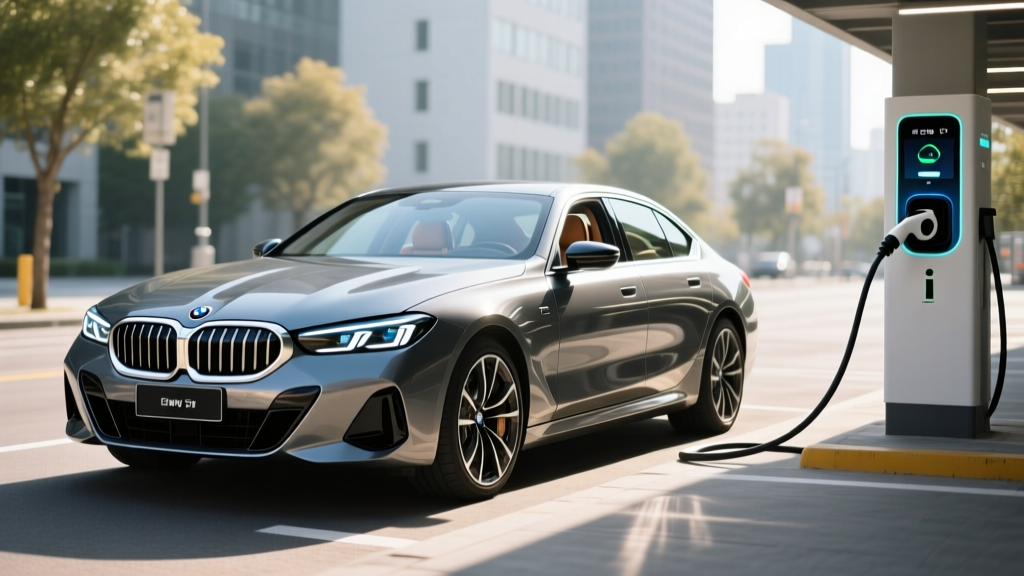
The BMW i5 — the all-electric version of the 5 Series — is a compelling executive sedan for buyers who have Level 2 home charging and primarily drive under 250 miles per day. The 2026 i5 eDrive40 starts around $70,200 and delivers an EPA-estimated 295 miles of range from its 84.3 kWh (usable) battery. It charges at up to 205 kW DC, reaching 10–80% in roughly 30 minutes. However, it does not qualify for the federal §30D tax credit due to BMW's German battery sourcing. If you need over 350 miles of range, frequently road-trip through charging deserts, or lack reliable home charging, the gas 5 Series or a plug-in hybrid alternative may be a better fit.
BMW i5 Lineup: Specs That Matter for Buyers
BMW offers the electric 5 Series in three core trims for the 2026 model year. The eDrive40 is the volume seller with rear-wheel drive and maximum range. The xDrive40 adds all-wheel drive at a slight range penalty, and the M60 is the performance flagship. Here's what the numbers actually look like:
| Spec | i5 eDrive40 | i5 xDrive40 | i5 M60 |
|---|---|---|---|
| Base MSRP | $70,200 | $73,200 | $87,200 |
| Drivetrain | RWD | AWD | AWD |
| Horsepower | 335 hp | 389 hp | 593 hp |
| 0–60 mph | 5.7 sec | 5.2 sec | 3.7 sec |
| Battery (usable) | 84.3 kWh (NMC) | 84.3 kWh (NMC) | 84.3 kWh (NMC) |
| EPA Range | 295 mi | 266 mi | 256 mi |
| MPGe (combined) | 99 MPGe | 92 MPGe | 88 MPGe |
| Peak DC Charge Rate | 205 kW | 205 kW | 205 kW |
| 10–80% DC Fast Charge | ~30 min | ~30 min | ~30 min |
| Level 2 Charge Rate | 11 kW | 11 kW | 11 kW |
| Battery Warranty | 8 yr / 100,000 mi | 8 yr / 100,000 mi | 8 yr / 100,000 mi |
Source: fueleconomy.gov and BMW USA specifications.
Real-World Range vs. the EPA Sticker
EPA Estimate: 295 miles (eDrive40)
Real-World Expectation: ~240–270 miles on highway road trips at 70–75 mph; ~200–230 miles in sub-30°F winter conditions with cabin heat.
The i5's 84.3 kWh usable battery and NMC chemistry deliver strong efficiency around town, where regenerative braking recaptures energy in stop-and-go traffic. But at sustained highway speeds, aerodynamic drag pushes consumption to roughly 3.2–3.5 miles per kWh, cutting effective range below the EPA figure.
Cold weather compounds this. In testing conditions around 20°F, expect a 20–30% range reduction due to battery resistance and cabin heating demand. The i5 includes a heat pump (standard on 2026 models), which mitigates losses compared to resistive heating, but physics still wins. If your commute is 40 miles round-trip and you charge at home nightly, this is irrelevant. If you're driving Denver to Grand Junction in January, it matters enormously.
Charging curve reality: The i5 peaks at 205 kW only briefly between roughly 10–30% state of charge (SoC). From 30–60%, it sustains around 150–170 kW, then tapers further above 80%. This is why the 10–80% time of ~30 minutes is a more useful metric than peak kW. Charging from 80–100% at a DC fast charger is painfully slow — plan to unplug at 80% on road trips and move on.
i5 vs. Gas 5 Series: The Cost Comparison
Most cross-shoppers are deciding between the i5 eDrive40 and the gas-powered 530i xDrive. Here's a 5-year ownership comparison assuming 12,000 miles per year, $3.60/gallon premium fuel, and $0.14/kWh home electricity (national average):
| Cost Factor (5 Years / 60k mi) | BMW i5 eDrive40 | BMW 530i xDrive (Gas) |
|---|---|---|
| Base MSRP | $70,200 | $61,200 |
| Federal Tax Credit (§30D) | $0 (not eligible) | $0 |
| Effective Purchase Price | $70,200 | $61,200 |
| Fuel / Electricity (60k mi) | ~$2,520 (home charging) | ~$7,560 (premium gas) |
| Maintenance (est.) | ~$1,800 | ~$3,500 |
| Insurance (est. avg/yr × 5) | ~$14,500 | ~$12,800 |
| 5-Year Depreciation (est.) | ~$31,500 | ~$27,000 |
| Estimated 5-Year Total Cost | ~$120,520 | ~$112,060 |
Fuel cost estimates based on EPA efficiency data. Depreciation and insurance are estimates based on industry averages for the segment. Actual costs vary by location, driving habits, and electricity rates.
The i5 saves roughly $5,000 in fuel and $1,700 in maintenance over five years compared to the 530i — no oil changes, no transmission fluid, fewer brake replacements thanks to regen. But the higher purchase price, steeper depreciation (luxury EVs still depreciate faster than their ICE counterparts), and higher insurance premiums erase most of those savings. The i5 wins on refinement, instant torque, and daily-driving smoothness. It does not win on pure economics unless electricity rates are very low and gas prices spike.
The Federal Tax Credit Situation
This is where many BMW i5 buyers are surprised. Under current IRS §30D rules, the i5 does not qualify for the $7,500 federal clean vehicle credit. The reason: BMW's battery cells and critical minerals do not meet the domestic sourcing and assembly requirements that took effect under the Inflation Reduction Act. The i5 is assembled in Dingolfing, Germany.
§30D Credit Requirements the i5 Fails:
- Battery component manufacturing: Must be manufactured in North America — i5 battery is sourced from Asian suppliers and assembled in Germany.
- Critical minerals sourcing: Must be extracted or processed in the US or a free-trade-agreement country — i5 supply chain does not meet the 2026 threshold.
- Final assembly: Must occur in North America — i5 is built in Germany.
Some state incentives may still apply. California, Colorado, and New York offer rebates that don't carry the same sourcing restrictions. Check your state's energy office for current programs. If the federal credit is a dealbreaker, competitors like the Tesla Model S (US-built, credit-eligible depending on current sourcing rules) or the domestic-market options may be worth considering.
Charging at Home and on the Road
Home Charging (Level 2)
The i5 accepts up to 11 kW on Level 2 AC charging. With a 48-amp Level 2 home charger (the most common residential setup on a 60-amp circuit), you'll add roughly 35–40 miles of range per hour of charging. A full 0–100% charge takes about 8.5 hours — ideal for overnight top-ups.
Installation cost for a Level 2 charger typically runs $800–$2,000 if your electrical panel has spare capacity and the charger is within 20 feet of the panel. If you need a panel upgrade (common in older homes with 100-amp service), budget an additional $1,500–$3,000. Always get a quote from a licensed electrician — never DIY high-voltage work.
Public DC Fast Charging
The i5 uses the CCS1 connector (2026 model year). BMW has not yet transitioned to NACS on the i5, though a NACS adapter is available for Tesla Supercharger access. On Electrify America, EVgo, and similar 350 kW-capable stations, the i5 peaks at 205 kW and delivers a practical 10–80% charge in about 30 minutes.
At an average DC fast-charging cost of $0.35–$0.48/kWh, a 10–80% session (roughly 59 kWh) costs $21–$28. That's comparable to a tank of premium gas in the 530i. The cost advantage of EVs comes from home charging, not public fast charging.
Common Misconceptions About the i5
| Myth | Fact |
|---|---|
| "The i5 gets 295 miles no matter what." | The EPA 295-mile figure assumes mixed driving. Sustained highway speeds at 75 mph yield ~240–260 miles. Cold weather drops this further to ~200–230 miles. |
| "I'll save $7,500 with the federal tax credit." | The i5 does not qualify for §30D due to German assembly and non-compliant battery sourcing. Check state incentives instead. |
| "DC fast charging is cheaper than gas." | At $0.35–$0.48/kWh public rates, a full fast charge costs $21–$28. Home charging at $0.14/kWh is where real savings live (~$12 for a full charge). |
| "The battery will need replacing soon." | BMW warrants the battery for 8 years/100,000 miles against degradation below 70% capacity. NMC batteries in similar BMWs have shown ~8–12% degradation over 100k miles in real-world data. |
| "I can use Tesla Superchargers directly." | The 2026 i5 uses CCS1. A BMW-approved NACS adapter enables Supercharger access, but charging speed may be limited by adapter throughput. |
Who Should Buy the BMW i5 — and Who Shouldn't
Decision Framework
Choose the BMW i5 eDrive40 if:
- You have Level 2 home charging (or can install it)
- Your daily driving is under 200 miles and you road-trip fewer than 6 times per year
- You value cabin quietness, instant torque, and low running costs over maximizing purchase-price value
- You live in a state with additional EV incentives that offset the lack of federal credit
- You want a luxury executive sedan without the M60's $87k price tag
Choose the BMW i5 xDrive40 if:
- You need all-wheel drive for snow/ice but can accept a 29-mile range penalty (266 vs. 295 EPA)
- You live in a region with harsh winters where AWD traction is non-negotiable
Stick with the gas 530i or consider a PHEV if:
- You lack reliable home charging (apartment, street parking, no garage)
- You regularly drive 350+ miles in a single day through areas with sparse charging infrastructure
- The $9,000 price premium and lack of federal credit make the i5 hard to justify financially
- You want the longest possible range without stopping — the 530i delivers ~420 highway miles on a tank
First-Time EV Buyer: What to Know Before Ordering
1. Home charging is the foundation. If you can't install a Level 2 charger, owning an i5 becomes significantly more expensive and inconvenient. Public DC fast charging is 3–4x the cost per mile of home charging. Before ordering, get an electrician's quote for a 240V/48A circuit near your parking spot.
2. Plan for winter. If you live north of the 37th parallel, expect 20–30% range loss in sustained cold. The i5's heat pump helps, but preconditioning the battery while plugged in (using the BMW app's departure timer) is essential for preserving range and enabling faster DC charging in cold weather.
3. Insurance costs more. Luxury EVs carry higher insurance premiums — typically 10–20% more than their gas equivalents due to higher repair costs and battery replacement values. Get quotes from your insurer before committing.
4. Understand the warranty. BMW covers the high-voltage battery for 8 years or 100,000 miles, whichever comes first, against capacity loss below 70%. The general vehicle warranty is 4 years/50,000 miles. Battery replacement out of warranty, if ever needed, runs $18,000–$25,000 based on current BMW parts pricing — though industry data suggests most EV batteries outlast the vehicle itself.
5. Precondition before fast charging. The i5's battery management system works best when the battery is warm. Navigate to a DC fast charger using the i5's built-in navigation, and the car will automatically precondition the battery — enabling it to hit peak charge rates faster. Arriving cold can add 10+ minutes to your charging session.
Frequently Asked Questions
Does the BMW i5 qualify for any tax credits?
The i5 does not qualify for the $7,500 federal §30D clean vehicle credit due to German assembly and battery sourcing that doesn't meet IRA requirements. Some state-level incentives (California, Colorado, New York, and others) may still apply. Always verify current eligibility on irs.gov and your state's energy office.
How long does it take to charge the BMW i5 at home?
On a 48-amp Level 2 home charger (11 kW), a full 0–100% charge takes approximately 8.5 hours. Most owners plug in overnight and wake up to a full battery. On a standard 120V outlet (Level 1), expect roughly 3–4 miles of range per hour — sufficient only for emergency trickle charging.
Is the BMW i5 self-driving?
No. The i5 offers BMW's Driving Assistant Professional, which is an SAE Level 2 driver-assistance system. It includes adaptive cruise control, lane-keeping, and highway assist, but the driver must remain fully engaged with hands on or near the wheel and eyes on the road at all times. It is not autonomous. BMW's Highway Assistant allows hands-off driving at speeds up to 85 mph on divided highways with eyes-on supervision — still Level 2 under SAE classification.
How does the i5 compare to the Tesla Model S?
The Tesla Model S Long Range offers ~402 miles of EPA range versus the i5's 295 miles, qualifies for partial or full federal credit depending on current sourcing rules, and has access to the Supercharger network natively. The i5 counters with superior interior material quality, a quieter cabin, more traditional luxury sedan ergonomics, and BMW's dealer service network. If range is the top priority, the Model S wins. If build quality and executive comfort matter more, the i5 has the edge.
What happens if the i5 battery degrades significantly?
BMW's battery warranty guarantees at least 70% capacity retention for 8 years or 100,000 miles. Based on data from similar NMC batteries in the i4 and iX, real-world degradation over 100,000 miles typically falls between 8–12%. If the battery falls below 70% within the warranty period, BMW will repair or replace it at no cost. Out-of-warranty replacement is estimated at $18,000–$25,000.