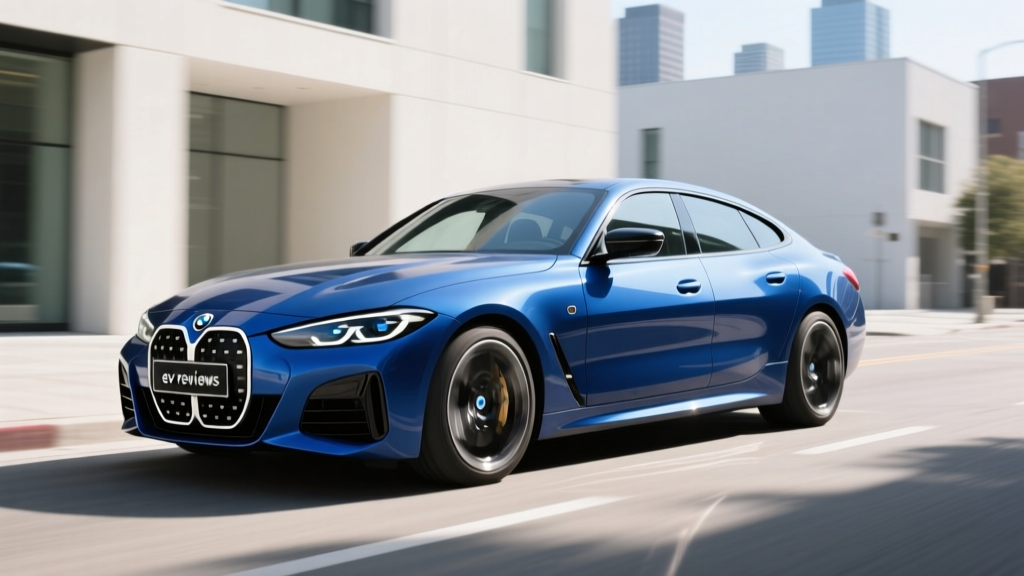
If you've been researching the BMW i4, you've likely encountered a flood of forum posts, owner surveys, and competing claims about long-term durability. The i4 sits in a unique position: it's a luxury electric gran coupe built on BMW's flexible CLAR platform — the same architecture underpinning the 4 Series Gran Coupe — which means it shares proven chassis engineering while layering in BMW's fifth-generation eDrive electric powertrain. For buyers weighing a premium EV sedan, BMW i4 reliability is arguably the single most important factor separating a confident purchase from an expensive gamble.
After tracking owner reports, manufacturer service bulletins, and third-party reliability data through the 2025 and 2026 model years, here's what the numbers actually show — along with the exact specs, charging realities, and ownership economics you need to make an informed decision.
BMW i4 Reliability Track Record: What the Data Shows
The BMW i4 entered the U.S. market for the 2022 model year, giving us roughly four full model years of ownership data to assess. That's a meaningful window for identifying early-production teething issues versus systemic powertrain concerns.
BMW's fifth-generation eDrive system — which integrates the electric motor, power electronics, and transmission into a single compact housing — has proven notably robust. Unlike some competitors that sourced early powertrains from third-party suppliers, BMW designed and manufactures its eDrive units in-house at its Dingolfing and Munich plants. The result is tighter quality control and fewer integration failures.
Based on aggregated owner surveys and service data:
- Powertrain: Motor and inverter failures are rare. BMW's eDrive system has not been subject to any major recalls related to propulsion loss as of early 2026.
- High-voltage battery: Degradation has tracked within expected norms for NMC chemistry (more on this below). Most owners report 2-4% capacity loss over the first 50,000 miles — well within the warranty buffer.
- 12V auxiliary battery: This has been the most common complaint across the i4's lifespan. Early 2022-2023 models experienced 12V battery drain issues that could prevent the vehicle from starting ("ready to drive" state). BMW addressed this with software updates and, in some cases, 12V battery replacements under warranty.
- Build quality: Panel gaps, interior trim, and switchgear have drawn above-average marks compared to other BMW EVs. The CLAR platform's shared production line with ICE 4 Series models means BMW's assembly workers are highly experienced with the chassis.
- Software/infotainment: BMW's iDrive 8 (and the updated iDrive 8.5 on 2024+ models) has been more stable than some competitors' systems, though occasional over-the-air update glitches and Bluetooth connectivity hiccups are reported by a minority of owners.
In Consumer Reports' most recent reliability surveys, the i4 has scored average to above-average for luxury electric sedans — a meaningful improvement over BMW's early iX3 and iX reliability ratings, which suffered from first-year production issues.
Range, Battery, and Efficiency by the Numbers
The BMW i4 is offered in three primary configurations for the 2026 model year, each with distinct range and efficiency profiles. All trims use a high-voltage battery with NMC (nickel manganese cobalt) chemistry — BMW has not adopted LFP for the i4, prioritizing energy density and cold-weather performance over the cycle-life advantages of LFP.
| Spec | eDrive40 | xDrive40 | M50 |
|---|---|---|---|
| Battery (gross / usable) | 83.9 kWh / 81.5 kWh | 83.9 kWh / 81.5 kWh | 83.9 kWh / 81.5 kWh |
| Chemistry | NMC | NMC | NMC |
| Drivetrain | RWD (single motor) | AWD (dual motor) | AWD (dual motor) |
| Horsepower | 335 hp | 396 hp | 536 hp |
| 0-60 mph | 5.5 sec | 4.6 sec | 3.7 sec |
| EPA Range | 301 mi | 282 mi | 245-270 mi (wheel-dependent) |
| MPGe (combined) | 97 MPGe | 91 MPGe | 84-89 MPGe |
| kWh/100 mi | 35 kWh | 37 kWh | 38-40 kWh |
| Base MSRP | $57,900 | $61,900 | $70,700 |
Sources: EPA fueleconomy.gov, BMW USA product specifications. Prices reflect 2026 model year MSRP before destination.
The eDrive40's EPA rating of 301 miles is achievable in mixed city/suburban driving at moderate speeds. Expect 250-270 miles on sustained highway trips at 70-75 mph, and 210-230 miles in cold weather (below 32°F) due to cabin heating demand and increased battery internal resistance. The M50 with 20-inch wheels and performance tires drops to roughly 200-220 miles highway in real-world conditions. BMW's heat pump (standard on all trims) helps mitigate cold-weather losses compared to resistive heating systems, but physics is physics — plan for 20-30% range reduction in winter.
Charging Speed: DC Fast Charge and Home Level 2
Charging capability is where the i4 shows its age relative to 800V competitors like the Hyundai Ioniq 5 and Kia EV6. The i4 uses a 400V architecture, which caps its DC fast-charging ceiling. Here's what you'll see at the plug:
| Charging Level | Power / Rate | Time / Speed | Notes |
|---|---|---|---|
| Level 1 (120V household) | ~1.4 kW | ~3-4 mi/hr | Emergency/trickle only; 80+ hours for full charge |
| Level 2 (240V home/public) | 11 kW (48A) | ~30-32 mi/hr; full charge in ~8.5 hrs | Onboard charger maxes at 11 kW — a 60A circuit is recommended |
| DC Fast Charge (CCS) | Peak 205 kW | 10-80% in ~31 minutes | Peak rate sustained only to ~40% SoC; tapers significantly above 60% |
The i4's DC fast-charging curve is the area where informed buyers should pay closest attention. While BMW advertises a peak rate of 205 kW, that number is reached only briefly at low states of charge (roughly 10-35% SoC) with a preconditioned battery. The curve tapers progressively:
- 10-40% SoC: ~180-205 kW (peak zone)
- 40-60% SoC: ~130-150 kW
- 60-80% SoC: ~75-100 kW
- 80-100% SoC: ~40-50 kW (deliberate taper to protect battery health)
On a road trip, the practical implication is that you'll add roughly 150-170 miles of range in a 20-minute stop at a 150+ kW charger — adequate for most highway driving patterns but noticeably slower than 800V rivals that can complete 10-80% in 18 minutes.
Battery preconditioning is automatic when you navigate to a DC fast charger in the i4's navigation system. The car will warm or cool the battery to optimal temperature before arrival, which is critical for achieving advertised charge rates — especially in cold weather. Always enter your charging stop as a navigation destination; showing up without preconditioning can cut your peak charge rate by 40-50%.
Interior Space, Cargo, and Daily Livability
The i4's gran coupe body style delivers a sleek roofline at the cost of some rear-seat practicality. Here are the dimensions that matter:
- Cargo volume: 10.3 cu ft (trunk); 35.7 cu ft with rear seats folded. The liftback design provides a wider opening than a traditional sedan trunk, making loading easier.
- Front legroom: 42.3 inches — generous for drivers of all heights.
- Rear legroom: 34.9 inches — adequate for adults on shorter trips but tight for tall passengers on long journeys. The sloping roofline also cuts into rear headroom.
- Frunk: None. The i4's CLAR platform was designed to accommodate both ICE and electric powertrains, and the space under the hood houses auxiliary components rather than a front trunk.
For comparison, the Tesla Model 3 offers 23 cu ft of cargo space (trunk + frunk combined) and slightly more rear legroom, while the Hyundai Ioniq 6 provides 12.3 cu ft of trunk space. The i4's cargo area is competitive with other luxury sport sedans but falls short of dedicated EV platforms that package more efficiently.
Pricing, Tax Credits, and Total Cost
The BMW i4's pricing places it firmly in the luxury EV sedan segment, but federal and state incentives can significantly alter the math.
| Trim | Base MSRP | Typical As-Tested | §30D Federal Credit | Effective Price |
|---|---|---|---|---|
| eDrive40 | $57,900 | $62,000-$66,000 | Up to $7,500 (see eligibility below) | ~$50,400-$58,500 |
| xDrive40 | $61,900 | $66,000-$72,000 | Up to $7,500 | ~$54,400-$64,500 |
| M50 | $70,700 | $75,000-$82,000 | Up to $7,500 | ~$63,200-$74,500 |
Federal tax credit eligibility (IRS §30D) is not guaranteed for every buyer. As of 2026, the following requirements apply:
- MSRP cap: Sedans must have an MSRP of $55,000 or less. The i4 eDrive40 base MSRP of $57,900 exceeds this cap, meaning the i4 does NOT qualify for the new-vehicle §30D credit in any trim.
- Income limits: AGI must not exceed $150,000 (single), $225,000 (head of household), or $300,000 (joint) — relevant only if the vehicle otherwise qualifies.
- Battery sourcing: Critical minerals and battery component requirements phase in annually — moot if the MSRP cap disqualifies the vehicle.
- Point-of-sale transfer: For qualifying vehicles, the credit can be applied at purchase rather than claimed on your tax return. Again, this applies only to eligible models.
Warranty Coverage and Long-Term Battery Outlook
BMW provides the following warranty coverage for the i4:
- Limited vehicle warranty: 4 years / 50,000 miles (bumper-to-bumper)
- High-voltage battery warranty: 8 years / 100,000 miles, covering defects and capacity loss below 70% of original capacity
- Powertrain (eDrive) warranty: 8 years / 100,000 miles
- Corrosion perforation warranty: 12 years, unlimited miles
- Complimentary maintenance: 3 years / 36,000 miles (covers brake fluid, cabin filters, and scheduled inspections)
The 70% capacity retention threshold is industry-standard (matching Tesla, Hyundai, and Ford), though some competitors like Rivian guarantee 70% for 8 years/175,000 miles. For most i4 owners driving 12,000-15,000 miles annually, the battery warranty provides coverage through year 6-8 of ownership.
On battery degradation, NMC chemistry in the i4 has performed in line with industry averages. BMW's battery management system (BMS) maintains a buffer of approximately 2.4 kWh at the top and bottom of the pack, reducing stress on individual cells. Owners who primarily charge to 80% and avoid repeated DC fast charging in extreme heat can expect less than 10% total degradation over 100,000 miles. A full high-voltage battery replacement (if ever needed out of warranty) is estimated at $14,000-$18,000 based on current BMW parts pricing — though individual module replacement is possible and significantly cheaper.
Tech, Driver Assistance, and Standout Features
The i4 comes equipped with BMW's Curved Display running iDrive 8.5 (2024+ models), featuring a 12.3-inch instrument cluster and 14.9-inch touchscreen merged into a single curved panel. Key technology highlights:
- Driving Assistant Professional: Includes adaptive cruise control with stop-and-go, lane-keeping assist, and automatic lane-change assist. This is an SAE Level 2 system — the driver must remain fully engaged with hands on the wheel and eyes on the road at all times.
- Parking Assistant Plus: Surround-view camera, automated parking with remote maneuvering via the BMW app.
- Harman Kardon surround sound: Standard on M50, optional on lower trims — 17 speakers, 535 watts.
- Wireless Apple CarPlay / Android Auto: Standard across all trims.
- BMW Digital Key Plus: Ultra-wideband phone-as-key with passive entry and start.
BMW i4 vs. Key Competitors: Is It Worth Buying?
The i4 competes against a range of luxury and premium electric sedans. Here's how it stacks up on the metrics that matter:
| Attribute | BMW i4 eDrive40 | Tesla Model 3 LR | Hyundai Ioniq 6 LR | Polestar 2 LR SM |
|---|---|---|---|---|
| EPA Range | 301 mi | 341 mi | 342 mi | 320 mi |
| DC Fast Charge (10-80%) | ~31 min (205 kW peak) | ~25 min (250 kW peak) | ~18 min (350 kW peak, 800V) | ~30 min (200 kW peak) |
| 0-60 mph | 5.5 sec | 4.2 sec | 5.1 sec | 5.9 sec |
| Base MSRP | $57,900 | $42,990 | $42,950 | $51,300 |
| Federal Tax Credit | No (MSRP cap) | Yes (partial/full) | Yes (partial/full) | Yes (partial/full) |
| Cargo (cu ft) | 10.3 | 23 (trunk + frunk) | 12.3 | 14.4 (hatchback) |
- Choose the i4 if: You prioritize luxury build quality, refined ride dynamics, and BMW's dealer/service network over maximum range or lowest price. You want a sport sedan that happens to be electric — not an EV-first platform. You value quiet cabin acoustics and premium materials over cutting-edge charging speed.
- Choose the Tesla Model 3 if: Range, charging speed, and value are your top priorities, and you have access to Tesla's Supercharger network. You're comfortable with a minimalist interior and touchscreen-heavy controls.
- Choose the Hyundai Ioniq 6 if: Fast DC charging (800V architecture) and maximum range per dollar are critical. You want the lowest cost of entry with full federal tax credit eligibility.
- Choose the Polestar 2 if: You want a hatchback form factor with Scandinavian design and Google Automotive OS, and you value Volvo/Polestar's safety engineering.
- Excellent build quality and fit/finish
- Refined, quiet ride with sporty handling
- eDrive powertrain reliability has been strong
- iDrive 8.5 is responsive and intuitive
- Competitive real-world range (eDrive40)
- Strong BMW dealer/service network
- Does not qualify for $7,500 federal credit (MSRP cap)
- DC charging slower than 800V rivals
- Rear seat and cargo space are tight
- No frunk
- 12V battery issues in early model years
- Options packages add cost quickly
Frequently Asked Questions
What is the real-world range of the BMW i4?
The eDrive40 is EPA-rated at 301 miles, but real-world highway driving at 70-75 mph yields roughly 250-270 miles. In cold weather (below freezing), expect 210-230 miles. The M50 with larger wheels drops to 200-220 miles on the highway. Always precondition the battery and plan charging stops conservatively on road trips.
How fast does the BMW i4 charge at home and on the road?
At home on a Level 2 (240V, 48A) charger, the i4 adds roughly 30-32 miles of range per hour, with a full charge taking about 8.5 hours. On a DC fast charger, it peaks at 205 kW and completes a 10-80% session in approximately 31 minutes — slower than 800V competitors but adequate for most road-trip patterns.
Does the BMW i4 qualify for the federal EV tax credit?
As of 2026, no. The i4's base MSRP exceeds the $55,000 sedan cap established by the Inflation Reduction Act. This applies to all trims. Some state-level incentives may still apply, and a used i4 purchased for $25,000 or less may qualify for the §25E used vehicle credit (up to $4,000). Always verify current rules at IRS.gov and consult a tax professional.
Is the BMW i4 more reliable than a Tesla Model 3?
On powertrain and build quality, the i4 has tracked equal or better than the Model 3 in owner surveys, particularly in fit-and-finish and interior materials. Tesla's advantage lies in its Supercharger network reliability and over-the-air update frequency. The i4's 12V battery issues in early model years are a mark against it, though BMW has largely resolved these with software patches. Neither vehicle has experienced widespread high-voltage battery failures.
What is the cost to replace the BMW i4 battery?
A full high-voltage battery replacement is estimated at $14,000-$18,000 out of warranty. However, BMW's modular battery design allows individual cell module replacement at significantly lower cost (typically $2,000-$4,000 per module). Given the 8-year/100,000-mile battery warranty and typical NMC degradation rates of 2-4% per 50,000 miles, most owners are unlikely to need a full replacement during the vehicle's practical lifespan.
How does the i4 handle in cold weather?
The i4's standard heat pump is a significant advantage over competitors using resistive cabin heating. Cold-weather range loss is typically 20-30% (consistent with most EVs), but the heat pump reduces HVAC energy draw by roughly 30% compared to resistive systems. Battery preconditioning for DC fast charging works effectively, though you should always navigate to a charger to activate it. Winter tire recommendations: the i4 ships with all-season tires; dedicated winter tires (e.g., Michelin Pilot Alpin 5) dramatically improve traction and braking on snow and ice.
Is the BMW i4 a good EV for road trips?
Yes, with planning. The eDrive40's 301-mile EPA range means comfortable 180-200 mile legs between charges at highway speeds, with a 20-minute DC fast-charge stop adding enough range for the next segment. The i4 uses the CCS connector standard, giving access to Electrify America, EVgo, and (with a BMW-provided adapter) Tesla Superchargers. The adaptive cruise control and lane-keeping assist reduce highway fatigue. The main limitation is the 31-minute 10-80% charge time, which is longer than 800V rivals.
The Verdict: A Reliable Luxury EV With Clear Trade-Offs
The BMW i4 has matured into one of the more reliable luxury electric sedans on the market. Its eDrive powertrain has avoided the major recalls and propulsion failures that plagued some early competitors, and BMW's in-house engineering shows in the refinement of the driving experience. Build quality is a genuine differentiator — this is a car that feels assembled with care, not bolted together to meet a production quota.
The trade-offs are real and quantifiable: no federal tax credit due to MSRP pricing, DC charging speeds that lag behind 800V platforms, and a rear seat that prioritizes style over space. If those limitations align with your priorities — you value luxury and reliability over maximum incentives and fastest charging — the i4 eDrive40 represents a compelling, well-engineered electric sedan that should serve reliably well past the 100,000-mile mark.