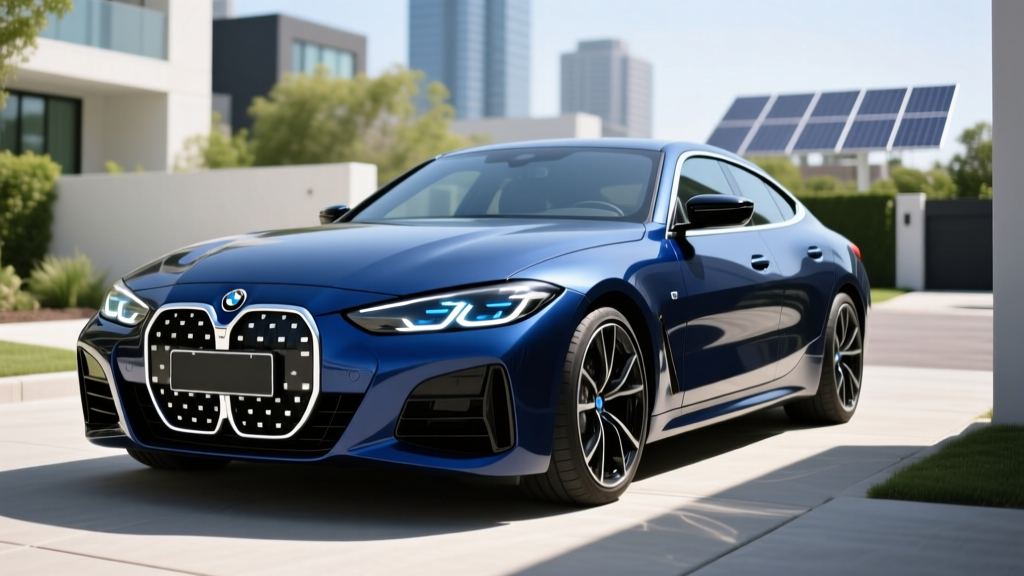
Quick Verdict: The Electric Gran Coupe That Doesn't Feel Like a Compromise
The BMW i4 has always occupied a specific niche: the electric sports sedan for buyers who want BMW driving dynamics without the M3's fuel bill. For 2026, the i4 lineup — spanning the rear-wheel-drive eDrive40, the dual-motor xDrive40, and the performance-focused M50 — continues to refine the formula with updated battery chemistry, faster DC charging curves, and a refreshed infotainment stack running iDrive 8.5. But with rivals like the Tesla Model 3 Performance, Hyundai Ioniq 6, and Polestar 2 all pushing hard on value and efficiency, the i4 must justify its premium badge with more than just a kidney grille.
After spending time with the 2026 i4 across multiple trims and charging scenarios, here's what matters: the eDrive40 delivers genuinely usable real-world range, the M50 remains one of the quickest sedans under $70,000, and DC fast-charging speeds now hold closer to peak rates for longer. The trade-off? A starting price that pushes past most competitors and a back seat that's tighter than you'd expect for the footprint.
Range, Battery, and Efficiency: EPA Meets Reality
The 2026 BMW i4 eDrive40 carries an EPA-estimated 307 miles of range with its 81.5 kWh (usable) battery pack. In real-world mixed driving, expect 260–285 miles in moderate temperatures. Sustained highway driving at 75+ mph drops that to roughly 240–255 miles. In freezing conditions (below 30°F), plan for 210–240 miles without preconditioning — the i4's heat pump helps, but cold still bites all NMC packs.
The i4's battery uses NMC (nickel manganese cobalt) chemistry, which prioritizes energy density over the cycle-life longevity of LFP cells. BMW has not switched to LFP for the i4, meaning you get more range per kilogram but should avoid routinely charging to 100% for daily use. Set your daily charge limit to 80% and save full charges for road trips — the battery management system will thank you over the long haul.
| Spec | eDrive40 | xDrive40 | M50 |
|---|---|---|---|
| EPA Range | 307 mi | 282 mi | 269 mi |
| Battery (usable) | 81.5 kWh | 81.5 kWh | 81.5 kWh |
| Chemistry | NMC | NMC | NMC |
| Drivetrain | RWD | AWD (dual-motor) | AWD (dual-motor) |
| Horsepower | 335 hp | 402 hp | 536 hp |
| 0–60 mph | 5.5 sec | 4.6 sec | 3.7 sec |
| MPGe (combined) | 109 MPGe | 98 MPGe | 89 MPGe |
| Efficiency | 31 kWh/100mi | 34 kWh/100mi | 38 kWh/100mi |
| Max DC Charge | 205 kW | 205 kW | 205 kW |
| 10–80% DC Time | ~31 min | ~31 min | ~31 min |
| Level 2 Rate | 11 kW | 11 kW | 11 kW |
| Base MSRP | $57,900 | $62,900 | $69,900 |
The eDrive40's 109 MPGe combined is competitive with the Tesla Model 3 Long Range (132 MPGe) but falls short of the Hyundai Ioniq 6's remarkable 140 MPGe. The i4 trades some efficiency for its heavier build, premium insulation, and sportier suspension tuning — a choice that shows up at the charger as well as the window sticker.
Charging Speed: DC Fast Charge and Home Level 2
The 2026 i4 supports a peak DC fast-charge rate of 205 kW via CCS1 connector. BMW quotes a 10–80% charge time of approximately 31 minutes. In practice, the i4's charge curve is one of its stronger attributes: it sustains above 150 kW well past 50% state of charge before tapering, which means your real-world highway stop doesn't feel like it drags. Above 80%, charging slows significantly — expect 80–100% to take an additional 20+ minutes. Don't wait around for a full charge on a road trip; 80% is the pragmatic target.
| Charging Level | Power | Speed (approx.) | Best For |
|---|---|---|---|
| Level 1 (120V) | ~1.4 kW | ~4 mi/hr | Emergency / overnight trickle |
| Level 2 (240V, 48A) | 11 kW | ~33 mi/hr | Home daily charging (~9 hr full) |
| DC Fast Charge | Up to 205 kW | ~180 mi in 30 min | Road trips, 10–80% in ~31 min |
At home on a Level 2 wallbox (240V, 48-amp circuit), the i4's onboard charger accepts up to 11 kW, adding roughly 33 miles of range per hour. A full 0–100% charge takes about 9 hours — perfectly manageable with overnight charging. If your home electrical panel supports a 60-amp dedicated circuit (requiring a licensed electrician), you'll maximize the i4's 11 kW capability. Homes with older 100-amp panels may need a panel upgrade, which can add $1,500–$3,000 to your charging setup cost.
The i4 uses the CCS1 connector for DC fast charging and J1772 for Level 2. BMW has not yet adopted NACS (Tesla's connector) on the i4, though the brand has confirmed NACS integration for future models. For now, CCS1 gives you access to Electrify America, EVgo, ChargePoint, and other major networks — though if you frequently travel corridors dominated by Tesla Superchargers, you'll need a CCS-to-NACS adapter or rely on third-party networks.
Performance and Driving Dynamics
The i4's Gran Coupe body style sits on BMW's CLAR platform adapted for electrification, and it shows. This is a driver's car first, EV second. The eDrive40's single rear motor produces 335 horsepower and hits 60 mph in 5.5 seconds — brisk enough for confident highway merging without being excessive. The xDrive40 adds a front motor for 402 hp and all-wheel grip, dropping the sprint to 4.6 seconds. The M50 is the star: 536 hp, 3.7 seconds to 60, and an adaptive M suspension that manages to feel both supple and planted.
Regenerative braking offers adjustable levels via the drive modes, including a one-pedal-driving mode (B mode) that brings the car to a full stop without touching the brake pedal. The i4's regen tuning is among the smoothest in the segment — no abrupt deceleration lurches that plague some competitors. BMW's Driving Assistant Professional package adds adaptive cruise with stop-and-go, lane-centering, and automatic lane-change assist, though this remains a SAE Level 2 system requiring full driver attention at all times.
BMW's Driving Assistant Professional is an SAE Level 2 system. It provides lane-centering and adaptive cruise control but requires continuous driver supervision — hands on or near the wheel, eyes on the road. It is not self-driving and will not navigate complex intersections, construction zones, or unmapped roads autonomously. Always remain fully engaged.
Pricing, Trims, and Federal Tax Credit Eligibility
| Trim | Base MSRP | As-Tested (typical) | §30D Credit Eligibility |
|---|---|---|---|
| eDrive40 | $57,900 | $62,000–$65,000 | Up to $7,500 (see rules below) |
| xDrive40 | $62,900 | $67,000–$72,000 | Up to $7,500 (see rules below) |
| M50 | $69,900 | $74,000–$80,000 | Up to $7,500 (see rules below) |
All 2026 BMW i4 trims fall under the $55,000 MSRP cap for sedans set by the IRS under §30D — wait, no. The i4 is classified as a sedan, and the §30D MSRP cap for sedans is $55,000. This means only the base eDrive40 at $57,900 already exceeds the sedan cap. However, BMW classifies the i4 Gran Coupe as a sportback/liftback, which some dealerships and tax professionals may argue qualifies under the $80,000 SUV/pickup/van cap. This is a gray area — consult a tax professional and check the IRS's latest VIN-eligibility tool at fueleconomy.gov before assuming credit eligibility.
- MSRP cap: $55,000 for sedans; $80,000 for SUVs, pickups, and vans — verify i4 classification with your tax advisor
- Buyer income cap: AGI ≤ $150,000 (single), $225,000 (head of household), $300,000 (joint)
- Battery sourcing: Must meet critical-minerals and battery-component requirements that phase in annually — check IRS VIN lookup
- Point-of-sale transfer: Eligible buyers can apply the credit as an immediate dealer discount instead of waiting for tax filing
- Assembly: Vehicle must undergo final assembly in North America — the i4 is built in Munich, Germany, which disqualifies it from the §30D new-vehicle credit
This is the critical detail many buyers miss: the BMW i4 is manufactured in Munich, Germany, and does not meet the North American final-assembly requirement. As a result, the i4 does not qualify for the §30D new-vehicle federal tax credit. This is a significant disadvantage against competitors like the Tesla Model 3 (built in Texas) and certain domestically assembled options. However, a used i4 may qualify for the up-to-$4,000 pre-owned EV credit (30% of sale price, capped at $4,000) if purchased from a dealer for under $25,000 and meeting income requirements. Always verify current rules at IRS.gov.
Interior Space, Cargo, and Tech
The i4's cabin is unmistakably BMW — the curved display running iDrive 8.5 pairs a 12.3-inch instrument cluster with a 14.9-inch touchscreen in a single curved housing. Wireless Apple CarPlay and Android Auto are standard, and the system's voice assistant handles navigation and climate commands well. Build quality is a clear step above the Tesla Model 3's minimalist interior, with real stitching, aluminum accents, and well-damped switchgear throughout.
Space is where the Gran Coupe form factor extracts its toll:
- Cargo volume: 16.6 cu ft (rear seats up), 45.6 cu ft (rear seats folded) — the liftback hatch is genuinely useful
- Rear legroom: 35.2 inches — adequate for adults on shorter trips, tight for taller passengers on long drives
- Front headroom: 40.3 inches (without panoramic roof); the optional glass roof shaves about an inch
- Frunk: None — the i4 has no front trunk, which is a missed opportunity for an EV
Compared to the Tesla Model 3 (23 cu ft trunk + 3 cu ft frunk), the i4 gives up some total cargo volume but gains a more practical liftback opening. The Hyundai Ioniq 6's conventional trunk is smaller at 11.2 cu ft but offers a frunk. If cargo flexibility matters, the i4's hatch is a genuine advantage over traditional sedan trunks.
Standard driver-assist features include forward collision warning with automatic emergency braking, blind-spot monitoring, rear cross-traffic alert, and parking sensors. The available Driving Assistant Professional adds highway lane-centering and adaptive cruise with stop-and-go — competent for long commutes but not hands-free like GM's Super Cruise or Ford's BlueCruise on mapped highways.
Ownership Costs and Warranty
BMW covers the i4 with a 4-year/50,000-mile limited warranty and an 8-year/100,000-mile battery warranty that guarantees the high-voltage pack will retain at least 70% of its original capacity. This battery warranty is standard for the industry and aligns with Tesla, Hyundai, and most competitors.
Insurance costs for the i4 tend to run 15–25% higher than a comparable gas-powered 4 Series, reflecting the higher repair costs associated with EV battery packs and specialized bodywork. Expect annual premiums in the $2,200–$3,000 range depending on your location, driving record, and coverage level.
Charging costs depend heavily on your setup. Home charging on Level 2 at the US average electricity rate of ~$0.17/kWh costs roughly $13.80 for a full 81.5 kWh charge, translating to about $0.045 per mile for the eDrive40. Public DC fast charging at networks like Electrify America averages $0.35–$0.48/kWh, pushing road-trip fueling costs to $0.10–$0.14 per mile — still below gasoline at current prices but not the dramatic savings of home charging.
Pros, Cons, and Who Should Buy the 2026 BMW i4
- Genuine sports-sedan driving dynamics — steering feel, chassis balance, and ride quality are a cut above most EVs in this price range
- Strong real-world range (260–285 mi mixed) on the eDrive40
- DC charging curve sustains high power past 50% SoC — practical road-trip charging
- Liftback hatch design offers superior cargo access vs. traditional trunks
- Premium interior build quality with iDrive 8.5 — no screen-only minimalism
- Smooth regenerative braking calibration with true one-pedal mode
- Does NOT qualify for the §30D federal tax credit (German assembly) — a $7,500 disadvantage vs. US-built rivals
- Base MSRP starts at $57,900 — significantly above Tesla Model 3 and Ioniq 6
- Rear seat legroom (35.2 in) is tight for a car in this price class
- No frunk — wasted EV packaging opportunity
- CCS1 connector only — no native NACS/Tesla Supercharger access
- Efficiency trails rivals (109 MPGe vs. Model 3's 132 MPGe)
Choose the i4 eDrive40 if: You want a premium electric daily-driver with real sports-sedan dynamics, value build quality and cabin refinement over maximum range-per-dollar, and can charge at home to offset the lack of federal tax credit.
Choose the i4 M50 if: You want sub-4-second acceleration in a livable electric sedan and don't need the back seat for regular adult passengers.
Look elsewhere if: Federal tax credit eligibility is essential to your purchase math (consider the US-built Tesla Model 3 or Ford Mustang Mach-E), you need maximum rear-seat space for a family, or you rely on Tesla Superchargers for road trips.
Frequently Asked Questions
What is the real-world range of the 2026 BMW i4?
The EPA rates the i4 eDrive40 at 307 miles. Real-world mixed driving yields 260–285 miles in moderate weather. Sustained highway driving at 75+ mph drops to roughly 240–255 miles, and freezing temperatures can reduce range to 210–240 miles without preconditioning. The xDrive40 and M50, with their higher power outputs and dual motors, deliver 10–15% less real-world range.
How fast does the BMW i4 charge?
The i4 peaks at 205 kW on a DC fast charger, with BMW quoting 10–80% in approximately 31 minutes. The charge curve holds strong past 50% state of charge, making real-world road-trip stops practical. At home on Level 2 (240V), the 11 kW onboard charger adds about 33 miles per hour, fully recharging overnight in roughly 9 hours.
Does the BMW i4 qualify for the federal EV tax credit?
No. The i4 is assembled in Munich, Germany, and the §30D credit requires North American final assembly. This is a significant cost disadvantage versus US-built competitors. However, a used i4 purchased from a dealer for under $25,000 may qualify for the up-to-$4,000 pre-owned EV credit, subject to income limits. Always verify eligibility at IRS.gov.
Is the BMW i4 worth buying versus the Tesla Model 3 or Ioniq 6?
It depends on your priorities. The i4 wins on interior quality, driving dynamics, and chassis refinement. The Tesla Model 3 Long Range wins on efficiency (132 MPGe), Supercharger access, and tax-credit eligibility (US-built, ~$42,490 after credit). The Ioniq 6 wins on pure efficiency (140 MPGe) and price (~$42,000 base). If premium feel and BMW's driving character matter more than maximizing value, the i4 earns its price. If cost-per-mile and tax incentives drive your decision, the alternatives are objectively more efficient purchases.
What is the BMW i4's battery warranty?
BMW provides an 8-year/100,000-mile high-voltage battery warranty guaranteeing at least 70% capacity retention. The limited vehicle warranty is 4 years/50,000 miles, with 4 years of complimentary maintenance included.
Does the i4 have a frunk?
No. The 2026 BMW i4 has no front trunk. All cargo space is in the rear liftback area: 16.6 cu ft behind the rear seats, expanding to 45.6 cu ft with seats folded.